Search

Black Leadership Analysis

This is an unofficial Spiral Dynamics blog. It is not endorsed by D. Beck PhD.

Author

blackleaderanalysis

This site will use Ego Development Theory to analysis various leaders and problems in the black community. Ego Development Theory is a value meme classification first invented by Clare W. Graves and expanded by Natasha Todorovic, Christopher Cowan, and Don Edward Beck.

Why We Can’t Wait: Philosophy

Dr. King is careful to point out that the current Civil Rights Movement (CRM) is just part of a struggle of freedom happening all over the world throughout all of history. The revolutions in Africa and Asia that created new independent governments was an extension of the same struggle. Ultimately, oppressed people all over the world were beginning to stand up for themselves and fight back against tyranny.

Within the confines of American history, the Civil Rights Movement is the third revolution. The first and second are the American Revolution and the Civil war respectively. Oppressed people in all walks of life have fought for freedom. The black people are no different, and their struggle has been continual.

Many outsiders to the Civil Rights Movement see it as a sudden happening caused by outside agitators. Their evidence is that the black people they knew did not complain about their plight. Dr. King reminds these people that blacks are heavily penalized for talking about their experience. Also, most blacks would assume whites would not care about what they go through.

The method employed by the Dr. King led branch of the CRM was non-violent direct action (NVDA). In NVDA, members would purposely violate the law in such large numbers the jails would fill. Once the jail filled the unjust law would become unenforceable. Also, the oppressor would have to use his violence in public on a large scale. His use of force would show he was unjust to the greater society and increase support for the movement in the general public.

It is important to remember, Dr. King did not see his movement as a replacement for efforts within the courts and government. It was essential to have people sympathetic to the CRM in places of power. It was also essential to support NAACP efforts to fight discrimination in court. To obtain freedom, all three methods had to be deployed.

Dr. King defines freedom as social, political, and economic redress. From a social and political aspect, the rest of America would begin to respect black people because they won their freedom in the face of the most powerful government in the world. The victory would be due to African American’s ability to strategize and have restraint in the face of violence. The victory would disprove the stereotypes and allow African Americans to move through society in a more free manner.

Economic equity would come with black people obtaining positions of power due to the collective effort. These positions of power will not be tokenism, which Dr. King deplores. He defines tokenism as letting a few blacks have power to pacify the masses and slow the CRM. Dr. King supported efforts to give black people economic stability on a mass scale through set-asides. He mentions efforts in India to support Dalits. India had a reservation system that allowed for Dalits to get preferential treatment in hiring and college admittance. So from this book, it is safe to assume he would have supported Affirmative Action.

The principle tool blacks had in their arsenal was the strong faith of black people. Black America had one of the most active religious traditions in the country. The negro spiritual was the hallmark of this tradition. Dr. King was chiefly relying on a supernatural strength to propel blacks to freedom.

The organization Dr. King headed, the Southern Christian Leadership Conference was centered around ten points.

  1. Meditate daily on the teachings and life of Jesus
  2. Remember always that the nonviolent movement seeks justice and reconciliation, not victory
  3. Walk and Talk in the manner of love for God is love
  4. Pray daily to be used by God in order that all men might be free
  5. Sacrifice personal wishes in order that all men might be free
  6. Observe with both friend and foe the ordinary rules of courtesy
  7. Seek to perform regular service for others and for the world
  8. Refrain from the violence of fist, tongue, or heart
  9. Strive to be in food spiritual and bodily health
  10. Follow the directions of the movement and the captain of demonstration

Once the foundations of the organization were set the goal is to have many enthusiastic members that were also committed to non-violence. Meetings would include great speakers, the ability for members to explain how they have been personally harmed by Jim Crow, and singing. The singing was very important as Dr. King believed these songs held almost supernatural powers in bolstering faith.

To achieve egalitarianism in the country, the CRM had to be egalitarian itself. Within the movement, a doctor would be looked at the same as a janitor. A senator the same as a garbage worker. Leadership roles and rank would be limited. Instead, members would be encouraged to participate. By standing off to the power structure directly, they would build self-esteem. This self-esteem would supplement the supernatural forces behind their back.

The CRM had an uphill fight with obstacles placed by more than just racist Southern whites. Many black leaders felt that SCLC protest was too radical and could cause more backlash than good. Also, many whites even in the South disagreed with Jim Crow but were afraid to speak up. Apathy and fear in the general public were obstacles worse than overt racism.

Expressed in Letter from a Birmingham jail is the need for people to not stay on the sidelines. The struggle had reached a point were active participation was needed by all supporters. Minor differences in preferred tactics or philosophy can’t keep someone from full support. The 1960’s was not the time for conciliation. It was time to fight.

The methodology for the SCLC was:

  1. Gather information to determine if discrimination was happening
  2. Negotiated with those in power
  3. Self- purification to grow in the faith and resilience for a prolonged fight
  4. Direct action to create tension to force those in power to the negotiation table

It is important to remember King’s goal was negotiation from a place of power. The South as it was in the 1960’s was not willing to negotiate with black people. NVDA would be a mechanism for pressure

Many critics asked how Dr. King could condone breaking the law from an ethical standpoint. King reminds us of the goal of law and order was to establish justice. So injustice laws should not be obeyed. He also makes a distinction between unjust laws by nature such as segregation and unjust laws in practice such as parading without a permit. There is nothing naturally wrong with requiring a permit for parade, unless the permits are specifically held from Civil Rights protesters.

Black people were justified in using extreme methods to achieve freedom. Freedom is his God-given right and should be granted upon birth. Those outside the movement who say black should wait for a more convenient time put their own comfort above other’s self- determination. Also, time is neutral and its passage will not aid or hurt the movement in an of itself. It is the job of those in the movement to make the best use of time. Ultimately, tame time to their advantage.

Alternative Methods for Freedom

Dr. King did briefly discuss alternative methods to freedom done by famous black leaders.

Booker T. Washington taught black people to let down their buckets where they were. Ultimately don’t fight for change just get the best-skilled labor jobs offered now and save as much money as possible. Ultimately, this strategy is not resistance at all.

W.E.B DuBois supported the concept of the talented tenth. The idea was that if the most talented ten percent of blacks took it upon themselves to uplift the race the rest of black society could become stable. The idea of the ten percent leading the race would create a black aristocracy that may not behave any better than their white counterpart.

Marcus Garvey believed that any attempt at integration was doomed. The only hope was to relocate black America to Africa and build an independent nation. However, most black people had been rooted in America for hundreds of years and had few resources for relocation.

The recent phenomenon of the Nation of Islam (NOI) had a similar strategy as Garvey. Instead of relocating to Africa, blacks would build a separate nation in America. Most of the members were disillusioned by the lack of militancy in the CRM. The NOI was still small and few outside of large cities knew about it. The movement was fueled by resentment that would grow and become a danger to all Americans unless America embraces Civil Rights.

The final plan that was not necessary headed by any one leader called for poor blacks and whites to unite over their shared poverty. Efforts to advance this movement were always thwarted by the fact whites did not want to give up the privilege, assumed or real, of being white.
Dr. Martin Luther King Library

This is a list of summaries of books written by MLK.

Stride Toward Freedom: The Montgomery Conflict

Stride Toward Freedom: The Montgomery Resolution

Stride Toward Freedom: Philosophy

The Measure of a Man

Strength to Love

Why We Can’t Wait: Philosophy

Why We Can’t Wait: History

All Labor Has Dignity

Where Do We Go From Here?: Black Power

Where Do We Go From Here?: America Now and Later

Trumpet of Conscience

Dr. King and Malcolm X Agree on Kennedy’s Death

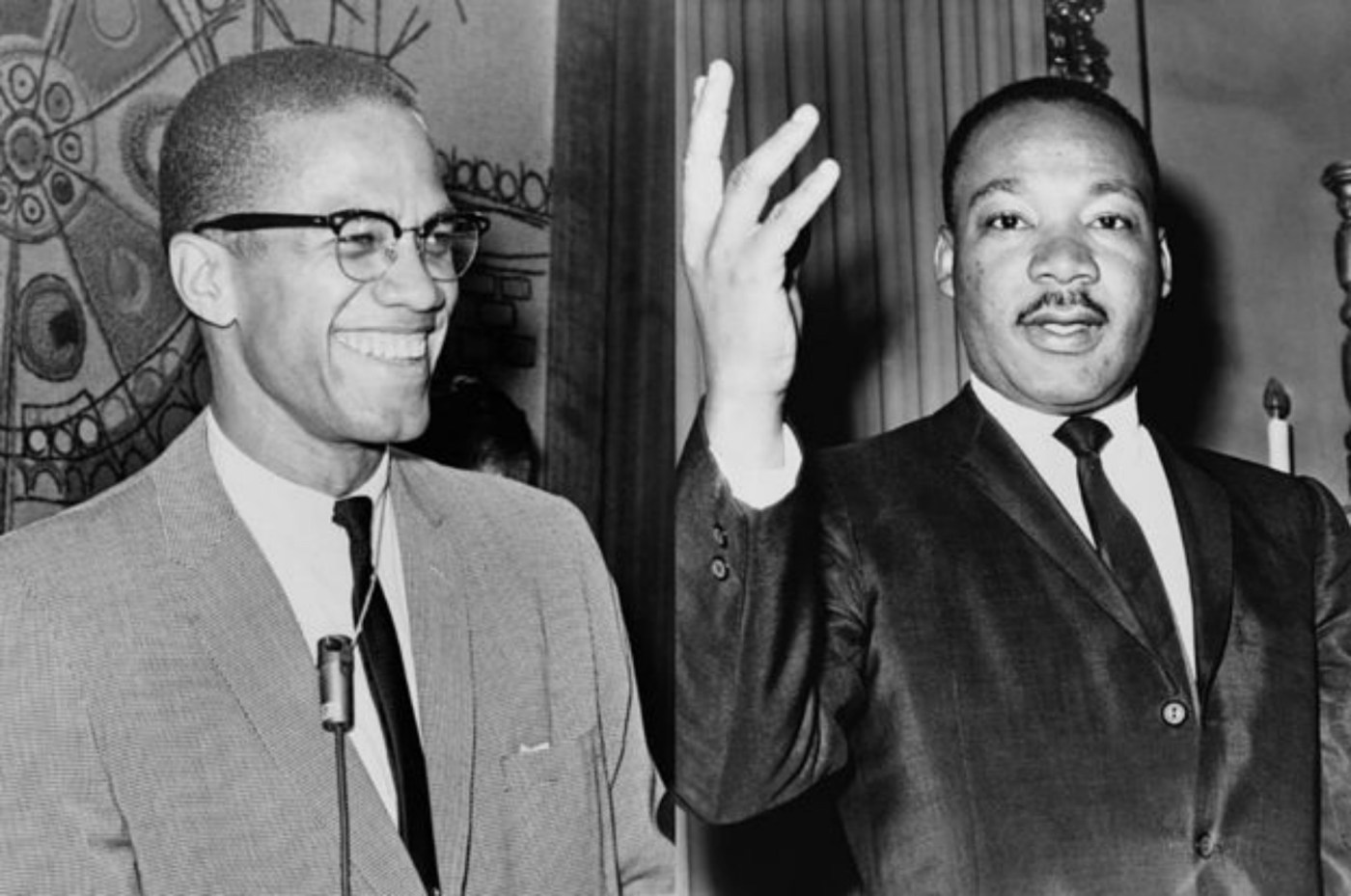
As a product of historical revisionism, the public has begun to see Dr. King and Malcolm X as polar opposites. Dr. King is seen as a capitulate and begging white people for acceptance. Malcolm X is seen as someone staunchly focused on self-determination and separation. In reality, their philosophies are closely linked. One example of that was their views on the death of John F Kennedy.

Dr. King said in the book Why We Can’t Wait the following on Kennedy’s death:

The unforgivable default of our society has been its failure to apprehend the assassins (of murdered Civil Rights leaders). It is a harsh judgment, but undeniably true, that the cause of the indifference was the identity of the victims. Nearly all were Negroes. And so the plague spread until it claimed the most eminent American, a warmly loved and respected president.

These words show that King understood Kennedy as a victim of racialized violence, that Kennedy had a hand in helping spread. Some of the Civil Rights leaders King’s mentions as being killed were killed during Kennedy’s presidency. So King is saying that America’s history of racialized violence killed Kennedy.

The infamous “Chickens Coming Home to Roost” quote was given after Malcom X complete a speech in December of 1963. A reporter asked how he felt about Kennedy’s death. In response he said the following:

Being an old farm boy myself, chickens coming home to roost never made me sad; they only made me glad.

The Nation of Islam silenced him for 90 days for this remark. Once the period of silence was over Malcolm X explained to reporters what he meant. He told the reporter he saw the assassination as the result of racialized violence that had been prominent in America since its founding. The same thing Dr. King said.

So King and Malcolm X differed in oratory style, not philosophy. Their philosophy is strikingly similar once one reads both men.

While on the subject of the “chickens come home to roost” quote. It was given after a speech called God’s Judgement of White America. The lecture explains his stance on separation.

Many internet commentators have misrepresented what Malcolm X meant by separation. The commentators say Malcolm X wanted black people to separate without getting their share of wealth from the America they helped to build. The reader can find a link to the full speech below.

Malcolm X wanted blacks to confront the power structure to obtain their share of the wealth America had accumulated on our labor. The wealth could be used to go back to Africa or build an independent nation in America.

To not petition America for our fair share wealth is not militant or radical. It is a capitulation. So again King and X both believed in reparations. The difference is the method of compensation. X wanted to build a separate nation. King wanted to make a welfare state in America that included other races.

Chickens Come Home Speech

Claudette Colvin and Respectability Politics

One of the unhealthy manifestations of social justice in the Blue Meme is respectability politics. Here we are defining respectability politics as advocating for black people that fit a mainstream view of acceptability. Mainstream defined as wealthy, chaste, orderly, and conformist. The story of Claudette Colvin shows of these mainstream standards that are set upon us by outsiders prevents advocating for all black people.

Claudette Colvin was a high schooler that had stopped straightening her hair one year before the not giving up her seat on a Montgomery bus. She lived in Montgomery Alabama when the Civil Rights Movement was heating up. Local black leaders had been looking for a way to challenge the city bus segregation law for years. The leaders had built resources and expertise that would be instrumental in 1955.

In March of 1955, Claudette boards a bus in front of the church Dr. King pastored. After a few stops more white passengers board, but there are no seats available for these passengers. The bus driver ordered Claudette to move to allow the whites to sit. Claudette said she felt the spirit of the ancestors pushing her down in her seat and she refused to move.

The bus driver called the police. When they entered they said “We have had trouble with that “thing” before.” They move closer and order her to leave. She refuses again. The grab her to drag her off the bus. In the scuffle, she scratched the officer. In an interview year later Claudette said she does not remember doing so and the scratch was not intentional. Whether the scratch was deliberate or not she was charged with, disorderly conduct, violating segregation law, and assault on an officer.

On the way to lock-up the police joke about her bra size and call her a “nigger-bitch.” They do not take her to juvenile hall which would be warranted if she was 17. They took her to an adult jail. She spends three hours there before her mother and pastor bail her out. Her father sat up all night with a loaded shotgun waiting for KKK retaliation.

The NAACP began working on her case immediately. She was introduced to Rosa Parks who was running a youth bible study. Claudette joined the Bible study and started to help in the civil rights movement. In court, they were able to overturn the two counts of disorderly conduct and violating segregation law, but assault on an officer stuck.

Many in the black community shunned Claudette as a troublemaker. The NAACP never publicly advocated for Claudette, so many black citizens were not fully aware of the importance of what she did. She says she entered a mild depression. The condition was exacerbated by her pregnancy later that year. Once the NAACP found out she was pregnant, she definitely could be the face of the boycott campaign. She was left pregnant and alone.

In fall of that year, Rosa Parks follows the footsteps of Claudette and refuses to give her seat up. Rosa a light-skinned, relatively well-educated, adult was a much better face of the movement. The Montgomery Bus Boycott was ultimately a success, but Claudette’s early sacrifice was forgotten.

Years later in an NPR interview, Claudette was asked why she could not be the face of the Montgomery Bus Boycott. She says being pregnant would have been a distraction to the movement. However, another reason that Rosa was a better pick as a light-skinned woman with straight hair. Her look was more palatable to blacks and whites with a European standard of beauty. Having a dark-skinned woman with natural hair would not play well in the media.

Claudette’s contributions did not stop. The NAACP asked her to be part of a Supreme Court case against the Montgomery Bus System to end legal segregation in transportation, Browder v. Gayle. She again testified at the local, state, and national level putting herself and her new baby at risk. Once the NAACP won the case, they did not invite her or any other of the four plaintiffs to the celebration.

Claudette decided that her life may be better if she moved to the north. She began a career and never spoke about her part in the Civil Rights movement until 2004. A book written by Phil Hoose on her life was published in 2009 and won the national book award.

Respectability is an area social justice activist in the blue meme and those that understand a blue meme audience struggle. Yes, it is essential that our collective best foot is put forward when trying to win allies from outside the community. However, we must remember that those within the community need aide even if they are in difficult circumstances. 1955 would not have been an optimal time to tackle segregation and teen pregnancy. Yet, we have to find a way to prevent similar stories in the future.

Buy Colvin’s Biography Here

Sources

Teen Vogue Article

BBC Article

Black Past Article

Biography

Radio Diaries

NPR

Russia Today

Was Dr. King a Republican?

“When a Hollywood performer, lacking distinction even as an actor [Ronald Reagan], can become a leading war-hawk candidate for the presidency, only the irrationalities induced by a war psychosis can explain such a melancholy turn of events.”
Dr. King on Ronald Reagan 1967

The article is a response to many other articles and Facebook comments I have seen painting Dr. King as a conservative. The comments normally center around a few points.

  • King was registered as a Republican at the time of death
  • King never endorsed Kennedy or Johnson
  • King advocated for equality, so he would not be for Affirmative Action

King was not a conservative, and his writings prove such. All these points can be explained by a cursory reading of his work and common sense. I will take these points on individually in this blog post.

Why did King register as a Republican?

The obvious reason is King spent most of his formative years in the South and most Southern Democrats were Dixiecrats. It would make no sense for any southern black person to be part of the Democratic party. In the 1950s when Dr. King would have first been allowed to vote Republicans were amicable to Civil Rights.

The only Republican president Dr. King interacted with was Eisenhower. He said in the book Why We Can’t Wait that Eisenhower was sympathetic to his cause. However, his conservatism prevented him from making the radical change needed to move forward on Civil Rights. If the fundamental power structure does not change only small, local, incremental change can happen. Ultimately, conservatism was not conducive to Civil Rights.

Why didn’t Dr. King endorse Kennedy or Johnson?

In the book Why We Can’t Wait , Dr. King explains his relationship to Kennedy. He says he was grateful that Kennedy negotiated for his release from jail in 1960, but Kennedy was a young politician. King saw the Civil Rights Movement as new and fragile. Endorsing Kennedy could be dangerous if Kennedy turns on the movement. That is why he never endorsed Kennedy in 1960. In the same book, he says he would have supported Kennedy if he had lived until the next election.

Johnson began his political career as a staunch Dixiecrat. Kennedy picked him as a vice president to secure the southern vote. When Kennedy died most of black America was terrified because they did not trust Johnson to care about their interest.

Fortunately, Johnson had a change of heart after working closely with King and Kennedy. Again in Why We Cant Wait King says Johnson restored his hope in the white southerner. King said Johnson was genuinely connected to Civil Rights and was on the right track.

Johnson and King parted ways on the issue of Vietnam. King’s belief in non-violence extends to other countries. King was extremely vocal on the issue of Vietnam even though most of America saw his view as unpatriotic. So King did not endorse Johnson because King was to his left, not right.

Would King have supported Affirmative Action?

King talked at length in his writings about economic redress to black people. He reasoning was redressing the systematic oppression that has destroyed black people is no different from other forms of redress and redistribution. For example, federally subsidized mortgages that were solely given to whites was a way to redistribute wealth to poor people to make them middle class. The GI Bill was implemented because the state understood they had put their veterans in harm’s way and took away important earning years. Giving veterans health care, college tuition, and other advantages were needed to put them on par with others who did not suffer the hardship of war.

As part of his demands from the Birmingham campaign, the SCLC demand the department stores have a certain percentage of black salesmen. The non-discrimination hiring program extended to Birmingham industry. So King advocated and implemented an Affirmative Action program in his lifetime.

Would Dr. King have been a Democrat?

Dr. King deplored party politics. This is an excerpt from Why We Can’t Wait

Negroes have traditionally positioned themselves too far from the inner arena of political decision. Few other minority groups have maintained a political aloofness and nonpartisan posture as rigidly and as long as Negroes…For some time, this reticence protected the Negro from corruption and manipulation by political bosses. The cynical district leader directing his ignorant flock to vote blindly at his dictation is a relatively rare phenomenon in Negro life. The very few Negro political bosses have no gullible following.

In a press conference in the late 1960s King affirmed that he had no interest in politics. He saw his role as an outside agitator and politics would muddy the waters of his mission. The official stance of the SCLC was never to endorse a candidate.

Civil Rights was Dr. King’s political party. He would side with whichever party would advance the cause of Civil Rights. To have a hard stance concerning political party would be counterproductive. Any party can support or abandon the cause. Black people have to be independent.

Why Does This Matter?

It is essential that we as black people study our leaders in their own words. Many people within and outside our community have attempted to appropriate our leaders for their gain. The historical revisionism of Dr. King as a conservative or capitulater has caused us to discount his teachings. Dr. King had one of the most comprehensive understandings of social justice. Without his knowledge, we will be left to reinvent the wheel continually.

Sources
“Inside Dr. Kings Final Radical Year” by W. Pepper http://www.salon.com HERE

King Press Conference Late 1960’s

Houston Group Says Martin Luther King Was A Republican by M. Ashford-Grooms wwww.politifact.com HERE

No Martin Luther King Was Not a Republican by J. Legum http://www.thinkprogress.org HERE

King, Martin Luther, Jr., 1929-1968. Why We Can’t Wait. New York :New American Library, 1967. Print.

King, Martin Luther, Jr., 1929-1968. All Labor Has Dignity. New York :New American Library, 2012. Print.
MLK Was A Republican and Other Myths by J.Blake http://www.cnn.com HERE

The Crucible Series

Part 1: Overall Summary

Part 2: Value Memes and Transitions

Part 3: Influences for the Crucible

The Present Problem with Indian Currency

World War I devalued the currency of many nations. Each country is now looking for ways to strengthen their currency. In this paper, Ambedkar explains how exchange rates are determined and gives prescriptions for India’s currency.

Most economists were vexed on whether a currency should be stabilized or pegged favorably to foreign currency. Many factors determine an exchange rate. The first and most important is the purchasing strength of currency in its home country. For example, if Indian prices drop allowing a consumer to buy more with his currency, then the currency value raises concerning other countries. That is if the other country experiences no change in price.

Exchange rates cause trade imbalances, not the other way around. When a country tries to peg their currency to foreign currency to improve trade is headed for disaster. If one ignores the actual purchasing power of the currency business at home will suffer.

For many years, the gold standard or pegging the currency to a fixed amount of gold was successful. Unfortunately, after the war, only the United States could keep their money pegged to an amount of gold. The gold standard reduces the ability of a country to change their money supply in times on need.

Economist split society into three classes. Investor class which lends money to the business class that hires the employer class. When a currency falls the business class benefits because the money they borrowed and the wage they agreed to pay their employees is discounted. When the currency increases it hurts the business class because the reverse will be true. So Ambedkar recommends India have a nimble currency that can move to accommodate changing conditions. He then presents a gold – rupee exchange rate that could work.

The full document can be read HERE

Ancient Indian Commerce

This treatise is a short history of ancient Indian economics and trade based on the Buddha Jatakas, the stories of the birth of the Buddha. It ranges from before the time of Alexanders conquest to the Byzantine Empire.

The ancient Indian economy was mainly agricultural. Being that the economy was agricultural, the oxen and cow became extremely important. The fact bovine was instrumental to the economy led to their eventual reverence.

India skilled labor was advanced also. There were many guilds to train people to make some of the most valued goods in the world. There was a limited amount of banking and cooperative investment. Because India had a relatively advanced economy, there were able to develop trade routes with the Middle East, East Africa, and many islands north of Australia.

Through trade, Indian culture was able to promulgate all over the ancient world. Many teachers in Rome were from the East. Indian architecture inspired many buildings in the Roman Empire. The most pronounced influence of Indian culture are the Tamil origins of the words such as rice, ginger, and cinnamon. It proves these items originated in India.

The full document can be read HERE

Commercial Relations of India in the Middle Ages

This paper gives a short history of the rise of the Islamic Caliphate and its effects on trade. Before the Caliphate, Arabia was in decline because Rome established direct routes to India. The people of Arabia were tribal and pagan. Many began to leave Arabia an integrate into neighboring Byzantine, Persia, and Eqypt.

Islam emerged as a stabilizing force that united warring Arabian tribes. Once the tribes, they began to expand their influence conquering the land from Morrocco to India. This process took generations, but it reconnected the Eurasian landmass.

Europe responded by solidifying power in the church around Rome. This gave Europe enough organization to resist the incursion. However the following factors impeded trade and culture in Europe:

  1. Constant war
  2. Lack of money
  3. No banking system

Remnants of the Byzantine Empire in Italy were able to keep commerce going. The Italian in Genoa and Venice were able to keep commerce going in Western Europe. Unfortunately, the Ottoman Empire grew in strength choking trade between India and Europe. The need to reestablish trade motivated Columbus to seek a Western route.

The full document can be read HERE

Website Powered by WordPress.com.

Up ↑