Search

Black Leadership Analysis

This is an unofficial Spiral Dynamics blog. It is not endorsed by D. Beck PhD.

Category

Uncategorized

What Happened to Black Bookstores?

Often you will hear black people say; blacks don’t support black business because we are brainwashed. We think the white man’s water is wetter and ice is colder. In actuality, black business suffers from some unique external problems and the same market forces that cause other companies to fall. This post will look at the history of black-owned bookstores and why we see so few black-owned bookstores now.

The first surge in black bookstores happened from 1965 to 1979 with the number of black bookstores increasing from twelve to around one hundred. The black book boom did not occur in a vacuum. The innovation of soft cover books in 1930 made books cheap enough for the masses. The number of printed books doubled from 1952 to 1962 and sales went up 83% from 1963 to 1971. So more books were available at a lower price to a market of black people who saw their income rise 140% from 1947 to 1960. Black bookstores were the outer manifestation of a book craze that took over the country.

One of the first black-owned bookstores was Lewis Michaux’s National Memorial African Bookstore started in 1939. The bookstore was not only a business but an epicenter of black politics in Harlem. Many other book entrepreneurs will duplicate this activist business model. The National Memorial Bookstore would host Nation of Islam rallies and book signings by Nikki Giovanni.

Michaux’s main competitor in Harlem was Una Mulzac’s Liberation Bookstore. Mulzac got into the book business while working with Leninist in British Guiana. When a new regime took over in that country, her store was closed, and she was deported back to America, the place of her birth. Her bookstore began in 1967.

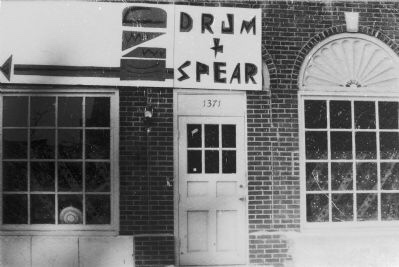
Washington, DC had its own activist bookseller Charles Cobb Jr. In the wake of the Dr. King riots in 1968, Cobb opened up Drum and Spear with a grant from the Episcopal Church. Over the years, Mr. Cobb developed a mail-order catalog, publisher, and wholesale operation. Drum and Spear became the largest black bookseller by 1971.

One of the key drivers of the first black book boom was the Civil Rights Movement. As black people began to assert themselves, racist forces also worked to thwart them. FBI documents released through the freedom of information act revealed there was a concerted effort from 1968 to 1973 to monitor the activities of these bookstores. The FBI believed the owners were connected to communist and black nationalist groups committed to overthrowing the American government.

There was no store hit harder than Edward Vaughn’s Vaughn Books in Detroit. Mr. Vaughn was traveling to New Jersey when a race riot broke out in Detroit in 1967. He rushed back to his city to ensure his store was not damaged. On the way home, he is detained in two different states for questioning. Upon his return to Vaughn Books, he sees the words ” Long Live the African Revolution” graffitied on the door.

Mr. Vaughn sees the first order of business as trying to improve race relations in Detroit. He sends a telegram asking to meet with city leaders to discuss solutions. The mayor’s office gives no response. In later weeks the Detroit PD firebombed the store, but Vaughn repaired the damage. The police made a second attempt to destroy the store. They broke in clogged a pipe and turned on the faucet flooding the store. Vaughn again rebuilt and repaired the damage.

Drum and Spear was only blocks away from FBI headquarters, so they were visited frequently. Mr. Cobb was heavily involved with the Student Non-violent Coordinating Committee in Mississippi and often recognized agents. One FBI agent admitted after months of surveillance, he realized that Drum and Spear was no different than any other bookstore. The FBI officials don’t believe him and demanded the agent find proof that the store was involved in communism. The agent bought a copy of Mao’s Red Book from a white bookstore and claimed he got the book from Mr. Cobb to satisfy his superiors.

The core patrons of Drum and Spear solidified around his business after they realized the FBI was attempting to destroy him. A similar phenomenon happened with Vaughn books. However, Cointelpro put too much pressure on the black power movement to keep it viable. The movement as a whole started to falter and wain. Black Nationalist started to leave the movement because involvement necessitated people taking a high risk with little material reward. Many black activists found steady work; others worked for change in multi-cultural movements.

In addition to the black power movement losing steam in the 1970s, Black Americans began to experience an economic downturn. Three years after being proclaimed the largest black bookseller Drum and Spear closed in 1974. Black America was more interested in individual success and not attempting to work for systematic change.

In response to the general change in Black America, a new genre of black books emerged, the black romance novel. The first installment was Entwined Destinies in 1980, followed by Adam and Eva. These books pushed no political ideology. Instead, they concentrated on universal themes of love and heartbreak. The black romance genre was easy to mainstream because anyone could relate to the stories.

Terry McMillan was the largest cross-over black romance novelist. Her first book was Disappearing Acts in 1984. She marketed by catering to black bookstores. The strategy continued to her second book in 1987 Mama. However, once a mainstream audience was able to sample her work, she began to sell at white bookstores.

In the late 1980s, a new development happened in the booksellers market, the megastore. Stores such as Barnes & Nobles or Borders were able to eat up market share by having black interest sections. Also, by having a network of stores all over the country, a customer could order books that were not in stock at their local store. So the megastores offered a better product at a lower price. So small bookstores, no matter what the interest, were on the decline. In 1975, small booksellers had 60% of the market by 1997 the share had fallen to 17%.

In 1992, three black women were on the New York Times Best-sellers list. Possessing Secret by Joy Walker, Jazz by Toni Morrison, and Waiting to Exhale by Terry McMillian. This was the first time three black authors were on the best seller list at the same time. McMillian became a household name and conducted appearances all over the nation.

In 1997 durning the How Stella Got Her Groove Back tour, McMillan was set to conduct a book signing in Missouri. Antoine Coffer owner of Afrocentric Cafe protested the signing on the basis that she should do the signing at a black-owned business. Coffer called for a national boycott of McMillian unless she promised to do more book signings in black-owned bookstore. The book signing was scheduled at Library Ltd which had twenty-five times as many titles. The publisher decided to cancel the event in Missouri to avoid bad press. In reality, most of the black bookstores stayed afloat selling romance novels like Waiting to Exhale. This boycott would not only hurt one of the authors that kept Coffer’s business viable, but it would also only hurt black bookstores as a whole.

In the end, the novelty of black romance novels wained. They became just like any other romance novel in the genre. Most of the black bookstores could not compete with large sellers, and Amazon was a death nail by 2014 only 54 black-owned bookstores existed in the USA.

According to a Publisher’s Weekly article black bookstores are back on the rise. In 1999, there were 325. By 2014 there were only 54 in the USA. Fortunately, the number is back up to 108 in 2018. One of the stores Mahogany Books has a physical location in Washington DC and an online branch. Marc LaMont Hill’s bookstore is also inter-sectional offering queer studies, disability studies, and gender studies. So black bookstores are changing with the times.

Ultimately, there was a government plot to destroy black bookstores, but the larger factors were changing tastes in the Black community and market forces that hinder small niche businesses in every community. In the end, black bookstores adapted like every other industry. Once the company changes customers of all races frequent the store and make the business grow.

It is essential that we end the narrative that black business fails because black people just won’t support black people due to inherent low-self esteem. There is nothing fundamentally wrong with black people and thinking that there is something inherently wrong will prevent business owners from evaluating better business strategies. Customers are not obligated to frequent any business. In a free market, the owners should find ways to entice clients.

A link to Mahogany Books can be found HERE

Sources

From Head Shops to Whole Foods Joshua Clark Davis 2017

The Kojo Nnamdi Show 5-15-2018 “Drum and Spear: How a local bookstore educated Washington about Black Power in the 60s and 70s”.

“Author Bows Out of Book Signing” by Lorraine Kee St. Louis Post Dispatch May 20, 1997

“A New Generation of African-American owned Bookstores” by A. Green on https://www.publishersweekly.com April 06, 2018
Dr King in Four Quadrants

Michaux’s Real Estate and Government Aide

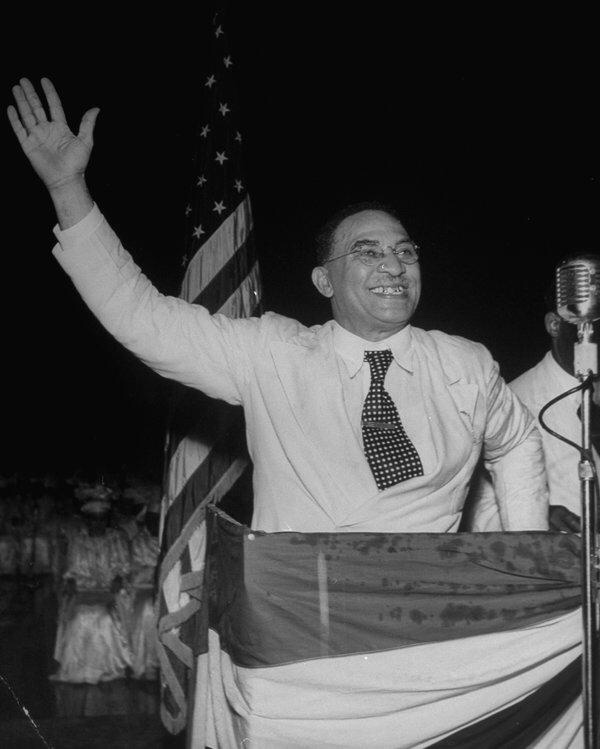
By 1933, Michaux had several churches in many states and a radio show. He was one of the most prominent black men in the USA. He cast himself as a modern day prophet. One night in 1933, Michaux had a prophetic dream. He saw a white eagle representing the church. There was a blue eagle, the New Deal reforms. Both teamed up to fight the Red Eagle of communism. Michaux talked about this dream on his radio broadcast.

One of the listeners was Hugh Johnson of the National Recovery Administration. He had been looking for black voter outreach. Michaux could be the perfect person to accomplish this task. At the time most blacks voted Republican. Johnson sent Michaux an invitation to join the Good Neighbor League.

Once America elected Roosevelt in 1932, Michaux became a Washington insider. He accompanied Major Richard Wright on a goodwill mission to Haiti with other prominent blacks. Wright owned a business that exported Haitian coffee. Most of the delegation was looking for business opportunities in Haiti. Michaux was there attempting to take his church international. Ultimately he felt Haiti was not a place to expand his congregation, but he and Major Wright struck a deal to sell coffee in Michaux’s “Happy Time Cafe.” Major Wright was instrumental in ending the US occupation of Haiti in 1934. The goodwill trip happened in 1938.

In 1934, The Gospel Spreading Church of God bought a farm that would become the National Memorial to the Progress of the Colored Race. Williamsburg was the place the first African slaves landed in 1619. Michaux had a plan to build a farmers co-op, memorial, and a church on this land. He began fundraising in 1937.

In the 1930’s Williamsburg was building their tourist attraction, a recreation of the colonial settlement. Town officials felt the Monument to Progress would be an eye-sore. So the town called into question Michaux’s methods of fundraising. There was also a move to claim eminent domain on Michaux property and force him to move to another area. The questions about Michaux’s ethics in fundraising caused the decline of his radio show and the cancellation of the national broadcast in 1939.

So Michaux had prominence and pull before working with the FBI in 1939. He did not become a propaganda agent out of desperation. It was a calculated move he made because he felt it was the right thing to do. The Bureau Clergyman, the organization Michaux became a part of pushed a conservative theology to support the status quo. Often Bureau Clergyman would disparage Civil Rights leaders. Michaux will be one of the first men to put forth the rumors that Dr. King was having affairs.

Michaux also needed to have as much influence as possible. He was having legal troubles building his monument to black progress in Williamsburg, VA. The town did not want a black statue creating a blemish on their colonial Williamsburg project. Michaux was also eyeing a sizeable real estate venture in DC called Mayfair Mansions. As the Mayfair Mansions project moves on, Michaux will become further and further in debt. The White House influence will be instrumental in keeping the project afloat.

It was also true that no one could turn down J. Edgar Hoover. We now know Hoover would often manipulate presidents. A storefront preacher would never stand a chance against the FBI. Many black leaders were labeled communist in the era. The red scare ruined the careers of many Leftists, black and white. If Hoover approached him, there was no way he could say no.

A black architect named Albert Cassell had an idea for middle-income housing development in Washington, DC. Cassell had pushed for investors for over a year before contacting Solomon Michaux. Michaux had insider connections with government and wealthy individual. Cassell paid Michaux $12,500 to use his influence to find investors. Michaux brought on: George Allen, DC City Councilman, Harry Butcher, wartime aide to Eisenhower then working for CBS, and Marvin McIntyre aide to FDR. Cassell and Michaux rounded out the original shareholders, all holding 20%. The property that was the Old Benning Road Race Track was purchased in 1940 was used as the construction site.

The district outlawed gambling in 1908. A bill was currently in the City Council to bring the practice back. Luckily, an honorary deacon of the Church of God was on the council, George Allen. Michaux decides to write a telegram to Allen, reminding him of his religious duties. Allen was also ordered to sell his racehorse at a discount to prove his piety. No one can know if the letter influenced his vote, but one can be sure the one-fifth share he had in Michaux’s Mayfair Mansions project tipped the scale. No one knew then Allen was a Mayfair shareholder. Allen votes NO, and the District of Columbia upheld gambling prohibition.

The Federal Housing Authority approved a $ 2.5 million loan, and construction began in 1942. In 1943, Michaux realized he needs more money to complete the project. To secure more funds, he needs to influence the Reconstruction Finance Corporation. There is only one person Michaux knows with enough pull to get the supplemental loan, Mary McLeod Bethune.

The appeal to Bethune was based on the fact that this was the only middle-class federal housing project subsidized by the government for Negros. If the plan failed, blacks would not get another chance for a generation. Bethune agreed and talk to Eleanor Roosevelt. In 1944, the Reconstruction Finance Corporation approved another $682,000. It didn’t hurt the George Allen was in charge of the Reconstruction Finance Corporation at the time.

Mayfair Mansions was not the only project Michaux was constructing in the early 1940s. The commemoration of the passage of the Thirteenth Amendment with the holiday Freedom Day was a passion him and his friend Major Wright. They worked together to influence FDR into ratifying the holiday. Unfortunately, FDR would never make the holiday law. Wright and Michaux began the first unofficial celebrations in 1942.

Michaux “predicted” Truman would win in 1948. God had given Truman stewardship of America for seven years, according to Michaux’s prophecy. Because of Michaux’s enthusiastic support, Truman invited him to participate in the victory parade. Michaux also presented Truman with a painting of Major Wright after he died to commemorate the great Civil Rights Leader. Truman made National Freedom Day law in 1948.

A Senate investigation of Michaux’s business dealings in Mayfair Mansions began in 1951. During the investigation, it was proven that Allen and Butcher owned stock in the project. Allen claimed to have donated his share to the Gospel Spreading Chruch before assuming the role of director of the RFC. Butcher also gave his shares to the church as a result of this investigation. The Senate Committee never finished the investigation. In addition to the Senate investigation, Michaux was delinquent on loan payments. The Treasury Department investigated why Michaux had not paid taxes from 1948 to 1951. Again the investigation abruptly ends with no penalty to Michaux. It is only logical that either Truman or Hoover intervened. Anyone else would have had their property foreclosed on and been sent to jail.

Albert Cassell falls on hard times and has to sell his shares to Michaux for a paltry $40,000 to save the Cassell family farm in Maryland. In 1954, Cassell sued Michaux and the Mayfair association for back pay as the architect of the Mayfair and the money invested in the project. The results of the case could not be found, but it is known that Cassell lived in the Mayfair until he died.

Once Truman’s seven-year stewardship ended. Eisenhower takes up the presidency. Eisenhower was a Republican. So Michaux support was held with suspicion. Michaux made Eisenhower and honorary deacon of The Church of God and wrote him many letters. Staff answered most of the letters. Michaux did receive one invitation to the White House after he led an all-night prayer vigil for the president’s health after a heart attack.

Michaux was able to obtain a new loan to buy the property just north of Mayfair Mansion. The new project was called Paradise Manor and financed with a $6 million loan from Redevelopment Land Agency. By 1960, the only influence Michaux had in government was J. Edgar Hoover. The track record of Mayfair would not have justified an even larger loan, so again it is only plausible to think Hoover pulled some strings. Michaux would not live to see this project completed because he died in 1968, Paradise Manor would not be complete for months after his death.

Upon Solomon Michaux death in October of 1968 many factions attempted to gain control of his fortune. There were three wills. The first will filed in 1958 stated that his siblings would get his fortune, and after their death, it would go to the church. The second and third will gave all the wealth to the siblings in perpetuity. The estate consisted of $25,000 in life insurance, $200,000 in properties mainly in Virginia, and $8 million in shares of the $15 million Mayfair and Paradise complex.

The first contestant was Lewis Michaux, Solomon’s younger brother. His position was that no one would give their property to the church when they had a family. He vowed to take what was rightfully the property of the Michaux klan. Lewis was not named in the first will, but his ex-wife, Ruth, was named. Solomon more than likely left him out because he left the church to go to New York. Lewis files his petition to be executor in April of 1969.

There were also many church factions. One of the church contestants was Marion Butler, a church official in Virginia. He contended that the Virginia churches get the land in their state and operate autonomously.

The second church contestants were Raymond Willis and Robert Hampton both officials in the Washington DC branch. They contended that Solomon Michaux used church funds to keep all his real estate projects afloat, so the real estate should go to the church. They had canceled checks from the church bank account to prove their case. Also, Solomon Michaux said in many church sermons that members should will their wealth to the church upon death. The Willis-Hampton faction wanted the nine churches to split and become independent.

The third was James Taylor, who believed he should be overseer of the church and that the church should stay united. To be overseer he had to be licensed to marry people in every state the Gospel Spreading Church operated. He lacked licensure in Washington, DC at the beginning of the church dispute. Taylor only wanted to keep the church united; he didn’t care what happened to the outside real estate holdings.

Taylor’s first attempt at DC marriage licensure failed. He claimed to be an assistant pastor at the Washington, DC branch of Michaux’s church. Pastor Willis sponsored him at first, but once he found out Taylor was trying to take the church over, he pulled his sponsorship. On Taylor’s second attempt he claimed he founded a new church in the same spot with the same people as the current Washington, DC branch.

The church faction dispute ended on May 17, 1969, when James Taylor won in a court case and received a license to perform marriage in Washington DC. The fact that Taylor alleged to start a new church was never brought up in the hearing. Therefore the judge awarded James Taylor a marriage license. Taylor becomes the overseer of the church and decides not to challenge Lewis Michaux. Taylor demoted Willis, who was the pastor of the Washington, DC branch to giving sermons on Saturday night.

Lewis Michaux was named an executor in September of 1969. However, the fight was not over. A fourth will emerges that was allegedly created three months before Solomon Michaux died. Rabbi Abraham Abraham was named executor. The Rabbi did participate in baptism and secured holy water from Isreal for church events. Atty James Cally authored the fourth will. Cally claimed to be unaware that Solomon Michaux died until 1970. Upon learning, he filed a petition in Washington, DC.

During the deposition, Rabbi Abraham Abraham did not recall meeting Atty Jame Cally or the other witnesses that signed the will. Cally claimed that Solomon was in good health when he entered his office. The family testified that Solomon was too sick to clothe and drive himself. None of Solomons servants remembered driving him to a law office in July of 1968. Neither James Cally or Rabbi Abraham Abraham showed for the hearing. The judge ruled in favor of Lewis Michaux. Fortunately, Lewis gave the Gospel Spreading Church control of the Mayfair and Paradise later that year.

In the end, Michaux’s life is a mixed bag. He preached against Dr. King hurting the Civil Rights Movement. On the other hand, he did provide the only federal subsidized middle-class housing in the nation. The idea of slavery as a positive good was the basis of his theology. On the other hand, he had a soup kitchen that fed hungry black people in the depression. Instead of seeing Michaux as a sell-out, it is better to see him as someone that prioritizes helping those closest to him over the greater national Civil Rights Movement. His skewed priorities is not a justification for the damage he did, but a warning for those of us living today not to let personal ambition get in the way of the more significant fight for liberation. A nuanced look at his life could offer more guidance than writing him off as a sell-out.

Where Do We Go From Here?: Black Power

As the Civil Rights Movement (CRM) marched on, many black people felt the success was too slow and regional. The CRM had crushed Jim Crow in the south, but it had little effect on conditions in the ghettos of the north. Black people needed more than just the ability to dine and shop with whites. America needed a full plan of economic and political power redistribution.

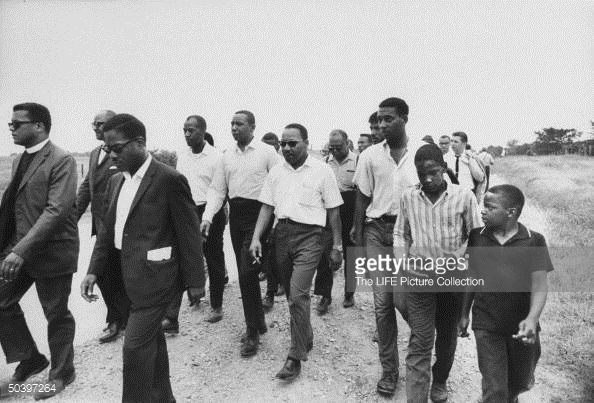
The book tells the story of the Meredith Freedom March also known as the March Against Fear 1966. James Meredith, famous for integrating the University of Mississippi, began a march to encourage blacks to register to vote. Meredith did not want any large Civil Rights organizations on the march and only asked individuals to join. Meredith was shot, but not killed on June 6, 1966 the second day of the trek.

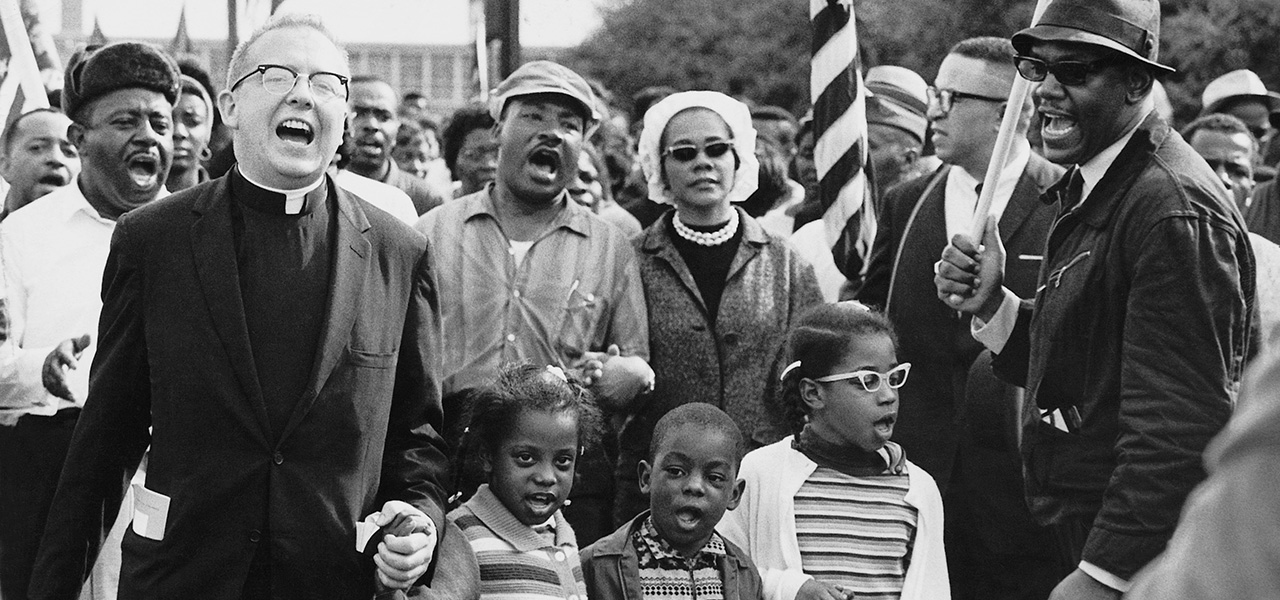
Most Civil Rights organizations knew if the march was stopped blacks in Mississippi would always be afraid to register to vote. Dr. King leader of the Southern Christian Leadership Conference (SCLC), Floyd McKissick of Conference of Racial Equality (CORE), and Stokley Carmichael of the Student Nonviolent Coordinating Committee and James Meredith held a meeting on continuing the march. They all agreed they had to continue the march as a joint effort of their various organizations. However, specifics needed to be agreed.

Both McKissick and Carmichael disagreed with King on non-violence in political struggle. All the men involved believed in personal self-defense. If a person was individually attacked for no reason, that person could fight and defend themselves. The point of difference was how should violence be used in demonstrations in self-defense. King held firmly that protesters should stay non-violent no matter what.

McKissick had frequently used the Deacons for Defense as security in protests. Carmichael had begun to train his followers in firearms if non-violent resistance proved not to work. So both parties believed that the movement might be forced to turn violent.

King was against having any armed guards on the march. If the march turned violent the mass of black America would not be ready for the repercussions. White supremacist would use any violence from blacks as an excuse to unleash a wave of violence unprecedented in the USA. Previous attempts at black armed resistance have ended in mass slaughter.

Non-violence was also needed to keep the moral high ground. King wanted to prove the violence displayed by the south was unwarranted. King believed the masses of white America were altruistic and if they realized the level of violence black America was under they would advocate for Civil Rights. Carmichael especially didn’t believe in the virtue of white America.

In the end, King agreed to allow the Deacons of Defense to guard marchers. Carmichael and McKissick had to agree they would not retaliate unless armed civilians threatened the lives of marchers. No retaliation would happen against law enforcement.

The second point of contention was should whites be allowed on this march. SNCC had recently expelled the white members of their group. The reason was whites often took leadership positions from local black organizers. The local organizers felt overwhelmed and could not compete with whites that had more education and leadership experience. So Carmichael expelled them all to open the lane for blacks to develop leadership experience.

The SCLC had always been integrated and would continue to be integrated. King reminded the others how many whites had died in the movement. It would be disgraceful to their memory to close the door now.

King understood what Carmichael’s intentions were. It was important that black run their organizations to build confidence in themselves and build leadership experience. Therefore, King hoped that whites would understand the importance of taking a backseat in leadership. Blacks needed to realize they could save themselves. If whites have the leadership roles blacks will continue to feel helpless.

King was able to get McKissick and Carmichael to agree to march with whites in the end.

The last point of contention was the slogan of the march. The SCLC faction wanted “Freedom Now.” The CORE/SNCC faction wanted “Black Power.” The slogan “Black Power” was too divisive for King to support. It could be interpreted as a call to violence, and it would also alienate white allies.

Black Power could mean different things to different people. Yet its meaning centered around three points.

  1. Disappointment in America and the pace of racial justice
  2. Coalesce resources of black people
  3. Call to psychological manhood

The unyielding boot of white power created the need for the term black power. Many black people have been frustrated by the slow pace of progress and have retaliated by creating a pungent slogan. These black people have lost faith in the fundamental and altruistic nature of American principles.

The call for separatism from the slogan “Black Power” would cause a consolidation of resources. It would cause black people to pool their talent and money to create a separate economy. King talked at length on cooperative economics which most term Ujamaa currently. The SCLC used the black-owned Tri-state bank to further economic goals in the black community.

The point of difference between King and Carmichael was the idea the Ujamaa would be enough to build economic stability in the black community. King supported many anti-poverty and wealth redistribution initiatives. The A. Philip Randolph Freedom Budget was explicitly mentioned in this book. Ultimately, black people could not build a strong economy alone. No ethnic group in America built an economy by separating.

The call to psychological manhood is essential to black liberation. No law or presidential decree will replace a deep unyielding sense of self-reliance. An intimate knowledge of black history will aid in building self-respect. Blacks would also need to start rejecting European standards of behavior and dress. King applauded the use of African aesthetic in clothing and culture. It is important for black people not to be ashamed of the part of their heritage that was different.

The disagreement came in the idea that blacks were or should be wholly African. King said that the natural state of an African-American made him partly African and partly American. Understanding himself from a dual perspective will be more advantageous than a singular. The dual perspective will also help black people feel at peace with the country they live and help build an integrated America.

In the end, the SCLC faction used the slogan “Freedom Now” and the CORE / SNCC faction used “Black Power”.

Ultimately, King supported a Gandhian, non-violent, multi-racial freedom movement. Nothing short would work. America is currently at a crossroads and there is no time for impracticality. Nihilistic separatism will only exacerbate the problem.

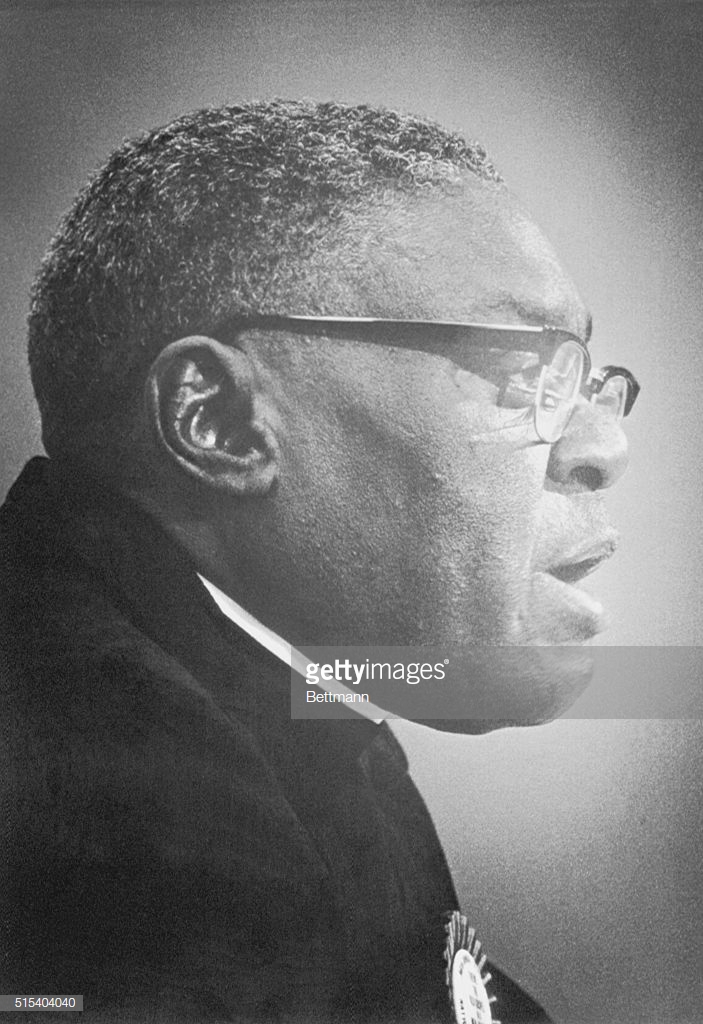
Joseph H Jackson (Pastor)

Accomplishments

  1. President of National Baptist Convention from 1953 – 1983
  2. Pastor churches in Mississippi, Nebraska,Pennsylvania,Illinois
  3. Represented Protestanism in the Second Vatacan
  4. Published six books from 1950 – 1980
  5. Member of fraternity Phi Beta Sigma

Joseph Harrison Jackson was born in Rudyard, MS in 1900. He worked as a farmhand in his youth while teaching himself to read and write. From his own efforts, he was able to attend Jackson College now Jackson State University. Later he earned a degree in Divinity and a Masters in Theology. He then began preaching all over the nation.

After pastoral appointments in Omaha and Philadelphia, he became pastor of Olivet Baptist Church on the Southside of Chicago in 1941. From this position at a very prestigious church, he was able to make his first bid for the presidency of the National Baptist Convention (NBC) in 1953.

Jackson is best known as an opponent of Dr. Martin Luther King Jr. in the Baptist Church. In the beginning, their relationship is amicable. Jackson was often a house guest of King when he visited Atlanta. During the Montgomery Bus Boycott of 1955 Jackson not only supported the movement in word, but he also gave $2000. However, by 1960 Jackson had misgivings on the Nonviolent Direct Action aspect of the Civil Rights Movement.

By the 1960’s the Nonviolent Direct Action (NVDA) focused more on willing breaking the law. In 1961, Albany, GA campaign thousands of people went to jail, and Albany failed to desegregate. The job market already discriminated against Black people. All these people were adding to their hardship by accruing criminal records. Many questioned if NVDA was worth the risk.

In addition, to the practical aspect of the risk of the NVDA, there was concern that it was not moral and patriotic to knowingly break the law. The Bible implores Christians to respect the law of the land. Also, as Americans blacks should want to promote peace and tranquility in the country we live.

Jackson prescribed that in addition to legal action blacks concentrate on self-improvement and economic collectivism. Blacks should search for and exploit opportunities given to them now. Instead of sit-ins to integrate a lunch counter, Jackson would prescribe community funding our own restaurant. Booker T Washington also endorsed bootstrap patriotism, and Jackson was part of the Washington tradition.

The old strategy of fighting Jim Crow through the courts had brought some victories. Brown v Board did determine school segregation was unconstitutional. The decision did not require anyone to go to jail. The previous pace of ending Jim Crow was not fast, but blacks were marching forward.

Tensions came to a head when Jackson attempted to get a fifth term as president of the NBC. The original NBC charter forbade a president from seeking a fifth term. A group lead by Pastor Taylor opposed Jackson. King and his father were part of the Taylor group. The team lost a lawsuit levied against the Jackson in 1960. Tension came to a head again in the 1961 NBC convention in Kansas City. Supporters of the Taylor faction stormed the stage. A tussle broke out and pastor A.G. Wright fell hit his head and died. The Jackson faction blamed Taylor for the death. As a result, 2000 pastors left the NBC and created the Progressive National Baptist Convention (PNBC). King and Taylor joined the PNBC the next year.

After the separation, King and Jackson were still in conflict and tensions come to a head again during the Chicago Campaign of 1966. Jackson had become part of the Mayor Daley political machine by this time. So not only did he ideologically disagree with Dr. King, Jackson stood to lose standing with the Democratic party if he couldn’t stop King’s movement. Jackson went to work calling King an outside agitator and forbidding churches associated with NBC from having events for King. Jackson forbade any NBC members from going to King’s mass rally at Soldier Field. In the end, King was only able to achieve a partial victory in Chicago.

Upon King’s death in 1968, Chicago moved to have the road in front of Olivet Baptist Church named after Dr. King. Jackson changed the front address to a side entrance to ensure the address of the church would not have Dr. King’s name in it. The NBC continued to advocate for cooperation with the law and only trying to achieve equality through the courts.

Time magazine interviewed Jackson in April of 1970. In the interview, Jackson blames NVDA for leading the Civil Rights Movement down a path of treason. What started with civil disobedience has led to rebellion in the black community against the authority of the United States. Jackson’s steadfast patriotism and support of Nixon earned him “Patriot of the Year” from a right-wing organization.

Olivet Baptist Church erected a life-size statue in his honor in the 1980s. By 1983 Jackson was old and very ill, so he was not able to defend his position as president. Dr. T.J. Jemison took on the role and promised a new direction for the church. NBC embarked on voter registration drives, building black banks, and ordaining women. In 2001, the church removed the statue of Jackson because it was an engraven image.

Sources

  1. “The Albany Movement Campaign for Full Integration”Global Nonviolent Action Database https://nvdatabase.swarthmore.edu/content/albany-movement-campaigns-full-integration-georgia-fall-1961-summer-1962
  2. “A New Voice for the Baptist Church” by M. Hyer Washington Post http://www.washingtonpsot.com
  3. “Church Casts Aside Famed Pastor’s Statue” by r. Grossman Chicago Tribune http://www.chicagotribune.com
  4. “The Bible and the Ballot: Rev. Joseph Jackson and Black Conservatism in the Civil Rights Movement” by S. Lipson
  5. “Missions of Patriotism Joseph H. Jackson and Dr. Martin Luther King” by S. Hitchmough European Journal of American Studies
  6. “Joseph H. Jackson (1900-1990) The Black Past Remembered and Reclaimed http://www.blackpast.org
  7. 1964 National Baptist Convention address by J.H. Jackson
  8. “The Meaning of the Cross” Time Magazine April 4, 1970
  9. The Progressive Story, New Baptist Roots by W.D. Booth

Stride Toward Freedom: Philosophy

List of Influences

King’s most significant influence was Jesus Christ. The account of Christ’s love in the Bible provided a basis for operating in the world using sacrificial love. However, King was unsure at first how to translate these concepts realistically in the modern world. To find a method of practical application King began a journey into Christian and secular philosophy.

Early in King’s journey, he discovered the work of Friedrich Nietzsche. Neitzche’s belief in “will to power” was birth from his contempt for Judeo-Christian morals. King was also displeased with Neitzche’s belief that seeing piety and humility as a virtue was glorifying weakness. Ultimately, King saw little value in Neitzche or building his Übermensch.

Karl Marx’s philosophy challenged King by viewing history in materialistic terms not spiritual. Marx also believed in ethical relativism. This purely secular worldview flew in the face of Christianity that King loved.

King commended Marx’s ability to question wealth disparity and create a plan to address the problem. However, King felt Marx’s view of Capitalism was outdated for modern times. Because Marx undervalues the importance of the individual, he turns him into a cog in the wheel of the state. Despite the idea the state would dissolve once a classless society is established the intermediate cost is too high. Immoral means will not justify moral ends. King’s view on communism can be best summed up by the following quote:

Historically capitalism failed to see the truth in collective enterprise and Marxism failed to see the truth in individual enterprise. The Kingdom of G-d [is] a synthesis which reconciles the truth of both

King was often dismayed by mainstream Christianity’s optimism in the inevitable progress of history. Reinhold Neihbur’s philosophy gave King an even more solidified defense against unrealistic optimism. Neihbur is best remembered for supporting interventionist war to stop the spread of Communism, which he saw as totalitarianism. He also believed there was no moral difference between violent and non-violent resistance. The only difference is the state would meet non-violent resistors with less violence. In addition, Neihbur believed, non-violent resistance would only work on an oppressor with a moral center and could never work to stop a totalitarian army.

The problem with Neihbur’s philosophy was it often confused non-violent resistance with acquiescence. This confusion caused Neihbur to focus on militant solutions. King never lost faith in the good of man even though Neihbur highlights the evil. Ultimately, King saw Neihbur as over-focused on sin and not redemptive grace.

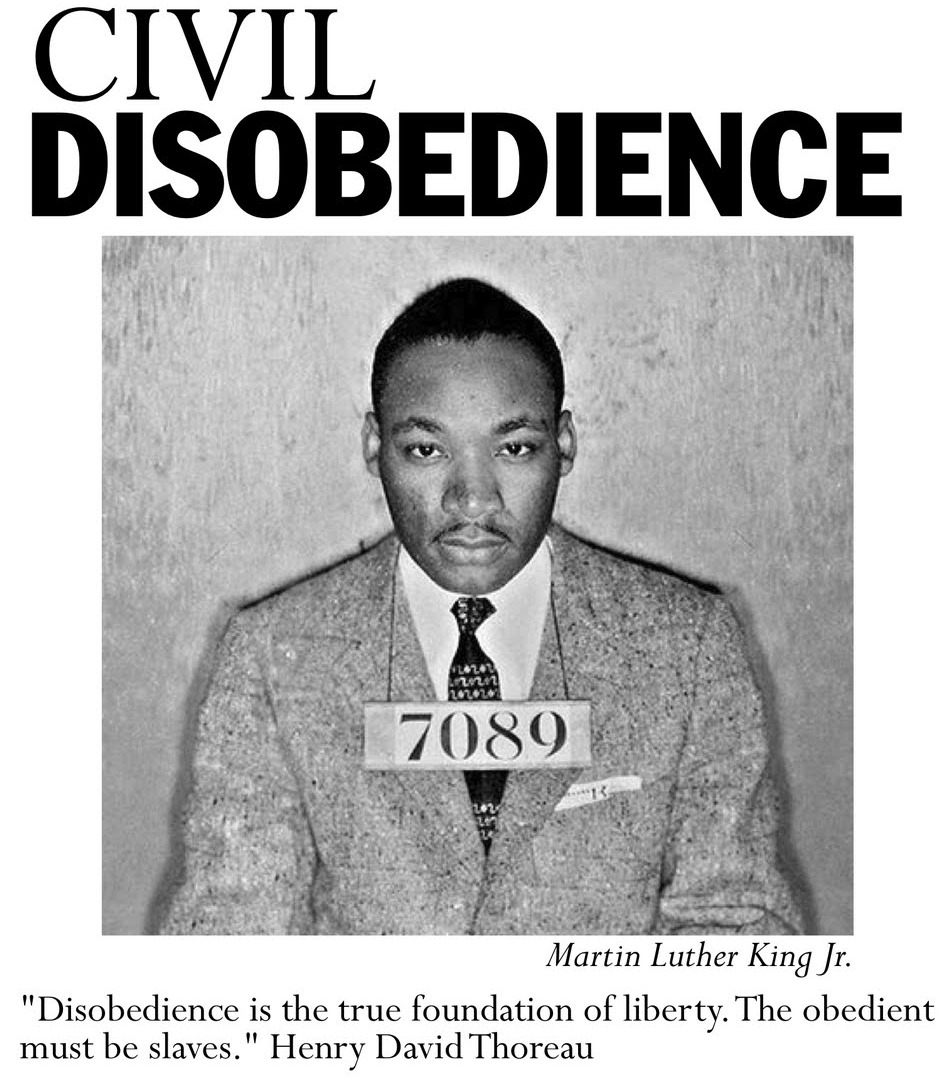
The first example of realistic non-violent resistance King read was Henry David Thereau’s Civil Disobedence. In the book, Thoreau makes the case that the people should go on a tax strike to stop the immoral Mexican American War. King saw the tax strike as a non-violent method to promote social change.

However, Gandhi was the example of non-violence par-excellence. Dr. Mordecai Johnson of Howard University first introduced King to Gandhi’s work. Satyagraha was Gandhi’s term for non-violent direct action, and the name loosely translates into ”Love Force.” Through protest such as The Salt March, Gandhi showed Christ’s principle of turning the other cheek could be used to effect social change on a national scale. The following quote summarized King’s feelings on Gandhi:

Gandhi was probably the first person in history to lift the love ethic of Jesus above mere interaction between individuals to a powerful and effective social force on a large scale.

What is Non-Violent Direct Action (NVDA)?

The goal of non-violent direct action (NVDA) is to create tension in society that facilitates justice. If a large enough segment of the population, disobeys unjust laws then they are no longer enforceable. Clogging the jails with protesters and the jails with activists also grab the attention of the greater society once the masses see the virtue of the protesters that will come around in support.

For Dr. King, NVDA was a way of life, not a tactic. The idea of it being a way of life means that it is a chief component of one’s spiritual journey. People should respond non-violently in interpersonal relationships as well as activism. It is not a tactic for those that do not have weapons or those afraid to fight. NVDA took just as much if not more bravery than armed resistance. Even if an avenue arose that made violence expedient to further the cause, King would not have accepted that option.

Another misconception about NVDA was the idea the goal was to move blacks ahead of whites. In reality, the goal was to build a new non-racial community. NVDA would win the friendship and understanding of white people. The participants would also develop and recognize their self-resilience and worth. The personal development achieved in NVDA would build stronger bonds in the black community. Waiters, doctors, garbage-men, and lawyers would participate in demonstrations as equals. King’s movement would destroy racial barriers and class barriers.

Practical Application

In the 1950s, as today there were many factions of the black liberation struggle. One wing Dr. King represents with a man named Vernon Johns, a fellow preacher in Montgomery. This more conservative faction believes in self-reliance and individual effort being the key drivers toward social advancement. The other was represented by E.D. Nixon a union activist in the same city. This branch is more liberal and focuses on collective action to force the government’s hand. These methods seem opposed at first, however, upon further investigation they are complimentary. A group of self-reliant individualist are best equipped to work collectively for the betterment of their people.

Some black people enjoyed relative comfort and financial success in spite of a system of segregation. Montgomery was home to the HBCU Alabama State University, so the city had a population of educated black people. Most of these people had stable work at high pay. However, they rarely would stand in protest for fear of losing their jobs. So the most talented black people rarely wanted to fight for equality.

The city of Montgomery did not educate the masses of black people. Segregation had not only halted their economic development but their personal growth. Fear and inferiority embedded themselves in the subconscious of black people. Black people did not understand the power they wield. Acceptance of the current system as it is had solidified in their minds.

The apathy of the educated black people in Montgomery spilled over to their preachers. Most preachers saw their role as entirely spiritual. They did not delve into politics partially because they saw it as not the church’s role and realized they would lose congregants.

However, behind the apathy and fear is a rage just boiling beneath the surface. This rage often spills out as riots. Most of the riots end the slaughter of countless black people involved in the riot and bystanders. Even if an individual lashes out in anger he is usually lynched. If this anger is not utilized constructively, the consequences could be dire.

Non-violent direct action became a force that could bring together black people of various philosophies because it centered around a behavior. Even though protesters would be attacked by dogs or shot with water hoses, it would be unlikely a non-violent protest would lead to the massacre of all of the black people in the city. The demonstration would serve as a way to channel anger into a constructive effort while building self-esteem. Finally, many whites would see the protest as noble and support change. Non-violent direct action is the only method that would solve all of these goals.

Robert F Williams (1925 – 1996)

Accomplishments

  • President of Monroe, NC NAACP 1955 – 1961
  • Lead an armed take-over of public swimming pool 1957
  • Secured two gubernatorial pardons for children in the 1958 Kissing Case
  • Founded Monroe NRA Chapter known as Black Armed Guard
  • Founded “Radio Free Dixie” while exiled in Cuba 1962 -1965
  • Authored Negros with Guns which inspired the Black Panther Party
  • Published the newspaper The Crusader
  • Traveled to Hanoi, Vietnam to aid the North Vietnamese

Robert F Williams was born on February 26, 1925, in Monroe, NC. He was the fourth of five children. His family had always been active in black liberation. Williams’ grandfather stumped for the Republican Party and edited the newspaper The People’s Voice at the turn of the century.

If his grandfather gave him a love for journalism and information, his grandmother gave him his belief in self-defense. Williams received his first gun from her. The firearm had been used in his family to fight off white mobs in the past. Young Robert understood the necessity to use firearms in the freedom struggle.

Jesse Helms Sr. a police officer beat and drug a black woman by her hair as part of an arrest. An 11-year-old Robert had to witness this first hand. He saw the level of violence used as an ordinary course of business in the segregated south. The police officer from this incident became chief of police and father senator Jesse Helms Jr. Robert will grow to be a pioneer in Civil Rights and journalism.

Coming to adulthood, Williams understood he would have to find work. He moved to Detroit to work in a factory. A race riot broke out in the city in 1943. The experience solidified in Williams’ mind that the condition of black America is the same throughout the country. In 1944, A segregated army drafted Williams.

 Williams joined the NAACP upon return to the states and revitalized a struggling Monroe, NC chapter. A massive and unrelenting Ku Klux Klan (KKK) constantly harassed this chapter. Monroe had 12,000 people, and 7,500 were Klansmen and Klanswomen. Williams becomes president of the chapter, in 1955. The Monroe NAACP was different from other branches because it was chiefly composed of working-class Black people. Most chapters had professional and business class Blacks.

Understanding that the current racial order was enforced through constant violence, it was only logical that blacks needed armed self-defense. Therefore, he applied for an NRA Charter to start a gun club. The initial membership numbered between 50 – 60 men, mostly World War and Korean War Veterans. They organized around protecting the black community by violence perpetrated by the Ku Klux Klan.

The first action of mass protest led by Robert Williams was the 1957 Monroe Pool protest. The goal was to get the Monroe government to integrate the current pool or construct another pool for Black residents. Black children were drowning in creeks and rivers because there were no safe swimming accommodations. The protester faced KKK violence from the beginning. The action ended when the KKK attempted to raid the President of the Monroe NAACP’s home, Dr. Albert Perry. Robert Williams led a successful defense of the home. Unfortunately, the KKK used the legal system to arrest Dr. Perry on false abortion charges. The Blacks of Monroe did not get access to a pool after the 1957 protests.

In 1958, two boys under the age of 10 were arrested for kissing a pre-teen White girl. Williams immediately began work to free the boys. He called on the national branch of the NAACP to make the case public, but they felt the case too controversial to intervene. Williams used the European press to leak the story and shame North Carolina’s government. Many protests broke out in Europe in support of the boys in Paris, Rome, and Vienna. The governor pardoned the children the next year due to international shame.

The attempted rape case of Mary Ruth Reed solidified Williams’s commitment to armed self-defense and put him in opposition to the NAACP. Louis Medlin attempted to assaulted Reed while she was pregnant. The tussle spilled into the backyard. Once out in the open, there were both Black and White witnesses. Reed was able to escape and press charges.

When Medlin went to trial, his lawyer’s defense was a respectable White man would never leave his White wife for a Black woman. The defendant was drunk and never had a real intention of raping Reed. The judge acquitted the attempted rapist of all charges.

The result of the trial whipped the Black residents of Monroe into a frenzy. Essentially, the judge declared open season on Black women. If a conviction could not be acquired even if there were White witnesses, then the law doesn’t include Black people.

After this verdict, Williams made his infamous speech advocating for Blacks to defend themselves against racist Whites. Blacks should enforce rights through vigilante justice. It was time for Black men to defend their women and children if no one else would. The NAACP denounced Williams and removed him as president of the Monroe NAACP for six months.

In June of 1961, a second picket of the local swimming pool began. Again the picketers are met with violence, verbal and physical. One member of the crowd of White counter-protesters shot into the picket line. The picketers asked the police that witnessed the event if he would do anything. The policeman said he didn’t hear or see anything.

Williams decided to bring in the Freedom Riders led by James Farmer to amplify what was happening in Monroe. He also wanted to bring in Dr. King to expand awareness of the unique problems of Monroe. King did not want to go back to North Carolina because of pending legal troubles due to a traffic arrest. Williams said it was cowardly for King to send Freedom Riders without coming himself. Many of the Freedom Riders had been in legal trouble. Williams called King a “phony” for not taking the risk.

The Freedom Riders protested in front of the Monroe Courthouse. After several days a large mob of counter-protesters arrived to intimidate the Freedom Riders. James Farmer protected a White woman that was protesting from an attack. The counter-protesters respond by attempting to apprehend and lynch James Farmer. The police came to arrest the Freedom Riders to prevent an immediate lynching. The Riders were apprehended put in Monroe county jail. Police, counter-protesters, and other jail inmates injured many of the protesters. They sat in jail a full 24 hours with no medical attention.

The Stegalls, a white couple, were traveling through Monroe to visit family. They claimed to be unaware of the riot. However, many Blacks recognized them and their car because they drove around Monroe with a banner with a racist slogan. Many believed the couple came to spy on the defenses being built by the Blacks of Monroe. A mob of angry Black people confronted them and brought the couple to Williams’s house to be lynched. 

At this point, the story diverts into two narratives. One given by Robert Williams said the Stegalls followed Williams into his house to avoid a lynching. The other given by the chief of police said Williams took the Stegalls hostage and used them as leverage to get the police to give the Freedom Riders medical treatment. Either way, the Stegall’s left Williams home in a few hours, and the Freedom Riders got medical treatment. Williams got word that the police are coming to lynch him and flees in the middle of the night. 

A network of left-wing activists smuggled Williams and his family to Cuba. Fidel Castro welcomed him. He stayed in Cuba for years as a refugee. With Castro’s support, Williams created Radio Free Dixie.

The goal of Radio Free Dixie was to encourage and inform the socialist struggle in the United States. The station played the best Jazz and Blues of the time to grow the audience. Then there would be news segments from a socialist perspective, information on guerrilla warfare, and education of proletarian solidarity. During the Cuban Missile Crisis in 1962, Williams encouraged Black service members to insurrection through this platform.

While in Cuba, Williams wrote Mao Zedong asking him to support the black freedom struggle formally. Mao agreed and issued a statement in support of the freedom struggle in 1963. Building a bridge with Mao was helpful. Williams had a falling out with Castro in 1966. He was able to flee to China on the personal invitation of Mao in 1966.

In China, Williams and his wife became spokesmen for the African American struggle. They toured all of China speaking on black liberation. He also made a radio broadcast from Hanoi in the Vietnam War. The transmission encouraged blacks to rebel in the Vietnam War.

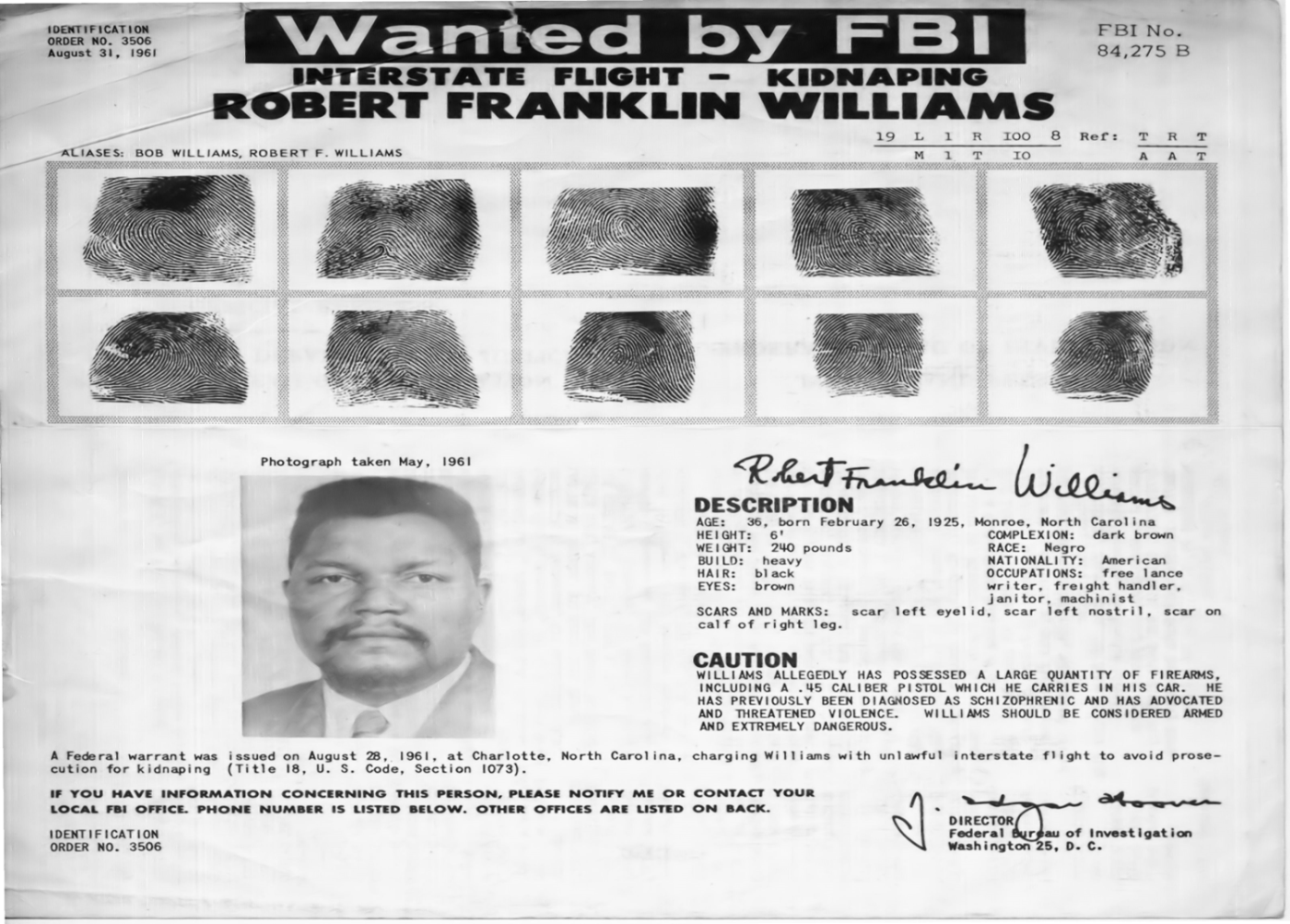
When Nixon wanted to build relations with China, he called on Williams for insider information. Williams agreed to return to the US if Nixon aided in fighting the kidnapping case. In 1969, Williams returned to Michigan to avoid arrest in North Carolina. Nixon assisted in getting the charges dropped in 1975. Williams became a scholar in residence at the University of Michigan Center for Chinese Studies.

Toward the end of his life, Williams became involved with the People’s Association for Human Rights. He lectured on Civil Rights and wrote an autobiography. According to his son, Williams was pessimistic about American society. He felt the gains of the Civil Rights movement had been eroded.

The entire world mourned Williams’s death from Hodgkin’s disease in 1996. Rosa Parks gave the eulogy at his funeral.

For the rest of the series clickHERE

Where Do We Go From Here? : America Now and Later

What is the Political Plan?

America in the late 1960s was a land of much racial progress and stagnation. On the one hand, you had Brown V Board making school segregation illegal. On the other, you only had 90% of schools in segregation over a decade later. Most white people cheered the end of racial segregation in interstate travel. Those same white people would object to their child marrying a black person. Voting rights act of 1965 ushered in new hope and opportunity. At the same time the lack of hope an opportunity lead to the Watts Riots the same year.

The Watts Riots were especially perplexing. The Voting Rights Act 1965 which most people thought was the goal of the Civil Rights Movement had just been passed. It was perplexing to most whites why there was so much unrest in the black community at this point.

King assures us the riot was not the result of the Civil Rights Movement. It was the culmination of years of frustration and stagnation that people in the urban ghettos faced. The establishment of a serious, long-term, comprehensive anti-poverty program will prevent further unrest. This program would need to be nationwide.

The Civil Rights Movement had reached a turning point. The first phase ended with the signage of the Voting Rights Act in 1965. The first phase was implemented to win black people a basic level of dignity. Now the Civil Rights Act must focus on bringing forth equality. By equality, King meant an improvement of the material condition of blacks relative to whites.

By moving from decency to equality, King knew he would lose some white allies many of whom wanted to make the racial wealth gap less visible not close it. Many of these white allies thought blacks were asking for too much or a true anti-poverty program would bankrupt the country. King uses data from the Office of Economic Opportunity to show the country can comfortably afford a comprehensive anti-poverty program. Also, increasing the standard of living and wages of black Americans helps the entire country. As a practical example, King shows the salaries of whites in the South is depressed because black labor is kept at poverty wages.

The future of the Civil Rights Movement will be a coalition of poor people from all races, ethnicities, religions, and regions of the country. The fate of all ethnic groups in the country are intertwined and unless we act as a unit nothing will be accomplished. As a unit, a comprehensive anti-poverty plan can be pushed forward in Congress.

Politics to advance humanity did not stop on Americas shores. King advocated for foreign aid and opposed military intervention. America and Western Europe were bastions of revolution. Now those same powers oppose independence in the third world. The West must take their mantle as leaders in freedom.

What is the plan to build brotherhood?

King understood policy alone will not solve the race problem. Blacks and Whites had to see their fate as intertwined. Both races had to embark on a re-education program on race to build understanding. Black people had already begun this process, yet whites lag behind. It is a symbol of their sense of superiority that they feel they have so little to learn.

The book gives a brief history of how the concept of race was born as a justification for slavery. Institutions of religion, education, and government were co-opted into the white supremacist framework. Slavery made America split in its intentions. On the one hand, it was home to liberty and democracy. One the other it perpetuated a racial hierarchy for economic gain.

America has always had a considerable contention of people against racial equality. The Civil Rights Movement did not awaken or embolden the racist that were already here. Racism was endemic in both conservatives and liberals.

The conservative racism expresses itself in outright violence toward black people in the form of lynchings and church bombings. It also expresses itself in obstruction of laws meant to aid black people.

Liberal racism is expressed by those that are more interested in keeping the peace than expanding equality. Racist liberals hide their obstruction in wanting to avoid undue tension. King reminds us that all tension is not bad. Some tension is needed to expose the evils of segregation and inequality.

Many critics of the Civil Rights Movement argued the advancement of black people brought on a white backlash. King was clear in rebutting that racism has always existed in America. Securing the rights of black people is the best way to combat racism. King gives examples of how the failure to enforce anti-segregation law has embolden racists and their organizations.

What can white allies do?

The Civil Rights Movement was not only meant to change America; it was intended to alter black America. For too long, black people lost faith in themselves as agents of change in their own life. Many accepted that they were inferior to whites. The Civil Rights Movement was also about letting black people see they can change the government and build a sense of self-pride.

A few years before the book was published the Student Non-violent Coordinating Committee (SNCC) an organization that aided King in many protests, kicked all the whites out of their organization. The reason was whites often took leadership roles because they had more education and experience. Blacks could never develop leadership skill if this continued so the leaders of SNCC kicked the white people out.

King vehemently disagreed with removing whites from Civil Rights organizations wholesale. It would be a travesty to all the whites that had died in the movement up to this point. However, he did agree that blacks need to hold leadership positions in their organizations. If not blacks will view the movement as whites coming to save them. King implored whites to leave leadership in these organizations to black people. Black people need the psychological boost as well as the practical leadership skills. These leadership skills could be applied to business or politics in the future.

Why We Can’t Wait: History

The book details the Birmingham Civil Rights Movement (CRM) of 1963. Birmingham was considered the most segregated city in the United States of America. Nine years after Brown v. Board only nine percent of the black children went to integrated schools. Steady growth in the economy did not affect black life as blacks had two times the unemployment of whites. To add to unemployment troubles automation and discrimination in the construction industry added to unemployment.

The CRM had gotten off to an auspicious start with the 1958 Montgomery Bus Boycott. The 1962 campaign in Albany, GA was far less successful in spite of the fact five percent of the black population was willing to be jailed for freedom. Many were looking on the CRM as a flash in the pan that was soon to fizzle out.

In 1962 virulent racist and segregationist Eugene “Bull” Connor was the City Commissioner of public safety. He saw his job as maintaining the status quo and quelling protests. George Wallace, governor of Alabama, supported Connor’s stance. To aid these men in their mission in “state’s rights,” the Alabama legislature created a law that said no foreign corporation could operate in Alabama. Therefore the NAACP, SCLC, SNCC could not have a formal presence in Alabama.

To combat the political climate, Fred Shuttlesworth created the Alabama Christian Movement for Human Rights (ACHR). The ACHR had many successful boycotts. The white citizens’ mob responded by bombing his house. However, with perseverance, the ACHR was able to become an affiliate with the Southern Christian Leadership Conference headed by Dr. King.

The SCLC began planning to aid Birmingham in the summer of 1962. The now-famous Gatson Motel was the site of the initial planning meetings. The SCLC would lead a protest to integrate shopping centers in Birmingham. The national convention of the SCLC would be held in Birmingham to show solidarity. Also, a boycott would follow in the spring of 1963 culminating Easter weekend. The first mobilization of protests would happen the first week of March. Protests would slowly build to a massive demonstration April 14.

The 1962 SCLC convention had a profound effect. Once business owners realized the best Civil Rights leaders in the nation would all be in Birmingham they needed to pacify the ACHR. The ACHR and local business owners held negotiations to reduce the chance of mass protests during or immediately after the SCLC convention. The business owners remove Jim Crow signs while the SCLC was in town. However, once they left the owners reneged on the deal and put the signs back up. The momentary capitulation of the business owners shows how powerful the SCLC was in the early 1960’s.

Unfortunately, the political climate would not allow for the first execution of this plan. A mayoral election was early March that included Bull Connor. If a protest happened during the mayoral election, Connor would be emboldened, and the white citizens in Birmingham would gravitate toward him. The mayoral election went into a run-off, so the protests were postponed even later. Bull Connor officially lost April 3 protest began two weeks later.

Connor and his supporters had not given up. They filed an injunction to leave the current City Commissioners in office until 1965. Another injunction was filed to stop all protesting by the ACHR until their right to protest had been litigated in court. The injunction to stop all protest guaranteed protesters could be arrested even if the protest was peaceful.

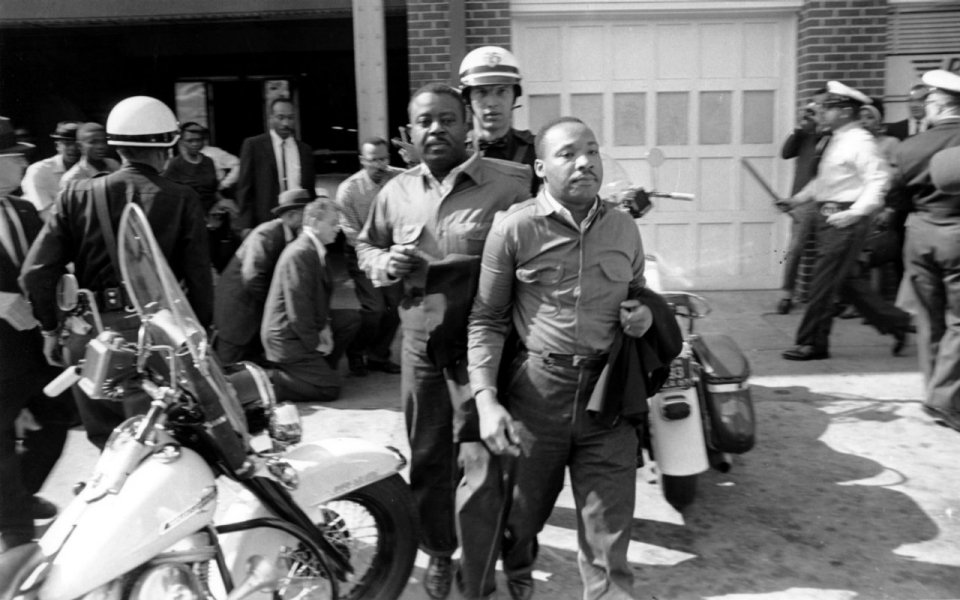
The fact that all the protesters would be arrested after April 10 but Dr. King at a crossroads. If he were to participate in the protest and be arrested there would be no one well connected enough to raise bail for the rest of the protesters. The SCLC was low on funds because of the protests that happened earlier in the month. The SCLC and ACHR debate if Dr. King going to jail will benefit the movement. In the end, Dr. King made the decision to go to jail. Ralph Abernathy, Dr. King’s aide and friend, accompanied him to jail. It will be in the Birmingham jail he writes his famous letter.

Dr.King and Ralph Abernathy stayed in jail for eight days before being bonded out. They left to organize a new wave of protest in which children would be the main participants. Many criticized using kids as reckless. However, these same kids suffer the humiliation of segregation every day. Having them confront the violence head-on is not a far stretch.

As jails filled up, the City Commissioners has few options, but violence. The police used their infamous hoses and dogs. Their efforts were supplement by domestic terrorist using bombs. Kennedy had to bring in federal troops to restore peace.

Ultimately a coalition of citizen and business owners had to be formed for negotiations. The protesters demanded:

  1. Desegregation of private business
  2. Non-discriminatory hiring in business and industry. Black clerks and salesman had to be hired within 60 days
  3. Dropping all charges on all jailed protester
  4. Creation of a biracial committee to work our timetable for further desegregation

The coalition finally came agreed, and the protests ended. A few days later the Alabama Supreme Court forced the City Commissioners to leave office and let the officials elected in April take office. May 23, 1963, a new City Commission took office.

Relationship with Presidents

Eisenhower proved to King he was personally invested in advancing Civil Rights through many meetings. However, Eisenhower has a hard time communicating his passion to the public. Also, his rigid conservatism only allowed for small incremental change. Dr. King did not see a way to defeat Jim Crow without sweeping change to the power structure.

In the 1960 election, King did not endorse John Kennedy. King admits he liked many aspects of Kennedy’s platform and was grateful for his help in King’s release from jail earlier that year. However, King felt Kennedy was an untested politician. The Civil Rights Movement was fledging, and if Kennedy reneged on his platform, the movement could have ended.

Dr. King described a strained relationship with John Kennedy. Kenndy did run on a pro-CRM platform but abandoned the movement in 1961 and 1962 due to his small margin of victory. In 1963, JFK saw that public opinion shifted and began to support Civil Rights again.

Dr. King said he would have supported JFK in 1964 had he lived. Not because King felt Kennedy had fundamentally changed, but the Civil Rights movement was fundamentally stronger. If Kennedy were to abandon Civil Rights again, the movement would survive.

Lyndon Johnson had an intense involvement in Civil Rights intellectually and emotionally. LBJ rekindled King’s faith in the ability of white southerners to change. King attributes LBJ for inspiring him to write an article for “The Nation” magazine on changing attitudes in the South.

Website Powered by WordPress.com.

Up ↑