Search

Black Leadership Analysis

This is an unofficial Spiral Dynamics blog. It is not endorsed by D. Beck PhD.

Category

Leader Analysis

Shelby Steele Analysis

What Shelby Steele has right?

He explains various stories from his life and is willing to be vulnerable. He gives perspective to the black experience.

What Shelby Steele has wrong?

Shelby Steele claims he doesn’t believe America is endemically racist. He then goes typically on to recant several instances of racism in his own life and the lives of his children. Steele had to turn down a tenure position at the U. of Utah his first year teaching due to racism encountered as a black man married to a white woman. He was offered a non-tenured position in California, but the fact that he had to turn down a tenure position was huge.

Steele continually says racism does not keep a person from achieving goals. That has been true of his life, he is very talented and could be mobile. However, most people don’t have anything they are exceptionally good at or unlimited mobility. Let’s say Steele had the responsibility of caring for a sick relative in Utah or did not get several other job offers. He would have had to accept the U. of Utah job and suffer racial harassment or divorce the woman he loves. That is the reality for most black people; we are having to navigate around prejudice while striving for goals. Most people generally could not achieve every goal with that many hindrances.

Racial harassment inflicts trauma on black people that makes it difficult to focus on tasks. Steele tells stories of racial slurs painted on buildings at University and people would yell “nigger” at him while walking down the street. A person with the mental stability of Steele can go about their day unaffected by this treatment. However, some people can’t compartmentalize the many instances of racial harassment they endure or levied at their race as a whole. This harassment has an indirect effect on a person’s ability to achieve. Some people have the mental strength to compartmentalize the harassment, some develop the talent, and others never gain the ability.

According to Steele, black people don’t support a conservative agenda because they have a “grievance identity.” The “grievance identity” is a name for an inferiority complex that provides unity for a culture. However, Steele doesn’t talk about the many conservative movements going on in the black community now. The most significant and most famous is the Nation of Islam (NOI). The NOI preaches a belief in a supreme being is paramount and a person should adhere to a strict moral code to ensure stability in life. A secular conservative movement that is also popular is the push to build black business. The most famous of the pro-black business leaders is Boyce Watkins, his lectures are available for free on the internet. So there is a sizeable conservative movement in the black community.

The problem is not with conservatives it is with Republicans. The Republican party has implemented the Southern Strategy to entice former Dixiecrat voters to their party since the 1970’s. The first key opposition came with the 1968 Voter Rights Act, and the movement has grown since. Lee Atwater provides a summary of the Southern Strategy in a 1981 interview with Alexander P. Lamis. The text can be found below:

“You start out in 1954 by saying, “Nigger, nigger, nigger.” By 1968 you can’t say “nigger”—that hurts you, backfires. So you say stuff like, uh, forced busing, states’ rights, and all that stuff, and you’re getting so abstract. Now, you’re talking about cutting taxes, and all these things you’re talking about are totally economic things, and a byproduct of them is, blacks get hurt worse than whites.… “We want to cut this,” is much more abstract than even the busing thing, uh, and a hell of a lot more abstract than “Nigger, nigger.”

So the Republican party has been using racial “dog whistles” to attract racist for years. The Willie Horton ad campaign of 1988 was the most famous and blatant implementation of this plan. In the Horton campaign, the story of a large black felon raping and killing a white woman was used to scare white voters into voting Republican to removing Democratic programs used to free prisoners. The “law and order” rhetoric of the Republican party has often had racial undertones.

Recently, Republican attacks have become more blatant. Trump and his rallies get the most press coverage. Audio from the rallies shows people yelling slurs from the crowd. Trump did not stop them, and none of the Republican establishment denounced the activity.

Trump is not the only Republican with overtly racist statements. St Petersburg mayoral candidate told activist to “Go back to Africa” in 2017. Jesse Helms in office from 1973 – 2003 once said: “crime rates and irresponsibility among Negroes are a fact of life which must be faced.” Also, in 1983 most of the opposition for making MLK day a holiday came from Republicans, 86 of the 90 no votes.

With all this being said, Democrats have also made racist statements and implemented racist policies. That is why black voter turnout in 2016 was 59.6% compared with national average of 61.4%. During mid-term elections, the number drops to the 40% range. Part of the reason for black voter disenfranchisement is racism endemic in both parties. To say the disenfranchisement is the result of an inferiority complex when ample evidence exists that there are severe problems in both parties is naive. Americans are conditioned to believe black people are irrational and emotional. The belief that black people are irrational leads people to ignore the many reasons black people have not voted. This racial bias has caused Steele to attribute black support for the liberalism as irrational and ubiquitous. Neither is the case.

Steele bases his opposition to Affirmative Action on the fact it fuels an inferiority complex he calls “grievance identity.” In the sample of articles studied, no psychological studies verified the pathology was endemic in black society or government set-asides cause the pathology or embolden it. He only provides anecdotal stories from personal friends and colleagues.

Even if the “grievance identity” is real, it can be avoided by the individual not putting their race or gender on the application. The demographic section of college or job applications are voluntary and if the person feels getting a job because of their demographic could hurt their self-esteem, they can opt-out. The current Affirmative Action system does not need to be changed to avoid perpetuating “grievance identity.”

The other common argument Steele makes is Affirmative Action is intended to salve the conscious of white people for the wrongs of the past. This assertion is not correct. The goal of Affirmative Action is to counter bias in the workplace that is happening now.

Vox reported on a university study that revealed whites are 36% more likely to get callbacks than equally qualified black applicants. A 2004 U. of Chicago study proved resumes with traditionally white names got 50% more callbacks. Administrative Science Quarterly surveyed minorities that remove references to their race on their resume. The study showed that “whitening” a resume increases chances of callbacks by 50%. The results were the same for companies with active diversity initiatives.

Racial bias is also very prevalent in schools. A Johns Hopkins study shows that white teachers 40 % less likely than black teachers to expect a black student graduate from high school. If the teacher shows this bias, it could hurt the student’s enthusiasm in class. A U. of California study showed white teachers were more likely to perceive a black student’s behavior as disruptive. The bias in perceived student ability leads teachers and professors to treat students differently. Wharton conducted a study showing white males were 25% more likely to receive an e-mail response from teachers than other demographics.

Ultimately, something needs to be done to even the playing field. Steele believes the discrimination laws should be enforced with criminal penalties. Making discrimination a criminal defense is something Steele only talks about to black media. He did not mention making discrimination criminal in any interviews with whites in the sample of articles in the BLA survey. If he were to explain on conservative talk radio that he feels discrimination is a criminal act, it would be doubtful he would be invited back.

An Integralist does not have to be for Affirmative Action. However, racial bias is a real hindrance to the advancement of black people. An Integralist will want something done about this. The Integralist would also be clear to all audiences they speak to as to what measures he or she feels should be done.

The idea that black people have to choose a “bargainer” or “challenger” strategy refutes the notion that America is not endemically racist. If America was not endemically racist and the racism couldn’t prevent a person from achieving goals, then black people could just live their life without a clandestine strategy. Black people could just go through life, and if someone wronged them, they could say they were mistreated, and it could be handled as an isolated incident. The fact that either a black person needs to pretend that nothing is wrong or always use race to manipulate through guilt would only be required in a racist society. Steele does say some black people are independent, but independence takes extreme courage. However, one must ask, why is courage needed to be independent. Why does black autonomy threaten society? If the answer is not racism, then what and who are threatened.

The idea that a “bargainer” has more success than a “challenger” calls into question Steele’s entire philosophy. One has to question if he is only speaking on how magnanimous white America is to attempt to flatter them. The flattery will lead to rewards in the form of radio airtime and articles in prestigious journals and papers.

Steele taking a “bargainer” position could also explain the vitriol with which he deals with liberal black leaders. All of his analysis of liberal black leaders center around the idea that they are maliciously manipulating people for personal gain. He never considers the liberal leaders have a different philosophy which they feel would help black people. Even if the liberal leader’s ideas are wrong, the leader could have positive intentions and motivations. However, when whites are accused of racism, the benefit of the doubt is always extended. Trayvon Martin’s killer, George Zimmerman even received Steele’s benefit of the doubt. If Steele can defend Zimmerman, he could at least say Michael Eric Dyson doesn’t have all the facts.

When on conservative talk radio, Steele often says, “Blacks should stop begging for crumbs from white people and demand better behavior from each other.” He then goes on to list negative statistics of unemployment, fatherlessness, and crime. Steele claims nothing is being done about these things in the black community. Nothing could be further from the truth. There are many initiatives in the black community to promote fatherhood, academics, and family planning. Many of these initiatives are sponsored by the black church. When Steele says nothing is being done about issues in the black community, it calls into question how often he is in the black community.

Instead of pointing out problems in the black community and attacking other leaders, Steele could build his conservative movement. If he creates a program that improves black children’s SAT scores, he could convince black people that Affirmative Action is not needed. It is completely understandable that black people fight to keep a system that counters bias if they are not presented with an alternative. Attempting to build something is much more difficult than trying to tear something else down. No one benefits from rambling on about how bad SAT scores are for black children. He has tremendous access to research being a fellow at Stanford. Also, he has communication outlets at the Heritage Foundation and the Wall Street Journal.

Where is Steele on the Spiral?

Don Beck listed Shelby Steele as an Integral thinker in the book, The Crucible. Since Don Beck is a founder, his analysis surpasses mine. However, I would like to point out, when this assessment was given when Steele only had one book out and one documentary.

Shelby Steele doesn’t fit the definition of Integral according to The Crucible in that.

  1. He doesn’t have a big picture view of Affirmative Action. Many of his arguments are easily refutable
  2. He doesn’t use an informational learning system. In that, he doesn’t use studies to back up his theory only anecdotes.
  3. The fact he says discrimination is a criminal offense in black media, but not conservative talk radio shows he is still concerned with status and authority
  4. Doesn’t exhibit “flex flow” problems solving when dealing with liberal/leftist black leaders. He assumes they are malicious and dismisses them. Dismissal is not an optimal strategy for converting followers

BLA lists Shelby Steele as Orange. He is “goal centered” in that he is chiefly focused on the economic improvement of black people. As a conservative, he wants “First Order” change in regards to racial set-asides and discrimination law. He focuses on I and We space solutions in that he calls on black people to hold each other accountable for the professional development and family planning.

For the complete series click HERE

Sources

  1. black-turnout-in-1964-and-beyond 10-17-2017www.nytimes.com
  2. Voter Turnout Always Drops Off For Midterm Elections But W hy 07-24-2017www.pewresearch.org
  3. Black Voter Turnout Fell In 2016 Even As A Record Number Of Americans Cast Ballots 05-12-2017 http://www.pewresearch.org
  4. Teacher expectations reflect racial bias, John Hopkins study reflects 03-30-2016 https://hub.jhu.edu/
  5. Study: Anti-black Hiring Discrimination is as Prevalent Today as it was in 1989 09-18-2017 http://www.vox.com
  6. Hiring bias study: Resumes with black, white, and hispanic names treated as same 05-04-2016 http://www.chicagotribune.com
  7. Minorities Who “Whiten” Resumes Get More Job Interviews 05-17-2017 http://www.forbes.com
  8. Teachers’ Perceptions of Students’ Disruptive Behavior: The Effect of Racial Congruence and Consequences for School Suspension 11-2015 Adam Wright
  9. Wharton Study Shows the Shocking Result When Women and Minorities Email Their Professors 05-01-2014 http://www.mic.com
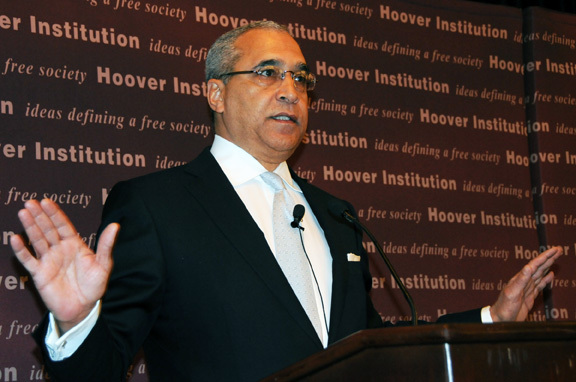
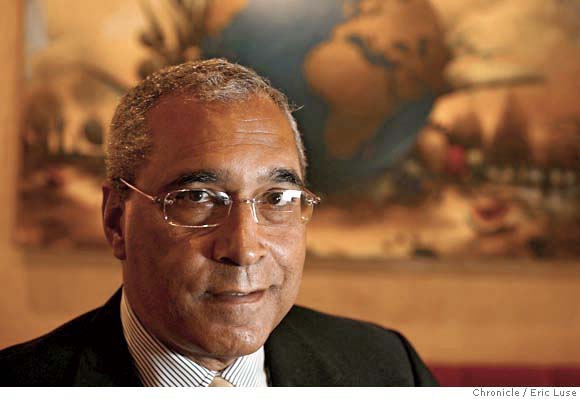
Shelby Steele Philosophy

Shelby Steele perceives modern day America as not endemically racist. He admits there are a minority of racist people and sometimes they commit crimes against minorities. However, a person’s race does not explicitly stop them from achieving a goal. Therefore the effects of racism are minor. Strong work ethic and ingenuity can overcome all obstacles.

Racism still exists in America. Steele recounts in his work various instances of harassment and bigotry. To list a few:

  1. People yelling “nigger” from their car as he walked by every few months
  2. A professor telling him he was not “really black” when he gave a report on the Civil Rights Movement
  3. His children being called names due to their mixed-race heritage
  4. Graffiti at a nearby school that read “NIggers, spics, and chinks. Quit complaining or get out.”

However, none of this ever stopped him from attaining goals. There are no laws specifically keeping black people from applying to school or a job.

America does have a racist history of slavery and Jim Crow that relegated black people to the sidelines of American life. However, with the passage of the Civil Rights Act and the Voting Rights Act, most doors were open. Now 99.9% of American life is free and open. American life is so open America even had a black president.

After the victory of the Civil Rights Movement in the mid-1960’s the struggle took a dangerous turn. Once the Jim Crow laws were removed, the struggle was over, yet the black leaders still wanted power. They used a claim of victimization to get preferential treatment from the government

Affirmative Action is particularly problematic because it reinforces racial stereotypes. Affirmative Action implies that black people are inferior hence they need Affirmative Action. Not only are supporters of Affirmative Action implicitly agreeing with racist stereotypes, but they also assert that white benevolence is required to even the playing field. The recipients of Affirmative Action will also have to share their victory with white people.

Victimization has also infiltrated black culture and has become integral to the black identity. Therefore the most downtrodden black people are the “blackest.” Making the poorest black people the icon of a race forces other black people to validate themselves through emulating the poorest among them.

Grievance Identities is a term coined by Shelby Steele to describe those that use victimization as their lens to see the world. Grievance Identity keeps people from seeing the universal humanity in themselves and others. They separate themselves from the rest of society. Not only do they separate from those of a different demographic, but they also attack people not clinging to the Grievance Identity as sellouts and Uncle Tom’s. To separate from a Grievance Identity would separate a person from their entire community.

On an individual level victimization can lead to suppressed feelings of self-doubt. Steele recounts the story of a black student walking into a class full of whites. The student told Steele that he felt uncomfortable “Because I know they’re all racists. They think blacks are stupid.” Steele illustrates how this is a projection and most white people are not racist. The student has internal questions about his ability that he is projecting onto other students. This projection is the result of him repressing his feelings of inadequacy. If the student were to admit he has questions on his ability he could work through these feelings and be happier.

Victimization also causes black America to act as a “one-party” state. If a person has a political ideology that is not based on victimization or blaming the white man they are perceived as an Uncle Tom. By impeding healthy political dialogue real solutions are lost or not brought to light. Black conservatives are liberal, in that, they challenge the usual dialogue or paradigms on politics within their community.

The real solution to racial disparity is Flat Freedom. Flat Freedom would entail no preferential treatment for anyone. He explicitly calls for the end of Affirmative Action. However, he does not explicitly call for laws against nepotism, the end to legacy admissions in elite universities, or leniency due to hardship in college admission. He does recommend that discrimination laws be changed from civil offenses to criminal offenses. As it stands now if a company loses a discrimination case they pay a relatively small fee to the person that won the case. Typically, the person that filed the lawsuit is blackballed from the industry because the case is public record. As the law stands now, a company can discriminate and expect to pay a settlement every few years.

Preferential Treatment and Race Relations

Preferential treatment does not uplift black people or pay off the debt of Jim Crow and slavery. It does increase white anger at black people. Even after concessions are made to help black people, blacks still charge whites with racism. The continued charge of racism angers white people as they are collectively considered the scapegoat for the ills of black America.

Once black people began to assert power solely based on skin color, other “disadvantaged” groups followed suit. Women, Hispanics, and Asian also get preferential treatment due to attributes they did not earn. In academia, many departments are solely based upon differences, such as African- American Studies and Women’s History. These departments add to racial tensions not take them away.

The election of Donald Trump was the backlash from many years of scapegoating. Donald Trump’s vitriol is an expression of white people’s anger at being stigmatized as racists. Trump’s rhetoric is a response to years of racial discussions not being related to facts, but a battle of identities. Trump represents the universal American identity. He is not partial to any small demographic or particular interest group. “America First” is Trump’s motto.

Donald Trump’s success is due to his charisma, more than actual qualifications. Trump represents the antithesis of cultural and institutional liberalism. Hopes and dreams are the basis of liberalism. Pragmatic individual responsibility and discipline are the basis of conservatism.

Much of the anger black people feel now is suppressed anger. As with abused children, anger only manifests itself after a period of normalcy without abuse is established. Black people are experiencing this on a macroscopic scale now. When black people vent about racism, it is an upsurge of anger collectively hidden for so many years.

Blacks should commend whites for how far they have come in embracing racial reconciliation in a short amount of time. Very few other countries have ever even attempted to redress past wrongs. The Russian’s never paid the Georgians reparations or gave them jobs. Steele recounts many instances of whites helping him professionally.

Ultimately, the focus on improving the black community should be on personal responsibility. The entitlement culture is a distraction, and a way to abdicate responsibility. Once the entitlements are removed, black America will have to look internally for solutions. Individuals will improve themselves and rise above other applicants. Black America will “catch on fire.” The renaissance will not be the result of helping the collective, but individual achievement reaching a fever pitch.

Strategies to Maneuver in a White Dominated Society

Two strategies for dealing with white America according to Steele’s work. The “bargainer” and the challenger. The “bargainer” grants white America their innocence from oppression in exchange for entry into the mainstream. The “challenger” withholds this innocence until a demand for entry or another concession is met. Black people that adopt both strategies have made it to the highest levels of society.

In the “challenger” camp we have people like Michael Eric Dyson. Dyson acts as a provocateur stirring up negative sentiments in black people. He tells black people not to have faith in America and be suspicious of white people. The focus of Dyson’s rhetoric is what white people owe you not on what you can do for yourself.

In the bargainer camp, he puts people like Bill Cosby. His flagship show “The Cosby Show” never challenged white authority. The Cosby’s never discussed Affirmative Action, police brutality, no one ever endured racism. All the characters were fun loving and jovial. The television programmed showed black Americans thriving, without having any uniquely black issues raised.

Obama is the most famous and successful “bargainer.” Obama puts forth a non-racial image that conforms white people. He says to them implicitly “I will not hold a racial grievance against you.” The ability to absolve white people allowed him to get elected. His racial idealism is what makes him an electable candidate. hi. Obama had ambivalence for American exceptionalism and felt the full use of American military power was “neo-colonialism.”

Obama did have missteps in keeping his non-racial image. The Skip Gates controversy pulled Obama into a racial narrative. Skip Gates is a famous Ivy League professor that was arrested in his own home when neighbors called the police. Gates assumed with no evidence the police officer asked for his ID because of his race. Gates chose to make the narrative public and ask Obama for aid. Obama made a mistake by getting involved.

Jesse Jackson is an example of a person that moves back and forth between “bargainer” and “challenger” positions. One minute he is giving magnificent speeches at the DNC reminiscent of Dr. King. The next he threatens to boycott Major League Baseball and refuses to denounce Louis Farrakhan. White people do not know how to take him. They assume he is a “challenger” by instinct and a “bargainer” by political ambition.

However, some black people are truly independent. Harold Ford Jr. is an excellent example of an independent black thinker. Ford was a congressman from Tennessee. He did not use race in his politics and chose policies that were best for America.

Steele is clear that “challenging” works best for the collective, but “bargaining” works best for the individual. The new era of black progress will come from “bargainers.” “Bargaining” allows a person to enter mainstream society and make way for himself or herself. Individual achievement will grow to encompass all of black America.

Steele compares the protest that Black Lives Matter sponsor against the protests of Dr. King. He explains how Dr. King’s protest had people coming in more significant numbers and they were respectably dressed. Black Lives Matters protest were disruptive with people dressing and acting erratically.

Many of the leaders that support Black Lives Matter and other forms of “identity politics” are a bane to their people. They preach bad faith, more specifically to distrust white people and mainstream America. This distrust will impede progress because individuals will be suspicious. The suspiciousion will keep them from taking risks necessary to enter mainstream society. The distrust is more of a hindrance than any racism they will face. The leaders know this and purposefully repeat the “bad faith” narrative for personal gain.

International Politics

White guilt not only cause society to take half-measures to fix the actual race problems in America, but it also causes the US to take half-measures in foreign policy. America has the greatest military in history. If the full power of the military were unleashed on Iraq, the resistance would be over in no time. America holds back so the world will not see her as a monster. In the same way stories of Abu Ghraib and Guantanamo are portrayed by the media as brutal. The line between interrogation and torture is an arbitrary one and is often crossed in times of war.

The wars that currently involve America are wars to hold the status quo in regards to world power. Wars in previous years, such as World War II, were a fight for the survival of the Western world. Because the wars are wars of choice, the public has less stomach for the military using its full might. The public needs to realize the need to end radical Islam once and for all.

In the spirit of leaving no stone unturned, America needs to support Israel in all its efforts. Compromise is not an option in the Palestine conflict. For example, Steele notes that in 2006 Hezbollah launched an attack from land lost in a peace deal. Entering a peace deal with these terrorist organizations gives the terrorists legitimacy. If a Western power such as Israel negotiates with a terrorist organization, then their terrorist organization’s claim to represent the people is valid. The validation makes the terrorist organization grow.

Radical Islam is not fighting the West because of oppression and colonization. They are angry they cannot compete. If oppression were the cause of radical Islam, peace deals from Israel would reduce suicide bombings and attacks. Extremism is a product of post-colonial Arabia. After the Arabs freed themselves, they realized that their countries were woefully behind the rest of the world. The anger from not being able to compete caused extremism. To quote Steele directly “Islamic extremism is the saber-rattling of an inferiority complex.”

For the rest of the series click HERE

Sources
,
Interviews

  1. Tucker Carlson speaks with Shelby Steele on The Exhaustion Of American Liberalism Published by the Echo Chamber on 3-10-2017
  2. Greg Gutfeld Interviews Shelby Steele by The War on SJW on 07-02-2017
  3. Laura Ingraham Interviews Shelby Steele about White Guilt on The War on SJW on 06-26-2017
  4. Shelby Steele: The Left’s Toxic Obsession with Race by Laura Ingraham on 08-31-2017
  5. The Next Debate: The Future of Race in America with Shelby Steele in 2015
  6. Dennis Prager Interviews Shelby Steele on Race in America in 2013
  7. White Guilt and the end of the Civil Rights Era 05-05-2006 NPR interview by Ed Gordon
  8. Interview: Shelby Steele Black Star News 02-29-2008
  9. The High-Wire Act of Barrack Obama Interveiw by Margaret Wente of Toronto Globe and Mai 10-20-2007
  10. Bill Moyers Talks with Shelby Steele 01-11-2008
  11. Wall St Journal Articles

  12. White Guilt and Radical Islam printed 10-31-2006
  13. Not Appeasement printed 11-26-2007
  14. White Guilt and the American Way of War 7-30-2006
  15. Down on Hilary’s Plantation 1-24-2006
  16. The Promise of President Trump 1-19-2017
  17. Trump, Clinton, and the Culture of Deference 11-7-2016
  18. From Emmett Till to Skip Gates 08-01-2009
  19. Why the GOP Can’t Win with Minorities 03-16-2009
  20. The Exploitation of Trayvon Martin 04-05-2012
  21. Hoover Institute Articles / Hoover’s Digest

  22. The Double Bind of Race and Guilt 01-30-2001
  23. Engineering Mediocrity 10-30-2000
  24. The Loneliness of the Black Conservative 01-30-1999
  25. Obama Unbound 01-22-2009
  26. Obama’s Unspoken Re-election Edge 05-25-2011
  27. Obama and the Burden of Exceptionalism 09-01-2011
  28. Better Angels 06-30-2009
  29. Nothing More Than freedom 07-01-2009
  30. The Soft Bigotry of Political Correctness 2017 Spring
  31. Who Speaks for Black Americans 2013 no.4
  32. End of the Line for the Shame Train 2017 Summer
  33. Obama’s Unspoken Re-election Edge 05-25-2011
  34. A Referendum on a Redeemer 10-28-2011
  35. Israel and the Surrender of the West 06-21-2010
  36. Good Manners and Anti-Semitism 09-29-2010
  37. Harper’s Magazine

  38. I’m Black, You’re White, Who’s Innocent 06-1998
  39. Articles Misc

  40. Racism–Fact of Faith in the LA Times 11-23-2006
  41. Michael Eric Dyson is a plague on his people 08-30-2017 http://www.lifezeete.com
  42. Recoloring of Campus Life
  43. The New Segregation
  44. A negative vote on Affirmative Action 05-13-1990 http://www.nyt.com
  45. On being black and middle class 01-01-1998 http://www.commentarymagazine.com
  46. Obama’s post-racial promise 11-05-2008

Shelby Steele Biography

Accomplishments

  • Created Award winning documentary film on Seven Days in Bensonhust
  • In 1990, he received the National Book Critics Circle Award
  • Robert J. and Marion E. Oster Senior Fellow at Stanford University’s Hoover Institution 1994
  • 2004 National Humanist Medalist from the National Endowment for the Humanities
  • Labeled in Don Beck’s book The Crucible as having second tier thinking

Shelby Steele was born on January 1, 1946, in Chicago, Illinois to a black father and a white mother. His parents met as members of the Congress of Racial Equality (CORE). Steele grew up middle-class. His father was a truck driver, and his mother was a social worker.

Steele speaks fondly of his childhood. His father dropped out of school in the third grade. He drove a truck by day, yet at night was a voracious reader. Shelby Steele remembers him as having the gravitas of a university professor. Unfortunately, Steele’s father never acquired a job that would fully utilize his intellect.

Steele’s mother was white. Often interviewers ask how does his status as a mixed race individual affect his work. He replies that he does not see himself as mixed race. A white woman married to a black man in Chicago was treated as a black woman. The family lived in a segregated section of the city. So in his upbringing he was never viewed as having mixed or half-white identity.

As a college undergraduate in Cedar Rapids, Iowa, Steele was active in Summer Community Organization and Political Education (SCOPE). SCOPE is affiliated with the Southern Christian Leadership Conference. Steele earned a Bachelor of Arts in Political Science from Coe College in 1968. He was one of eighteen black people that graduated that year.

After receiving a Masters degree in Sociology from Southern Illinois University, Steele continued his studies at the University of Utah. At the University of Utah, Steele also taught black literature. Steele recounts that he turned down a tenure position at the University of Utah because of animosity he experienced harassment due to his interracial marriage. After receiving his Ph.D. in English in 1974, he left Utah to teach at San Jose State University.

The 1990 PBS documentary Seven Days in Bensonhurst, was Steele first dive into the public debate on race. The PBS documentary told the story of Yusef Hawkins, a black man lynched in New York City in 1989. Two white men had been patrolling the neighborhood looking for a black man that had been dating one of the local white women. The two white men were convicted of the crime and served jail time. The documentary won Emmy Award, the Writer’s Guild Award, and the San Francisco Film Festival Award.

Seven Days in Bensonhust focused on how Hawkins death was used for political purposes. Al Sharpton and Jesse Jackson brought in media attention and galvanized the public. The support for Hawkin’s killer being put to justice was used to empower black mayoral candidate David Dinkins. Hawkin’s father did not want his son’s death politicized. The documentary also show the vitriol black residents had for white politicians Ed Koch and Mario Cuomo.

In the book The Content of our Character first published September 1, 1990, Steele shows how we look at the person’s race instead of character. In the introduction to the book, Steele explains the tedious and often rehearsed racial dialogue in the news prompted him to write the book. In his opinion, people split their personal racial beliefs from their public racial beliefs. The goal of the book is to facilitate a more honest discussion on race.

The Content of our Character was followed by A Dream Deferred. He expands his previous analysis by saying American betrayed its core values by creating the racial preference system of Affirmative Action. The betrayal was motivated by a deep shame and remorse for its past racial wrongs.

It took Shelby Steele 10 years to make another PBS documentary. Jefferson’s Blood explores the evidence that President Thomas Jefferson fathered children by slave Sally Hemmings. The film details the DNA evidence and shows the reaction of Sally Hemings descendants that they are in fact related to Thomas Jefferson.

Steele takes on what he characterizes as an overcorrection for racism in his book published in 2006. White Guilt: How Blacks and Whites Together Destroyed the Promise of Civil Right explains how after the Civil Rights movement many white institutions attempted to correct their wrongs and avoid charges of racism by creating Affirmative Action. Unwittingly by creating Affirmative Action, they cast all black people as victims and not the equal of white people. The real problem in black America is the decline in mortality since the 1960’s.

A Bound Man: Why We Are Excited About Barack Obama and Why He Can’t Win is an exploration of how Obama’s mixed race heritage affects his politics. The book was published in 2007 after Obama declared his candidacy for the presidency. Steele says the title of “why he can’t win” was done to increase interest and he always believed he had a change. The book also delves into how black people function in a white society.

In Shelby Steele’s newest book Shame How America’s Past Sins Have Polarized The Country . In this book Steele gives his autobiography and shows how America has changed over many years. He asserts that people clinging to their identity as victims bits one demographic against another. Also, activist groups based on victimization all claim to have a monopoly on compassion. America is growing tired of requests for preference without any personal responsibility. These activist groups also garner prestige from dis-identity with America.

It is interesting to note that Shelby Steele’s identical twin brother, Claude Steele, is his ideological opposite. Claude Steele is a social psychologist that chief work is on how the knowledge of stereotypes affects people performance. Claude Steel coined the term stereotype threat to describe this phenomenon. Claude Steele has a Ph.D. from Ohio State University and was Vice Chancellor Provost at University of California, Berkeley.

For the rest of the series click HERE

Sources

  1. “Shelby Steele” http://www.blackpast.org
  2. From http://www.goodreads.com

  3. ”The Content of Our Character” http://www.goodreads.com
  4. ”Shelby Steele” http://www.goodreads.com
  5. “Introduction” from The Content of our Character from http://browseinside.harpercollins.ca
  6. Summary of White Guilt found on http://www.harpers.com
  7. “Preface” from A Dream Deferred
  8. “A Bound Man” http://www.ontheissues.org
  9. “ Shelby Steele” http://www.neh.gov
  10. Synopsis of Jefferson’s Blood http://www.pbs.org
  11. Seven Days in Bensonhurst 05-15-1990 Frontline PBS Transcript
  12. Jefferson’s Blood 05-02-2000Frontline PBS Transcript

Shelby Steele

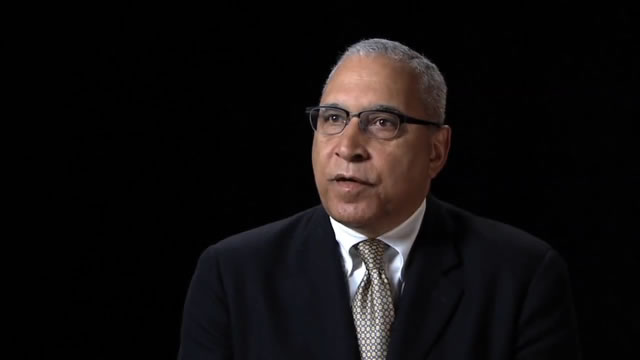
Shelby Steele was rated by Don Beck as a second-tier thinker. He is against Affirmative Action and is a critic of leaders like Micheal Eric Dyson. The Wall Street Journal and Harper’s Magazine frequently publish his editorials. These articles explain Steele’s support for Donald Trump and the Iraq War. Click on the links below to find his series.

Biography

Philosophy

Analysis

Rainer Spencer

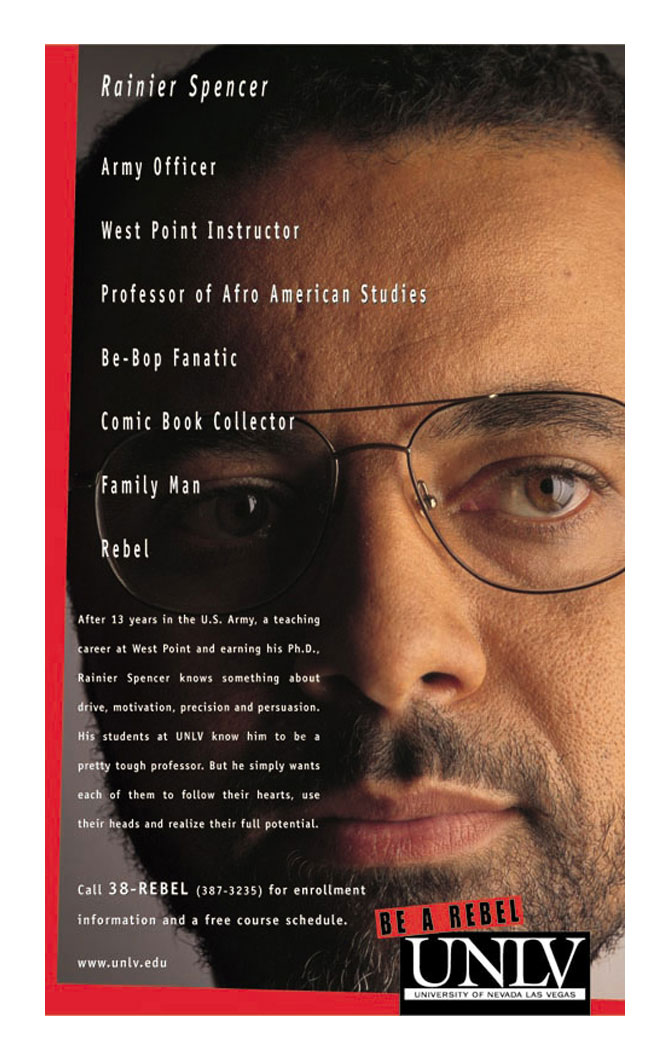
A true rebel of Black Studies. His journey began in Hollis, Queens and currently has him stationed at the University of Nevada Las Vegas. He created the concept of Racelessness, the idea that one can see themselves as not having a race, yet understand how race affects day to day life. His commitment to black people is second to none. Below is a summary of his philosophy with an analysis.

Biography & Philososphy

Rainer Spencer Analysis

Rainer Spencer Analysis

What Rainier Spencer has Right.

He makes a reasonable and articulate case for racelessness. He also doesn’t use racelessness as a way to distance himself from other black people or the struggle for racial justice, quite the opposite, racelessness adds to his commitment. He also understands how multiracial people can be used to hurt other members of the black community. He actively identifies the mechanism that could pit multiracial black people against monoracial black people.

Spencer does the work that most people that consider themselves allies of black people should do. He understands the ways that his struggle is similar and dissimilar to that of monoracial black people. He then can see how he and other multiracial people can help and hurt the plight of the race as a whole. When building alliances, frequently the base of the union is an emotional understanding that both groups are disadvantaged. If members of the alliance could honestly dialogue to understand in what ways their struggle is similar, dissimilar, and divergent alliances among disadvantaged groups would be more stable and advantageous for both groups.

An alliance that could benefit from a more logical approach to commonality is the alliance between black and Latin people. Both groups are disadvantaged, yet the ways they are disadvantaged is very different. Blacks are disadvantaged from being economically isolated for the majority our time in this country. Latins are disadvantaged because of language barriers, unfair immigration laws, and the perception of being foreign. If a more nuanced look at our struggles were taken, we would see that many policies that help Latins hurt black people. For example, mandating grant application be available in Spanish and English. If the applications were English, only black people would have an advantage. Also, requiring job applicants be US citizens will help black people, but hurt many Latins. If both groups were more honest about what they need on a concrete level, when the racial groups decide to work together we would be more productive and fruitful.

What Rainier Spencer has Wrong

The HeyReb! mascot does allude to the Confederacy. The assertion that critics are assuming that HeyReb! is a Confederate simply because of his race and hat is absurd. The mascot cannot be taken out of context. The area Las Vegas was founded in was part of the Confederacy. The students did have a Confederate subculture for twenty years. In addition to this Las Vegas was segregated for many years and there were numerous racial incidents in the area. UNLV should remove any connection or possible connection to the Confederacy.

In the report, he says that the University has a deep connection with the nickname Rebels that could not be broken. If this is true, the school should just put changing the nickname to a vote. If people can not part with the Rebels nickname, the name will be safe. In Spencer’s report, he claims that UNLV is one of the most diverse campuses in America. If this is true, it would be difficult to believe that most students want a mascot that could in any way be linked to the Confederacy.

The Rebels report was very incomplete. It only used face to face interviews and articles from the school newspaper. First, the school newspaper has an incentive to play down conflict and animosity, due to the fact the newspaper answers to management at the school. If they print negative stories about the school, the administrators could cut funding or pull students scholarships. Second, face to face interviews could make interviewees feel uncomfortable when giving a dissenting opinion or relaying a negative story. For example, Spencer said only one member of the Black Student Organization expressed a problem with the flag. However, they were talking to a faculty member sent by the administration to determine if the school mascot needs to change. It could be they were afraid that they would be targeted or punished for expressing a negative opinion.

The information on Bill Casey, UNLV quarterback in 1968, shows bias that could play out due to a face to face interview. Bill Casey is black and was the quarterback for the UNLV Rebels when they had a Confederate flag on their helmets. Casey claims he never felt uncomfortable and his teammates said nothing racist in front of him. However, in a 2007 interview with the Las Vegas Sun, Casey reveals the UNLV allowed Casey an extra year of eligibility in spite of an ankle injury. If he had not gone to UNLV, he would be eligible for the Vietnam draft. The fact he did not say there were incidents of racism does not mean that he genuinely was not bothered or it is true no one made him feel uncomfortable. Giving this extra information opens the possibility that he looked the other way when racism surfaced because he had few alternatives. Also, if he did experience racism and did not fight back, it could be very embarrassing to retell the story. Not only will Casey have to relive the incident in his mind, but he could also feel he loses face in front of another black man that expected him to stand-up to oppression.

The study of UNLV’s mascot should have included anonymous surveys, and interviews with people accepted to UNLV but did not go. Spencer could have added both of these items to his study. Anonymous surveys will allow him to get a much more honest opinion of what people thought about the mascot. Interviewing the people that turned down UNLV could show how the mascot is affecting people’s decisions to go to UNLV. Even if people at UNLV like the mascot they should be aware of how much they are losing by keeping it. If Spencer presents the information that numerous star athletic recruits turn down the UNLV because of the name, they can determine if the cost outweighs the benefits.

Where is Rainier Spencer on the Spiral

Dr. Spencer is in the Green Meme. He attacks the concept of race opening the possibility for new groupings to form and unity with people of multiple “races.” He facilitates moving beyond race while realistically maneuvering in society. He understands race is not real, yet the effects of people’s perception of race have a real impact. As more people come to the “racelessness” view, what is considered “in group” expands from the blue meme concept.

Understanding “racelessness” is an I Space solution. Since “racelessness” is core to Spencer’s philosophy, this analysis has determined the “I Space” is where his solutions concentrate. His commitment to “IT Space” solutions such as Affirmative Action and taking racial demographic data shows his ability to embrace multiple solutions paths. His flexibility is a sign of Integral thinking.

Dr. Spencer did not express any need for revolution. Therefore he concentrates on First Order Change or change within the system in place.

For entire series on Rainer Spencer click:
HERE

Sources

  1. Ron Kantowski catches up with Bill Casey, who only played one season at UNLV but nonetheless remains one of the program’s top quarterbacks by R. Kantowski 10-22 -2007 http://www.lasvegassun.com

Rainer Spencer Biography & Philosophy

Accomplishments

  • Vice Provost for Academic Affairs, University of Nevada, Las Vegas (UNLV)
  • Associate Vice President for Diversity Initiatives & Chief Diversity Officer, UNLV
  • Founder and Director, Afro-American Studies Program at UNLV
    Journal of Critical Mixed Race Study Editor
  • Contributor to Mixed Race Studies.org
  • Contributor to New York Times, CNN, and The Chronicle of Higher Education

Rainer (pronounced Rie Ner) Spencer was born in Hollis, Queens. He lived in what was a predominately white neighborhood in his younger years that transitioned into a black neighborhood by the time he was in high school. His father was black, and his mother was white. He joined the army and taught basic logic at West Point.

It was at West Point he began to question the concept of race. He realized that the concept of race, a biological connection with people of the same skin color, made no sense. He then decided to personally not identify with race while being aware that society perceives him as black. Knowing that society perceives him as black, inspires him to advocate for others that are perceived the same way.

While getting his Ph.D. in 1996, he participated in the Multiracial March on Washington. The chief issue was getting the government to allow multiracial people to mark more than one checkbox on government data sheets. He also began to dialogue with other multiracial people on the Interracial Individual’s (II) e-mail list.

Rainer does not believe in race. It has no concrete basis in science. Therefore it does not exist. He calls his stance racelessness and differentiates the stance from colorblindness. Colorblindness is looking over race without actively working to redress inequality or attempting to help the downtrodden. Racelessness is the belief that race does not exist, yet the concept of race has a very prolific effect on society. Racelessness is coupled with constant advocacy to remove the stain of racism in society.

Part of his activism causes him to mark “Black / African-American” on census and government forms. The government takes racial demographic information on these forms to aid in creating Civil Rights policy. By checking “Black / African-American,” he supports the government’s research on the perception of race and how it affects socioeconomic status. Spencer does not chastise other multiracial people that check all the races of their background or multiracial people that only check “White.” He feels the question should be changed to “How are you perceived” instead of “What is your racial background.”

Rainier Spencer does not believe multiracial identity or an increase in the number of multiracial people will dissolve America’s color lines. The only way to fix the racial problem is the abolition of the notion of race. The elimination of the idea will only come after serious work is done on the collective and individual levels regarding race and the redress of inequalities. In fact, the idea that a person could be multiracial strengthens the concept of race.

It is also a fallacy to think multiracial people will act as a bridge between different races. The idea of mixed race people acting as racial bridges is rooted in the idea that people are instinctively connected to race. There is no scientific evidence for this claim. Also, being closely involved with a person for a long period does not necessarily allow the integration of perspectives. Even if proximity allows a person to take on another’s perspective, working with someone closely, social interaction, and living with a person outside of a romantic relationship (roommates)could accomplish the same goal. Ultimately, the idea that multiracial people act as bridges further marginalizes mono-racial black people. The foundation of the concept of multiracial bridging is the presupposition the mono-racial black people are not capable of speaking for themselves or interacting with society.

If a person is multiracial, then both races that the individual claims are valid and exist. The only reason to make an issue of the racial status of each parent would be to distance themselves from the lower status parent. The idea of whites at the top and blacks at the bottom of a racial hierarchy is still reinforced. People of a multiracial background will not act as a bridge between races because they will aspire for white acceptance.

Having a multiracial checkbox on standardized tests and educational documents will be used to mask racial disparities. First, the multiracial checkbox will break continuity with historical data. The discontinuity will render historical data on racial disparity useless. It will also falsely equate people that do not have the same experiences. For example, a person that has a white parent and an Asian parent will be grouped with a black man that wants to acknowledge he has a white grandfather. Their experiences will be different and will be hidden under the success of people that are multiracial and not black. The category will always fall in the middle of statistical analysis not telling researchers anything.

Mainstream media purposely misleads the public on the impact of multiracial people. A CNN documentary reported that the multiracial population of Mississippi had grown 50% from 2000 – 2010. They did not report that multiracial people are only 1.1% of the total population of Mississippi in 2010. Most articles and documentaries in the media focus on the opinion of high school and college-aged multiracial people to counter actual scholarly studies on race. The idea is if the public stops talking about race these multiracial children will lead us into the post-racial America.

The mainstream media wants to push the idea of the Conservative Consensus . The Conservative Consensus is the idea race does not make an impact on outcomes or group disparities. No collective redress is needed, only proper personal choice and education. These multiracial children choosing to not identify with either race show us that race is simply a choice. Everyone should simply get on board and stop complaining.

Spencer created the Journal of Critical Mixed Race Studies to publish and gather scholarly articles on multiracial identity. The journal publishes the best scholarly articles on multiracial identity from all over the world. Spencer hopes to counterbalance the media portrayal of his people.

UNLV “Rebels” Mascot

After the Charleston Massacre in 2015, the University Of Nevada Las Vegas reevaluated their mascot and nickname. It is currently a Pathfinder in a red suit and gray hat. The nickname of the team is Rebels . Many people believe the name eludes to the Confederacy and slavery. Spencer conducted research and interviews from August 15th to November 18th of 2015. He also reviewed over 20 years of school newspaper articles.

His research determined the name “Rebels” predated the use of Confederate imagery. It alludes to the university’s struggle for independence for the University of Nevada Reno that was obstructed by the Nevada state legislature. People in the northern part of the state controlled the government. The obstructionist pattern in the legislature has been going on since the Las Vegas region was added to the state of Nevada in 1867, three years after statehood. Las Vegas is located in an area that was part of Arizona territory. Arizona aligned itself with the South in the Civil War. [1]. No evidence could be found of battles in the Las Vegas area. Spencer also doesn’t mention in his paper that the area Las Vegas is in was part of Confederate Arizona.

The name “Rebels” was used informally to describe UNLV students since inception according to Spencer. The student body adopted a cartoon wolf dressed in Confederate uniform namedBeauregard the Wolf in the early 1950’s. His image is still in the original basketball stadium now used as an art museum.

There was far more Confederate symbolism than just the mascot. The school newspaper was called “The Rebel Yell” and featured a Confederate flag on the cover. The students would have a Confederate Cotillion that crowned a Southern Belle. The student government was called the Confederate Students of Nevada Southern. Spencer contends all the Confederate imagery was due to people not fully understanding what the Confederacy stood for in the 1950’s.

Student protests and a race riot in Las Vegas resulted in the removal of Confederate symbolism in the 1970’s. The student body was allowed to vote on the mascot and the nickname. The student body chose to get rid of the mascot and keep the Rebel’s nickname. They are replaced briefly with a Colonial soldier and a UNLV Sun. These mascots were not salient, and in 1982 a mascot committee was formed. The result is the current mascot HeyReb! aka Mr. Reb .

The official school stance is that HeyReb! was a 1800’s pathfinder or trailblazer. His clothing is Western, not Southern. He is depicted in a red coat and gray hat. However, when HeyReb! is displayed on clothing and logos he only has his gray hat. This leads most people to assume he is a Confederate. The school is adamant this is not the case, and a detailed investigation will lead anyone to the official school position. In fact, to assume that a white man in a gray hat must be a Confederate is in itself racist.

For the entire series on Rainer Spencer click:
HERE

FOR MORE ON DR. SPENCER

Mixed Race Studies

Rainer Spencer’s UNLV Link

Rainer Spencer’s Amazon Link

Sources

  1. How The States Got Their Shapes from the History Channel
  2. ”Mixed People Natural Bridges to Racial Healing Utopia?” Mixed Race Radio 09-04-2013 http://www.blogtalkradio.com
  3. Multiracial Identity on The Agenda with Steve Paiken 07-22-2011 TV Ontario
  4. ”Even discussing ‘angry black man’ stereotype provokes anger” by J. Blake http://www.cnn.com
  5. ”Mixed-Race Chic” by R. Spencer The Chronicle of Higher Education
  6. ”Racism and the Multiracial Check Box” by R. Spencer http://www.nytimes.com
  7. Excerpt of Chapter 9 of Reproducing Race: The Paradox of Generation Mix by R. Spencer
  8. “Only the News They Want to Print”: Mainstream Media and Critical Mixed-Race Studies by R. Spencer Journal of Critical Mixed Race Studies
  9. Bill Casey Interview with Ron Kantowski for Las Vegas Sun 10-22-2007
  10. ”Raceless like me” by Z. Weinberg http://www.crimson.com
  11. “Sanita Jackson Show with Rainier Spencer 02-16-2011 WVON AM Chicago
  12. Dr. Rainier Spencer guest on Mixed Chicks Chat Episode #131

Black Rebel Philosophy and Analysis 


Basic Philosophy
Andrew Duncomb is a Confederate flag supporter from Seminole, Oklahoma. His support for the Confederate flag comes from his belief that the Confederate flag is not racist. He points to the fact the Northern border states also had slavery. Therefore, slavery did not cause the war. Also, many slave ships ported and disembarked from northern ports. The American flag has as much blood on it as any other flag. 

He also points to all of the reasons to fly the Confederate flag. Many people want to honor their ancestors that died in the war. Others want to support and affiliate themselves with Southern culture. The flag can be flown out of heritage not hate. It can stand for rebel pride. 

Black Rebel also realizes that there are people who fly the flag to signify racism. He implores his fellow southern heritage supporters to denounce these people. Specifically, he called out a white supremacy march at Stone Mountain. Stone Mountain is the largest Confederate monument in the country. Black Rebel recognized some of his friends went to the white supremacy rally. He assumes they did not have the proper information and if they did, they would not go. 

Ultimately, Black Rebel wants to influence other black people to see the positive side of the Confederate flag. If more black people can be turned on to the Confederate flag, they can join him in celebrating Southern culture. At the least, the flag would no longer trigger them, and people can begin to come together. Black Rebel reminds us that we are all part of the human race. If we can keep sight of our place in the human race, then we can stop attacking each other and work together in harmony. 

The media artificially create racial animosity so the elite can keep power. The government no longer follows the Constitution and strips our freedom every day. He specifically points to President Obama’s 2016 Executive Order. The Executive Order requires background checks while purchasing firearms in all establishments including gun shows. To Black Rebel, this is the beginning of tyranny and “When tyranny is law revolution is a must.” Black rebel uses this quote on tyranny frequently. 

In Black Rebel’s August 2017 YouTube, he made some disturbing claims. He has been to many monument rallies and says that ANTIFA, the group protesting the monuments, instigates violence. According to him the police stand around and make no arrest. He calls on “patriots” to stand up and fight back. He makes clear that he is talking about physical altercations. He wants to “put them out of commission one by one.” He tells Patriots to “cause as much damage as possible in a short time… if some of them have to die so be it. ” He calls right-wingers not willing to go to the rally “cucks”. “Cucks” is short for cuckold, a white man that allows his wife to have sex with black men. It is used to call a person weak. 

The problems of black people can be traced back to poor personal choice and bad parenting. The black community sets itself up for failure with such poor decision-making. When black people see the issues and don’t conform to the accepted behavior paths, they are ostracized. Because non-conformist are ostracized there is no one around to break negative habit patterns. Black society then descends further and further. Even Black Rebel admits that some people will have a more difficult time overcoming than others. However, self-reliance and independence can be achieved. 

What Black Rebel has right

He is right to attempt to use common humanity to bring people together. The flag is only colors and cloth as he said in his earlier videos. If there was a way to make people less triggered by the flag, it could help American advancement. 

What Black Rebel has wrong

The Civil War was chiefly about slavery. Some people fought for other reasons. However, the main reason was slavery.

The idea that states with large slave populations willingly fought for the North needs to be debunked. Delaware only had 1,800 slaves by the time of the Civil War. Most of these slaves lived in one county. Maryland was under martial law in 1861, and Lincoln jailed southern sympathizers in the state. Kentucky initially declared itself neutral in 1861. Confederates invaded Kentucky, and the Union came to attack the Confederacy. The North then occupied the state to prevent another invasion. When Kentucky voted later that year to join the Union, there were Union troops outside the capital. Missouri sent armies to the Union and the Confederacy and had a star on both national flags. So no state with a large slave population supported the North entirely, and they all had internal fighting over slavery.

Also, South Carolina seceded one month after Lincoln won the election and before he was inaugurated as President. In the Declaration of Immediate Causes, which is the document of South Carolina’s reason for leaving the union they state their constitutional right to own slaves. They asserted their constitutional right to own slaves because Lincoln was from the anti-slavery wing of the Whig party, now called Republicans. The previous Republican presidential candidate supported a national ban on slavery. Therefore, in the Declaration of Immediate Causes, they state their right to own slaves and the rights of all thirteen slave-holding states. 

Even if all the Civil War history is ignored, the Confederate Battle Flag was flown by the Ku Klux Klan during night raids on black townships. The history of the Ku Klux Klan is well documented, and one blog post can not detail the issue. Other white supremacist groups later adopted the flag. 

The modern use of the Confederate flag began in 1948 when the Dixiecrat party used the symbol at their national convention. The Dixiecrat political party was chiefly against desegregation and obstruction of the Civil Rights movement. The Confederate flag was added to the flag of the State of Georgia in 1956. The flag was raised over the South Carolina statehouse in 1961 on the centennial of the Civil War. Because of this timeline, many connect the display of the Confederate flag with those opposed to Civil Rights even if the official state documents don’t explicitly say it was done in support of Dixiecrats. 

Even in spite of all this historical evidence, Black Rebel is allowed to have his own opinion on the Confederate flag. He is also allowed to wear the flag on his body and fly it on his property. However, he or other Southern Pride supporters can’t use the government to push their perspective on other localities. Black Rebel travels to many locations to fight to keep Confederate monuments.

He also assumes that his friends in the Southern Pride movement that also go to rallies put on by White Supremacist simply don’t realize who is in charge of the rally. The idea his friends go to White Supremacist rallies out of ignorance is naive at best. If he was able to find information on who sponsored the rally, then his friends had access to the same information. Either his friends chose not to look, which means they don’t care to ensure they separate themselves from White Supremacist, or they know and simply are White Supremacist. If there is not a serious effort in the Southern Pride movement to separate themselves from racist, then the movement is racist. 

Ultimately Black Rebel does not see the difference in Southern culture and Confederate symbolism. Black people will always be triggered by Confederate symbols, at least as a collective. The history is too deep, and the pain is too recent. However, it would be productive to introduce more black people to the rodeo and agricultural communities. Black Rebel has a pervasive background in these fields that traditionally do not have many black members. If he were to drop the Confederate symbols, many black people would be willing to become more involved in those communities if they knew they would see friendly faces. 
Black Rebel will simply get into hot water with no personal gain by supporting the aggressive tendencies of the Alt-Right movement. The YouTube videos in which he threatens violence even in response to ANTIFA violence should be taken down. If someone commits a crime and they say Black Rebel inspired them, he could be implicated. The videos do not help Black Rebel or the Southern Pride movement. 
Where is Black Rebel on the Spiral?

Black Rebel is firmly in the Blue meme. The Neo-Confederate / Southern Pride movement is very similar to the Afrikaner Nationalism that Beck describes in The Crucible. In the crucible, he states the main elements of Afrikaner

Nationalism:

  1. Common language and religion
  2. Common struggle
  3. Common vision of the future

The Neo-Confederate movement has all these elements. They also justify their stances by talking about Southern respect and honor. Both the Afrikaner and Southern see themselves as victims of a well-funded Northern aggressor that did not understand their culture. Both have historically been seen as the oppressor of African people. Both people point out how the Northerners chastising them for oppressing Africans are no better. 

In The Crucible Don Beck also speaks on removing the Afrikaner monument. In the book, Beck talks about how removing the monuments and says “If the Afrikaners feel they have to come together to fight for their language they will unleash a wave of destruction.” Well in 2017 there is a group on the left that could operate on the same standard. Later in that chapter, Beck talks about how it is important for those in the Integral community to facilitate a compromise that could save lives. 

As a conservative, Black Rebel is not for change first or second order. 

Return to Series

Sources

  1. Fact Sheet New Executive Actions Reduce Gun Violence and Make Our Streets Safer. 

    www. Obamawhitehouse.archives.gov

  2. Here are Obama’s Executive Actions on Gun Control. http://www.forbes.com
  3. “Delaware” http://www.slavenorth.com
  4. “Maryland in the Civil War: A Volatile Border State Experience” http://www.civilwarmed.org
  5. “Kentucky’s Neutrality During the Civil War” history.ky.gov
  6. The State Historical Society of Missouri Guide to the American Civil War in Missouri http://shsmo.org
  7. “Where the Civil War began” https://www.visitmo.com
  8. Confederate States of America – Declaration of the Immediate Causes Which Induce and Justify the Secession of South Carolina from the Federal Union http://avalon.law.yale.edu

Red Meme (Power/Dominance)

Characteristic Thinking: Raw power displays, Immediate pleasure, Unrestrained by guilt, Colorful and Creative, Egocentric and tough

Decision Making: Tough-one dictates, What gets respect, What feels good now, Powerful grab spoils to be dominant

Educational Approach: Rewards for learning, “Tough-loving” tactics, Work for respect, Focused energies, Challenges and dares

Family Structures: Gang-like battles, Builds us-them walls, Tests of worthiness, Struggles with system, Reward aggression

Community Forms: Predators in control, Danger to outsiders, Forms fiefdoms, Turf wars and vendettas, High activity level

Life Space Nomrs: Unconstrained by rules, Might makes right, Winners and dead losers, Attention-seeking flashy, High energy and risk

From “Foundations Stones” Bedrock Beliefs Systems that Shape Character, Community, and Country

LEADERS IN THIS MEME

Fezekile Ntsukela Kuzwayo

Dr. Sebi