Search

Black Leadership Analysis

This is an unofficial Spiral Dynamics blog. It is not endorsed by D. Beck PhD.

Category

Leader Analysis

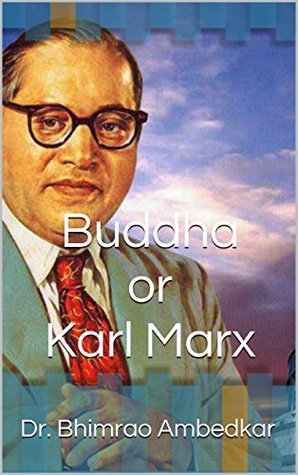
Buddha or Karl Marx

Buddha or Karl Marx

34 pages

Dr. Ambedkar admits that at first glance a comparison of Buddha and Karl Marx seems unreasonable. However, both can be considered practical philosophers attempting to create a more equitable world. Also, both saw that the abolition of private property would lead to a fairer and freer society.

Karl Marx proposed what he felt was a scientific socialism. In Marx’s estimation, a revolution by the poor was inevitable due to mounting inequality. The poor would collectively own the means of production through dictatorship. Once the dictatorship removed the concept of private property, a new equitable society would flourish.

However, the Communist plan has been implemented in Russia since 1917 after a violent revolution. The implementation of policies has also necessitated the use of violence and coercion. The use of force has no end in sight. Even though Marx claimed that implementing Communism would eventually lead the dissolution of the state, there is no evidence of this happening. Also if the state dissolved, it seems it would be replaced by Anarchy.

In contrast, Buddha set out to change people’s understanding of the world. Ambedkar then goes on to explain various Buddhist concepts such as The Four Noble Truths, The Ten Hindrances, and the Ten Virtues. He describes how these teaching systematically remove the idea that the individual can exist on his own or personal gain will lead to lasting happiness (ego). Once a person thinks in a collective sense, they will not want to own the means of production and want it owned by the collective.

To reframe this in Integral terminology, Buddha focused on interiors, and Marx concentrated on exteriors. Buddha understood that external changes only happen once a person’s attitude changes. If externals change without the internals, there will always need to be some greater force holding society together. People will not be motivated to maintain a healthy society without coercion so the society will always be unstable.

One of the criticisms that Communist often levy on Buddhist or people with religion is that religion makes people “otherworldly”. Those with religion care more about the afterlife than building an equitable future here on earth. Ambedkar illustrates how Buddhism professes and supports building material wealth inside the boundaries of law and morality. Buddhism is not an otherworldly religion. Ambedkar goes further to say Communist attempt to paint all religions with the same brush.

The read the entire book yourself click on the link below for a PDF copy.

Buddha or Karl Marx

Manu and the Shudra

In this treatise, he gives some background and explanation of Manusmriti, the book that codified caste law. He explains many of the rules that affected Dalits and other lower caste people.

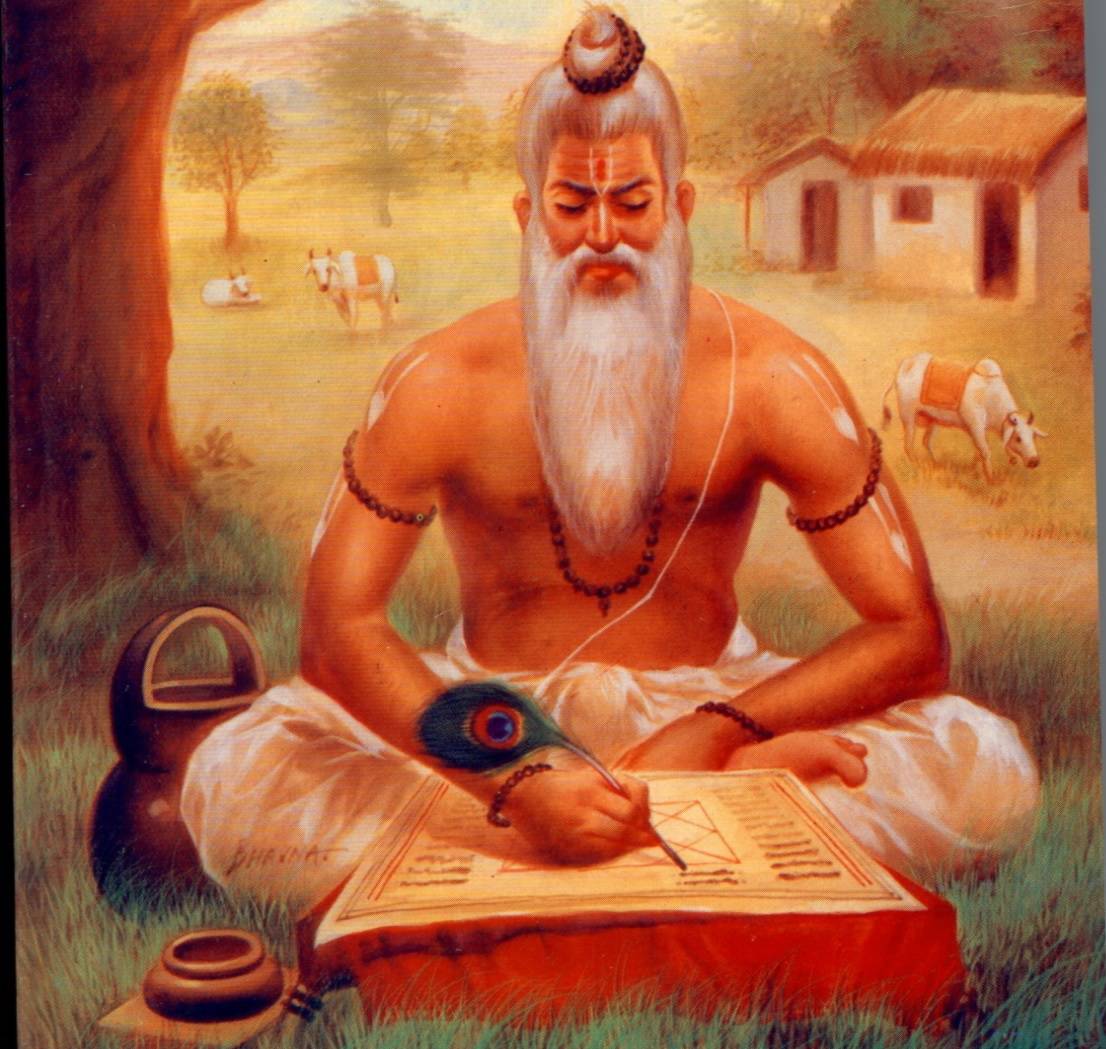
According to Manu, the person/demigod that codified rules of Untouchability, the world is composed of those inside the caste system and those outside the caste system. Of those inside the caste system, there are priests (Brahmin), soldiers (Kshatriyas), vendors/traders(Vaishyas), and servants (Shudras). These castes were listed in descending order.

The book goes into detail on various ways in which Dalits were marked and insulted.

  1. Had to leave town from 3 pm to 9 pm to not cast a shadow on higher caste
  2. Had to hang a pot around his neck to catch spittle
  3. Had to wear black necklace, black wristband, carry broom to sweep away footsteps, or wear horn
  4. Had to wear old or torn clothes
  5. Can’t build more than a one story house
  6. Not allowed to cremate their dead

One interesting point in the book was his thoughts on Shudra forming their political party and electing the best candidate that was Shudra. Ambedkar says that the action of selecting someone just because they are Shudra is no better than choosing someone just because they are Brahmin. The Shudra are attempting to dominate in the same way as the Brahmin

Ambedkar never published or completed this work.

Found in the book The Selected Works of Dr. B.R. Ambedkar found online for free.

Waiting on a Visa

This treatise gives anecdotal information on Ambedkar’s life as a Dalit. He speaks on incidents in which his life was threatened or disrespected. He also relays some anecdotes from other Dalits he gathered while investigating Dalit issues for the government.

Ambedkar relayed the following stories in the book.

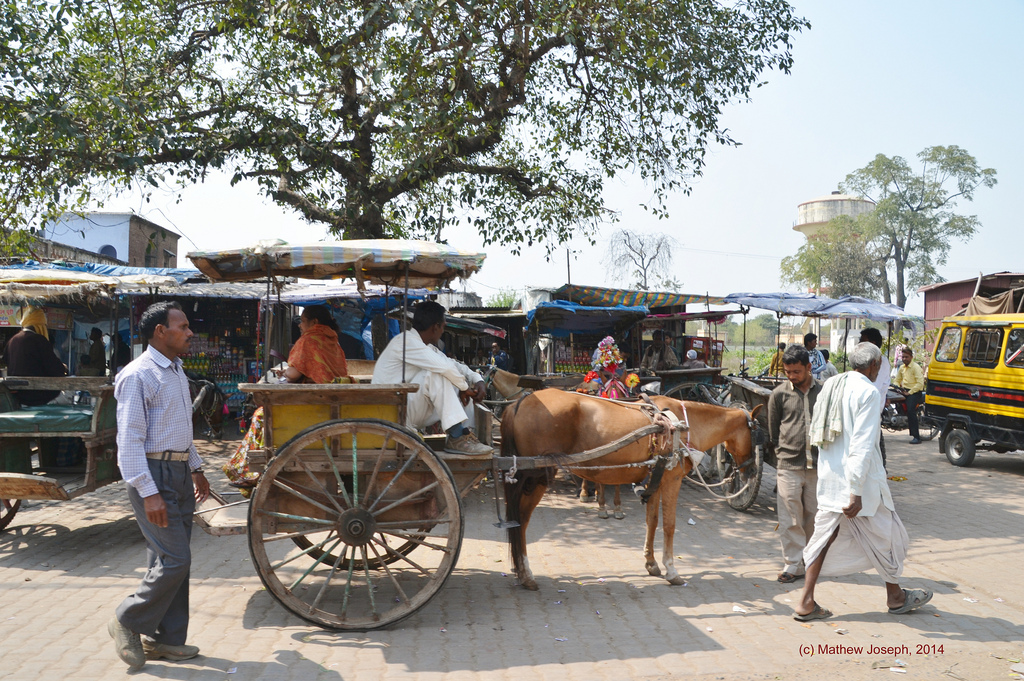
  1. He recounts how in his childhood he could not secure a wagon ride to another city because he was Dalit.
  2. He also recounts how he could not get lodging because he was a Dalit upon return from graduate school. He found lodging in a Parisi hotel under a false name until the locals found out he was a Dalit.
  3. Ambedkar retells an incident in which he was in a wagon wreck because of an inexperienced Dalit driver. All the upper caste drivers in the area would not transport a Dalit, so an inexperienced Dalit had to drive the wagon.
  4. He discussed an incident in which he was considered to be polluting the water tank of a Muslim
  5. A doctor refused to give another Dalit medical treatment. The refusal of treatment resulted in the woman’s death
  6. You can find the book at the link below.

    http://www.columbia.edu/itc/mealac/pritchett/00ambedkar/txt_ambedkar_waiting.html

The Origins of Caste (Caste in India)

The Origins of Caste is an early work of Ambedkar written in 1916. The treatise gives a preliminary explanation of the origin and propagation of caste. It also critiques the interpretation of castes provided by others. In the end, he reiterates this theory is preliminary and could require more research.

He summaries the root caste from others to begin. The other theorists say the caste system is rooted in myths of lineage, traditional occupation, or ceremonial purity. Ambedkar describes all the opposing theories as partially correct. However, he makes his case for the root of the caste system being the prohibition of intermarriage between castes.

When a person understands the root of the caste system is the prohibition on intermarriage, many other customs can be easily explained. The prohibition on intermarriage, each group, must ensure there is an equal number of males and females. If a spouse dies, then there is a surplus man or surplus woman. This adult with no sexual partner would have the incentive to look for a mate from outside the caste. To prevent the widow from a cross-caste marriage, she can be thrown on the funeral pyre or take a vow of celibacy. For a widower, he can be forced into celibacy or given an underage girl to wed.

He criticized that the rule of caste was set forth by one authoritarian ruler, Manu. It would be difficult for one man to enforce these laws during his reign against the will of the people. It would be even more challenging to create a lineage of rulers that did the same thing. It is also unlikely the Brahmin forced caste rules on the lower caste for the same reason.

Ambedkar theorized that the most likely explanation is the Brahmin decided to close themselves off by forming a caste. The next highest social class then converted themselves into a caste to improve their social standing. This behavior continued until finally those at the bottom of society were completely shut out. To support the claim Ambedkar calls to the attention of the reader; there are fewer purity rules the further a person’s caste is from the Brahmin.

The treatise is crucial because it provides a basis for Ambedkar’s struggle for the rights of women with the overall social justice struggle. As women win the right to marry and love as they wish, the foundations of caste will be destroyed.

A copy of this treatise can be found on Google Play or from the below link from Columbia University.

http://www.columbia.edu/itc/mealac/pritchett/00ambedkar/txt_ambedkar_castes.html

Who were the Shudras?

In this treatise from 1946, Ambedkar focuses on the origin of the Shudra (Menial) class. It studies Vedic scripture to get a clear picture of the origin of the castes system. The treatise also refutes the Aryan invasion theory, that is popular today and in the time of Ambedkar.

Some background on the caste system will be needed. The caste system is a social structure in which people are segregated into groups that are typically associated with professions. People can’t marry outside of caste or get an occupation that is reserved for another caste. Certain types of contact from lower caste can cause the higher class to need cleansing. A ceremony conducted by a Brahmin (priest) can fill the cleansing requirement. There are four Hindu castes: Brahmin ( priest), Kshatriya (soldiers), Vaishyas (traders), Shudras (menials). The Dalit (untouchables) are considered to be a caste by some. However, most Dalits feel that they are outside Hinduism. Dalit are not covered in this treatise.

The prevailing theory of the origin of caste in 1940 was the Brahmin descended from a central Asian tribe called the Aryans. The Aryans conquered the native Dravidian people. The Brahmin are those with the purest Aryan blood, and the lower castes are mixed until finally, the lowest class was pure Dravidian. Aryans had a white skin complexion and Dravidians had a dark-skinned complexion. This idea of mixing of race degrading a people was used to segregate people all over the world. It also was also used to justify white rule in India and other places.

He begins by laying out his main premise.

  1. The Shudra were an Aryan community
  2. There was a time only three castes were represented Brahmin, Kshatriyas, and Vaishyas
  3. Shudra were Aryans and part of the Kshatriyas (soldier class)
  4. The Shudra began a feud with the Brahmin on the exclusive rights to religious ceremony
  5. In retaliation, Brahmin refused to perform Upanayana on Shudra, Upanayana are the rights that are a prerequisite to land ownership and education
  6. The prohibition on Shudras from owning land or being educated led to the degradation of the Shudra.

The Shudra were an Aryan community

The word “Aryan/Aryas” was never used to mean race in the Vedic text. It derives from a Sanskrit word that meant plowed land. The term was used to differentiate the Aryan people from less sophisticated scavenger and nomadic tribes. After Vedic times Aryan meant nobleman or respected person. The only physical description of the Aryan people describes them as long-headed. Long-headed people could have any skin color.

Not only do the Vedic text not imply that Aryans have white skin. Many of the main characters in the Vedas that are Aryan are said to have a dark complexion. Rama, Krishna, and Rishi Dirghatamas all are said to have had dark skin. It is most likely that Aryans were white, copper, and black in complexion.

Also, the Vedas say that Dravidians/Dasus would convert and become Aryans. That leads Ambedkar to believe Aryan and Dravidians are early cults of Hinduism. Individuals could experience Aryan culture and determine they wanted to switch. The ability to change Varna would not be possible if Aryan denoted race. Also, the word “Varnas” which is normally translated as color, actually derives from the Sanskrit word for faith.

There was a time only three castes were in Hinduism

References to the four castes are found in the Purusha Sukta, which Ambedkar proves is a late addition to the main text of the Rig Veda. Therefore, there was a time only three castes existed: Brahmin, Kshatriyas, and Vaishyas. These three are the only ones mentioned in the Rig Veda main text.

Shudras were Aryans part of the Kahatriya (soldier) caste

The Shudras are the mythic progeny of the Vedic character Sudas. Sudas was a king in ancient India. Sudas coronation was conducted by Brahmin, a sign that he was Kshatriyas. Sudas was also said to be wealthy and respected before the skirmish.

The Shudra fought the Brahmin for the right to perform religious services.

Ambedkar uses passages of the conflict between Vasishtha and Vishvamitra as an allegory about the conflict between Brahmin and Kshatriya’s priest. Both were performing religious rights. Vishvamitra was a Kshatriya and wrote some of the Rig Veda’s hymns. Vasishtha was Sudas chief priest. Sudas fires Vasishtha and hires Vishvamitra. Also, Vasishtha’s son is killed by Sudas. Vasishtha’s son questioned Vishvamitra on an important matter. To hold Vishvamitra’s honor, Suda’s murdered the young lad. The sons and all the progeny of the two sides continued the feud. The Purusha Sukta and the Manusmirti hold the information on this conflict.

In retaliation, Brahmin refused to perform Upanayana on Shudra, Upanayana are the rights that are a prerequisite to land ownership and education

To retaliate on the Kshatriya’s priest, the Brahmin refused to perform Upanayana on the Shudras. Upanayana was an initiation rite that allowed a person to be educated and own land. Conducting sacrifice according to the Vedas was the primary reason for property ownership. The Vedas also say the Shudra of that time were few. The Brahmin held power to perform Upanayana and deny it to anyone for any reason.

The prohibition on Shudras from owning land or being educated led to the degradation of the Shudra.

Because the Shudra did not have education or land, they could not do anything other than menial tasks. They were not genetically deficient or fated to live in a servile state. The denial of Upanayana to women caused the same situation.

Also, the modern day Shudra are not descendants of the mythic Sudas. Shudra came to mean “low-class” or uneducated person. All those not Dalit or upper class got the epithet. If people understood the modern Shudra were not the descendants of Sudas, violence against them would stop.

Ambedkar also debunks the Aryan invasion theory. The Vedas have no record of an invasion. If the Aryans were conquerors, they would boast about their conquest. Both Aryans and Dravidians were native to India and are not related to Europeans. The Aryan Invasion theory was started by Europeans to justify conquest and accepted by upper-caste Indians to justify caste rule.

Why is “Who are the Shudra” important”

Who are the Shudra shows how important it is to study something through many cultural lenses. Had Europeans and upper-caste Indians been the only ones looking into the subject, many biases would not have been uncovered.

Also, the roots cause of disparity between groups is the denial of education and land. Systematic economic disenfranchisement is true in Indian history, African history, and American history. There is no situation in which a people with full access to education and property over the entire history of a country ends up in a servile position.

The full-text can be found HERE

Dr. Bhimrao Ambedkar

Ambedkar was an Indian Dalit, a person that was inflicted with social untouchability. Despite being a social outcast, he was able to earn degrees from Columbia and the London School of Economics. He started numerous political parties in India and served as India’s first Law Minister. While serving as Law Minister, he was commissioned to write the Indian constitution.

He is most famous for his show-down with Gandhi for the right of Dalits to have a separate electorate. Gandhi goes on his indefinite fast to force Ambedkar to concede power. Finally, the two agree to the Poona Pact in compromise and Gandhi narrowly avoids death. The rivalry between the two will continue. Gandhi will hold a paternalistic view toward the Dalit and Ambedkar will advocate for Dalit self-determination.

However, the mass conversion to Buddhism is what endeared Ambedkar in the hearts of many. In 1956, he converted to Buddhism along with 500,000 followers. This action made him the father of modern Buddhism and the founder of Navayana Buddhism. Many from all over the world consider Ambedkar a Bodhisattva.

Dr. Ambedkar’s Library

Biography

Dr. King and Ambedkar Agree on Communism

Gandhi’s Influence on Dr King ?

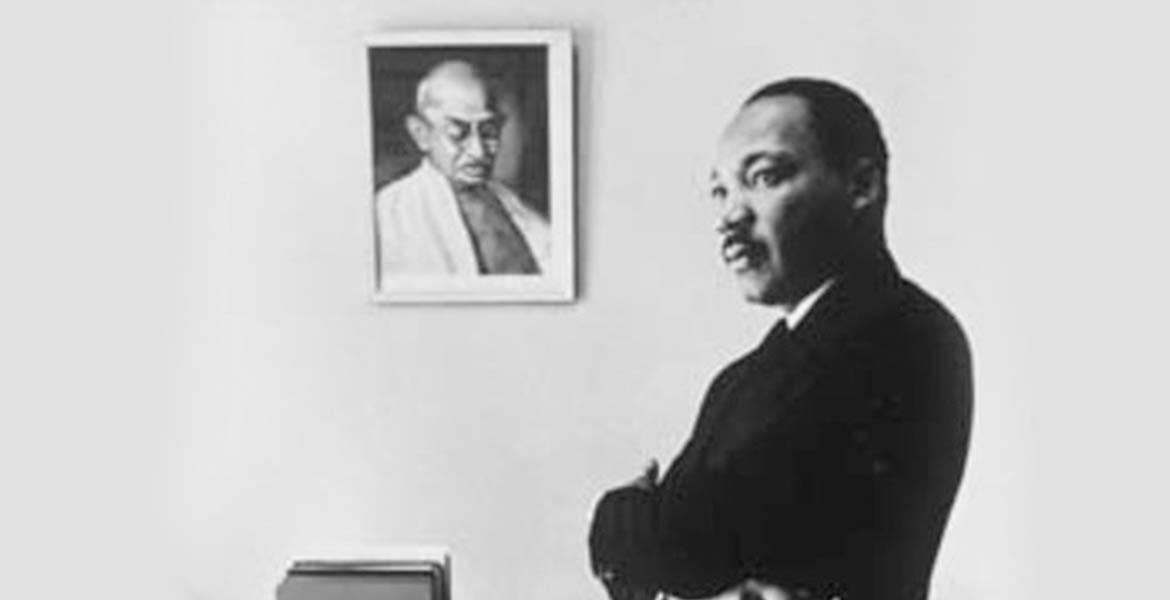
Dr. King saw Gandhi as a fellow Christian. Not because Gandhi was part of a church, Gandhi was Hindu. However, he did see Gandhi as a person that used love to conquer hate through non-violent resistance. He went as far as to say the bible verse “there are other sheep I must minister” (John 10:16) and “do even greater things than these” (John 14:12) included Gandhi. In a 1959 sermon, Dr. King said Gandhi was also a master of self-control.

Dr. King says that his first encounter with Gandhi’s teaching was a two years after the death of Gandhi in 1950. Dr. Mordecai Johnson gave the lecture while Dr. King was in seminary. At the time of the speech, Gandhi had already been assassinated. The address had such an effect on King he went out and bought six books on the subject. Some scholars say that Dr. Benjamin Mays introduced King to Gandhi’s work while an undergraduate. Dr. Mays had gone with a delegation of Christians to visit India and met Gandhi in 1935. However in the paper “My Journey to Non-violence” King credits Dr. Johnson for introducing him to Gandhi.

Prime Minister Nehru invited Dr. King to visit India in 1959. The Gandhi National Memorial Fund and the Quaker Center sponsored the trip. Dr. King arrived in India on February 10, 1959. He brought his wife Coretta and biographer L.D. Reddick for the month-long journey and exploration of non-violent resistance.

Upon leaving India, King calls on the United States and Soviet Russia to follow Gandhi’s example of non-violence and disarm. He also calls on India to disarm and become an example to the world. If India did disarm and some other country attacks, the world would rush to her defense, because she is a shining example of non-violence. His call for India to disarm shows how sincerely he believed in the concept of good will inevitably triumph over evil.

King’s view of Gandhi and his trip to India were recounted in the 1959 Palm Sunday sermon, a 1959 article for Ebony magazine, and a 1965 Independence Day sermon. According to King, Gandhi freed India without a gun drawn or a harsh word uttered. He gave a narrative of Gandhi’s life in the Palm Sunday sermon.

Gandhi began his journey when he was kicked off a train after buying a first class ticket in South Africa. The humiliation for being kicked off the train led him to organize Indians for equality. Gandhi gathered inspiration from the bible and Christian authors like Tolstoy. His campaigns in South Africa were so successful that those back home in India wanted his help.

In India, his campaign for equality began in 1922. This first campaign had to end because people in his movement became violent. King commends Gandhi for having the bravery to chastise members of his movement when they transgressed. He later restarted the campaign and protested the high taxes for salt with the Salt March.

Gandhi also wanted to end untouchability, according to King. King believes the fast of 1932 was to stop untouchability. Gandhi takes himself to the brink of starvation. Right before Gandhi was to die of starvation, a group of untouchables and high caste members decide to sign a pact to end untouchability. He never mentions Ambedkar by name. Now untouchability is punishable by three years in jail. Most Indian leaders publicly denounce the practice, and no one would publicly sign a pact supporting untouchability.

In reality, the 1932 fast was to remove Parliamentary reservations for Dalits. Ambedkar had gone to England and secured The Communal Award ensuring Scheduled Castes and Tribes would have seats reserved for them in Parliament. Supporters were glad that England would ensure some Dalit representation. Gandhi wanted to ensure Hindus always held the majority in Parliament. If Dalit had a separate electorate, they could form a coalition with Muslims and weaken Hindu caste rule. Gandhi went on a fast to ensure the Hindu set aside included Dalits. It is unlikely a Dalit could win an election where most of the voters were caste Hindus, and their numbers would increase the number of seats Hindus had relative to Muslims. Ambedkar and Gandhi were able to reach a compromise in the Poona Pact. Gandhi broke his fast and Ambedkar received some reserved seating in Parliament.

King continues to praise Gandhi saying he achieved absolute self-discipline. According to King, Gandhi had no secrets, and his life was an open book. King obviously was not aware of the numerous sexual allegations against Gandhi. These allegations will not be known in the West until much later. However, someone deeply involved in Indian politics would have at least heard rumor of transgression. Arundhati Roy has written many books detailing the violations.

Gandhi is also complemented for using the term “Harijan” instead of “untouchable.” It appears Dr. King is not aware that the term “Harijan” is also offensive and most people that suffer from untouchability and they prefer the term Dalit. The term “harijan” is Sanskrit for “children of G-d.” The term “Harijan” is more palatable to upper caste Hindus than “untouchables” or “Dalit” because it allows the upper caste to sidestep real issues and the root problems with caste. On the other hand, “Dalit” means “oppressed” in Sanskrit. The term “Dalit” forces upper caste to deal head on with the social problems of the day. Many Dalits protested the use of the term “Harijan” while Gandhi was alive. Gandhi knew this and continued to use the word “Harijan” because his priority was to talk to upper caste Hindus.

King also seems unaware that Ambedkar charged Gandhi of having different narratives in the three versions of his newspaper Harijan. The English version always advocated for the annihilation of caste, but the two versions in his native language advocate for keeping upper caste Hindus above Dalit, while removing rituals of purity when one is in contact with Dalits. King praised Gandhi for having a paper dedicated to Dalits.

While telling his story about his brief stint in Trivandrum, Kerala while in India, he tells the story about when he was called an untouchable. He was visiting a high school in the city that was comprised mostly of untouchables, and the principle introduced him as an untouchable from America. King was at first upset, but after reflection, he realized that he was, in fact, an untouchable, along with every other black man in America.

From the evidence I was able to gather, I am not convinced that Dr. King had a clear view of the Indian struggle and Gandhi’s role in it. He apparently knew little of Gandhi’s personal life. It is most likely that a carefully manufactured retelling of the Indian struggle through the eyes of Christian pre-determinism influenced King’s understanding. The idea that good will inevitably win over evil is pervasive throughout the Bible. All the people in King’s life that studied India were Christians with a background or career in theology. So, it can be easily seen that these people superimposed their beliefs on their retelling of the story. Dr. King was predisposed to believe the narrative because of his sincere belief in the Christian faith.

In reality, India had an armed struggle against the British that started in the 1850’s. By the 1940’s the Indian National Army was large and had carried out successful operations against the British in World War II. The English needed to concentrate on rebuilding after the war and did not have enough resources to suppress an armed rebellion. Gandhi came in at the right time to offer a transition of power that would allow for continued economic growth while not consuming British military resources. That does not mean blacks should form a resistance army to mimic the Indians. I present this evidence to show how fundamentally different what Gandhi accomplished was to what Dr. King accomplished.

King’s faith also led him to be humble and extend credit to Gandhi. In reality, the story of Gandhi had the same influence on King as the stories of rebellious Scottish chiefs had on the American founding fathers. Both gathered inspirations to fight tyranny from those that went before them. Both may have used previous struggles as a rough outline of what needed to be done to free their people. But to say that Gandhi was the inspiration or mastermind of the American Civil Rights movement is a step too far. King’s tactics and struggles were his own.

If Dr. King had been introduced to the philosophy of Ambedkar, he would not have given so much praise and credit to Gandhi. King also would not refer to Dalits as “Harijan” if he understood they prefer the term Dalit. He had a very limited view of the Dalit fight, but he saw the struggle against untouchability and racism as intertwined. If Dr. King understood Gandhi’s true feelings on untouchability, he would be highly critical.

As we continue this blog, we will go in-depth on the philosophy of Gandhi, Ambedkar, and King. It is very likely the philosophy of Ambedkar and King will be the most similar.

Sources

Background

  1. Labelling Dalits “Harijans”:How We remain ignorant and insensitive to Dalit Identity. 10-27-2015 S. Ramanathan
  2. L.D. Reddick’s Account of the arrival in India 02-10-1959
  3. Biography of M. Gandhi on http://kingencyclopedia.stanford.edu/
  4. Narrative of Dr. King’s 1959 trip to India found on http://www.gandhiking.ning.com
  5. Poona Pact: Mahatma Gandhi’s fight against untouchability 09-24-2016 https://www.indiatoday.in
  6. Dr. B.R. Ambedkar’s BBC Interview in 1955
  7. Arundhati Roy: Race, Caste – Ambedkar v. Gandhi posted by Joe Friendly on 10-14-2014 YouTube
  8. Arundhati Roy: The Doctor and the Saint posted by We Are Many Media on 10-16-2014 YouTube
  9. An odd kind of piety: The truth about Gandhi’s sex life 01-02-2012 http://www.independent.co.uk/
  10. The Sexuality of a Celibate Life by Vinay Lal 05-01-2011 https://www.sscnet.ucla.edu
  11. Debunking the Gandhi Myth:Arundhati Roy posted by The Laura Flanders Show 10-21-2014 YouTube
  12. Dr. King’s Papers and Speeches

  13. His Influence Speaks to World Consciousness paper 01-30-1958
  14. My Pilgrimage to Nonviolence paper 09-01-1958
  15. Statement Upon Return from India 03-18-1959
  16. Palm Sunday Sermon 03-22-1959
  17. My Trip to the Land of Gandhi 07-1959 published in Ebony
  18. The American Dream sermon 07-04-1965

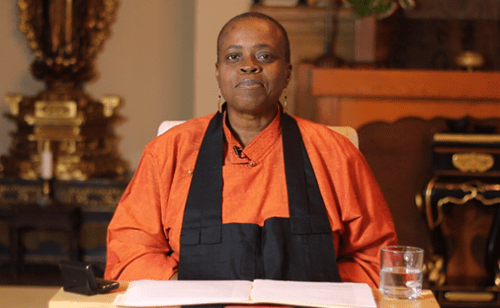
Zenju Earthlyn Manuel

Accomplishments

  • PhD in Transformative Learning from California Institute of Integral Studies
  • Opened a Zen Center in Oakland, CA
  • Zen Buddhist priest in the Suzuki Roshi lineage
  • Given Dharma talks at San Francisco Zen Center and Deer Park Monastary

Zenju Earthlyn Manuel (b. 1952) is a Buddhist teacher in the Zen tradition. She is of African- American ethnicity and only two generations removed from slavery. Her landmark work The Way of Tenderness: Awakening Through Race, Sexuality, and Gender her take on Buddhism. The book explains how universal suffering and individual suffering are the same and different.

Her story begins with her first Buddhist sit in 1988. A feeling of separation and unacceptability to the mainstream world motivated her quest for deeper meaning. She understood these feelings were connected to the systematic and historical suffering of her people. Initially, the path of activism provided an outlet for her angst. Eventually, she needed more holistic methods.

Entering Buddhism presented some difficulty because she had to leave Christianity. The black church not only serves as a spiritual community but an underpinning of an entire subculture. Often in rural areas such as Louisiana, the black church is the only formal organization a black person could join. Dr. Manuel equated blackness with membership in the church. She had to move past these feelings of betrayal to embrace the path of Buddha.

In The Way of Tenderness she uses the connection with the body to explain how universal suffering and individual suffering are interconnected. The body must be accepted as part of nature as the vehicle in which you experience the world and how the world experiences the individual. This body connects a person with an identity that distinguishes them from others. These identities can cause suffering, yet they also connect a person with their individual history and support from people with the same identity. The connection with identity can be emotional, powerful, and empowering.

The identity which Dr. Manuel frames as race, sexuality, and gender can’t just be ignored or obsessed over to create a false personal narrative. It is through an understanding of race, sexuality, and gender that a person begins to dissolve the illusion of self. The social justice struggle of these various groups connects the Dharma back to the physical world. Once people have these experiences with oneness, they will be motivated to expand them to the people they love and the communities they reside.

In the Buddhist or Enlightened communities issues with race, sexuality, and gender are seen as personal problems out of the scope of the religious community. Also, those still struggling with issues of identity are not enlightened and attached to the concept of self/ego. Instead of actively working toward a more equitable society the person needs to “let go” of ego. The denial of identity takes the Dharma and makes it only a metaphysical concept. True Dharma changes the metaphysical and physical world.

It is essential for enlightened communities to define “letting go of ego.” If self is an illusion then there is nothing to “let go of” and nothing to “attach to”. The release of ego is the understanding of the interconnection to all other living beings. The knowledge that all of our roots and fates are intertwined. Something happening to one person, real or imagined affects all people.

When enlightened communities do not discuss issues of identity, these problems fester and boil over. The unresolved issues of race repel members of minority communities. It also reduces the ability of introspection in members of the majority population. If a member of an enlightened community is not doing serious work in the area of introspection, they can not claim to be different than the population at large. Self-introspection will lead to an understanding of collective suffering and a desire to actively remedy the collective suffering.

In the social justice movement, which Dr. Manuel is connected with through membership in Pan-African associations and study of indigenous African religions, individual suffering is used to explain all life phenomenon. It is essential to understand what is personal narrative and what is systematic racism. In her meditation retreats, she has activities focused on people telling their personal narratives. Her retreatants will either disconnect from their story or see how their story is interconnected with everyone else. Once a person disconnects from their story, their anger moves through them. It is not ignored nor is it dwelled on as a controlling feature of their life. The individual can then determine what needs to be done in a given situation from a rational perspective.

Her understanding of universal and individual suffering leads her to support cultural sanctuaries, spaces for people of color (POC) to heal in spiritual communities. POC Sangha’s allow black people to openly discuss how they use the dharma to heal with past wounds and maneuver in a racially charged world. It is difficult to discuss these issues among groups of mixed race because whites often feel attacked. Since creating strategies to deal with racism is valuable for the progress of a spiritual community, POC spaces are vital. These spaces do not exclude whites to impose superiority, or to keep whites away from knowledge. They are practical workspaces to use the dharma to heal and grow.

Dr. Z. Manuel Analysis

Dr. Manuel has Integral consciousness. She details how suffering is at the same time universal and individual. She also explains how focusing on the individual aspects or the universal aspects could cause pathologies in individuals and communities. The Integral community needs to study the work of Dr. Manuel.

She needs to be commended for having the courage not only to take on the Dharma community but the social justice movement. Integral approaches are normally both/and not either/or. Having perspective at a higher level allows her to criticize both camps. Being at second tier also allows her not to be threatened by criticism of both communities or need to defend the communities at all costs.

For more on Dr. Manuel

Here official website click
http://www.zenju.org

Also, a SoundCloud playlist has been created titled: Zenju Earthlyn Manuel

Sources

  1. Www.zenju.org
  2. The Way of Tenderness: Awakening Through Race, Sexuality, and Gender by Dr. Z. Manuel 2015

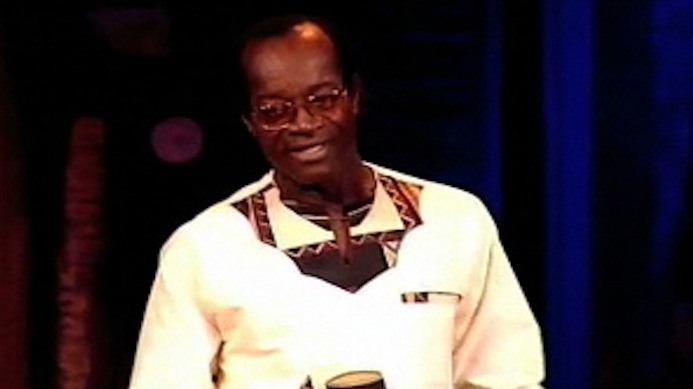
Ayittey’s Philosophy

Notable Life Events

  • Founder of the Free Africa Foundation in Washington, DC
  • Scholar affiliated with the Foreign Policy Research Institute, Hoover Institution, and The Independent Institute
  • Ph.D in Economics from University of Manitoba
  • Taught at Wayne State College, Bloomsburg University of Pennsylvania, and American University
  • Author of various books including Africa Unchained: the blueprint for development
  • In 2006 was made Nkosuohene (chief) of Teacher Mante
  • Victim of a Kenyan Security Force raid and jailed in Senegal for conducting research
  • Had office firebombed at American University in 1999

Bibliography

Indigenous African Institutions of 1991 was Ayittey’s first published book. The book details how indigenous African societies work. These systems were not destroyed by colonialism, in fact, in some cases, the colonial system rejuvenated the indigenous systems. The current one-party military dictatorships were detrimental to the indigenous institutions.

Africa Betrayed in 1992 illustrates how despots have halted Africa’s progress. Thirty years of independence has not led to economic prosperity. In the book, he goes as far as to say that the second wave of freedom struggles are starting to unseat the kleptocrats.

Ayittey followed up his work in 1998 with Africa in Chaos. The book is a deep dive into various problems in Africa along with solutions. In this book, he calls on African intellectuals to take up the fight against tyranny.

The idea of hippos vs cheetahs was first introduced in Africa Unchained: The Blueprint for Development in 2005. A cheetah is a young African leader that uses free market solution to improve the life of his people. A hippo is an old-style African leader that blames his failure on colonialism. The book explains various examples of cheetah leadership the reader apply in their own country.

Defeating Dictators: Fighting Tyrants in Africa and Around the World published in 2011 takes on the idea that Africa is predisposed to despotism. The book illustrates how the people could stop following incompetent chiefs in pre-colonial Africa. He also tells the story of many pro-democracy leaders and movements. He equates the struggles of Africa with other developing nations giving a global picture of the fight against oppression.

Proper African Leadership

Ayittey believes that Africa is suffering from economic stagnation because she has abandoned her indigenous culture for imported economic systems and charity. Africa is now dependent on foreign aid instead. The situation in Africa will not improve until the continent builds its workforce, infrastructure, and commercial systems.

There are two types of leaders in Ayittey’s estimation. Cheetahs young, nimble leaders ready to adapt and change to a fast-paced world. The second type is Hippos sluggishly clinging to post-colonial patronage systems. When they get in trouble, they blame colonialism instead of building solutions based on Africa’s past successes.

Confederations are the traditional type of African government. Even the largest empires had most of the power dispersed at the local level. The African cultures that had chiefs surrounded their chiefs with councils to ensure proper decision making. If the chief stopped listening to his people, they would leave and follow another chief. Some cultures, such as the Igbo, did not have chiefs. Ultimately, Africans are skeptical of strong centralized powers.

There are very few representative democracies in Africa today. As of 2011, there were 15 democracies out of the 54 countries in Africa. Only ten economies can be considered successes and less than ten have free media. Ayittey believes that accepting foreign government and economic system the leaders barely understood led to the failure of Africa.

Three sectors separate African economies, modern, informal, and traditional. Corrupt governments of Africa run the modern sector. The informal and traditional sectors are where average people engage in commerce. If aid goes to Africa, it should be targeted in the traditional and informal sectors.

Foreign Aid vs. Fiscal Responsibility

In numerous talks, Ayittey commends efforts by world leaders to raise money for Africa. He mentions aid packages ranging from $30 – $50 billion and compares this to the amount of money spent by irresponsible governments. Corruption costs Africa $148 billion; Capital flight cost $80 billion. Finally, the most outrageous number is $20 billion on imported food. In the 1960’s Africa had food surpluses. Fiscal responsibility could create far more wealth than additional aid.

Loans from IMF and Worldbank always come with stipulations. These stipulations restrain Africa’s ability to create unique solutions to her problems.

Chinese Development in Africa

Many African leaders have allied with China under the false assumption that the enemy of my enemy is my friend. Africa has been fighting colonialism from Western powers for centuries. Because China opposes the West for economic dominance, African leaders think partnering with China is advantageous.

When China partners with Africa the deal does not have numerous stipulations on how the country can conduct political or economic affairs. However, the deals are done on barter terms. For example in Nigeria, China agreed to repair $5 billion in railway repairs for access to four oil plots. China built presidential palaces in Zimbabwe and Sudan for resources. In Guinea and Congo China built a soccer stadium. China brings their workforce to these efforts, preventing the cultivation of a local workforce and a reduction in unemployment. Many of these Chinese workers participate in the informal economy selling discount products from China after work. The activity of China in the informal sector reduces African participation.

Socialism in Africa

Socialism means what is mine is mine, but what is yours we share:

Anonymous cabinet minister from Zimbabwe according to Dr. Ayittey

Ayittey uses the above quote in numerous talks when explaining how socialism failed in Africa. After the independence movements of the 1960’s and 1970’s. The revolutionary leaders borrowed socialism from Asia and Eastern Europe and did not modify it for the African situation. African socialism created a massive and wasteful bureaucracy that creates the opportunity for politicians to be corrupt.

To illustrate how socialism failed, Ayittey uses his home country of Ghana. Nkrumah took office in 1960 and implemented socialism. Socialism was always a strong force in Ghana even after the end of Nkrumah’s administration. In the 1980’s the price of cocoa dramatically increased. However, the only buyer allowed by law was a national co-op that would only by 20% of the world market price. The growers realizing they were being taken advantage of began to smuggle their product to neighboring Ivory Coast. To stop the smuggling the government had to impose the death penalty on violators.

Ghana also attempted to set the price for produce instead of allowing for negotiations at the market as had been done in local markets for centuries. Farmers refused to sell at the government declared price and create non-government affiliated markets. The government had to bomb these markets and jail farmers. The jailing of farmers was so vast that there were not enough farmers left to supply the prisons with food. Thirty-one farmers died while in jail.

Traditional African Capitalism

It is essential for people to understand the difference between not having an economic system and having a different economic system. Africans had money; they used gold and salt to barter. They had democracy. People would appoint a chief and chose to stop following him if he could not rule. They also had free markets. People would gather and negotiate prices to sell their produce. Therefore the ideas of democracy, free markets, and capitalism are not foreign to Africa. Africa had great free market empires such as Mali, Ghana, Songhai, and Zimbabwe. In these empires, the means of production were owned privately except for land. Also, these empires functioned as loose confederacies that had most of the power at the local level.

Historically, the best time for capitalism in Africa was the time after slavery and before decolonization, 1880 to 1960. The slave trade had ended, which was the primary cause of inter-tribal war, and the colonial governments were responsible for massive infrastructure spending. These local and traditional economies were allowed to develop without interference from the colonial powers.

What are African Solutions

Indigenous African systems serve as the basis for African solutions. Africans should concentrate on building the informal and traditional economies. Once the spirit of capitalism engulfs the continent, other reforms can take place. Currently and historically capitalism has been seen as connected to colonialism. Capitalism is not a foreign concept and is integral to Africa’s past and future.

Non-African countries can support Africa by not backing leaders but institutions. Institutions will last longer than leaders. The organizations that are vital to the development of Africa are independent and neutral judiciary, media, central bank, and security force. These institutions will enforce the rule of law, facilitate political discourse, and encourage economic self-improvement.

Private citizens, especially black Americans are vitally important also. Black leaders must speak out against oppression if it comes from blacks or whites. Idi Amin killed on average 150 people a day, and there was no outrage overseas. The Rwandan government controlled by the Hutus enforced an apartheid system on the Tutsi. There was no outcry until the situation turned violent. People are scared of promoting paternalism and colonization when speaking out against African leaders. Concerned citizens must remember their voices are vital and instrumental in improving the system.

Africans must work to reduce tribalism. It must be a requirement that a leader must win twenty percent of the vote from an ethnic group different than his own. The need to get votes from other cultures will encourage bridge building.

Read Entire Series HERE

Sources

  1. Description and Excerpt of Indigenous African Institutions found on http://www.books.google. com
  2. Description of Africa Betrayed found on http://www.books.google.com
  3. Description of Africa Betrayed found of http://www.goodreads.com
  4. Description and Excerpt of Africa in Chaos found on http://www.amazon.com
  5. Description and Excerpt of Africa Unchained: the blueprint for development found on http://www.amazon.com
  6. Description and Excerpt of Defeating Dictators: Fighting Tyrants in Africa and Around the World found on http://www.amazon.com
  7. YouTube Playlist titled SD George Ayittey

  8. George Ayittey: Cheetahs vs. Hippos for Africa’s future 08-01-2007 on TED
  9. George Ayittey: The solutions to Africa’s problems lie in Africa – IQ2 debates 11-29-2011 on iqsquared
  10. George Ayittey: The Failure of African Socialism 01-07-2013 on libertarianism.org
  11. George B. N. Ayittey | The New Path for Africa: Establishing Free-Market Societies 01-20-2015 on Independent Institute
  12. Pro. George Ayitteh speaks about democracy and dictatorship on ESAT 11-11-11 on Bette Mera
  13. ESAT – Professor George Ayittey (Part II) 11-26-2011 on Bette Merra
  14. George Ayittey, Economist, On Nigeria Elections And Africa 03-01-2015 on SaharaTV
  15. Independent Institute Articles

  16. Disband the African Union 07-12-2016
  17. Nelson Mandela’s Unfinished Business 02-11-2015
  18. A Human Rights Toast for an African Tyrant 08-08-2012
  19. Indigenous African Free-Market Liberalism 08-24-2011
  20. The Worst of the Worst 06-21-2010
  21. Generation Abdulmutallab 01-15-2010
  22. Misleading Africa 03-01-2009

Website Powered by WordPress.com.

Up ↑