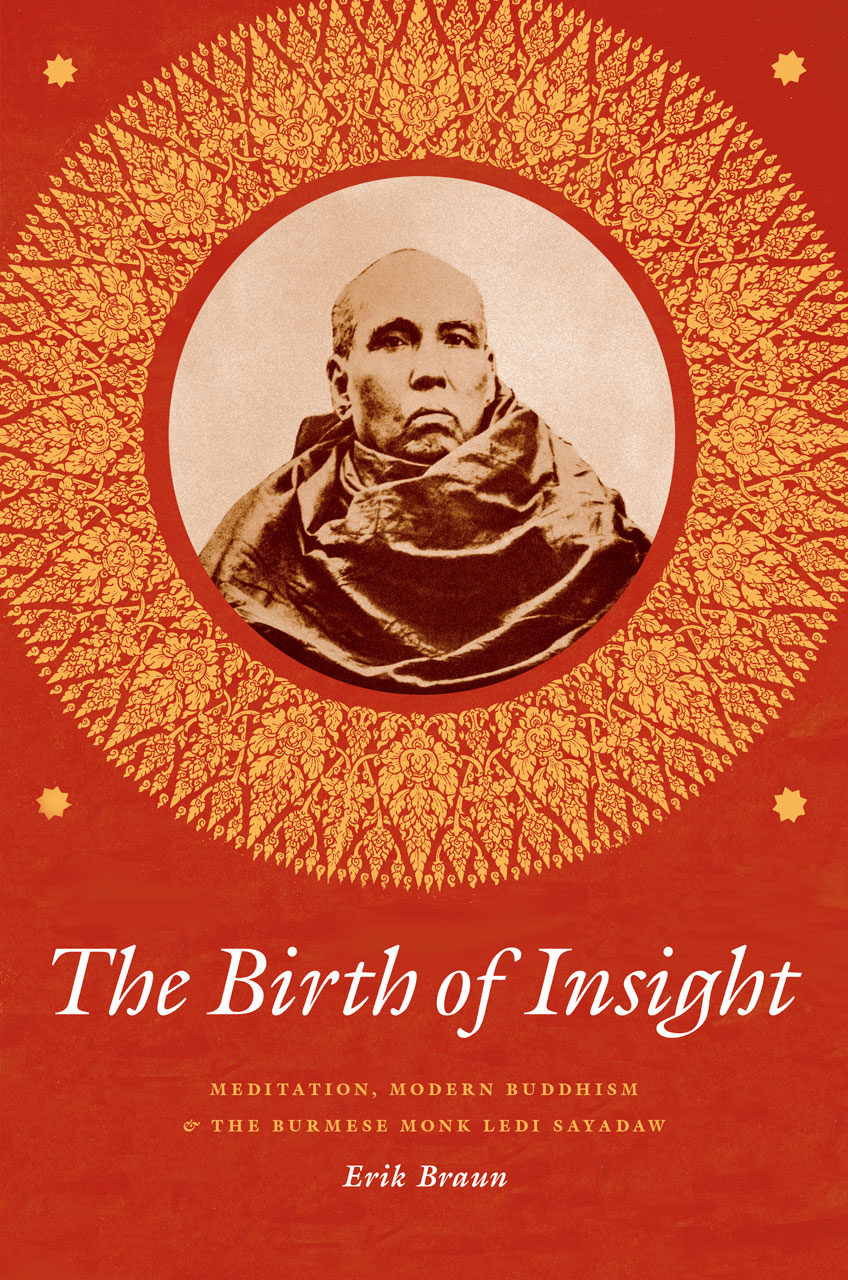
Ledi Sayadaw was born on December 24, 1846, and given the birth name of Tet Kaun. His parents were both rice farms in a society in which one was either in agriculture or living a monastic life. Ledi’s parents decided to give one of their five children to the monastery, so Ledi entered at ten years old. Luckily he excelled and graduated at 15 with the name Nyanadaza, Banner of Wisdom. He left monastic life briefly to help his parents on the farm but returned at 20 for full ordination. After full ordination, he went to the capital city of Mandalay.
Burma was a very turbulent place when Ledi was coming of age. The British had already captured Lower Burma, and everyone knew the British wanted to expand to upper Burma. The royal family controlled upper Burma from Mandalay. One of the King’s functions was to keep order within Buddhist monastics, also known as the Sangha. If a monk broke his vows, the King would have the final say on his ex-communication. The Sangha would keep their vows and perform good deeds to build good karma for the rest of the community. Therefore, if the British dethroned the King, Buddhism could die.
While at the monastery in Mandalay, Ledi excelled and became a first teacher at 27. He was also forward-thinking and wanted to build a Buddhism that could take Burma into a new century. He teamed up with fellow scholar Hpo Hlaing, who had an extensive library of western science and Burmese literature. They also worked together to learn and document British administration. The goal was to find the connections that are universal in all knowledge. They also wanted to have the tools to build an independent Burmese administration that ran efficiently.
Then in a twelve-day war that started on October 22, 1885, Upper Burma was conquered, and the King sent into exile. The same year Ledi created one of his first works of philosophy, “The Letter on Cows,” which forbade lay people from eating beef. This book was one of many on morality. The others were against a host of topics such as gambling and drinking.
Sociokarma was the underlying theme in all of Ledi’s works. It is the idea that individual actions and efforts can help or hurt the group. Keeping with the idea that individual effort improves the group, he also began his efforts toward meditation and teaching others by going into the forest in 1887. The meditation method he would use was Vipassana, which uses bodily sensation as the meditation anchor.
The Buddha also taught students within a particular order. The first aspect was morality. Ledi covered this aspect in his books on morality. Then came concentration covered by Ledi with Vipassana meditation. The last pin was wisdom. The book Ledi would cover this was 1897’s Manual of Ultimates. He decided to allow laypeople to learn complex philosophical concepts generally reserved for the clergy. He also began a form of sermonizing referred to as “fan down’ sermons. This new style of public speaking focused on laypeople and was relevant to their lives.
The more toward an educated lay population was vital because colonial administration immersed Burmese society. Most Burmese children went to schools run by Christian missionaries. These missionaries would often berate Buddhism and other local customs as “heathen.” Those children and their parents needed to have rebuttals ready. Ledi’s resistance allowed the Burmese to keep their cultural heritage.
Buddhism, in Ledi’s view, had superior reasoning to Christianity. In the West, science and religion are often at odds. In Buddhism, science, defined as knowledge obtained from observable data, was part of Buddhism. Ledi saw Buddhism as transcending and including science. Buddhism goes on to include a multi-level cosmos in which humans and spirits inhabit. So Ledi could continue the tradition of chanting and other more mystic practices. The supernatural didn’t conflict with science or the reverse.
In addition to Buddhism encompassing science, it comprises politics. The struggle for Burma’s political freedom fused with the propagation of Buddhism. The coming of the British could end Buddhism by consuming all Burmese culture. Ledi wanted to make sure that it did not happen.
Ultimately Buddhism encompasses all areas of mundane life. Once one begins a regiment of meditation and philosophical study, they see the world with new eyes. This unique “insight” makes all pursuits a liberatory experience. One can see the suffering and the relief and move towards healing.
In 1913, Ledi began the Buddhist Foreign Missionary Society to bring Buddhism to Westerners. Those in the Society believed once Buddhism was introduced to the West a world movement would begin to unite people all over the world.
Ledi Sayadaw died in 1923 at the age of 77 years old. However, his legacy lives on. He taught a layman named Saya Thetgyi. Thetgyi taught U Ba Khin, who taught S.N. Goenka. Goenka starts the Vipassana tradition that is popular in Asia and North America today. From the Goenka tradition, Joseph Goldstein and Sharon Salzberg became meditation teachers. These mediation teachers, along with Jack Kornfield, started Insight Meditation Center in 1975. So the most popular meditation traditions in the West began with the anti-colonial struggle.
For more information read the book The Birth of Insight by Erik Braun. Click the link HERE

The second half of Essay on Untouchables 3: Politics is the source for this article.
Under the Providence of Mr. Gandhi
In Ambedkar’s view, Mohandas Gandhi was a complete failure at the second Round Table Conference, a meeting in London to define the future relationship between England and colonial India. The treatise by Ambedkar references one of a series of Conferences in which the terms of Indian self-rule, Swaraj, would be defined and a constitution formed.
In Gandhi’s Conference speeches, he stressed religious humility as a sage more than initiating a coherent plan for self-rule. He was not able to get any concessions from the British Government. Not only was he ineffective in dealing with the Brits, but he also insulted many of the Indian delegates. He accused Indian liberal delegates of not having a following. The Muslim and Depressed class delegates fought accusations of not properly representing their demographics. In the end, Gandhi drove a large wedge between all parties involved.
Despite his failure, he returned home to a hero’s welcome. Government and party officials organized a large parade. Mr. Gandhi never expressed any words of thanks because he had taken a temporary vow of silence. Ambedkar questioned if the people’s support was due to blind devotion or misinformation by the press. Gandhi did not fool everyone. A group of Dalits protested Gandhi’s return waving black flags. A riot broke out, and forty people died.
The fact Gandhi preaches against untouchability yet doesn’t aid Dalits in their efforts to achieve equality angered Dalits in attendance. Many Gandhi supporters opposed efforts in Mahad to obtain the rights to use the Chawdar Water Tank. His actions are perplexing since he spoke at length about Indian unity to fight colonialism. Ending untouchability and building a bridge between Hindus and Muslims is the paramount precursor to self-rule. Ambedkar goes further by dissecting Gandhi’s actions before and after the Poona Pact.
Before the Poona Pact, the strategy adopted by most Indians to end British tyranny consisted of three aspects. The first was non-violence. Not only was violence morally wrong, but the Indians also could not beat the strongest military in the world. The second was non-cooperation with the Government. The last was a tax boycott. This plan was codified in February of 1922 in the Indian city of Bardoli.
The Bardoli program not only determined interactions with the colonizers. There were also plans for Indian self-improvement. Programs to encourage domestic yarn spinning instead of buying imports, organizing national schools, and an alcohol temperance campaign were paramount in the freedom struggle. However, the most contentious issue was the method of improving the lives of depressed classes.
Swami Shraddhanand and two others headed the Committee on Untouchables. Mr. Shradddhanad resigned from the committee because it was ineffective at getting results for depressed classes. The committee was an amelioration program not committed to ending separate facilities or marriage prohibition, but to convince people to give up caste. One of their contradictory policies was to fund separate wells not to offend locals while preaching against segregation.
Dalit led civil disobedience campaigns were the only way to end untouchability. When Dalits led their own struggle, Mohandas Gandhi was their biggest opponent. His logic for opposition was extremely puzzling. He claimed Dalits should not fight for their rights because the upper-caste committed the sin, so upper-caste need to end untouchability. The logic was extremely perplexing from a man waging a civil disobedience campaign against the British. Shouldn’t the British do the work to grant India freedom by Gandhi’s logic? Gandhi did not only obstruct Dalit advancement, but he also discouraged non-Hindus, including Sikhs, from helping Dalits. Ambedkar refers to Sikhs as militant and protestant Hindus. He did not see them as fundamentally different from Hindus.
Gandhi’s most detrimental act against Dalits happened at the Second Round Table Conference. An agreement took place in the first Round Table Conference based on a recommendation of the Simon Commission to create a separate electorate for Dalits. Similar agreements to disproportionate representation were extended to Muslims and Sikhs. Gandhi’s protest to the Dalit electorate was not only uncouth; it threatened the ratification of the constitution and the entire independence struggle.
Gandhi then began to collude with Muslims against Dalits. He offered the Muslims weightage in the new Parliament. Weightage having more votes than their percent of the population. In exchange, the Muslims would oppose Dalit claims to a separate electorate.
Gandhi and His Fast
The issue that deadlocked the Second Indian Round Table Conference of 1931 was Communal Electorates. Ambedkar and his faction wanted a separate electorate with reserved seats for Depressed Classes. Depressed Classes are defined as not only untouchables but scheduled caste, scheduled tribes, and other backward castes. Gandhi and his contention wanted only a general electorate. After the Round Table Conference ended, the British Government proposed a compromise.
The compromise, called the Communal Award, reserved 78 seats for Depressed Classes in a general electorate. Most Indians that suffered from untouchability were not happy with the agreement. Those of marginalized groups that did not suffer from untouchability felt it was acceptable. Even though Ambedkar was not entirely satisfied, he could also accept the compromise.
Gandhi felt that Dalits having their own electorate would weaken Hinduism. He felt untouchability and other forms of oppression were moral and religious in origin. A redistribution of political power would not improve the condition of Depressed Classes and destroy Hinduism. Gandhi decides to write a letter to the British Government while in jail informing them he would fast to the death to prevent Depressed Classed from having their own electorate. His fast began on September 20, 1932.
Gandhi’s opposition for a separate electorate for Dalits was inconsistent with his support for disproportionate representation for Sikhs and Muslims. He reasoned the Sikhs, and Muslims were more organized and politically aware. Dalits were less so due to current and historical oppression. The oppression was rooted in Hindus seeing Dalits as different. Therefore, labeling Dalits in a separate electorate would perpetuate the stigma and make things worse.
Ambedkar rebutted this argument by explaining labeling in and of itself is neither good or bad. It is the motivation behind the labeling that makes it good or bad. When Dalits are labeled to be excluded and disadvantaged in society, it is, of course, detrimental. However, to repair the accrued disadvantage, Dalits separate to build their community. The separation will not only help Dalits but the entirety of India. A separate electorate would empower Dalits and be a first step to rebuilding their community.
Gandhi’s fast put Ambedkar in a compromised position. He could not give away the political power the British granted the Dalits. The death of Gandhi could result in the assault of the same Depressed Classes in retribution. Ambedkar decided compromise would be the best solution. The Poona Pact was signed on September 24, 1932, was the result.
The terms of the Poona Pact were that there would be 151 reserved seats for Depressed Classes in the Central and Provincial governments. The reserved seats will be competed from candidates in a separate Depressed Class primary to elevate four candidates. Once the four candidates won the primary, a general electorate would pick the one that wins the reserved seat.
Ambedkar assessed the results of the Poona Pact as less than optimal. The Depressed Class candidates always had to appeal to a majority Caste Hindu electorates. These hamstrung Dalit representatives couldn’t even vote for a measure to allow Dalits into Hindu temples. Ambedkar realized Dalits would never have a voice in Gandhi’s party, the Indian National Congress.
The Indian Nation Congress was, in fact, revolutionary in their civil disobedience campaigns against the British Government. However, they were not radical in they wanted to change the power dynamics in India. Ambedkar wanted a radical party. Only a radical party can secure Dalit rights and a future for India.
The day after the Poona Pact was signed, Gandhi held a public meeting to explain his plan to help people suffering from untouchability. He pledges to start an organization later that month. It was called the All-India Anti-Untouchability League. He then changed the name to The Servants of the Untouchables Society. Finally, he settled on Harijan Sevak Sangh or Sangh for short.
One of the first actions of Sangh was to refer to those that suffer from untouchability as Harijan, which roughly meant “children of G-d.” He did not consult any Dalits when deciding on the name because most Dalits found it offensive. At least being called untouchable is a correct assessment of what they were suffering. Harijan covers the problem providing absolution for Hindus. Also, changing the name did nothing to reduce social stigma because everyone knew that Harijan means untouchable. Finally, it entreats a feeling of paternalism. No matter how old a person was, they would be seen as CHILDREN. It is surprising a person the understands the importance of labels such as Gandhi would make such an oversight.
Even if one excluded the horrible rebranding of people’s social conditions, the group was ineffective. The Sangh believed that only persuasion should be used to get orthodox Hindus to move away from untouchability. Therefore the group funded separate facilities for Dalits in places they were not allowed access to public facilities. By promoting separate facilities, they added to Dalit’s stigma.
Ambedkar challenged Gandhi to use civil disobedience as he did to fight British Imperialism. The reason Gandhi would not use direct action against Hindu’s is 91% of the support for the Indian National Congress came from Hindus. A move against Hindus to support untouchable would be suicide. If Gandhi was not willing to risk his political future to help Dalits, he is no better than the orthodox Hindus that oppress Dalits. The only real difference is that Gandhi claims to be sympathetic to the Dalit cause.
There is a long discussion on the prohibition on Dalit temple entrance. Ambedkar explains how insulting it is to allow animals entrance into Hindu Temples, but not Dalits. The few instances in which Hindus abolished the prohibition involved Dalit populations large enough and educated enough to create a political backlash for Hindus. Ultimately, if a Dalit accepted Hinduism, he accepted his own inferiority. Hinduism must purge the caste system if it expects Dalits to keep the faith.
A Warning To Untouchables
In the last essay, Ambedkar warns Dalits to separate from mainstream Hindu society. Their focus should be on education to dispel the lies the elite tell about Dalit inferiority and increasing political power. Dalits should feel no shame in increasing political power when attempting to combat elite Hindus that currently are unopposed. Dalit’s political power is their ability to strike. Strategic striking can secure Dalit political power.
Many people will say that religion could cause a moral revival that will end all forms of injustice. Ambedkar explains how religion was never designed to bring peace between those of different cultures. It was designed to bring peace to those in the same culture. Even within a faith such as Christianity, there is still conflict between blacks and whites in America. Hinduism is even worse because it is fundamentally non-egalitarian.
Others say reason will bring about the end of oppression because oppression is inherently irrational. However, in practice, most will not change their beliefs or position if it means they lose the advantage. The elite want to maintain their hold on resources and the idea that they have more because they are unique. Being special could mean they are better at the competition of life, or they are genetically / spiritually superior.
It is also impossible to build allies with the privileged class. They will never be more than benevolent despots. Again they have a vested interest in material advantage. There is no real motivator for them to sacrifice for the downtrodden.
Building a class-based struggle is also not realistic. Even within the Proletariat, there is a wealth and privilege stratification. A poor Caste Hindu would never give up his retaliative advantage over a Dalit. A true class-based alliance is not feasible. The relatively privileged poor will always be reformers. The destitute class will be revolutionaries.
Ultimately, Dalits could only depend on political representation from themselves. That is why Dalits need separate settlements and a separate electorate.
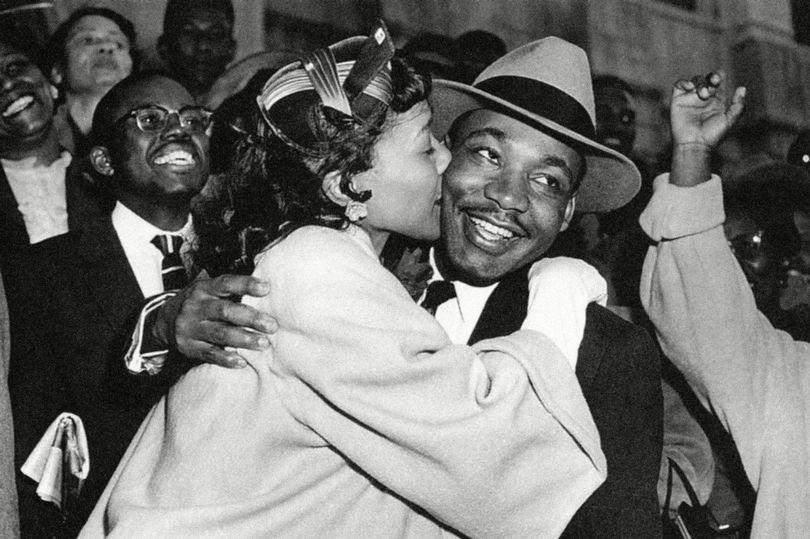
This book is a compilation of lectures given to a Canadian radio audience in 1967. These speeches focus on the future of the Civil Rights movement as it becomes part of the more expansive humanitarian movement.
Impasse in Race Relations
He starts the lecture by explaining the role Canada played in the liberation struggle. Canada was the last stop on the Underground Railroad. In the fugitives, slaves coded songs; it was symbolized by the word “heaven or north star.”
He then moved on to a discussion of the Civil Rights Movement and broke the movement down into two phases. The first was the unified resistance against the legal institution of Jim Crow. Once Jim Crow ended, many whites felt the struggle was over. The relative place of black people improved. The whites that were satisfied saw no need for equality between the races.
The second phase of the Civil Rights Movement is now underway. The focus now is not on law, but building a moral revolution. Also, many repressed feelings are surfacing. The first is the prejudice of whites; now that there are more interactions with other races. The second is the repressed rage of many blacks.
The repressed rage manifested itself in riots in the North. Many whites saw these riots as evidence that black people were fundamentally not able to handle freedom. Many blacks saw the riots as the first stages of an armed rebellion to take over the government.
King holistically analyzed the riots. The rage black people exhibited in the riots was caused by years of failed policy. Poor policy decisions caused discrimination, slums, unemployment, and poverty. The crimes on Blacks are derivative. Even when Blacks serve in the military, they return home to be treated as second class citizens. To build a more egalitarian society, there needs to be a government focused initiative to end poverty. King explicitly asks for a jobs program and Universal Basic Income.
The riots were also caused by frustration in the inability of the Civil Rights Movement to affect change in the Northern cities. Marches have little effectiveness in bustling cities that are used to large gatherings of people. King admitted the movement must devise new methods that are also non-violent.
When King used the term “The White Man,” he explains he does not mean all white people. Many whites had aided him in the Civil Rights Movement. The term “The White Man” is a shorthand to represent the black man’s adversary. Not only people but policy and value systems.
Conscience and the Vietnam War
This lecture was given after the famed Riverside Church speech in which he first denounced the Vietnam War. He addressed his critics asking why a civil rights activist would get involved in the peace movement. In the speech, King not only explains how the two issues are related, but how one that fights for equality in America can not turn his back on the freedom struggles of people across the globe.
There was three main criticism given by King for the Vietnam War. The first was spending for the war diverts funds away from social programs to aid the poor. The second was the poor do most of the fighting when they don’t even have full democracy at home. Finally, one can not advocate for non-violence in their movement and condone state-sponsored violence.
Ultimately, the USA was on the wrong side of history. King admits the National Liberation Front were no paragons of virtue, but only 25% of their soldiers were communist. Their opposition, the Ngo Dinh Diem government, brutally suppressed dissent. The United Buddhist Church, the largest non-communist political organization, was included in this suppression. The USA is motivated to support moneyed interest and the former colonial powers. The Vietnamese can not trust America while they destroy their country and rip apart families.
No American can sit on the sideline on the issue of Vietnam. We are required as Humanists to protest. The only question is what type of protest. This opposition will be under-girded by a revolution of American values centered around wisdom, justice, and love. Communism is ultimately a judgment on the failure of capitalism to meet people’s needs.
Youth and Social Action
The current generation is the first to live under the threat of nuclear war. This threat made ventures such as the Vietnam War risky with no apparent reward insight. America had lost its purpose, and the youth felt this disillusionment.
There were three groups of young people in Dr. King’s estimation. The first is the conformists. They understand the current system is untenable, but they have not entirely given up on it. The second group is the radicals. They understand the urgency for action to induce systematic change. However, they don’t have an ideology, and they are also not committed to non-violence. The last group is the Hippies. They seek to escape and disengage in society. When they participate in protests, it is a form of escape, not a catalyst for change. King correctly predicted the group would not last long, and many will move into communes away from the larger society.
Without a larger purpose to society, material growth has become a means to its end. The marriage of Big Business and the government has left many feeling alienated. Alienation is walking death, and it is especially damaging for the young.
Social cohesion will be regained when a new moral mission is undertaken. The hippies can provide their commitment to non-violence. The radicals will bring their urgency for action. Practical problem solving will be provided by the conformists. The new commitment to purpose is desperately needed because we are running out of time.
Non-Violence and Social Change
King begins with an ethical defense of civil disobedience. Most of his critics disagreed with his tactics because he was, ultimately, breaking the law. He uses the metaphor of a fire truck going through red lights. The urgency to put out a fire matters more than obeying traffic law. In the same way, ending segregation was an urgent need and law had to be broken for the greater good.
In the same way, people were attempting to understand Civil Disobedience. They wanted to understand the race riots happening in the North. Many whites saw the riots as proof that Blacks could not assimilate into society, and they were naturally bloodthirsty. Dr. King rebuts this idea with facts.
The riots did cause millions of dollars in property damage, but no white people were killed. Most of the deaths during the riots were blacks shot by the military. The looting and theft were motivated by a need to rebel against a system of oppression and not personal greed. Many of the loiter returned the merchandise after the riot, which proves they only wanted the thrill of taking something they couldn’t otherwise buy.
The rioters were rebelling against a system and not motivated by a blood lust to kill whites. If they wanted to kill whites, they would have killed them. They didn’t fear death or retaliation because they could be killed for looting. The riots were ultimately a warning. If nothing changes systematically, violence could be worse next time.
King also addressed critics that said non-violent direct action would not work in the North because Blacks in the North were more violent and too sophisticated. This idea results from a common stereotype that Blacks in the South are docile and slow. In reality, violent personalities often channel their anger constructively through Civil Disobedience. In fact, during the Chicago campaign members of the street gang Black Stone Rangers march with King and stayed non-violent. The same was true of people that had violent personalities in the South. However, new tactics need to be devised to address social injustice holistically.
The next phase of the Civil Rights Movement will be international. The first stage would require 3000 volunteers into a non-violent army of the poor. They would receive months of training in non-violent direct action to prepare for an occupation of the mall in Washington, DC. Their focus would be to advocate for policies to lower unemployment and increase wages.
As for the international front, King worked toward reducing military intervention and increasing foreign aid to developing countries. He goes as far as saying 3% of Gross National Product should be going to international aid. Developing countries are poor because of exploitation from the West, not an inability to manage their countries.
He also calls for economic sanctions on countries that aren’t practicing humanitarian values. South Africa was explicitly needed sanction until Apartheid ended. Only a united effort to apply pressure to Capital will lead to conditions of change.
Christmas Sermon on Peace
In this sermon, King explores what it means to have “peace on earth and goodwill toward men.” To him, this phrase was an affirmation of the sacredness of all life. It also is a commitment to love over hate.
To better define love, he goes through the ancient greek classifications of the word. The first definition is “eros,” which is the ascetic romantic love for the divine. The next definition is “philo” which is an intimate love between friends. King wants the audience to practice and understanding of goodwill for all man mimicking the love of G-d, “agape.”
There is also a difference in agape love and liking someone. Liking is superficial and spawned from positive interaction. One can’t love someone that slanders, attacks, and dismisses him. Love understands redemptive goodwill. Not retaliating with physical force, but Gandhi’s “soul force.” The King movement will wear down their enemy with their ability to endure hardships.
In this speech, King says one of his most often misconstrued quotes:
“Toward the end of that afternoon (March on Washington), I tried to talk to the nation about a dream that I had had, and I must confess to you today that not long after talking about that dream I started seeing it turn into a nightmare.”
He then explained how he was frustrated at the continued violence against black people when fighting for freedom, black systemic poverty, and escalation of US interventionism. He ends by doubling down on the original “I Have a Dream Speech” saying he will not lose hope. King never gave up on integrating America. Instead, he expanded his mission to help the poor all over the world.

There are two very misconstrued quotes from King. The first is “My Dream turned into a nightmare” from his 1967 Christmas Eve Sermon broadcast on the Canadian Broadcast Channel. The other is “I have integrated by people into a burning house.” Most use these quotes as proof that toward the end of Dr. King’s life he abandoned integration for black separatism or black militancy. Looking at both of these quotes, more rigorously will help us understand what King meant.
The exact quote from the Christmas Eve Speech was:
“Toward the end of that afternoon (March on Washington), I tried to talk to the nation about a dream that I had had, and I must confess to you today that not long after talking about that dream I started seeing it turn into a nightmare.”
In this speech, he explains his frustration at the amount of violence blacks have encountered in the Civil Rights Movement. But his frustration led him to double down on his philosophy of integration. In the speech, he goes on to say that hope is what keeps people alive, and he would never lose faith in the cause.
The 1967 Christmas Sermon is just one of five Massey Lectures. The Massey series was something the Canadian Broadcast Channel did to showcase significant contemporary thought leaders. If one reviews the entire Dr. King Massey Lecture series in the book Trumpet of Conscience his philosophy on social justice is thoroughly explained. He sees the first stage of the movement as removing the legal basis of segregation. The movement was now in its second phase, world-centric humanitarianism. In this movement, the focus was on empowering all underprivileged people all over the world. He espoused global egalitarianism manifested in his opposition to the Vietnam War.
The second quote on the “burning house” comes from a story told by Harry Belafonte. Here is the quote from The New York Amsterdam News:
According to Belafonte, King responded, “I’ve come upon something that disturbs me deeply. We have fought hard and long for integration, as I believe we should have, and I know we will win, but I have come to believe that we are integrating into a burning house. I’m afraid that America has lost the moral vision she may have had, and I’m afraid that even as we integrate, we are walking into a place that does not understand that this nation needs to be deeply concerned with the plight of the poor and disenfranchised. Until we commit ourselves to ensuring that the underclass is given justice and opportunity, we will continue to perpetuate the anger and violence that tears the soul of this nation. I fear I am integrating my people into a burning house.”
Belafonte added, “That statement took me aback. It was the last thing I would have expected to hear, considering the nature of our struggle.”
Belafonte said he asked King, “What should we do?” and King replied that we should, “become the firemen.” King said, “Let us not stand by and let the house burn.”
So again, Dr. King did not want to evacuate the house. Instead, he wanted us to be agents of change and harbingers of a new moral code. A full retelling of Belafonte’s story is consistent with what was expressed in the Massey Lectures.
However, the best way to understand if Dr. King gave up on the idea of would-be evaluating his last efforts in organizing. He died while building “The Poor People’s Campaign.” In 1967, King announced a plan to bring thousands of poor people from across the nation to a new March on Washington. Their first meeting in March 1968 had leaders from many trade unions, civil rights organizations, and academia. This effort was a multi-racial, multi-ethnic initiative to fight for class issues. They pushed for an economic bill of rights that included social programs, the elimination of slums, and a full-employment initiative. Nothing in the campaign singled out blacks or abandoned integration.
Sources
- The New York Amsterdam News“Dr. Martin Luther King Jr: I fear I am Integrating My People Into a Burning House” 01/12/2017 http://amsterdamnews.com/news/2017/jan/12/dr-martin-luther-king-jr-i-fear-i-am-integrating-m/
- Santa Clara University Website: “Harry Belafonte Reflections on Peace” https://legacy.scu.edu/ethics/architects-of-peace/Belafonte/essay.html
- https://www.poorpeoplescampaign.org/history/

This blog post is from the first half of Essay on Untouchables 3: Politics.
From Millions to Fractions
Untouchability is not a legal term. It is also not determined by physical features. It is a social concept that ostracizes a group. Dalits, the group that suffers from untouchability, have accrued disadvantage through generations. Birth determines untouchability. The condition can’t be changed.
Ambedkar lists the number of Dalits (Untouchables) in India as 50 million. The figure came from the 1931 census. The Indian government conducts a census every ten years.
There was no mention of caste in the first Indian Census of 1881. There was an attempt to add a caste question to the 1891 census, but the effort failed. The census of 1901 was the first successful attempt to add a question on untouchability. That year an untouchable was defined as one that most of the native people believe is untouchable. In 1911, there was a ten-question test to determine if one was a Dalit or part of the depressed classes. The questions involved if one eats beef or receives religious directive from a Brahmin. Many opposed the test on the basis that it perpetuates the idea of caste. The opposition did not win, and the question was on the 1921 census. Finally, the 1931 census confirmed there were 50 million Dalits or one-fifth of the population.
The number of Dalits became vital after the formation of the Simon Commission. The group was formed to study and determine how best to rule India. One of the efforts they were undertaking was increasing the political power of Dalits through a reserved electorate. A reserved electorate would allow Dalits to vote for a select number of seats. The electorate and the candidates would all be from the Dalit Community.
The Lothian Committee in 1932 also attempted to win Dalits an appropriate amount of political representation. The effort to increase Dalit political power was opposed by various provincial committees that tried to make the case that untouchability no longer existed. The provincial committees believed the British wanted to reduce Hindu political power by splitting their share in government between touchables and untouchables.
There were also factions of Indian society that could benefit from an electoral reservation for Dalits. The first group is the economically underprivileged of India referred to as Backward Classes. They wanted to join the reserved electorate for Dalits. If this were to happen, the reserved voters would have more people from the Backward Classes than Dailts watering down the Dalit vote. Dalits would have supported a Backward Class reservation from the portion allotted to Hindus but not their own. The Backward Classes insisted on getting a reservation from the Dalits. When the Dalits refused, the Backward Classes joined the Hindus in their denial of untouchability.
The second faction that could benefit from an electoral reservation for Dalits, is Muslims. If the Hindu electorate split between Dalits and Hindus the relative power of Muslims increases. Muslims did not support the electoral reservation because they were pushing to have a larger representation in Parliament than their number in the population, which is called weightage. Hindus would only agree to weightage if they had an overwhelming amount of power in Parliament, and giving more power to the Muslims would not upset their majority. Seeding power would be beneficial to Hindus if it prevents the Muslims from splitting into their own country. The second reason Muslims opposed having a reserved electorate for Dalits is that many Dalit Muslims would leave the Muslim political contention to join with other Dalits. Indian Muslims still practiced caste, just not as severely as Hindus. The following quote from Ambedkar can be found in this essay:
Although Islam is the one religion which can transcend race and colour and unite diverse people into a compact brotherhood, yet Islam in India has not succeeded in uprooting caste from among the Indian Musalmans (Muslims).
Misinformation hampered future efforts to account for Dalits. Hindus began telling Dalits that the government planned to institutionalize untouchability. Dalits were afraid to register as such, thinking they would never be able to pass as a caste Hindu. Dalits would often attempt to pass as caste Hindu to avoid discrimination.
Ambedkar reiterates the need for Dalits to agitate at the end of this essay. If no one speaks out, there will be no way to increase Dalit political power.
The Revolt of Untouchables
Dalit resistance came in two stages. Before 1920, Dalits concentrated on protesting and petitioning the government. After 1920, Dalits realized that petitioning the government had little success. Also, the national government declared that all public utilities and institutions were open to all citizens regardless of caste. Dalits moved toward Civil Disobedience and Direct Action.
One of the first civil disobedience campaigns was getting the ability to use roads near a temple called Vaikom in Travancore state. The campaign forced the government to move the road far enough away from the temple to allow Dalits to travel on it without polluting the temple.
The second great campaign was formed to grant Dalits access to Chawdar (Chavdar) Water Tank, located in Mahad, Bombay, in 1927. This tank is reserved as a reservoir for caste Hindus in the city. No one knows who originally built it, but it was declared public property in 1869. Dalits would frequently come to Mahad to shop and conduct other business. They would have to bring water from a well from a neighboring Dalit town or pay a caste Hindu to fetch water. In 1924, the city of Mahad adopted the laws allowing all citizens access to public facilities or institutions, including the water tank. However, the threat of caste Hindus violence kept Dalits away from the water tank.
Ambedkar organized a conference in Mahad in March of 1927 to discuss and organize Dalit rights. On the first day of the conference, the 2,500 people in attendance felt frustrated in their ability to access water. Only Hindus could retrieve water from the tank, and they charged a premium price. On the second day of the conference, Ambedkar decides to take matters into his own hands.
After a rousing speech, Ambedkar entreats the participants in the conference to take water from the Chawadar Water Tank. The Dalits were energized, and all went with Ambedkar to the tank. This mass protest caused the Hindus to gather paralyzed with shock at first. Then the Hindus unleashed terror on the Dalits that participated in the protest.
After the protest, the Dalits realized what they were up against and decided to double down. A second conference was called for December 25th -27th, 1927. At the same time, the Hindus chose to fight back by petitioning the local Magistrate to forbid Dalits from using the water tank.
The Magistrate refused because the Hindus never proved that they had exclusive use of the tank. The Hindus then went to state court to establish their exclusive right to use the water tank. Ambedkar and a group of Dalits contested. At the beginning of the trial, the Hindus ask the court to issue a restraining order on Ambedkar to prevent him from returning to the tank. Ambedkar received the order days before the December conference.
With the trial in recess, Ambedkar leads the December Mahad Conference. On the first day, he decides to have a public demonstration of the injustices of the caste system. He burned a copy of Manusmirti, the religious book that codifies the caste system. Ambedkarites still commemorate the Burning of Manusmirti as a holiday.
The next order of business was deciding if they would disobey the restraining order and drink from the water tank in protest. The Magistrate communicated he would uphold the state-mandated restraining order. After careful deliberation, the group decided to comply with the restraining order to give themselves the best chance of winning the court case. It turns out that it was a good decision. Ambedkar won the court case, and Dalits were allowed to drink from the Chawdar Water Tank. Ambedkar cautioned over celebration as Dalits needed to continue fighting to prevent untouchability from being recognized nationally.
The December Mahad Conference went on to express the vision of the Ambedkar movement. The conference created a manifesto that declared equality is the birthright of all Indians. No one had a right to remove that equality without due process of law. The law was created to secure this equality and must be respected by all people. The caste system, as detailed in Manusmirti was explicitly created to disadvantage Dalits. Those in this conference vow to oppose all literature, modern or ancient, that promotes the caste system. Those in the conference also vow not to do the jobs mandated by their caste. Specifically transporting dead animals and cleaning homes of the dead.
Ambedkar makes sure to attack the idea that Dalits brought scorn onto themselves by eating the dead animals they transport. Many attempts to claim the Hindus repulsion at Dalits were justified because the practice of eating rotten meat is disgusting. Ambedkar reminds the audience that Dalits would only eat rotten meat if they had no other options. The cruelty of the caste system prevents Dalits from finding any other work. Also, the law mandates they participate in scavenging to keep the only housing they were allowed to live in. Legally mandated work for no money is no better than slavery.
The Dalits must be strong to not do the work their caste mandates. The civil disobedience Ambedkar prescribes would serve two functions. The first is to increase self-esteem and self-respect. The second is to strike a blow against the Hindu Social Order. The current oppression only last because Dalits comply.
Held At Bay
Hindus view the advancement of Dalits as a personal attack. As the situation stands now, the Touchables are above the Untouchables. They are not one people. They are people from two different nations. By resisting caste, the Dalit seeks to elevate himself and the perceived expense of the Touchables. The Touchables will use any means necessary to maintain the status quo.
One example of this ruthlessness of caste Hindu oppression was in the immediate aftermath of the Chawadar Water Tank demonstration. It began with the Dalits exercising their right to tank water for the city reservoir during the Mahad Conference. Once the caste Hindus in the area saw the demonstration, a rumor began that the Dalits would soon enter the temple. Two hours after the water tank rally, the conference members were having a community dinner. A mob of Hindus attacked the Dalits with sticks. Many of the Dalit leaders kept their brothers from fighting back, stopping a much larger riot.
After the conference ended, Hindus from Mahad sent messages to government officials from the districts where conference delegates lived. Hindus assaulted many of the conference delegates on the way home or once they returned home.
Another example of oppression happened in Dholka Talvka, Bombay when Dalits attempted to integrate a school. Many of the Hindu parents did not want their children sitting with Dalits. They pulled their children from school. The tension from the integration efforts led a Brahmin to attack a Dalit. The Dalit men of the community protested at the police station to ensure something would be done. When the men were away, Hindus attacked the Dalit section of town. The Hindu mob included women. There was also another force of Hindus waiting to ambush the men after their demonstration at the police station. The ambush plan was thwarted, but Dalits still sought redress for the attack on their women and children. To further frustrate the Dalit’s effort, the Hindus poured kerosene in the Dalit well. The Dalits only had this one water source.
The Dalits appealed to Gandhi through Harijan Seva Sangh, Gandhi’s organization that promoted Dalit Civil Rights. They did nothing. Not only did they do nothing, they forced the Dalits to remove their complaint from the Magistrate and promised them no harm would come to them. Dalits had no way of enforcing Gandhi’s promise.
After reflecting on the incidents detailed above, one must wonder why Dalits are always on the bottom of the hierarchy. Ambedkar proposes a few reasons. They are a minority and scattered throughout the country. Also, the idea of caste has infected the mind of Dalits. Even within the Dalit community, there is a Caste hierarchy. There needs to be a common ethos to unite Dalits.
One example of a minority community with a unifying ethos is the Muslims. When a Muslim was attacked, the group unites in retribution. Much of the reason Hindus treat Muslims better is fear of a blood feud starting between Hindus and Muslims. The idea of a unifying ethos does not stop and India’s border. Muslims from other countries would not be afraid to defend their brothers in the subcontinent.
One way Hindus can exact revenge on Dalits is through violence. If the Dalits go to the police, the police rarely act. Most of the police are caste Hindus themselves. Even if they investigate the infraction, it is rare other caste Hindus would testify against their own.
However, the much more effective form of Hindu reprisal is the social boycott. Dalits own minimal economic infrastructure and depend on Hindus for employment and commerce. If a Dalit is seen at a protest, he can be fired. If he is not fired, Hindus could refuse to sell him goods. Both firing someone from a job or refusing to sell products to Dalits is legal. The only recourse for Dalits is political action.
Their Wishes Are Laws Unto Us
When Hindus are asked why they oppose the advancement of Dalits, they don’t reply with how it physically harms them. Hindus respond that it is an offense to their Dharma. Dharma means the privileges, duties, and obligations of a man as a member of the Hindu community, caste, and age group. Manusmirti sets each person in their station in life, responsibility, and benefits. A Smriti is a religious holy book for Hindus. They have several, but of all of them, Manusmirti is the most prominent and influential.
Manusmirti codifies who is inside and outside the social order, called Chaturvarna. Chatuvarna is a hierarchy with the Priest class at the top and the Menial class at the bottom. Those outside of Chaturvarna are called Bahayas, excluded. The denotation of Bahayas is the Western equivalent of being a non-citizen. Bahayas were never meant to have rights under the social order.
Bahayas are the present-day untouchables. To illustrate how the denotation of outsider plays out in current times, Ambedkar uses the example of the Balais. Balais is a sub-group of the Untouchables. The local caste Hindus attempted to force the Balais to confirm to caste rule. The Balais refused and the Hindus retaliated. Balais were not allowed to get water from village wells or cross land owned by Caste Hindus. Not being allowed to cross land owned by Hindus put some Balais cattle farmers out of business because the property of Caste Hindus surrounded their land. These draconian laws force Balais to leave local municipalities they had occupied for centuries.
It is important to remember at the time of the persecution of the Balais there was no legal enforcement of the Caste System. Ambedkar illustrates how custom could be more powerful than the law. Every social group has habits in how they act, feel, and value various things. Even when a new individual joins the group, they are pressured into conformance. Challenging the group norm could lead the new entrant to become an outsider himself.
To counter the power of Chaturvarna propagated by custom, laws must be passed to destroy the Caste System actively. As one can see, the Protestant Reformation would not have been successful without laws separating church and state. Laws were also needed to make the state superior to the church. Without an active degradation of church authority, it would have regained its place as the supreme authority.

What Dr. Alim got right
He is a superb advocate for holistic medicine and improving overall health in the black community. The Hoop House concept is an actionable plan to address the problem of food deserts. Urban gardening will not only improve the nutrition in underprivileged communities; it will increase fellow feeling amongst those that participate in the effort. The root of good health is nutrition. In a community with little money for health insurance, an ounce of prevention is worth a pound of cure. In addition, the building of hoop houses will not require government help.
He also brought an awareness of Ayurvedic medicine and Yoga to the black community. Without Dr. Alim, many black people would not have been exposed to any eastern medicine. Other avenues to eastern medicine are price prohibitive for poor people.
Advocacy for prostate cancer awareness is also vital in the black community. Because we are oppressed anything that can threaten virility can do severe damage to our psyche. Back in the 1990s when his work started losing a prostate could mean the loss of the ability to get an erection. Even the rectal exam could make men feel emasculated.
The economic devastation of Iraq through government sanctions was a subject few would discuss. Dr. Alim shined a light on the subject and urged Blacks to do what we could for those overseas. The act of discussing the US embargo on Iraq shows a glimmer of a world-centric perspective.
The most significant campaign of Dr.Alim’s life was the Dopebusters campaign. He provided a community solution when the government decided to underfund police in DC. Most stood by and watched DC neighborhoods fall apart. Dr. Alim created a program to at least retard the cancerous growth of crack.
Is Dr. Alim racist or antisemitic?
No evidence could be found of Dr. Alim advocating violence toward anyone for any reason. Also, there was no evidence that he prevented someone from improving their life due to race. In fact, in the Yale speech, he said NOI member that has a weapon can be expelled from the organization. He repeatedly said that the NOI is a peaceful movement and any vengeance will be taken out by Allah. So to equate him to the Ku Klux Klan or neo-nazis is a stretch.
Most often he is accused of supporting Steve Cokley’s conspiracy theory on Jewish doctors spreading HIV to babies in Africa. After evaluating the evidence presented he never confirmed the conspiracy only said the Cokley is a reputable researcher. Dr. Alim never evaluated the claim for himself. To hold Dr. Alim responsible for something, another person said that is not even in the Nation of Islam would be unfair. Dr. Alim said HIV was created and spread by the US government.
The worst statement Dr. Alim made was about Mayor Barry saying he “should not bow down to the Jews.” This statement is insensitive, yet not promoting violence to Jews directly or indirectly. So the statement can be considered a gaffe more than evidence of hate toward anyone.
In Dr. Alim’s work, he partnered with an Indian American and a Chinese American to create Abundant Life. Later he worked with Dr. Freddie Ulan, a white man, on Nutritional Response Testing. So he has worked with people outside of his race and faith for most of his career.
Finally, he works in conjunction with the Church of Scientology. The vast majority of the members of that organization are white. Therefore it would be difficult to say a black man that worked with Scientologist and took Scientologist training is racist. Racism is defined as advocating for violence, harassment, or destruction of property of other people based on race. He also would not fit the definition of racist if it is defined by impeding a person from advancement economically or politically because of race.
It would also not be fair to say Dr. Alim is racist for his affiliation with the Nation of Islam alone. If the NOI is evaluated from the lens of all Blue meme ethnocentric religions, it is not worse than any other. The belief of the NOI is the Mother Plane will return and lay waste to the earth and create a new Muslim social order. It is no different from the belief the Jesus will return lay waste to the current order and create the Kingdom of Heaven. Indeed, the Nation of Islam will not accept white converts, but many sects of Judaism will not accept those that are not ethnically Jewish. Master Fard Muhammad taught that whites are the devil, as the bible says many of the Hebrew’s neighboring tribes were evil. Therefore, the NOI might have racist members, but all those in the NOI are not racist by virtue of being members.
What Dr. Alim got wrong
What Dr. Alim gets wrong is the idea of a grand conspiracy that is thwarting blacks and every turn or a grand plan to kill all black people. It is true that there are nefarious plots conducted by individuals, but there is not grand plan that every white person is involved with to destroy black America.
When Dr. Alim was in charge of the Dopebusters program, he claimed that elites were all working against him. In reality, he had support from Democrats like Maxine Waters and Republicans like Jack Kemp. The NOI Security Agencies won contracts when they were not the lowest bidder. The effort stopped because the companies went bankrupt not because a law was created to stop them from getting contracts.
There were some Jewish groups like the Anti-defamation League (ADL) that were against the NOI getting government contracts. Their motivation was various insensitive things high profile leaders of the NOI said, not arbitrary hate for Muslims. In essence, there was a legitimate call for concern on the part of Jews. It is reasonable to be worried that if the NOI had the authority to police, they could begin to commit racial violence. The Senate conducted an investigation that vindicated the NOI against claims of racism. Therefore there was a legitimate concern that was evaluated and determined to be unfounded.
The Dopebuster program ended because the company went bankrupt. To blame a conspiracy by the elite only obfuscates from the real issue. Unless there is a thorough evaluation of what happened, people can’t improve community policing efforts in the future. The idea of a grand conspiracy will discourage future community policing attempts because people will believe the effort will be thwarted.
Another conspiracy that never materialized was the government was going to use the 2009 swine flu outbreak to force vaccinations. That never happened. It is currently 2019, and there has been no effort to force people to get vaccinated. There was no plot to infect a large portion of society with a virus to cause a mass extinction. Wild assertions like the government is attempting to exterminate black people through vaccines only raise suspicion of vaccine effectiveness in the black community. For a group of people with limited access to healthcare, it is essential to implement all low-cost preventative measures like vaccines.
The most outrageous conspiracy theory is the idea of an earthquake machine at the HAARP weather research facility causing the 2010 Haitian Earthquake. There is no scientific method to heat a tectonic plate. A man that graduated from medical school is smart enough to a tectonic plate can’t be heated artificially. By making such a wild conspiracy theory, it distracts from the real issue of America’s foreign policy toward Haiti. Because the US has not allowed the country to be fully sovereign, Haiti couldn’t build proper infrastructure. Having people advocate from Haiti spewing complete nonsensical assumptions only hurts Haiti.
Where is Dr. Alim on the Spiral?
Dr. Alim is a Blue meme spiritual leader. Even though he has an extensive background in science, most of his worldview is under-girded with NOI theology. The world is a dichotomy between the elite and aboriginal people. The elite are all in cahoots to systematically kill and oppress the aboriginals.
In the Crucible, Don Beck speaks of how once one sees the world in a dichotomy, they often dehumanize those seen as others. The dehumanization of others causes much of the “white man is the devil” rhetoric prevalent in the NOI. Even though Dr. Alim is more moderate than the average NOI member, he often indulges in wild conspiracy theories with little evidence. An example of a wild conspiracy theory is the idea that the US government has an earthquake gun.
The super-ordinate goal of Dr. Alim and the NOI is to unite Black America under their brand of Islam. NOI Islam is not the same as orthodox Islam. The most significant theological difference is the belief in “The Wheel,” a giant UFO that houses NOI leaders after death. So the NOI historically was against other versions of Islam. However, Dr. Alim never spoke against other forms of Islam.
One area that does not fit the traditional idea of the Blue Meme is motivation based on fear and guilt. The NOI doesn’t believe in an afterlife. It appears Dr. Alim believes one can live over 100 years with proper diet and exercise. NOI motivates people through the authority of the leaders. Dr. Alim exemplifies the adherence to authority through leadership in how often he references Louis Farrakhan when speaking.

Nutritional Health
Dr. Abdul Alim Muhammad first understood the importance of nutrition after reading Elijah Muhammad’s book How to Eat to Live while in medical school. In a 2018 interview, he said it is the best book on nutrition ever made. There a few books more technical, but Muhammad was writing for a barely literate people. While in college, he began the “How to Eat to Live” lifestyle of one meal a day. The book also has a very restrictive diet that forbids common foods like pork, lima beans, and sweet potatoes.
The name for Dr. Alim’s clinic and nutritional center is the Abundant Life Clinic. The name derives from the Bible verse John 10:10, “I have come so you can have life more abundantly.” In this clinic, the goal is not only to improve the patient’s health by relieving the person of disease. The goal is to build a healthy body to facilitate living out one’s purpose. For a short period the clinic operated out of Paradise Manor.
With the knowledge and technology that is available, a person could comfortably live to be 140 years old. Most people only live to 70 due to what Dr. Alim calls anti-survival factors. Anti-survival factors are poor diet, inadequate exercise, exposure to radiation. Pro-survival factors are the opposite and increase one’s lifespan.
The most common anti-survival factor is poor diet. America is the most obese country on earth, and blacks suffer from obesity more than any other sub-group. The prescription would be eating whole natural foods that one grows themselves.
To grow one’s food, one should build a hoop house. These hoop houses Dr. Alim prescribes are low-cost greenhouse one can make with little knowledge of carpentry. Growing food is necessary because the food produced through industrial farming has very little nutrition.
In 1929, Allah’s judgment fell on America. Master Fard Muhammad launched the “Mother Plane” on October 24, 1929. The launching caused the stock market crash. After that “The Great Dust Storm” blew America’s topsoil into the ocean. This Great Dust Storm and Stock Market Crash was Allah’s judgment on America for its treatment of blacks and natives. Since then, America has had to use chemicals to make up for the lack of topsoil. In recent years, genetically modified foods have been introduced so plants can survive exposure to harsh pesticides. The industrial farming has so reduced the quality of America’s that a carrot now has 1/4 the nutrition as carrots in the 1950s.
Raw cow milk is at the top of Dr. Alim’s food pyramid. Life begins with the mother’s milk, that provides all the nutrients needed to sustain a healthy life. The nutritional profile is so amazing; milk can be referred to as white blood. The only reason babies are weaned off of mother’s milk is they grow teeth. Luckily, G-d ensured that all mammals’ milk has a similar nutrition profile. G-d also imbued man with the ability and intelligence to cultivate cattle. Not only does milk’s nutritional profile excellent, but the water that makes up 89% of milk’s mass is the best one can find.
The perceived problem with milk is lactose intolerance. Sixty-five percent of the population experiences some level of lactose intolerance. According to Dr. Alim, the pasteurization kills the essential enzymes in milk needed for digestion. Also, pasteurization denatures the proteins in milk making the proteins harder to digest. When one consumes raw milk, with the proper proteins and enzymes, there are no digestive problems. Pasteurized milk is virtually useless. A calf fed on pasteurized milk will not live for six months.
Raw milk was the missing link in Dr. Alim’s Vegan lifestyle. Once raw milk was added, he became more nourished. He claims to have consumed up to 60 oz of raw milk a day with no need for any other food. As a former sufferer of lactose intolerance from pasteurized milk, Dr. Alim had to add raw milk to his daily regiment slowly. However, he now knows raw milk is one of two of the best foods known to man.
Sour raw milk treatment replaced the Alpha Interferon Treatment that Dr. Alim pioneered. According to Dr. Alim if raw milk is left to sit for three days at room temperature, it will sour. Raw milk cannot spoil only sour or ferment. Once the milk is sour, the alpha interferon, along with beta and gamma interferon has increased to the same levels as his earlier treatment. The ratio of interferons found in sour raw milk is optimal for treating a myriad of sicknesses. A daily regiment of sour milk can treat HIV.
Info-peptides small proteins can also be derived from raw milk. These info-peptides reorganize and re-balance cells. Dr. Alim has extracted these peptides into an elixir sold in a spray bottle. The elixir can be used to grow hair on balding men.
The other food necessary for optimal health is Dr. Alim’s patented “green cake.” The green cake is a proprietary blend of herbs, spices, with blue-green algae (cyanobacteria). The types of blue-green algae used are cholera and spirulina. This algae not only has an amazing nutritional profile, but it also can reverse the effects of radiation. Unfortunately, the algae taste so bad that it would be hard to consume an amount that would help the body fight the effects of radiation. The good doctor has made a blend that transformed the algae to a great tasting “brownie-like” substance.
Background radiation historically ranges from 0 – 20 Geiger counts per minute. According to a report from a reputable website, radiation counts in most cities are above 1,000 Geiger counters per minute, currently. There are many reasons for the increase. The first is the fact that the solar system moved from behind a cosmic cloud that exposes us to radiation from the center of the galaxy. The second is that radiation has drifted from the forever wars in the middle east. The US and its allies used depleted uranium bombs. These bomb raids have created lasting problems in the Arab countries that will take centuries to clean up. The last reason was leaking and failed nuclear power plants. The biggest culprit is the Fukushima Power Plant in Japan. The failure in 2011 is well documented and remembered by most people. Dr. Alim also accuses Limerick Power Plant, Peach Bottom, and Hunter’s Point Nuclear Power Plant of leaking radioactive water to the environment. He provides no hard evidence that American nuclear power plants are leaking at levels that are detrimental to the environment.
The green cake will not only reduce radiation in the body, but help improve the immune system and metabolism. Dr. Alim mentions herpes, influenza, HIV, and cytomegalovirus could be treated using green cake. Consumption of green cake enhances athletic performance and reduces recovery time from injury. Because it is mineral-dense and high in protein, it can correct a mineral deficiency. Ultimately, the green cake can treat any health problem.
On a world scale, the green cake could cure world hunger. The substance takes no energy to make and can be eaten raw. So there is no need to increase energy production. It also is imperishable so that it would be perfect for space voyages. Green cake is literally out of this world.
In 2004, he heard about Standard Process Products (SPP) and a holistic clinician named Dr. Freddie Ulan. They met at a Standard Process Symposium in 2005 and began trading ideas. Dr. Alim says that Dr. Ulan gave a seminar on “How to build a $1 million cash practice, and that was what he was looking for.” [V12] Dr. Alim decided to be trained in Nutritional Response Testing. He moved his clinic to Mitchellville, MD and became a subsidiary of Ulan Nutritional Systems.
He gave a demonstration to the Nation of Islam on Nutritional Response Testing in 2010. He had a patient lay on his back and put his arm straight in the air. Dr. Alim tested his ability to match the force he applied to his arm. That was the control part of the study. Dr. Alim then proceeds to touch the area above various organs while pulling on his arm. When an organ was deficient, the patient would become weak an unable to resist the force of Dr. Alim’s hand. Then he repeated the procedure with various Standard Process Products (SPP) laying on the patient’s chest. When the proper SPP product was on the patient’s chest, he could resist the force of Dr. Alim’s hand no matter what organ was touched. After several iterations, a cocktail of SPP products was prescribed.
Mental Health
There is a short video from 2012 in which Dr. Alim is addressing an audience that is half Nation of Islam members and half Scientologist. [V16] He is standing close to a large photo of L.Ron Hubbard. He says the goal of the talk is to explain the basics of NOI philosophy to Scientologist to increase dialogue and understanding. In 2009, Minister Farrakhan announced a “marriage” between the two groups. Dr. Alim admits he was skeptical at first. However, over the years of interaction, he felt Scientologist were the only whites without the racist attitude found in most white people. Scientology is the only way to move whites from there usually angry and reactive state.
He then begins his talk about the man the Nation of Islam believes was G-d on Earth, Master Fard Muhammad. From the photo, he presented Master Fard was a light-skinned man that did not look black. The story of his birth was his father was a 100% jet black aboriginal man that went to the Caucus mountains to civilize a white heathen woman. Dr. Alim proposed the term “civilized” is equal to the Scientologist term “Dianetic Processing.” The idea that whites have a “devil nature” could be equivalent to the Scientologist term “reactive mind.”
He ends the video by saying he looks forward to more meetings and he is under Dianetics processing himself. He told everyone he had just completed Training Routines and Objectives. The crowd applauded in congratulations.
In a second short video uploaded in 2012, he urges NOI members to undergo Dianetics training.[V15] He explains Dianetics teaches people how to “clear” mental blockages that prevent a person from evaluating their problems. Louis Farrakhan has demanded all the labors of the Nation go clear. So it is something one must do. Your reactive mind may tell you “no,” but you must push forward to be productive members of the Nation.
Vaccines
Dr. Alim called a moratorium on viruses in 1997. The reason was not that Dr. Alim doesn’t believe in the theory of vaccines. It is because he is concerned with viral contamination. He said in a 2009 interview that all the vaccines he has every studied were contaminated with other viruses. Also, many of the diseases that have vaccines would have mild consequences even if someone contracted it.
At the time of the interview, the NOI was concerned that the government would mandate the swine flu (H1N1) vaccine. According to Dr. Alim the worst form of the H1N1 virus only has a two percent mortality rate. Most of those that get sick will stay sick for only a few weeks.
The worst outbreak of swine flu, also known as H1N1 was the Spanish Flu that broke out during WW1. This disease was precipitated from a vaccine against whooping cough. Dr. Alim claims researchers at Fort Dietrich resurrected the eradicated virus to give it to the masses.
He is not sure if they were motivated by profit in creating the swine flu vaccine. It is also possible that the government wants to use the swine flu vaccine to introduce and even more deadly virus. The government has had numerous plots to depopulate using engineered vaccines, according to Dr. Alim. One recent incident involves Baxter Pharmaceutical sending vaccines contaminated with deadly bird flu to sixteen countries. He references the book Emerging Vaccines by Leonard Horowitz for more information on how AIDS was the result of contaminated vaccines.
The mandating of viruses could cause the great separation the NOI has been speaking of for years. Even at the time of the interview, children could not attend public school without all their vaccines. Dr. Alim says it could be a boon to have large numbers of NOI kids kept from school as it will force their parents to form an alternate means of education. Black people in general and Muslims, in particular, should not send their kids to “the enemy’s” school.
The best way to counter any viral infection is with raw milk and natural supplements. Three factors cause these infections, which are an introduction to the virus, a deficiency in Vitamin D, and a deficiency in calcium. The raw milk provides soluble calcium. Increasing vitamin D can be done through supplements or sunlight. Even if a person contracts a virus the immune system can fight the infection with proper nutrition.
Dr. Alim is not a hard anti-vaxxer. When he was on a mission trip to Haiti, he inoculated the children against tetanus. Many of the children were running through rubble from the 2010 Earthquake, so he wanted to prevent disease.
 Black Leadership Analysis