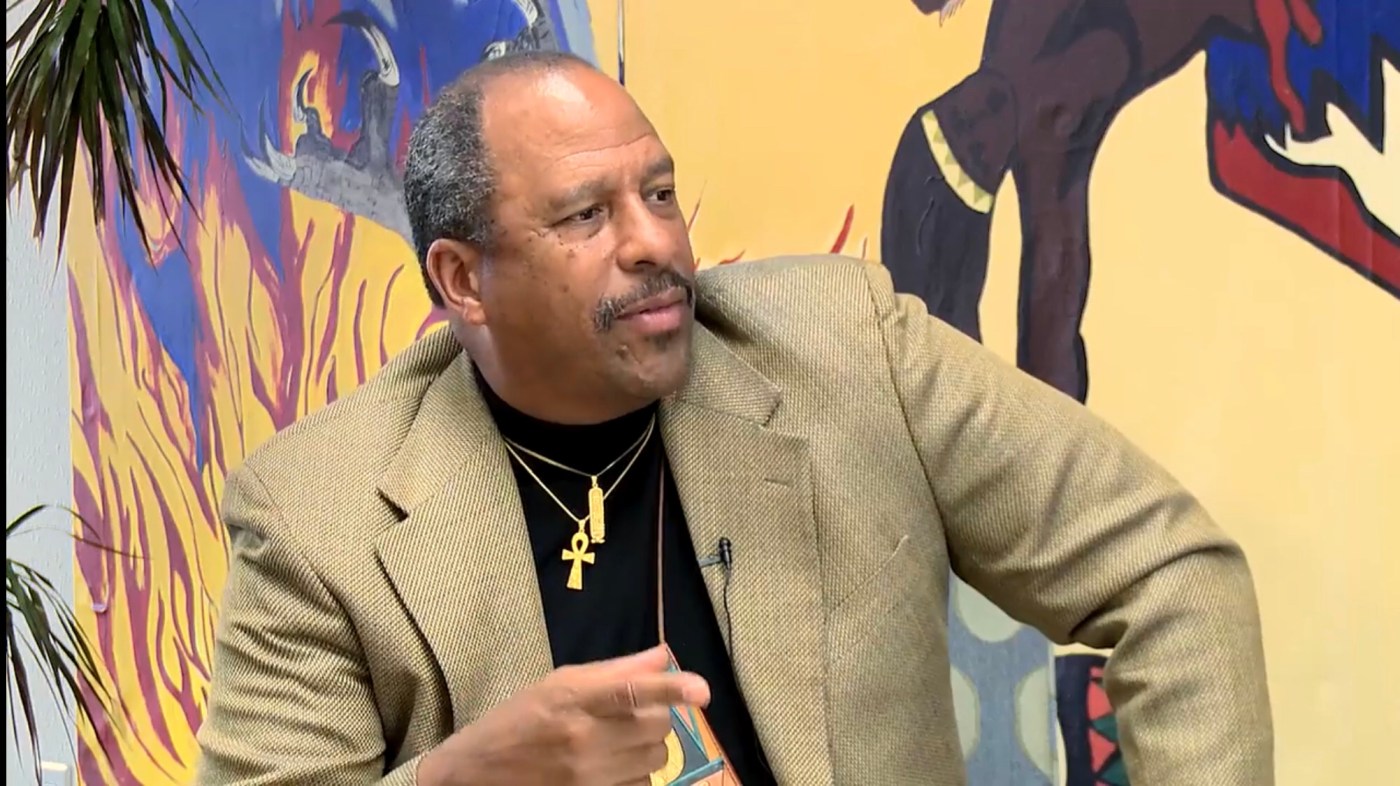
Psychological Storms; The African American Identity Struggle
Part II Psychological Storms: The African American Identity Struggle
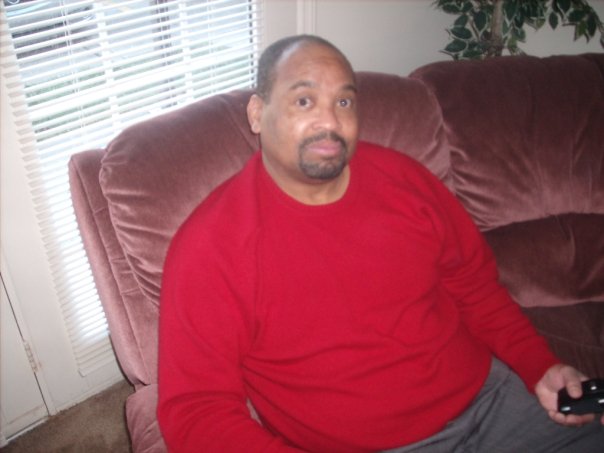
1971 High School Protest
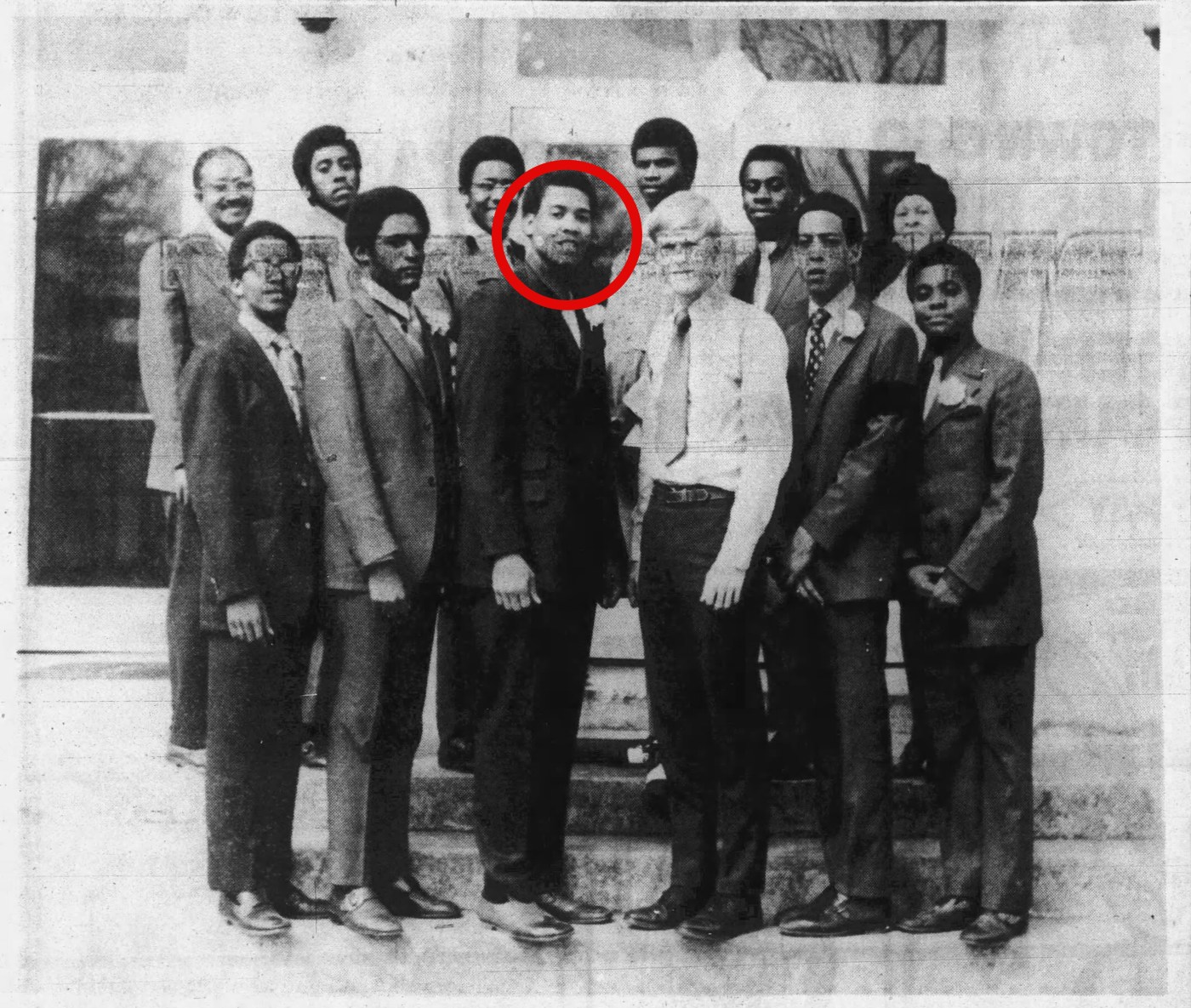
David Hartful began his senior year by making the honor roll the first semester. The second semester he decided not only to improve his future but the future of all the black kids going to high school in Murfreesboro now and in the future. He and other concerned Black students decide to create Murfreesboro Central High’s first Black Student Union.
The first order of business was to have a ceremony honoring Dr. Martin Luther King. He was assassinated only three years earlier. The first ceremony was at Central High School on April 2, 1971. The second was open to the public and held at First Baptist Church on April 4, 1971.
Later that month the students stage a sit-in at the high school. They wanted better treatment and more opportunities at the high school. The list of demands were:
Their actions got the attention of the faculty and the school board. In a Saturday school board meeting, they were able to make their demands and talk about what it was like to be a black student at the recently integrated school. They saw white students being punished more leniently than black students. Many of their concerns were similar to the concerns we have today.
The school board did have some push back. For example, Mrs. Richard Reeves said many blacks have excelled and Central High and cited, David Hartful, as an example. Forever, they ultimately realized they had to capitulate. Principal Swafford said the following:
“This situation would not be where it is if the black students who came to see me on Wednesday morning had not demanded. They not only demanded action, but made it clear I don’t have much time to make up my mind”
The school board did not comply with the demand to give the BSU two black cheerleaders. They compromised at two new cheerleaders, one black and one white. David Hartful was allowed to speak at commencement. His speech can be found on this website.
Jerry Anderson Foundation
Jerry Anderson was a star athlete from Murfreesboro, TN and Vice President of the black student union. After graduation, he went to the University of Oklahoma, where he was a star cornerback. During his college football career, he led the Sooners to the 1974 and 1975 National Championships. He later went on to play in the National Football League as a Cincinnati Bengals and the Canadian Football League.
Football was not Anderson’s only passion. He wanted to help people and especially children. His first act of selflessness came during the Tulsa flood of 1984. Anderson rescued two people trapped in vehicles. However, he was haunted because there was one he could not save. After his football career was over, Anderson headed back to Tennessee to pursue a degree. He wanted to get a job helping children.
On Memorial Day of 1989, Anderson decides to go fishing with two young family members. At the same time, two other boys, Pooh McFarlan and Johny Lodgson decided to fish nearby. The two boys fishing nearby decide they need to move to catch more fish. There was an old dam nearby that was underwater because the river was swollen. The boys decided to cross to the other side of the river by walking on the dam.
When the boys were walking on the damn, one slipped and fell into the river. The current was so strong he started to be pulled underwater. The other boy attempted to save the first, and he fell. Anderson sees the boys in the whirlpool and jumps in the river to save them. The boys that came with Jerry ran to call 911.
Anderson swam out to the whirlpool and was able to toss both boys out of the whirlpool so they can swim to shore. Jerry watched as both boys swam safely to shore. Unfortunately, Jerry would not be able to save himself. He attempts to swim out of the whirlpool, but can’t free himself. He comes up for air three times before losing the battle. A paramedic arrives on the scene, but it is too late. Jerry’s body was exhumed and transported to the hospital. He was declared dead on arrival.
The death of Anderson hit the class of 1971 very hard. Plans began to create someway to honor him. It was decided to create a foundation to help underprivileged children. The scope would begin as local and would grow nationally. The first project the group embarked upon was getting a pool named after Anderson in a low-income part of town. With that mission in mind, The Jerry Anderson Memorial Foundation was born in October 1989.
From the beginning, the foundation had influential Tennesseans on the board and serving as officials. On the board was a Kiwanis Club Governor, County Executives, the President of First City Bank, and a State Representative.
Murfreesboro NAACP eventually absorbed the Jerry Anderson Foundation. They were successful in buying computers for the Boys and Girls Club in 1991. Even without a formal foundation, the class of 1971 has not stopped helping the community. Their reunion in 2006 resulted in a fundraiser to buy books for school children.
Washington Post Articles
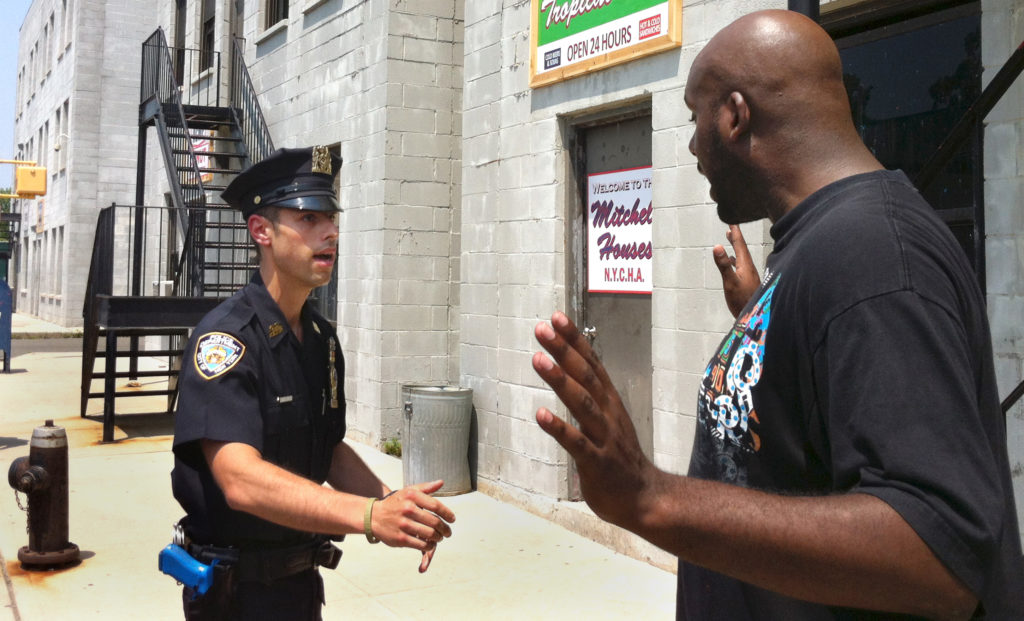
Washington, DC, was one of the last cities in the nation to encounter the drug boom of the 1980s and 1990s. The crime began to spike in 1986, and the public demanded a response from the Police Commissioner Maurice Turner and his Assistant Commissioner Issac Fulwood. Fulwood created Operation Clean Sweep, a comprehensive crackdown on street-level dealing. Washington was known for large open area drug markets, and the new effort was designed to strike a blow to the practice. Operation Clean Sweep began August 31, 1986.
The operations had a few signature initiatives.
These initiatives created backlash because they sacrificed privacy and freedom of movement for safety. Some examples of the collateral damage of Operation Clean Sweep can be gleaned from how the implementation at Clifton Terrace.
Clifton Terrace was a luxury apartment complex built in 1916. By the late eighties, it was an open-air drug market. The complex was such a popular drug market there would often be traffic jams due to so many customers coming into the apartments to buy their wares.
The police responded by banning people from parking near the building. They also patrolled the halls, randomly stopping anyone in the building. They had a master list of all leaseholders. If the police didn’t find one’s name on the leaseholders’ list, the person would have to name the person they were visiting in the building. The patrolman would then follow them to the apartment to verify the story. [2]
Another example of the cost of Operation Clean Sweep was roadblock set up to search cars for drugs. Police implemented the tactic in the historically black neighborhood of Anacostia. The area has had predominantly black people since the turn of the century. There were pockets of high crime, but there were also many upstanding black middle-class residents. In December of 1987, police arrested 124 people at a single roadblock. The two articles on the bust did not mention how many drugs, guns, and money were confiscated.[24,25] More than likely, these were arrested for small possession for personal use.
Not only were civil liberties constrained, but tax money was exhausted. In February of 1987, Mayor Barry had to cut the school budget to cover the cost of increased policing. In March of the same year, Operation Clean Sweep recorded 12,000 arrests, seizing 6.8 million in drugs, confiscating 300 cars, and hundreds of weapons.[3] Up to this point, there was only a 2% drop in overall crime.[4] However, the cost of $4.5 million exceeded the budget, and the city suspended the program in April. Public outcry forced the city to reopen it the next week.
Operation Clean Sweep was successful in increasing arrests. However, the facility that houses DC inmates, Lorton in Virginia, was soon overcrowded. The overcrowding forced the city to release prisoners. From July to October of 1987, the city released 815 inmates. Housing inmates is a serious problem for DC because there is nowhere in the city limits to put a prison. The District would have to coordinate with another state to house prisoners or use Federal prisons. By 1988 Clean Sweep arrested 46,400 people, but only 1,400 went to prison.[91,90]
Despite increased arrests, there was a decrease in the number of solved murders. From 1970 to 1980, about policed solved 83% of the murders. From 1980 to 1985 it was around 70%. By 1987 the stat fell to around 60%.[29] Part of the problem was people from outside of DC traveled there to sell drugs. When someone from out of town murders or is murdered, it is even more challenging to find the killer. Because no one in the city knew the killer, there were very few witnesses that were useful in court. Investigators had to travel for clues. The percent of drug-related murders increased from 25% in 1985 to 60% in 1987. It is also important to remember 1985 was a record low for murders and 1987 was the record high. [29] To increase the closed homicide rate, the city needed to hire more detectives.
No one took more risks or paid a higher price than the 200 officers assigned to Operation Clean Sweep. The first casualty happened in December of 1987 when Herman Keels died in an undercover operation. Weeks later, three more officers are wounded in the line of duty.
Due to high costs in overtime, Operation Clean Sweep was suspended again in December of 1987. The public was not informed until late January 1988.[35] Publicly Mayor Marion Barry wanted to continue the operation as it was. The police chief Maurice Turner wanted the program to end. They were arresting many people, but the overall crime rate was not going down. Turner wanted to try a holistic approach that included schools and churches.[26] He also supported mandatory minimum sentencing.[43] The city council was pushing to hire 150 more cops.[34] The overtime cost of 1987 could be reallocated in new hires so there would be no net increase in the budget. However, many experts, such as Fraternal Order of Police Chairman Gary Hankins, said 500 new officers need to be hired. [33]
So the city was looking for low-cost ways to supplement the police force. The first method was to modify the role of the City Police Reserve Corp. Previously the Reserve Corp were unarmed volunteers that aided police. Now they would receive full police training and weapons.[49] The Dopebusters initiative was the second. The Nation of Islam ran the Dopebusters force. They would provide unarmed security for problem housing developments on a volunteer basis initially. Eventually, the Dopebusters became DC contractors through Nation of Islam Security Inc.
Operation Clean Sweep officially resumed in February 1988. It could not have started at a better time because there had been 46 murders so far that year. [44] The first order of business was to replace the officers’ six-shooter revolvers with semi-automatic weapons. There was not a large amount of overtime allocated in 1988, so traffic patrol lost officers.[45]
Despite Operation Clean Sweep, straining the court and prison system without reducing the overall crime rates, neighboring communities adopted Clean Sweep tactics. Montgomery County MD, Fairfax VA, and Manassass VA all underwent similar police overhauls. These suburbs needed to respond to a spike in crime partially caused by criminals fleeing the crackdown in DC. Implementing these smaller Clean Sweep Operations further exacerbated the prison population problem.
A power vacuum was left in the drug market as another side effect of arresting large amounts of people at one time. This vacuum was filled by out of town drug dealers, mostly from New York as stated earlier. The influx of out of town dealers made crime investigation even more difficult and costly. Also, children were often employed as dealers because they would not receive long sentences. Usually, when the Washington Post wrote stories about the phenomenon of children dealing drugs, they rarely mention external factors that could cause such a problem.
Fortunately, the DEA created an alternative to Clean Sweep, Operation Pipeline. In this effort, the DEA trained local police on how to spot drug traffickers and collaborated with them on investigations. Drug sniffing dogs inspected packages at train stations. Police were trained to spot shotty welding on cars, which usually mean after-market modification to create drug compartments. By having a detailed methodology for identifying traffickers, older, cruder methods were replaced. One antiquated method would be to stop Hispanic men with Florida license plates to see if they were running narcotics. Operation Pipeline caught drug dealers at twice the rate of Operation Clean Sweep.[64]
Another Alternative to Operation Clean Sweep was Operations Fight Back. Fight back started initially to work concurrently to Clean Sweep. Mayor Barry announced it on January 12, 1988. [76] A new drug enforcement unit was initiated with 101 reassigned officers. The officers would collaborate with Federal and other local drug enforcement agencies. The city would also fund drug education and treatment services.
Turner retired as police chief in 1989, and Fulwood took over. One of his first acts was to end Operation Clean Sweep officially. He admitted, “We attempted to try to make police operation the backbone of fighting drugs. It did not work.”[104] The DC police moved to more comprehensive methods that use community watch, drug rehabilitation, and collaboration with various law enforcement agencies.
Clean Sweep cannot be considered a total failure. Evidence gathered in Clean Sweep arrests and investigations was instrumental in taking down DC most notorious kingpin Rayful Edmond and the Mayfair’s most notorious kingpin Michael Palmer. Clean Sweep was DC’s first comprehensive attempt to take stop the crack boom. There were many problems, but the lessons learned helped DC build the foundation of their current methods.
Police did bring back Operation Clean Sweep in 1993 on a limited basis. It appears that they only increased overtime for officers. By 1994, even Marion Barry admitted Operation Clean Sweep was a failure.
It is doubtful that Operation Clean Sweep will ever fully return. One of the main pillars of the operation, the drug roadblock, was found to be unconstitutional by DC Superior Court. The drug roadblock was used to enforce the law in general, not to find a specific offense such as a DUI roadblock. Therefore it violated the fourth amendment rights.
North India
The treatise begins by talking about when greeks ruled a large portion of Central Asia on the border with India. One of Alexander the Great’s heirs, Antiochos III, could not keep control of the ancient provinces of Parthia and Bactria. These provinces broke away to create two separate kingdoms around 261 – 246 BC.
Around 150 BC, a group of invaders called the Huns began invading Central Asia. This invasion pushed the native inhabitants out of Parthia and Bactria into Northwest India. There were two groups of people that came to settle in northwest India was the Tokhanians and the Sakas. They joined with natives to form the Kushan Empire.
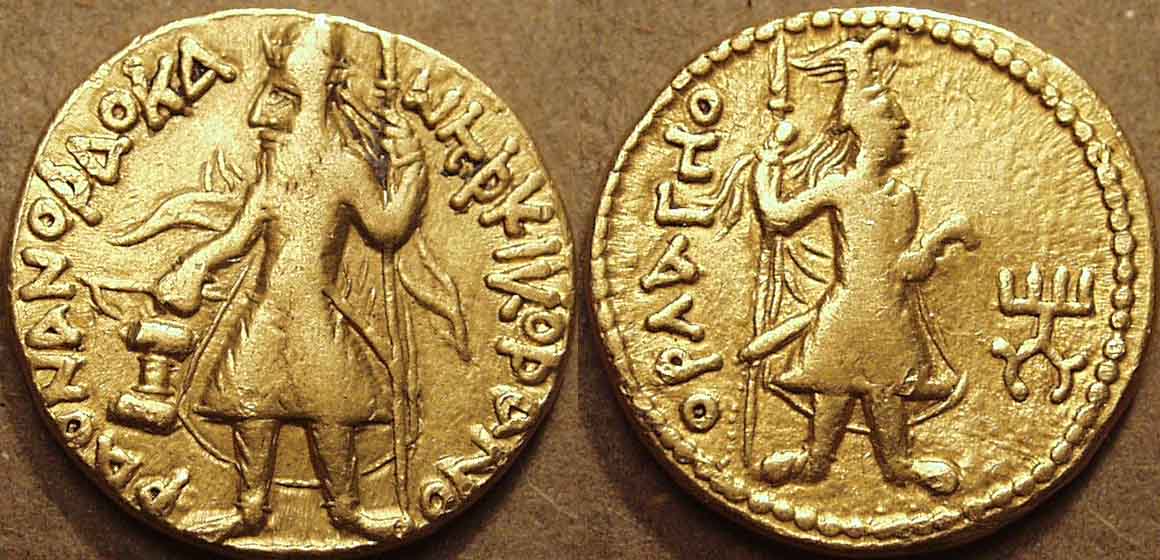
The Kushan Empire gives birth to one of the most famous Buddhist lines of royalty after the time of Ashoka. The first in the line is Phises I, who took power sometime between 15 – 40 AD. He is recorded as receiving Jesus’s disciple St. Thomas. Phises I had a son Phises II (78 -123 AD) who took control of most of NW India. After Phises II, King Kanishka came to power (78 – 123 AD). Kanishka is known as a great general who fought the Chinese and the Parthians. Their dynasty continues with Huvishka (123 – 140 AD) and Vasudeva (140 – 178 AD). Then the Kushan Empire mysteriously ends, most historians think the Sassanids of Persia took over.
There is then a period that is lost to history before the Gupta dynasty arose around 320 AD with King Chandragupta I. His son Samudra Gupta conquers most of northern India in 340 AD. The Gupta kings rule until the first invasion of the Huns in 455 AD. The Huns will be repelled, and they will invade again in 490 AD. The Empire of the Huns falls apart in 565 AD.
South India
The history of South India is more obscure, but there is more than enough evidence for historians to know a vibrant civilization survived there. A Roman history records that South Indian King Pandion sent a mission to visit Augustus in 20 BC. Pliny spoke of a Temple to Augustus in the same region. However, there were many kingdoms in this region.
Cera and Kerala lay on the West coast of India in modern-day Travancore. The Cola kingdom stretch from the southeast coast of India to central India. Central Asian invaders established the most famous kingdom called the Pallavas. King Narasimha-Varman 625 – 645 AD ruled over the Deccan, which is in Maharashtra province today. The Pallavas were rivals to the Cola Kingdom.
The Andhras is and ethnic group that was powerful in the Deccan where Narasima- Varman ruled. The Andhras were known to go to war with Buddhist fiefdoms in the region from 220 BC till 236 AD.
There is another large gap in known history before the Calukya dynasty is established. King Pulakesian II (608 – 642 AD) built an empire that stretched from the east to west coast of South India. He even had an embassy in Persia. King Harsha of the Pallavas defeated Pulakesian II, ending his rule.
The Rajput period happens from 650 – 1000 AD. This period hosted many Hindu kingdoms. From 840 – 910, King Panchala is known for waging war with Buddhists in Bengal.
In the world, everything that marks an end, also marks a beginning. The end of one day is the commencement of another. The end of one task is the beginning of a new one. The tree blossoms, bears fruit, sheds its foliage, and immediately begins preparation for another crop.
Today means different things for each of us. To some it is the commencement of higher education to others it is a career in the world of work.
Select a goal and work earnestly toward it. Know what you want and shape your course of study toward that end. We as graduating students, must not only achieve our goals but bring our honors and awards back to our community, not limiting our help, but to help others help themselves, bridging the gap between one another.
Our parents, teachers, and others have attempted to equip us well. They have tried to instill in us the principle of hard work, honesty, and ambition that would lead to better standards. These are qualities that are essential for us to achieve our respective goals.
We have enjoyed that blessing, which Tennessee has bestowed upon us – free education. To us has been given freely that which great men of the past have obtained only with many sacrifices and much labor.
The future holds a promise. I wonder just what that promise may be. Your future of the next generation is in our hands. It matters little where we were born, or if our parents were rich or poor, but whether we live an honest life and hold our integrity firm in our clutch, I tell you my brother, it matters much.
The late Rev. Dr. Martin Luther King, Jr., was one of the greatest men that lived in our time. He had a dream that we should further our educational capacities in order to build a better community and to have a brighter tomorrow. If not here, where, if not now, when if not you who. Remember the future of the world is limited by ourselves.


 Black Leadership Analysis