Search

Black Leadership Analysis

This is an unofficial Spiral Dynamics blog. It is not endorsed by D. Beck PhD.

Author

blackleaderanalysis

This site will use Ego Development Theory to analysis various leaders and problems in the black community. Ego Development Theory is a value meme classification first invented by Clare W. Graves and expanded by Natasha Todorovic, Christopher Cowan, and Don Edward Beck.

India and the Pre-Requistes of Communism

This work was unfinished.

One must first understand how the Hindu social order differs from free social order.

In a free social order, society sees the individual and his development as an end in itself. Liberty, Equality, and Fraternity are the cornerstones of the societies values. To justify man being the impetus for creating a society, Ambedkar uses a quote from French philosopher Jacques Maritain that states that people are unique in the universe because they possess a divine spirit.

Ambedkar uniquely defines equality and fraternity. Equality further specified as moral equality, the belief that all people deserve to have their rights respected. As the Declaration of Independence states, “All men are created equal” meaning they begin equal. Ambedkar does not mean that all men have equal ability. Fraternity is defined by reverence for the fellow man and the desire to be in unity with him.

Liberty has two parts, civil and political. Civil Liberty is the freedom of movement, speech, and action. Whereas, political liberty is the right for individual people to share in lawmaking and governance. These two aspects of liberty are intertwined and inseparable.

In contrast, the Hindu social order does not recognize individuals or individual responsibility. Instead, caste serves as the basis for social order. The four castes are Brahmin (Priest), Kshatriya (Soldiers), Vaishyas (Retailers), Shudra (Menials). In addition to the four major castes, there are over 3,000 subcastes. These castes are solidified, and individuals do not pursue their purpose to maintain social order. The base institution of society is caste. Marriage and inheritance are the only subjects in which Hindu society recognizes family. Castes are a division of society by occupation given at birth. Hinduism further separates caste for purposes of dining and marriage.

The three unique features of the Hindu Caste System:

  1. Worship of a Superman
  2. The Brahmin serves as the object of worship for the lower castes. The lower castes, especially, the Shudra exist to serve Brahmin. The servitude of Brahmin lasts until death. Hinduism does not permit Shudra to retire. In the same vein, a Brahmin has no obligation to a shudra.

  3. King is responsible for maintaining the Social Order
  4. The king must maintain social order. If he fails in doing this, he will suffer prosecution like any other criminal. The king also heads a legal system in which penalties are dependent on the caste of the victim and perpetrator. If someone of lower caste injures a person of the higher caste they receive a harsh sentence. The reverse is also true, to the point that someone outside the Caste system could be killed a will by a Brahmin with no penalty.

  5. The social order was ordained by Brahma (God)
  6. It is believed the Brahmin sprang from God’s mouth. The Kshatriya from God’s shoulders. Vaishya came from the thighs, and Shudra came from the feet. The origin of each caste is different, and therefore, so should their station in life. Because the caste system is divine, no modification or change is valid. Ambedkar reiterates that caste is not equivalent to class. Class is something one can ascend or descend depending on individual efforts.

There is also an interesting discussion of the revolution in the book. Three conditions lead to rebellion. The first is a wrong being committed to a group of people. The second is the capacity for the people to realize they suffer a slight—finally, the availability of arms or other means in the overthrowing government. The Hindu social order exists because Hinduism keeps people blind to the fact they suffered wrong. Hindus believe the social order is divinely prepared. Ambedkar lists Nazi and Muslim examples of societies that allow their people to realize they were wronged and then violently suppress the rebellions once they happen.

In the last paragraph, Ambedkar differentiates between Savarna, caste observing, Hindus and Avarna, non-caste observing, Hindus. Ambedkar says there is a class division between them, but not much other information is available.

There is no discussion on Communism because the work is unfinished.

Dr. King and Ambedkar Agree on Communism

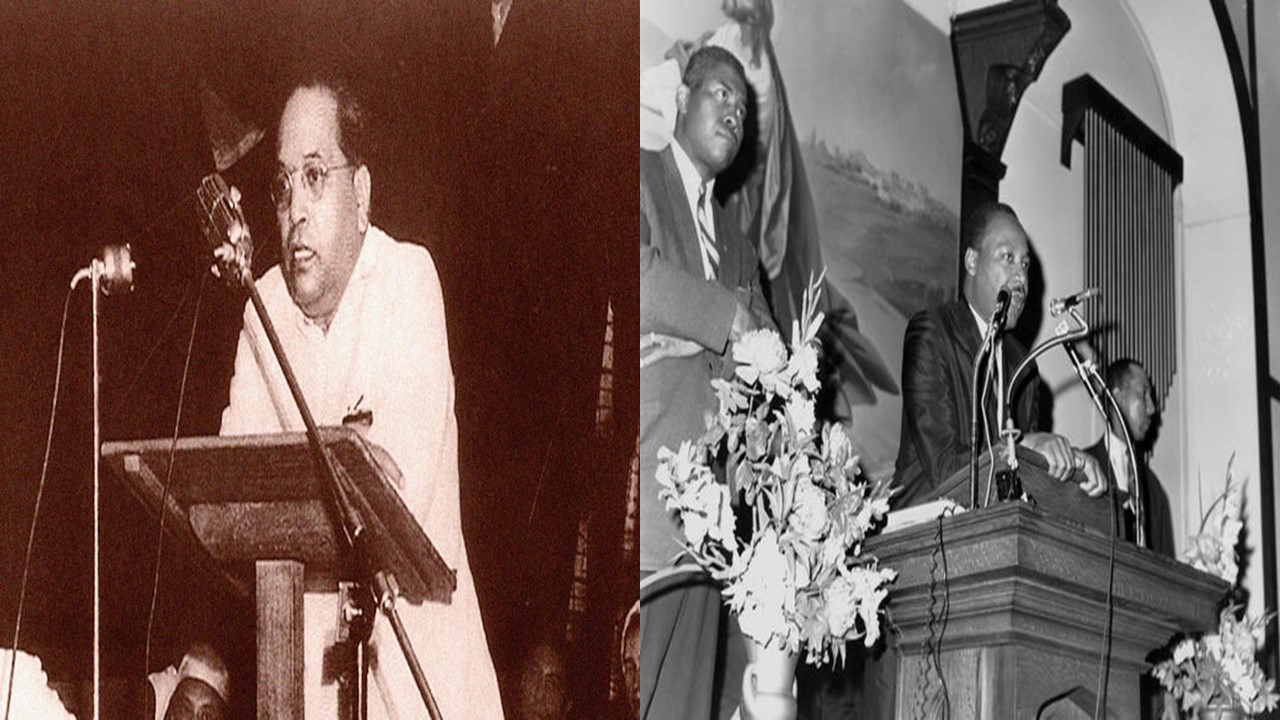
Two names are synonymous with social justice in their respective countries, Bhimrao Ambedkar and Dr. Martin Luther King. Both men were considered radicals in their time and even smeared as Communists. Anyone that reads what these men wrote understands the ridiculousness of the accusation.

Ambedkar was an advocate for untouchables, now known as Dalits. As a Dalit himself, Ambedkar faced many hardships. He overcame them to become educated at Columbia University in New York. He returned to India in the late 1920s. He worked to give Dalit’s voting rights, access to water, and education. In advocating for Dalits, he often found himself at odds with Gandhi. Despite political opposition, Ambedkar wrote the Indian Constitution. Toward the end of his life, he promoted Buddhism and held a mass conversion of Dalits to the faith in 1956. He died of natural causes a few months later.

The story of Dr. King is far better known to Americans. King was born in the American South and suffered through segregation. Like Ambedkar, he went to prestigious schools such as Morehouse and Boston College. The Montgomery Bus boycott was King’s first civil rights campaign. While aiding a sanitation workers strike in Memphis, he was gunned down.

The rise of Communism is one of the most important events of the early twentieth century. Communism was billed as the dawn of a new classless Utopia. Unfortunately, the actual implementation in Soviet Russia proved Communism was far from the mother of paradise.

Ambedkar and Dr. King wrote on the subject in their lifetime. Ambedkar’s The Buddha or Karl Marx and Dr. King’s “How Should a Christian View Communism” echo similar themes. A later version of King’s view on Communism is “Can a Christian Be Communist?”. Both works fundamentally rebuke Communism as antithetical to their religion. Due to Communism’s lack of moral absolutes, violence is used to suppress dissent. The result is a totalitarian government with no individual freedom.

Even though both men denounced Communism, they did not dismiss its critique of religion out of hand. Both agreed that the standard form of their faith was “otherworldly.” Most practitioners distracted themselves from the material lack in their life with spiritual pursuits. These religious endeavors foster an unhealthy individualism and a disconnection from social justice.

Ambedkar’s Buddhism and Dr. King’s Christianity were not the mainstream versions of either religion. The clergy of Burma rejected Ambedkar’s attempt to become a lay teacher. Fundamentalist Christians, white and black, opposed Dr. King. Instead, both men forged a new path for their religion infused with social justice. Their advocacy was their spiritual path.

The two works can be found below:

How Should a Christian View Communism

Can a Christian be Communist?

The Buddha or Karl Marx

The Round Table Conferences

The Indian National Congress (Congress), of which Mr. Mohandas Gandhi headed for most of his political career, never supported fair political representation for Dalits. The party formed in 1885 and not one president brought up social reform from 1895 to 1917. Generally, Congressmen believed that working on social problems distracted from making India free of British Rule. Social reform could be carried out by individuals or community organizations. In 1917, Congress began its program for social reform. Ambedkar accuses the Congress of only making this resolution to counter the depressed classes’ loyalty pledge to the British government.

On November 11, 1917, representatives of depressed classes met in Bombay to pass a resolution on how their freedom was a prerequisite for the independence of India. British India must first pursue a serious program to improve the economic, social, and political position of the depressed classes before they would support independence. The resolution had even more pronounced importance because His Majesty’s government had accepted a policy to make India independent gradually. Often the British government acted as arbitrators between the depressed classes and Hindus.

At the time, there were two competing schemes for the Independence of India. The first was the “Scheme of Nineteen” put forth by 19 elected members of the Imperial Legislative Council. This scheme had more support by the British government. The counter plan was “The Congress League Scheme”. The Congressmen wanted a more aggressive approach to independence marked by the ratification of a constitution. The All-Muslim League had recently supported the Congress League Scheme. Now that the depressed classes came into opposition, Congress could not claim the overwhelming majority of Indians supported their plan.

Britain first mandated the independence of India in the Government of India Act of 1919, which mandated in ten years a commission to investigate creating a constitution of India. The Royal Commission was formed in 1928 and headed by Sir John Simon. Sir Simon did not believe the Commission should include Indians. The Congressmen protested and the government compromised by promising a Round Table Conference to be held after the Commission. The Conference included Indians for the finalization of the Constitution.

The first Round Table Conference began on November 12, 1930. Dr. Bhimrao Ambedkar and Dewan Bahadur R. Srinivasan represented the Depressed Classes. Serval committees formed, one of which was the Minorities Committee. At that time, the issues of removing untouchability and reforming Indian society were collectively referred to as the communal question.

The first draft of the Constitution submitted in 1919 addressed the communal question. However, the Minorities Committee was able to correctly detail a plan for the inclusion of depressed classes in Indian society. There were anti-discrimination laws specified in the Constitution covering government institutions, public accommodations like hotels, and schools. Also, violence motivated by caste or in retaliation for one protesting for their rights were outlawed. Depressed Classes received access to all public water sources.

Depressed classes would also be given full adult suffrage and weightage. Weightage is giving a population a larger share of the vote than their population would allow. The First Round Table Conference did not determine details of Depressed Class representation. However, there was mention of Depressed Class reservations in the Provincial Legislature, Central Legislature, and Executive Cabinet.

The Indian National Conference boycotted the British government during the First Round Table Conference. Gandhi came as one of the representatives of Congress. Ambedkar describes him as an egotistical zealot, that held the other delegates in contempt. He felt he was the only one at the Conference that was chosen by the people. Also, Gandhi had been in negotiations in secret with the Muslim delegation.

Once the Second Round Table conference began, Gandhi asserts he would only recognize special treatment for Muslims and Sikhs. The Muslim delegation declared that if Dalits get weightage, it will not come from the Muslim’s portion. The government awarded Muslims weightage earlier, and Congress agreed to it. Ambedkar threatened to leave if the depressed classes were not adequately represented and have weightage. The general meetings in the Second Round Table Conference adjourned with no resolution.

The Minorities Committee met later. They were able to agree on provision for Depressed Class inclusion and weightage. The resolution stated that the representatives that were the author represented 46% of India. Gandhi holds in his opposition, and the Conference adjourns with no proper resolution. The matter of special electorates for Depressed Classes would go to arbitration with His Majesty’s Government.

Gandhi would give his reasoning for supporting special electorates for Muslims and Sikhs, but not Dalits. He felt both Sikhs and Muslims had highly educated electorates with nuanced political consciousness. The Dalits had neither. If Dalits were given special electorates, then they would be a political enemy of high caste Hindus. They would have to oppose the Hindu with very few resources. The Dalits and Hindus must be rebuilt as a unified community. As the community naturally progresses, animosity between the groups would subside. Many Hindus were working for reform because they realize that the oppression of Dalits hurts India’s ability to self-rule.

To rebut Gandhi’s non-sensical argument, Ambedkar questions how much Hindus feel ashamed of their role in the oppression of Dalits. Most Hindus do not see Dalits as kith and kin. The actions, or better inaction, of Congress, illustrates that there is no real effort to improve the lot of the Untouchables. With political power, Dalits could secure enough resources to improve education and other resources to improve their condition.

Ultimately, Gandhi is arguing Dalits can’t have the political power to improve their condition, because their situation was too low due to their lack of political power. The Castes System robbed the Dalits of education and the ability to be involved in politics that would naturally produce an educated electorate. These same arguments are made today when advocates ask for specific redress. The conflict between Gandhi would culminate in Gandhi’s famous fast til death.

The Psychology of Blacks Part II

Chapter 5: Approaches to Developmental Psychology African American Perspectives

Developmental Psychology asks four basic questions:

  1. What is the basic nature of humans?
  2. Is developmental qualitative or quantitative?
  3. How does nature contribute to development?
  4. What is it that develops?

All the developmental models fall into one of five theoretical approaches.

  1. Organismic: insists development is qualitative, not quantitative. Also, the process is unidirectional and irreversible. (Piaget)
  2. Psychoanalytic: insists development is qualitative and stage-like, proceeding through conflict resolution from one stage to the next. Progression is linear, but regression is also possible. (Freud, Erikson, Jung)
  3. Mechanistic: humans are machinelike composed of disparate yet interrelated parts. Environmental forces are the chief driver of behavior. Ultimately, the organism is a passive member in an active environment.
  4. Contextual: insists that the organism and environment are mutually effectual and symbiotic. The basic impetus is social-cultural or historical events. (George H Mead and Charles Sanders Pierce)
  5. Dialectical: insists that development happens in the context of contradiction or conflict. Once development begins, it is a continuous process of thesis, antithesis, and synthesis. The change also occurs on multiple levels. (Marx and Hagel)

Parham’s research has found three fundamental flaws with our current perception of human development that necessitate the need for black psychology.

  1. The first three forms of developmental psychology do not account for culture in the development of the theory. By not accounting for culture the theorist cannot account for their own cultural bias
  2. The first three approaches assume cultural universality. Again they saw the European perspective as the standard. Cultural strengths of those in other communities are not acknowledged.
  3. The ones that do account for culture view it as just another variable among others to be controlled.

Now everyone in the black psychology community does not agree on all aspects of the theory. For example, Dr. Joesph White, the father of black psychology, believes the methods should be rooted in the experience of blacks in America. Dr. Wade Nobles believes methodology should be rooted in African culture.

Whether rooted in Africa or the Black American experience, nine principles undergrid Black culture philosophically.

  1. Spirituality: The belief life is vitalist and non-material forces influence people everyday
  2. Harmony: living in a manner conducive with nature
  3. Movement: the idea percussive music and dance are vital to psychological health.
  4. Verve: the propensity of relative high level of stimulation energetic and lively action
  5. Emotional Expressivism: communicating one’s emotions because emotions are not viewed negatively.
  6. Communalism: social connectedness more important than individual privileges
  7. Expressive Individualism: proclivity for spontaneous, genuine personal expression
  8. Oral Tradition: speaking and listening in a charismatic tone, seen as a performance
  9. Social Time Perspective: the idea that time is passing through a social space not a material one. Time is to be enjoyed in the present.

Along with the communal/emotive/physical disposition, blacks have to navigate a world not designed for them. Triple Quandary Theory best expresses the simultaneous realities blacks have to navigate.

  1. The mainstream experience which centers eurocentrism.
  2. The minority experience as a marginalized member of society.
  3. The African cultural orientation that sustains and individuals very existence.

Mental health for black people is the ability to navigate these realities simultaneously.

Chapter 6: Mental Health Issues Impacting African Americans

Dr. Parham believes that mental health is defined differently for blacks and whites. A psychologically healthy black person is one who interprets the African American ethos in their daily life. The ethos being defined as an emotional tone of a group of people or bond of cultural heritage and life experience.

Western psychology not only does not correctly account for the racial differences, but it also views the racial differences as inferiority. This racial bias has lead to misdiagnosis. Dr. Parham points to blacks and whites showing the same symptoms, but blacks were disproportionately diagnosed with schizophrenia. Also, state-run facilities supplied the data for statistics on the mentally ill population. The reliance on state-run facilities and not private lead to a disproportionate number of the mentally ill being poor black people. So the numbers of mentally ill were inflated, showing blacks had a larger population of mentally ill people. These numbers were not questioned because most of the whites reviewing the information assumed that blacks were inferior.

Because black people understand the bias in the field of psychology, they go to people within their community with mental health issues. Often pastors, elders, and extended family are called upon for guidance in hard times. When blacks do seek help within psychiatric facilities, they are in more advanced stages of mental illness, or the court or school ordered them to get treated. The providers must be cognizant of difficulty in treatment. So Dr. Parham recommends cultural awareness training to all providers.

Now all black patients should not be treated by black providers. If providers are culturally aware, they can treat anyone. However, for patients, their stage in Nigrescence will affect how well a service provider can treat them. A white provider would best serve someone in the pre-encounter. They will be predisposed to not believing a black person could provide adequate service. A black provider would best serve a person in Immersion-Emersion because they would not trust a white person.

Not only does the race of the provider matter, but therapy methods are also important. Because black people are more communal than whites, group therapy could be more effective. Also, therapies that focus more on the action and not merely talk therapy.

Chapter 7: Praxis in African American Psychology: Theoretical and Methodological Considerations

Praxis is the alignment of thought and practice of a given ideology. Black Psychology has been centered around three key issues. Protect black people from cultural bias in psychology is the first issue. The second, develop psychological theories to give meaning to the African American experience. The third is to make western psychology more pluralistic and inclusive.

Now within Black Psychology, there is not a critical mass of consensus on many concepts. One of the most important is should black psychology be rooted in the experience of Black Americans or Africans. However, there is consensus on Western Psychology being inadequate in its current form to interpret the lives of a diverse population.

All epistemology is rooted in culture. Unless there is a conscious effort to understand and expel cultural bias, the study of psychology will never be inclusive. Western Psychology is more interested in justifying ideas than advancing them. One example of this is the idea of black intellectual inferiority and IQ testing. The early test did not find any difference in the intelligence of whites and blacks, but those psychologists kept modifying the test until blacks scored lower than whites.

One problem with Western Psychology is the over-reliance on quantifiable data to prove an idea. Quantifiable data is not sufficient in understanding a complete range of human behavior. Even when black psychologists do provide studies on black life, many mainstream journals will not publish it unless whites and blacks are included in the study. When studies do include whites and blacks often, it is difficult to get an equal sample size for both groups. For example, when studying college students, getting a large sample size of white students is very easy. Because there are so few black students in most major universities, it is difficult to get even a hundred subjects. There needs to be a provision to allow small sample sizes for black populations in mainstream psychological journals.

Chapter 8: Issues Confronting the African-American Community

There has been much progress made in racial equality, but there is still a long way to go. Black people have more access to schools and other areas of American life. At the same time, there has been little change in racial attitudes. There will be minimal improvement going forward unless whites decide to confront their attitudes on race.

There has already been work done in the way of whites confronting racism—white Identity Development, which is a framework to explain how whites move toward multiculturalism. Dr. Parham also recommends a yearly conference on whiteness to confront questions about racism.

Racism helps to create and perpetuate invisible systems that confer status and privilege or otherwise unearned assets to whites. The system is perpetuated by taking action to harm people of color and also inaction of not speaking up when one sees someone inflicting racism on someone else.

Once one understands and couples racism with an increasingly competitive work environment, it is easy to see why anxiety is widespread. Difficulties in the workplace were especially true when the book was written in the mid-1990’s. Austerity measures were in full swing. Dr. Parham prescribes building a corporate culture that takes into account the mental and spiritual well-being of its employees. The company should remember it is not always the employee’s job to conform to company culture. It is, at times, necessary for the company to conform to the employee. There is a distinction between desegregation and integration. Desegregation is giving people of color access to institutions. Integration is when people of all cultures see their values reflected in the policies of that institution.

The Psychology of Blacks: Part 1

Chapter 1 African-Centered Psychology in the Modern Era

The guiding principle to the book is African Americans have a unique, coherent, and persistent psychological perspective or worldview. The book is not anti-white, nor does it claim all black people are the same. In addition, African Americans have a unique culture influenced by its African roots, not white oppression.

The African worldview starts with a holistic view of the human condition. The view asserts there is no mind/body duality, and the basic unit is the tribe. Africans live in the present moment with a reverence for the past. In African languages, there is no term for the distant future. Africans revere the spoken word along with their ancestors. Ancestor worship and reverence leads Africans to view death as another stage of life. Living in harmony with nature undergirds their value system.

The study of psychology started in Africa, but it was very different than its modern conception. In Africa, the study of psychology was the study of spirit, defined as will and intent. Western Psychology is a perverted version of the original and focuses on quantifiable human behavior. When one starts by measuring behavior without understanding underlying motivations, differences are seen as deficiencies. Dr. Parham believes that a fundamental misunderstanding of what culture is could be to blame. Culture is a complex constellation of mores, values, customs, traditions, and practices that guide and influence a people’s cognitive, affective, and behavioral responses to life circumstances. Many have inappropriately equated culture with food, music, and clothing.

Because many white psychologists don’t understand culture and how their own culture affects their behavior, they can’t understand the difference between the behavior of blacks and whites. This misunderstanding leads to the presumption that blacks are deficient instead of different. Some white analysts believed that blacks were inferior due to genetics and the inferiority could not be corrected. Others believed blacks were inferior because of oppression and could be reformed with proper rehabilitation. Dr. Parham takes the multi-cultural perspective that all groups have strengths and weaknesses.

Psychological health for black people is dependent on understanding and living your true African nature.

Chapter 2: The African American Family

As stated in the earlier chapter, psychology generally judged blacks by how closely they resembled whites. The family was no different. The black family was considered dysfunctional and a hotbed of various pathologies.

No one evaluated how black families developed in light of the different conditions that they faced. It is no secret that the black family is statistically more likely to be headed by a single parent, usually the mother. However, no one looked at how black extended family networks often shoulder the load of a missing parent. The community generally is more collaborative in child-rearing. The tendency toward collective struggle originated in Africa and never left our community.

Dr. Parham questions whether the white researchers weren’t purposefully painting the black family in a negative light to justify blacks inferior social position. Propagating the idea that blacks were inherently inferior would justify not implementing social policies to help black people. In reality, all families should be judged how they help members build a positive self-concept and face the burdens of life.

Chapter 3: The Struggle for Identity Congruence in African Americans

To create a realistic and positive concept of self, one must ask three questions:

  1. Who am I?
  2. Am I who I say I am?
  3. Am I who I ought to be?

Western Psychology has not aided black people in asking these three questions. Originating with the Clark Doll test of the 1940s, psychology has viewed black people as self-haters. A group of people that have fundamental low self-esteem because whites won’t validate them.

The problem with the early “self-hate” models is that it assumed that black people only seek the validation of whites. Many blacks value the opinion of their peers above any outsider. The identity of black people is not totally the result of oppression. Much of what makes blacks unique can be traced to Africa. However, many black people need to grow into the knowledge of themselves.

The process of becoming black is called “Nigrescence.” The word Nigrescence derives from French and means “becoming black.” The theory states that people grow in the knowledge of self in several stages. The stages are listed as:

  1. Pre-encounter: a person has never been faced with the race problem and sees themselves as part of mainstream America. Their orientation is pro-white and anti-black. They downplay their uniqueness to assimilate into mainstream culture.
  2. Encounter: one is confronted with race through discrimination. A person realizes the world will not simply see them as a human being. If psychological defense against adverse stimuli is low, a person is more likely to move to the next stage. If it is high, a person could need many more encounter experiences to move to the next stage.
  3. Immersion-Emmersion: one immerses themselves in black culture to emerge a new person. The Immersion-Emmersion stage can manifest as joining black political and cultural movements or just going to black spaces.
  4. Internalization: one accepts their ethnic identities with all their other identities and saliences. One can continue to stay in black groups and space, but one is also comfortable venturing out into the rest of the world. Security and confidence fortify their identity, and adverse stimuli do not cause much psychological damage.

Dr. William Cross created the original theory. Dr. Parham made a few adjustments to the original theory. They are:

  1. Everyone doesn’t start at Pro-white anti-black. Many in culturally supportive environments can start at pro-black
  2. It is possible that people stagnate in one phase, move up in stages in a linear fashion, or recycle through phase serval times in life as they face new encounter situations.

Parham also states that a person in the pre-encounter should not be given a black therapist. Those in pre-encounter don’t believe other black people could have the expertise or ability to treat them.

Once a person develops a healthy understanding of their ethnicity, they will naturally want to aid in the freedom struggle of their people. The African idea of consubstantiation, the principle that all things are of the same substance, will permeate their life. All acts of transgression to other people will be seen as an act of transgression against self. A healthy, supportive lifestyle will result from a healthy self-concept.

Chapter 4: Blacks and Education

It is no secret blacks lag far behind in statistics on education. At the same time, tests show that black and white children have similar cognitively, sensory, and motor skills early in life. So the question then becomes how and in what ways is the current education system underserving the black community.

Education is a collaborative effort between the school, parents, and the greater community. Dr. Parham has a prescription for improving institutions that educate black children.

The school should work with teachers to help them understand how their exceptions of students affect the students’ success. According to several studies, when teachers believe students have ability, they are more patient and attentive. Other studies show that teachers that believe boys are smarter than girl have boys that outperform girls. When teachers believe boys and girls have equal intelligence, both genders perform equally. So teachers’ beliefs can manifest in class performance due to their level of attentiveness to the students.

However, one study was alarming. The researchers paired 66 teachers with four students each: One gifted black student, one average black student, one gifted white student, and an average white student. The researchers then evaluated the teachers’ interaction with each student. They found the most gifted white student was treated the best followed by the average white student. Third was the average black student. The gifted black student got the worst treatment. So it is possible that gifted black children are punished for their ability.

Parents are also crucial to educational development. It is essential for parents to set healthy boundaries for their children. For example, ensuring homework is done before any recreation. Black households statistically watch more TV than whites. By making recreation subordinate to eduction, the child will develop the life skills needed in the future.

The community can hold the school system accountable. Dr. Parham has a school system report card template that can grade the school. If the school is insufficient, the local government can be lobbied to make changes.

The community can also supplement students’ education. The government will not be willing or unable to teach things like black pride. So community efforts are needed to teach students that success is rooted in their African ancestry. We can work to obliterate the notion that scholastic success is the same as acting white.

Part II Psychological Storms: The African American Identity Struggle

Part II Psychological Storms: The African American Identity Struggle
by Oliver Taylor

Dr Thomas Parham offers some stimulating strategies from his book Psychological Storms: The African American Identity Struggle to prepare for the psychological storms that lie ahead for African Americans and Afropeans in the West. Parham quotes Wade Nobles (1986), a notable pioneer of the African American psychology movement, who wrote: ‘in the African way, ideas are the substance of behaviour.’ Parham elaborates writing, ‘consequently, if our consciousness is culturally congruent, then our behaviour should be focused on responding to our reality in ways which support, enhance, sustain, and actualize our individual and collective beings as African Americans.’

One of several strategies that Parham offers is what he refers to as Differentiating Values and Skill, found in Chapter 6, Preparing for the Next Storm: Fortification. I see this as an essential strategy for Black Atlantics to adopt, and one that if they can take seriously will increase their effectiveness, mental wellbeing and freedom in a Eurocentric society.

Differentiating between values and skills means understanding the fundamental difference between values and skills. Parham quotes values as, ‘”worth or importance that is assigned to something,” and skills are ‘”developed aptitudes or abilities at something;” it’s the ability to use one’s knowledge effectively in execution or performance’. There is a difference, and this is what Parham is emphasizing for the benefit of Blacks.

Parham believes that many Blacks, particularly young Blacks, assume that both terms mean that same thing. Parham writes that the words are not synonymous, and there is a danger making this assumption. Parham notes a case study run by the Philadelphia Inquirer newspaper, which they published on July 24, 1992, to support this. The paper conducted interviews on African Americans who reported having to endure both other-imposed and self-imposed pressures of ‘acting White’ if they wanted to achieve and achieved academic success (Barrington, 1992). Parham writes that this is an oversimplified explanation, and a trap Blacks can easily fall in to, and therefore must be untangled for their betterment.

Correlating excellence in writing, reading, mathematics, science with being White and selling out, and Blackness with athleticism and musicality is an error in differentiating between skills and values. The skills mentioned are not inherently White. Parham writes, ‘indeed, it was ancient Africa (Kemet) and not Europe who taught the world what it knows in almost every discipline’. The Blackamoors invaded Europe and brought them out of the Dark Ages (Sertima, 1991), and the ancient Egyptians and Phoenicians introduced the arts of civilization to the classical Greeks (Bernal 1987).

Here Parham makes two crucial points about Blacks learning the ‘skills and technologies of the dominant culture’ while at the same time being true to their cultural values:

‘Blacks do not have to adopt Eurocentric orientated values, especially when they are to Blacks detriment, simply because they learn or use a particular skill’.
‘Blacks cannot avoid acquiring a particular skill that might assist them in advancing themselves or their people, just because they associate that skill with being White’.
Parham then summaries this strategy–highlighting the challenge of maintaining our cultural integrity while learning the skills to navigate the pathways to productivity and success.

It’s worth noting earlier in his book in Chapter 4, The Eye of The Hurricane: Managing Anxiety, Parham shares some behavioural and attitudinal adjustments that Blacks make to manage the discomfort between the competing spirits (mentioned in Part I of this blog post). One of them is relevant to this post: Pass’in.

In reality, pass’in is adopting the values of Whiteness, and therefore what more closely equates to ‘acting White.’

Parham defines pass’in as ‘attempts to understate, downplay or otherwise camouflage one’s African American makeup. These individuals try to embrace and adopt the characteristic of the dominant culture. Every fibre of their beings suggests they want to be White, from their wardrobe, hairstyle, language style, peer group, spouse/partner, and professional affiliations and political views. They have incorporated and clearly project negative attitudes and feelings towards self and other African Americans’.

When Blacks refer to other Blacks who pursue excellence in any arena not considered traditionally ‘Black’ like sports or entertainment, as ‘acting White’ it is expressing an anti-Black idea. However, if Blacks observe another Black person adopting Whiteness and projecting negative attitudes and feelings towards themselves and other Blacks, it is likely pass’in. Blacks can misinterpret the actions of other Blacks if they subscribe to the belief that any form of Black success means that Blacks are ‘acting White.’

An excellent personal story that illustrates the experiences of being mislabelled is in a blog post by Black Leader Analysis founder David Hartful Jr. In the post, David shares his painful experience of growing up and always being labelled as the Black kid who wants to be White and his consequent resentment towards Black people and the immense guilt associated with that resentment. For David, he was ‘trying to be well behaved and productive in society,’ and ‘did not want to perpetuate behaviours that would be detrimental in my life as I had seen it be harmful in the lives of others’. For other Blacks though, it looked like David wanted to assimilate into White society, gain validation and attain some level of success while rejecting the Black community.

The lesson to be learnt here, as David writes, is ‘attempts to shame people out of their beliefs makes them double down. It creates two opposing camps in the black community. A divided house is that much easier to control’.
Part II Psychological Storms: The African American Identity Struggle

Dr Thomas Parham offers some stimulating strategies to prepare for the psychological storms that lie ahead for African Americans and Afropeans in the West. Parham quotes Wade Nobles (1986), a notable pioneer of the African American psychology movement, who wrote: ‘in the African way, ideas are the substance of behaviour.’ Parham elaborates writing, ‘consequently, if our consciousness is culturally congruent, then our behaviour should be focused on responding to our reality in ways which support, enhance, sustain, and actualize our individual and collective beings as African Americans.’

One of several strategies that Parham offers is what he refers to as Differentiating Values and Skills. I see this as an essential strategy for Black Atlantics to adopt, and one that if they can take seriously will increase their effectiveness, mental wellbeing and freedom in a Eurocentric society.

Differentiating between values and skills means understanding the fundamental difference between values and skills. Parham quotes values as, ‘”worth or importance that is assigned to something,” and skills are ‘”developed aptitudes or abilities at something;” it’s the ability to use one’s knowledge effectively in execution or performance’. There is a difference, and this is what Parham is emphasizing for the benefit of Blacks.

Parham believes that many Blacks, particularly young Blacks, assume that both terms mean that same thing. Parham writes that the words are not synonymous, and there is a danger making this assumption. Parham notes a case study run by the Philadelphia Inquirer newspaper on July 24, 1992, to support this. The paper conducted interviews on African Americans who reported having to endure both other-imposed and self-imposed pressures of ‘acting White’ if they achieved academic success (Barrington, 1992). Parham writes that this is an oversimplified explanation, and a trap Blacks can easily fall in to, and therefore must be untangled for their betterment.

Correlating excellence in writing, reading, mathematics, science with being White and selling out, and Blackness with athleticism and musicality is an error in differentiating between skills and values. The skills mentioned are not inherently White. Parham writes, ‘indeed, it was ancient Africa (Kemet) and not Europe who taught the world what it knows in almost every discipline’. The Blackamoors invaded Europe and brought them out of the Dark Ages (Sertima, 1991), and the ancient Egyptians and Phoenicians introduced the arts of civilization to the classical Greeks (Bernal 1987).

Here Parham makes two crucial points about Blacks learning the ‘skills and technologies of the dominant culture’ while at the same time being true to their cultural values:

‘Blacks do not have to adopt Eurocentric orientated values, especially when they are to Blacks detriment, simply because they learn or use a particular skill’.
‘Blacks cannot avoid acquiring a particular skill that might assist them in advancing themselves or their people, just because they associate that skill with being White’.
Parham then summaries this strategy–highlighting the challenge of maintaining our cultural integrity while learning the skills to navigate the pathways to productivity and success.

It’s worth noting earlier in his book, Parham shares some behavioural and attitudinal adjustments that Blacks make to manage the discomfort between the competing spirits (mentioned in Part I of this blog post). One of them is relevant to this post: Pass’in.

In reality, pass’in is adopting the values of Whiteness, and therefore what more closely equates to ‘acting White.’

Parham defines pass’in as ‘attempts to understate, downplay or otherwise camouflage one’s African American makeup. These individuals try to embrace and adopt the characteristic of the dominant culture. Every fibre of their beings suggests they want to be White, from their wardrobe, hairstyle, language style, peer group, spouse/partner, and professional affiliations and political views. They have incorporated and clearly project negative attitudes and feelings towards self and other African Americans’.

When Blacks refer to other Blacks who pursue excellence in any arena not considered traditionally ‘Black’ like sports or entertainment, as ‘acting White’ it is expressing an anti-Black idea. However, if Blacks observe another Black person adopting Whiteness and projecting negative attitudes and feelings towards themselves and other Blacks, it is likely pass’in. Blacks can misinterpret the actions of other Blacks if they subscribe to the belief that any form of Black success means that Blacks are ‘acting White.’

Parham, in a fascinating, inspirational and spirited speech, posted on Youtube entitled What Matters to Me and Why, offers some advice to Blacks on pursuing higher education. He says of his graduate students that they should not avoid White institutions out of fear feeling or being judged as ‘acting White’, no he suggests getting into the White institutions of learning, learning i.e. acquire the skills and getting out i.e. not joining their faculty etc.

An excellent personal story that illustrates the experiences of being mislabelled is in a blog post by Black Leader Analysis founder David Hartful Jr. In the post, David shares his painful experience of growing up and always being labelled as the Black kid who wants to be White and his consequent resentment towards Black people and the immense guilt associated with that resentment. For David, he was ‘trying to be well behaved and productive in society,’ and ‘did not want to perpetuate behaviours that would be detrimental in my life as I had seen it be harmful in the lives of others’. For other Blacks though, it looked like David wanted to assimilate into White society, gain validation and attain some level of success while rejecting the Black community.

The lesson to be learnt here, as David writes, is ‘attempts to shame people out of their beliefs makes them double down. It creates two opposing camps in the black community. A divided house is that much easier to control’.

Thoughts on Linguistic States

Ambedkar begins the book by saying he wanted to come out on the topic of linguistic states sooner. He admits his views have changed over time, and some of his views contradict. However, the idea of linguistic states needs to be vetted with cold reason. Ambedkar denounced the hooliganism going on during the publication of this work in defense of linguistic states.

Linguistic states facilitate fellow-feeling that leads to cohesive democracy. When people are grouped in states based on a common language, they have a much easier time working together. Mixed states fail because it forces people of different ethnicities to work together. Ambedkar asserts there is no real reason for various ethnicities to have conflict in India. The separation into linguistic states would facilitate democracy by reducing ethnic strife.

The downside of linguistic states is the possibility of the states developing into separate nationalities. If this happened, there could be the possibility of interstate conflict and war. A strong central government could quell the threat of interstate war. So the downside of linguistic states is far smaller than mixed states.

Another way to increase social cohesion with linguistic states is to make the official language the same in all provinces. So all business and government transactions would be done in the official language. Ambedkar recommends Hindi because 48% of the country already speaks the language. At a later date, when the population is ready, India would transition to English. The use of an official language reduces bureaucracy and ensures everyone in the country has access to all levels of government. It is paramount that those that advocate for linguistics states support one central language. Ambedkar goes as far as to state that someone that is against on central language is not fit to be Indian.

The work briefly discusses the partition of Pakistan. Ambedkar says he supported it. Specifically, he says, “I was glad that India was separated from Pakistan.” He feared Muslims would dominate the rest of India. By letting the Muslims leave, it would make way from India to build a prosperous democracy. However, he felt recent developments of ethnic conflict could close the door on Indian prosperity.

Upon the establishment of linguistic states a new problem arises. The south would have much smaller states than the Indian north. How then would power be equated between the north and south? The power distribution mattered because, according to Ambedkar, the south is educationally advanced and modern. The north is superstitious and backward. The solution is to break up the largest states in the north: Utter Pradesh, Bihar, Madhya Pradesh. The new states would have around 20 million people to put them at par with the southern states.

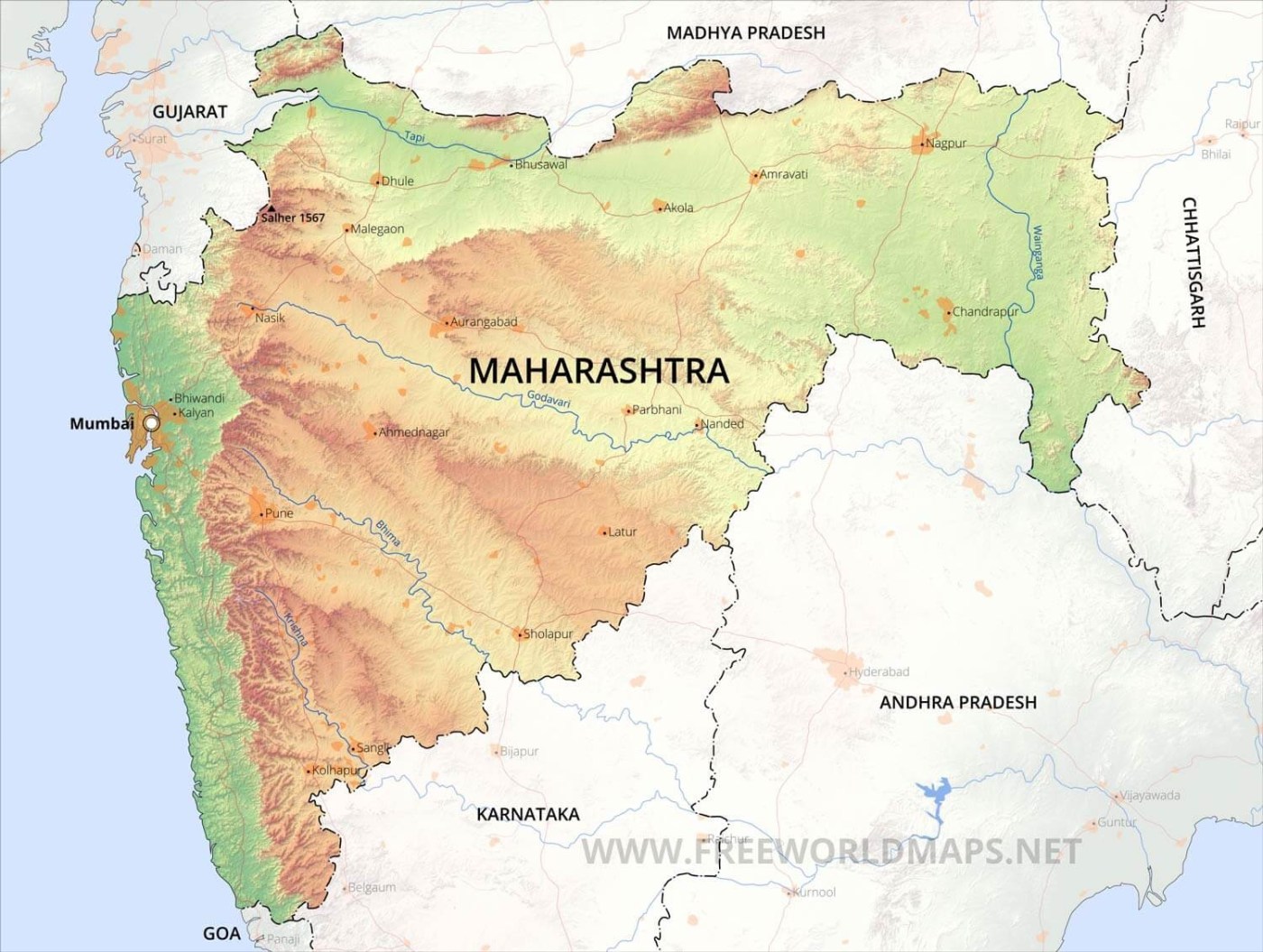
Maharashtra and Bombay

Maharashtra and Bombay were examples of failed mixed states currently in India. Both areas were plagued with ethnic conflict and violence. There were four proposals that the government was vetting to improve the area:

  1. To retain Bombay as a mixed state of Maharashtra, Gujarat, and Bombay
  2. To disrupt the existing state and to separate Maharashtra and Gujarat and make them two separate states.
  3. To make united Maharashtra with Bombay as one state
  4. To separate Bombay from Maharashtra and make it a separate city state

Ambedkar believes none of these proposals go far enough. He proposes breaking the state up into four separate provinces: Maharashtra City State (Bombay), Western Maharashtra, Central Maharashtra, and Eastern Maharashtra. The state of Maharashtra as it is was too big to govern. The smaller states would be easier to administrate and facilitate young leaders emerging. The Maharathi people had few political leaders and lagged in education.

Bombay could also benefit from being independent. At this time, the Maharthi population has not developed political or economic leadership. If the transient population of Gujurathis left the economy of Maharahtra would tank. Formation of Bombay into a separate city-state would allow for those creating industry to be satisfied, while the Maharthi develop. Ambedkar also proposes changing the name of Bombay to a Maharthi name.

Caste System Hindered Political Development

There were many problems with the current political system. The treatise talked explicitly about issues of taxation and alcohol prohibition. As in America, alcohol prohibition in India led to a black market and more consumption. To solve this problem, India needed a system that could could facilitate political change.

The social structure of India based on the Caste System caused political stagnation. The Caste System led to an ascending scale of hatred and a descending scale of contempt. A caste has all the pride of a nation. Those in higher caste see themselves as superior, and that led to them not voting for people of lower caste. However, those of lower caste would vote for someone of high caste because they are used to seeing high caste people in leadership. Political reservation would be essential in developing political leadership in lower caste communities. Also, smaller states would allow for areas with concentrations of lower caste people to hold political office.

There are two types of majorities. The first is a political majority formed to push a political agenda. Entrance into this majority is open and would change as political needs change. Societal norms set communal majorities. Entrance into a communal majority is closed, the status is set at birth. If the communal majority became the political majority tyranny would overtake the country.

India is much too large to have a single capital. There was also historical precedent for two capitals in India. For example, the Moghal Empire had Delhi as one capital and Shrinagar in Kashmir as a second. Calcutta and Simla both served the British as capitals. Those in the south had access to a Central government. Ambedkar proposes consolidating Hyderabad, Secunderabad, and Bolraum into a southern capital.

Maharashtra as a Linguistic Province

A linguistic province is an independent political entity formed to ensure that those who speak a similar language can govern together. Ambedkar takes on the idea of reforming the region that includes his hometown of Mhow as a linguistic province.

Those that support linguistic provinces see it as a way to preserve and develop local culture. If the government creates provinces without considering local cultures, they will die. In heterogeneous societies, people tend to advantage their group over others. The group hostilities will hinder nation-building.

Linguistic states would make a national democracy more challenging to develop. Democracies work best in homogenous societies. By having province drawn without linguistic considerations, everyone in the province would be forced to use the common language. The use of the common language builds national identity.

In addition to hindering the construction of national identity, Linguistic states increase government bureaucracy. The central government would have to make documents and provide translators of all the provincial languages.

The compromise solution proposed by Ambedkar was to create provinces based on common local language but use the national language for business and government transactions. The local language could be used for cultural activities. However, if the national language overtakes the provincial, so be it. A culture can stay together without a government entity or a unique language. Cultures can be cohesive through shared history, experience, and tradition.

Maharashtra as a Province

Ambedkar begins by explaining that the proposed province of Maharashtra would be viable. When comparing Maharashtra to the American state of Delaware, it is much larger. The population is greater than the most populous American state, New York. Maharashtra also had enough tax revenue to stay self-sufficient.

The next question was, should the province be unitary or federal. Federal meaning that Maharashtra would be broken into sub-provinces that work in a confederation. Ambedkar takes the stand that a federal province would only increase bureaucracy without any advantage. Maharashtra should be a unitary province.

Bombay

The largest city in Maharashtra would be Bombay, which has historically been an international trading capital. It has a sizeable Gujarathi population. Most work as merchants and liaisons from English and other European business. Many of the Gujaratis wanted Bombay to be independent.

Mostly the argument was that the Gujaratis turn Bombay into an economic powerhouse, and local Maharashtrians should not rule them. Most of the Maharashtrians in Bombay were laborers. They had no idea how to govern correctly. Many of the Gujaratis believed that Maharashtra wanted the surplus revenue of Bombay.

Ambedkar reminds the Gujaratis that they are only captains of industry because the British East India company gave them privileges to work in Bombay. Also, the surrounding provinces provide tax revenue to keep Bombay afloat. Lastly, the wealth of Bombay would not exist without Maharashtrian labor. The Capitalist did not gather their wealth themselves and had no right to its complete control. Wealth is the property of the society because it takes a community to build it.

Psychological Storms: The African American Identity Struggle

Dr. Parham’s uses Psychological Storms as a short introduction into his views on Black Psychology. In the book, he explains how racial oppression experienced by the group manifests itself as psychological issues.

The root of racial conflict comes from the differences between African and European worldviews. European worldview is based around individualism, while communalism undergirds the African worldview. As Africans living in European culture, blacks have to balance their natural essence with the need to conform for survival in a capitalistic world. This dissonance between these competing spirits cause psychological issues within individual black people that become widespread and result in societal trouble. The chart below details the European and African worldview.

Eurocentric Dimensions Africentric
Dualistic / Fragmented Self Holitic / Spiritness, Thoughts and Behaviors are Interrelated
Suppressed to rationale Feelings Expressed and Legitimized
Individual Competition Survivial Cooperative Econmics
Formal and Detached Language Informal and Connected
Commoditized with Future Orientation Time Experiential with Present Orientation
People control nature Universe People live in Harmony with Nature
Life ends at Death Death Afterlife starts at Death
Material/Individual Achievement Worth Collective Work and Responsibility

Not only are Blacks forced to hide their true African nature. They live in a world which vilifies them for being different. The Eurocentric worldview dictates control of all people and things non-European. This disregard for Black men not only manifests in personal relations but on a systematic level. It manifests in the lackadaisical investigations of black murder cases. In seeing black colleagues performing at a high capacity and not getting promoted. Mass media ignoring stories centered around black people. Racism has a profound effect on the psyche of Blacks.

Black people have developed many coping mechanisms to deal with the duality of being African in a European world. Many of the mechanisms that are not healthy involve denying one’s African identity in favor of assimilation. The over assimilation leads to feelings of alienation from one’s people. Also, even once one has no connection to their African roots, they may not be accepted in mainstream society.

Another extreme is always challenging other people’s blackness to show how connected one is to the community. Dr. Parham’s shorthand for this is “Blacker than thou.” When this is coupled with negative internalization of blackness leads to referring to fellow compatriots as niggas, bitches, and hoes. Dr. Parham does not condone the use of derogations in colloquial language, only gives background psychological underpinnings of the behavior.

Dr. Parham gives two models of one developing a healthy sense of self. He begins with the idea that all Black people have an African nature. Then they are exposed to an environment. If the environment is supportive, one will develop a Positive African Self Consciousness. If the environment is unsupportive one will undergo the stages of Nigrescence to build a positive self-image.

The stages of Nigrescence, first theorized by Dr. William Cross, are a step by step process that one grows through to actualize a healthy sense of self that includes their identity. The first stage is Pre-encounter. In this stage, a person has never been faced with the race problem and sees themselves as part of mainstream America. Then in the Encounter stage, one is confronted with race through discrimination. As a response to the discrimination, one enters the Immersion-Emmersion stage. In this stage, one immerses themselves in black culture to emerge a new person. The Immersion-Emmersion stage can manifest as joining Black political and cultural movements or just going to black spaces. Internalization is the last stage. In this stage, one accepts their ethnic identities with all their other identities and saliences. One can continue to stay in black groups and space, but one is also comfortable venturing out into the rest of the world.

To weather the upcoming racial storm, black people must cultivate an understanding of Africanity. Because Africanity is based in communalism or the idea all matter in the Universe arises from one spirit, it is specially equipped for building a strong community. Consubstantiation is the term Dr. Parham uses to define the idea that all people are united in spirit. He believes a deep understanding of consubstantiation would solve many societal ills. One couldn’t kill another because he understands that it is suicide. A person couldn’t become a drug addict because he understands how it hurts his people. Those that have education will naturally want to teach others because they see themselves as part of a community. Ultimate, black people have to reach back for the strength to move forward.

Website Powered by WordPress.com.

Up ↑