Search

Black Leadership Analysis

This is an unofficial Spiral Dynamics blog. It is not endorsed by D. Beck PhD.

Author

blackleaderanalysis

This site will use Ego Development Theory to analysis various leaders and problems in the black community. Ego Development Theory is a value meme classification first invented by Clare W. Graves and expanded by Natasha Todorovic, Christopher Cowan, and Don Edward Beck.

Essay on the Untouchables : Dalit and Christianity

Ambedkar begins the treatise by justifying the need for a mass conversion of Dalit. Most Dalits have determined Hinduism will never be conducive to Dalit uplift. Ambedkar then purposes a reasoned and logical evaluation of all religions to see which religion will suit the Dalit’s unique needs.

Many critics would characterize this type of evaluation as artificial and solely politically motivated. Ambedkar retorts the criticism by showing that most Christian conversion in the middle ages came after the king of a country was converted. The subjects would convert in mass to follow the king. If the subjects did not, they would be politically isolated.

Religion is by its nature communal. It projects the essential values of a community on to the universe. The purpose is to unite a community of people beyond extended family bonds. In primitive society, extended family bonds determined those that hold your life sacred and those that do not. Religion binds people beyond the family and creates a means of social control. Law and police can’t contain a society if the people don’t fundamentally respect life and property.

The concerns that a new Dalit religion needs to address are the Dalit’s social isolation and the resulting inferiority complex. To end the social isolation Dalit must move to a group that does not recognize caste. Hinduism will never serve this purpose because caste is a fundamental part of the Hindu religion. Ambedkar even goes further saying that a Dalit that accepts Hinduism accepts her oppression. Also, there is no altruistic center in Hinduism. All forms of behavior can be accommodated under certain pretenses.

A brief history of Christianity in India is given before arguments for and against it are presented. The first missionaries came to India from the Syrian church 800 years prior. They were followed 400 years later by European Christians. Many denominations of the church have created extensive charity networks in India. The goal of the charity networks is to build an audience to listen to gospel. However, there has been no effort to make the society of India more equitable, thus relieving the need for charity.

There were three main impediments to the spread of Christianity in India. One, early European Christians that settled in India were unruly sailors. Two, infighting between various denominations of the Christian church distracted from evangelizing. Three, the church adopted a failed strategy of concentrating on Brahmin converts assuming lower castes would automatically follow. The loss of privilege disincentivized Brahmin conversion. At the time of publication, there were only 6 million Christians in the subcontinent housing 358 million people. Most of the Christians were Dalit and most incorporated Christianity in their Hinduism instead of making a full conversion.

Christianity could not fundamentally challenge Dalit’s social isolation. Christianity itself was a composite community of different denominations. Also, the church kept the caste system going in its India churches. Different castes have different churches. There was no effort to change because a version of caste is practiced elsewhere in Christendom. In America and the Caribbean, blacks are separated from whites. In Europe, people of high class are separated from people of low class.

Christian believe the fall of Adam caused inequality. Therefore nothing can be fundamentally done to make life more equitable. The belief in predetermined inequality due to “The Fall” is no better than believing the cause of inequality is past karma. They also assert once a person accepts the religion they will be forgiven of all sin. The belief in absolute forgiveness also disincentivizes the need for social reform. Dalit can’t join a religion that does not facilitate their active striving for social justice.

Gandhi was briefly discussed in the treatise. Ambedkar shows that he vehemently fights against the conversion of Dalit to Christianity, but will not do the same to stop Dalit conversion to Islam. The discrepancy in Gandhi reaction was political according to Ambedkar.

Gandhi is quoted in this essay as saying ”They (Dali) can no more distinguish between the relative merits… than can a cow. (Dalit) have no mind, no intelligence, no sense of the difference between G-d and no G-d”. This statement shows Gandhi’s feelings for Dalits and his belief in Brahmin superiority.

The full essay can be read HERE

Mr. Gandhi and the Emancipation of the Untouchables

Mr. Gandhi and the Emancipation of the Untouchables

This treatise was used to express the oppression of Dalits, possible solution, and hurdles presented by the Indian National Congress to a foreign audience.

At the time the treatise was written the Indian constitution was being created. Ambedkar explains the conditions that will be met for the Dalit to accept the new structure. The first is the Dalit have to be recognized as a group outside of Hinduism. The second is the law needs to have provisions that address Dalit needs.

These provisions include

  • Funding set aside specifically for Dalit education
  • Guaranteed political representation for Dalits
  • To ensure political representation Dalits will have a separate electorate
  • Government jobs set aside for Dalits

One of the solutions Ambedkar presents is separate villages for Dalits. Traditionally, Dalits live on the outskirts of the city. The proximity to caste Hindus relegates Dalits to menial and unsanitary jobs. Because caste Hindu see Dalits as inferior, and Hindus control the economy, it is not realistic that a Dalit would get an opportunity to try new professions. New Dalit settlement will be created on government land and ruled by a commission. There will also be a set aside to fund the commission.

Gandhi opposed these provisions so vehemently he decided to fast till death. He proposed what he called the National Scheme as an alternative. The scheme consisted of:

  • Government in which official were elected purely on territorial basis
  • Executive drawn from majority party
  • Administration run solely on efficiency

Gandhi also disparaged Ambedkar’s plan as the Communal Scheme. Insinuating it focused on the local level and separated India. Ambedkar rebutted by saying India is not united now or was it united in the past. A temporary period of separation will reduce economic and political disparity that can lead to a united India in the future.

Also, Ambedkar supported the idea Dalit representatives and a separate electorate are needed to address Dalit issues. To assume Dalit issues or minority issues can be addressed by someone from the majority elected by the majority is not founded in history. People have a natural tendency to work in their favor and the favor of those close to them. The idea a person can remove their identity and ego while in office is laughable. Also, a Dalit representative elected by the general electorate would be beholden to the majority, not his people. So India requires both Dalit representatives and a Dalit electorate. Dalit would vote in the general election and the separate election.

There would also be a set-aside for Dalits for government jobs. Dalits would be required to pass an entry exam to show they have a basic level of skill. The minimum testing requirement will ensure competent employees. Ambedkar explains it is not realistic that Dalits have the same education level as Caste Hindus. Because of bias, discrimination, and economic disparity Dalit have been kept out of higher education. These problems can only be remedied by Dalits having stable jobs and being involved in the implementation of government policy. Many assume that a Dalit set-aside would lead to incompetent or less competent employees. To think this one must believe that there are no qualified Dalits that just aren’t being given the opportunity.

Hindus that are against Ambedkar’s plan are not uninformed or unrealistically optimistic. These Hindus are knowingly working in their self-interest against Dalits. The Dalit plan would not leave Hindus without power or opportunity. The Hindu plan could prevent Dalit economic mobility. Ultimately, in Ambedkar’s plan, the winners win more than the losers lose.

The treatise warns Americans and other Westerners of Hindu motives for Independence. Hindus ultimately want to install Hindu rule to the exclusion of other groups. Hinduism does not include an inclination for social justice. Also, Castes are not the same as Western concepts of class. Class implies social mobility and the ability to develop individual talent. These concepts are not in Hinduism.

The demands of Dalits are not dissimilar to demands of Sikhs and Muslims. Unfortunately, Hindus, Sikhs, and Muslims conspired to get Caste removed from census questionnaire. The removal of Caste on government forms does nothing concrete to improve the life of Dalits. It buries their problems and state from public view.

The full-text can be found HERE

Memenomics by Said Dawlabani

Buy Book Here

Visit Site Here

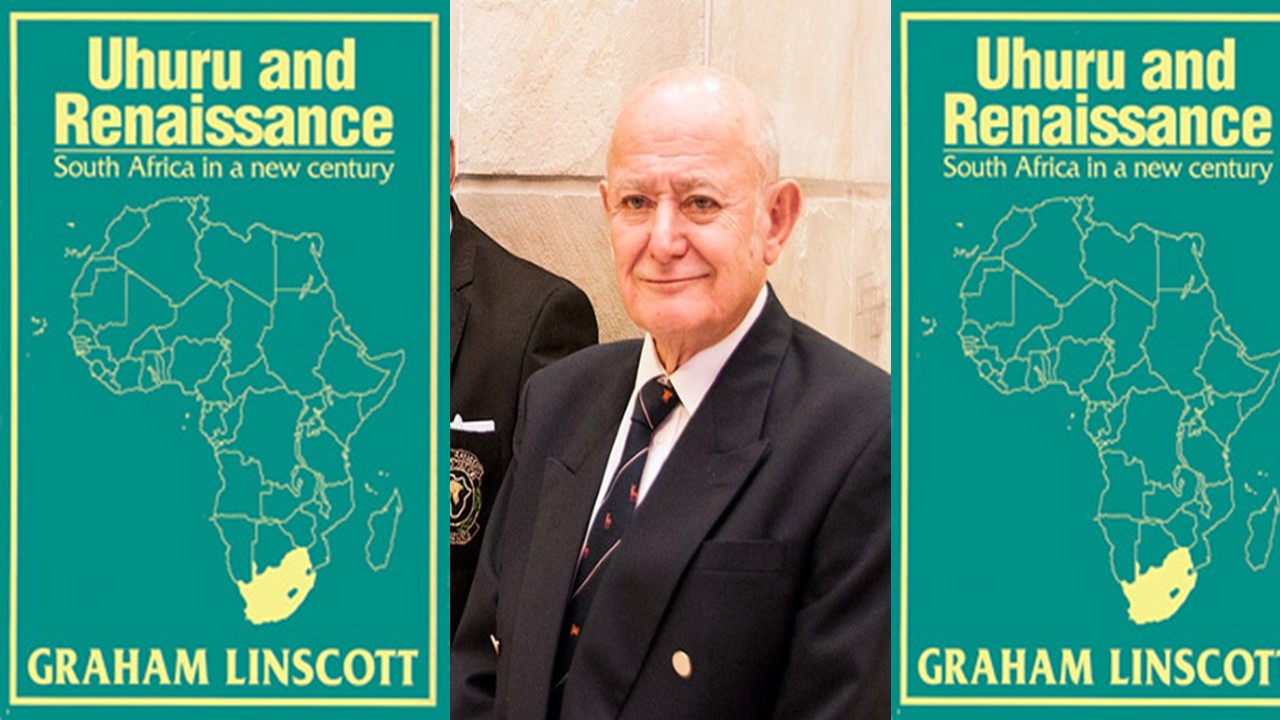
Uhuru and the Renaissance by G. Linscott

The Crucible by Don Beck : Part 3 Influences for the Crucible

The Crucible: Part 2 Value Memes and Transitions

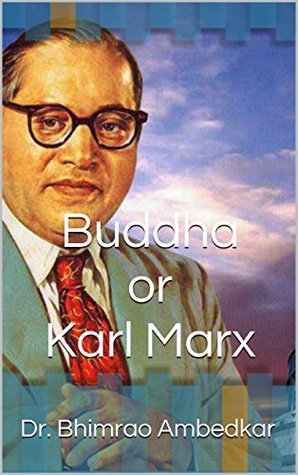
Buddha or Karl Marx

Buddha or Karl Marx

34 pages

Dr. Ambedkar admits that at first glance a comparison of Buddha and Karl Marx seems unreasonable. However, both can be considered practical philosophers attempting to create a more equitable world. Also, both saw that the abolition of private property would lead to a fairer and freer society.

Karl Marx proposed what he felt was a scientific socialism. In Marx’s estimation, a revolution by the poor was inevitable due to mounting inequality. The poor would collectively own the means of production through dictatorship. Once the dictatorship removed the concept of private property, a new equitable society would flourish.

However, the Communist plan has been implemented in Russia since 1917 after a violent revolution. The implementation of policies has also necessitated the use of violence and coercion. The use of force has no end in sight. Even though Marx claimed that implementing Communism would eventually lead the dissolution of the state, there is no evidence of this happening. Also if the state dissolved, it seems it would be replaced by Anarchy.

In contrast, Buddha set out to change people’s understanding of the world. Ambedkar then goes on to explain various Buddhist concepts such as The Four Noble Truths, The Ten Hindrances, and the Ten Virtues. He describes how these teaching systematically remove the idea that the individual can exist on his own or personal gain will lead to lasting happiness (ego). Once a person thinks in a collective sense, they will not want to own the means of production and want it owned by the collective.

To reframe this in Integral terminology, Buddha focused on interiors, and Marx concentrated on exteriors. Buddha understood that external changes only happen once a person’s attitude changes. If externals change without the internals, there will always need to be some greater force holding society together. People will not be motivated to maintain a healthy society without coercion so the society will always be unstable.

One of the criticisms that Communist often levy on Buddhist or people with religion is that religion makes people “otherworldly”. Those with religion care more about the afterlife than building an equitable future here on earth. Ambedkar illustrates how Buddhism professes and supports building material wealth inside the boundaries of law and morality. Buddhism is not an otherworldly religion. Ambedkar goes further to say Communist attempt to paint all religions with the same brush.

The read the entire book yourself click on the link below for a PDF copy.

Buddha or Karl Marx

Manu and the Shudra

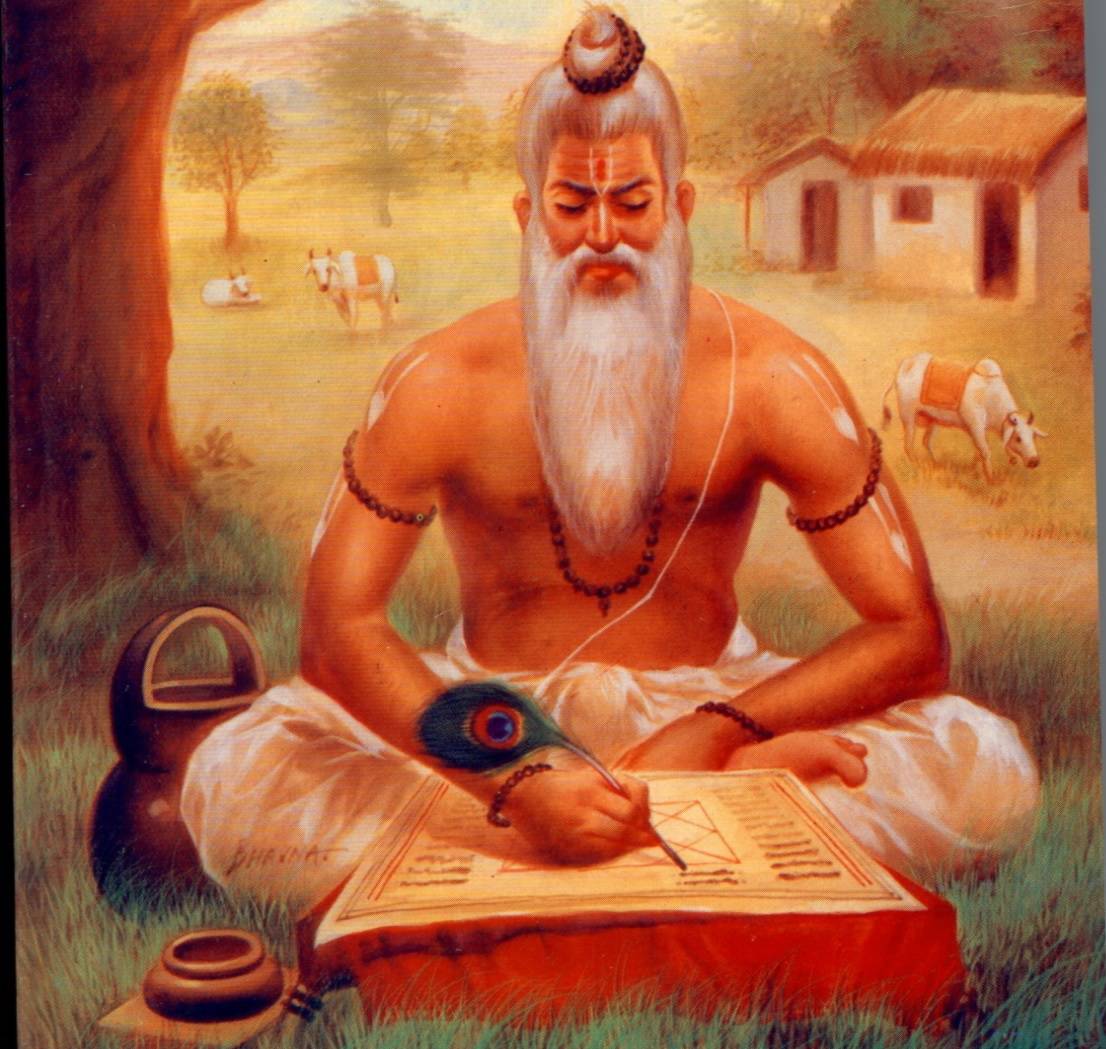
In this treatise, he gives some background and explanation of Manusmriti, the book that codified caste law. He explains many of the rules that affected Dalits and other lower caste people.

According to Manu, the person/demigod that codified rules of Untouchability, the world is composed of those inside the caste system and those outside the caste system. Of those inside the caste system, there are priests (Brahmin), soldiers (Kshatriyas), vendors/traders(Vaishyas), and servants (Shudras). These castes were listed in descending order.

The book goes into detail on various ways in which Dalits were marked and insulted.

  1. Had to leave town from 3 pm to 9 pm to not cast a shadow on higher caste
  2. Had to hang a pot around his neck to catch spittle
  3. Had to wear black necklace, black wristband, carry broom to sweep away footsteps, or wear horn
  4. Had to wear old or torn clothes
  5. Can’t build more than a one story house
  6. Not allowed to cremate their dead

One interesting point in the book was his thoughts on Shudra forming their political party and electing the best candidate that was Shudra. Ambedkar says that the action of selecting someone just because they are Shudra is no better than choosing someone just because they are Brahmin. The Shudra are attempting to dominate in the same way as the Brahmin

Ambedkar never published or completed this work.

Found in the book The Selected Works of Dr. B.R. Ambedkar found online for free.

Waiting on a Visa

This treatise gives anecdotal information on Ambedkar’s life as a Dalit. He speaks on incidents in which his life was threatened or disrespected. He also relays some anecdotes from other Dalits he gathered while investigating Dalit issues for the government.

Ambedkar relayed the following stories in the book.

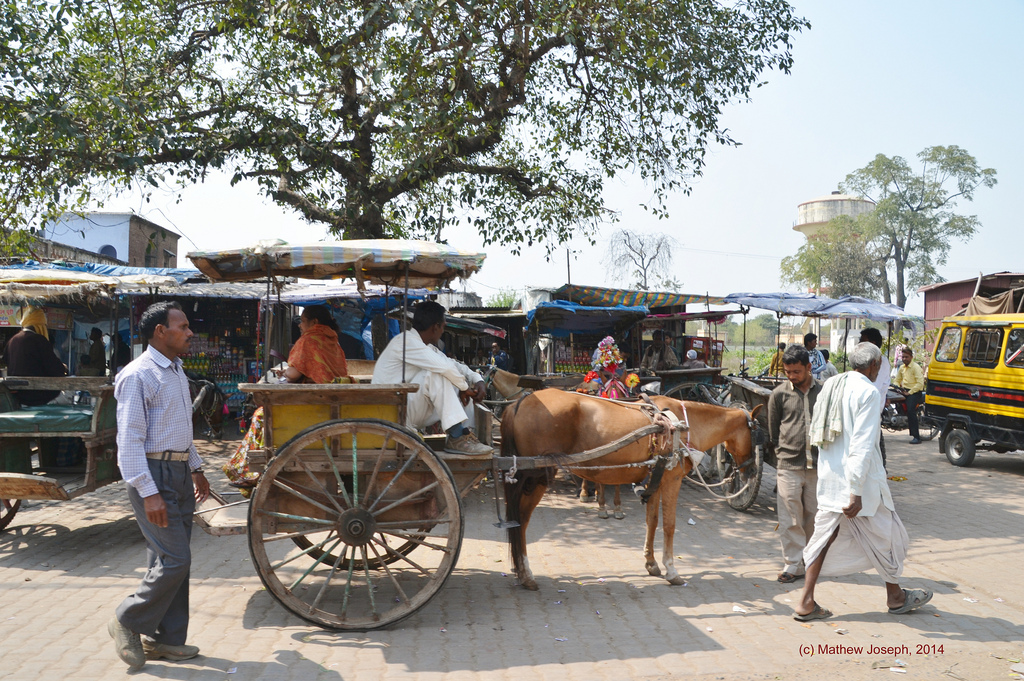
  1. He recounts how in his childhood he could not secure a wagon ride to another city because he was Dalit.
  2. He also recounts how he could not get lodging because he was a Dalit upon return from graduate school. He found lodging in a Parisi hotel under a false name until the locals found out he was a Dalit.
  3. Ambedkar retells an incident in which he was in a wagon wreck because of an inexperienced Dalit driver. All the upper caste drivers in the area would not transport a Dalit, so an inexperienced Dalit had to drive the wagon.
  4. He discussed an incident in which he was considered to be polluting the water tank of a Muslim
  5. A doctor refused to give another Dalit medical treatment. The refusal of treatment resulted in the woman’s death
  6. You can find the book at the link below.

    http://www.columbia.edu/itc/mealac/pritchett/00ambedkar/txt_ambedkar_waiting.html

Website Powered by WordPress.com.

Up ↑