Search

Black Leadership Analysis

This is an unofficial Spiral Dynamics blog. It is not endorsed by D. Beck PhD.

Month

August 2020

The International Robert Williams

Cuba was a hotbed of controversy in the early 1960s. The nation was communists, so the American mainstream saw it as a sign of the USSR’s growing influence. American leftists saw it as a testing ground for the ideology they professed. Black America had a different perspective.
For years, any movement to further integration was considered Communist. For example, the NAACP was disparaged in many southern newspapers as Communist-inspired even though no one on the board was a communist.

Many Black people stopped viewing Communism negatively. They took the fact that Communism was lumped into the freedom struggle to mean both wanted to end the current Jim Crow system. Others ignored the label of Communist and judged the actions of an institution on its merit.
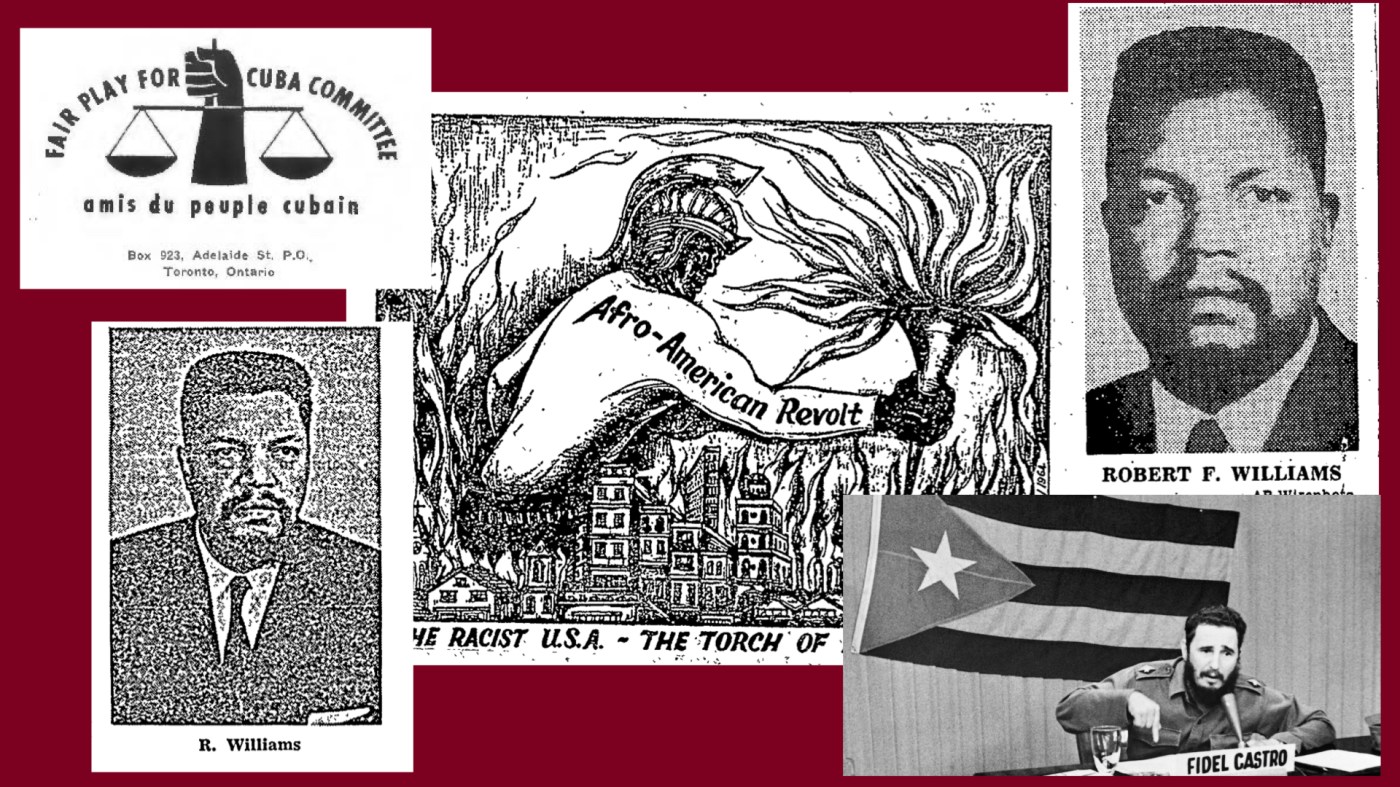
Once one understands why Black America had an opposing view on Communism, it is easy to understand why 1/3 of the founding members of Fair Play for Cuba were Black. Robert Williams was among such notable names as John Henrik Clarke and James Baldwin on his first trip to Cuba, which began on June 9, 1960.

Williams took a special interest because Black Press portrayed in Cuba as a haven of racial equality. Many Black Cubans participated in the revolution and had a high rank in the military. The Cuban Revolution could serve as a model for a future Black revolution. In addition to dethroning an oppressive and racist government, Cuba integrated schools and other public institutions. The idea of an integrated society had only existed in theory until now.

While in Cuba, an American reporter asked if Williams would give up his American citizenship. He replied he never had it. Anytime he wanted to advance in society, the government prevented it. When he needed protection, the government never came to his aid. Another reported asked how it felt to hear Cubans chant “Cuba Yes, Yankee No.” Williams asked the reporter how he felt seeing “Whites Only Signs” or how it felt to be in a work gang for leading a sit-in protest.

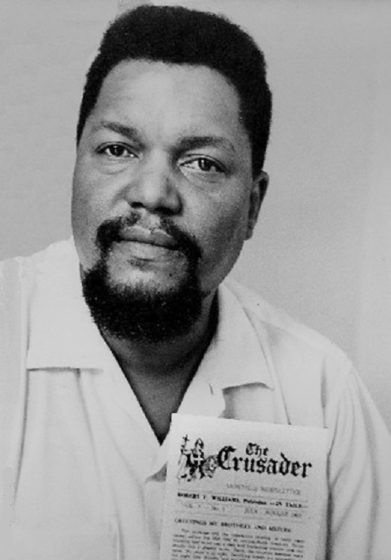
When the Fair Play for Cuba delegation left Robert Williams received a Cuban flag that he would later fly under the American flag at his own home. It was just the best of many Cuban souvenirs that would decorate his home. He returned to North Carolina to praise the greatest democracy on earth in his newspaper The Crusader.

NAACP Stands Against Militancy

Two legal cases would lead Robert Williams to create the first school of Black Militancy in the Civil Rights era. The first case was against Brodus F. Shaw. He was a White man who kicked a Black maid, Georgia Davis White, down a flight of stairs who disturbed his sleep. Once Georgia White pressed charges against Shaw, racist began a smear campaign to discredit Mrs. White. All levels of state government were involved in her smearing. The North Carolina Attorney General provided investigators, free of charge, to find dirt on White. The investigation discovered that Mrs. White did not report $4.00 in earnings two years before she applied for unemployment. Local authorities arrested her.

The second case was the assault of Mary Ruth Reed by Lewis Medlin. Medlin came to Reed’s house drunk and attempted to force his way in to rape her. Reed was there alone with children because her husband was at work. She was also several months pregnant at the time. She ran with her four-year-old out the back door. Medlin gave chase and caught Reed. Her four-year-old son struck Medlin in the back with a stick to allow his mother to escape. They found refuge in the house of a white neighbor.

The Blacks of Monroe did not believe the government would protect these women. A Black lynch mob formed to seek revenge on the perpetrators. Robert Williams stopped the lynch mob from taking the law into their own hands. He told the crowd he could use his connections in the NAACP and the Committee to Confront Racial Injustice (CCRI) to get two convictions. Of the two organizations, only the CCRI sent lawyers.

May 5, 1959, both the Shaw and Medlin case went to court. Shaw, the man who pushed the maid down the flight of stairs, got his charges dropped even though he didn’t show up to court. Medlin’s defense team used the idea that a White man would never leave a White woman for a Black woman to save him. Medlin admitted to going to Reed’s house while intoxicated but never said he intended to rape her. Reed even had the White neighbor corroborate her version of events. In the end, none of it mattered. Medlin was found not guilty of all charges.

The Black women of Monroe were furious. Not only was there no justice dispensed on those that assaulted these women, but the court showed that there would be no consequences for their attacks. It was now open season on Black women. One woman told Williams this was all his fault. If he had let the lynch mob form, at least these women would have received some justice.

Right after Monroe’s Black women chastised Williams, he had to give an interview to United Press International. Monroe had made national headlines due to the Kissing Case a year prior. Williams is asked to share his thought on losing both cases. He explains that there are no laws to protect the Blacks of North Carolina. Due to the complete breakdown of law, Blacks would have to meet violence with violence going forward. They would meet lynching with lynching.

It goes without saying that his statement angered many in the NAACP. The head of the NAACP Roy Wilkins asked Robert Williams if he was quoted correctly. Williams replied in the affirmative and said he still stood by his statements. He clarified he was speaking for himself and not the NAACP. Wilkins explained that it does matter how he meant his words; the public would take it as an NAACP statement. Wilkins then suspended Williams. In defiance, Williams told Wilkins the NAACP hadn’t done anything to help Monroe Blacks anyway.

Thus began the first push for militancy in the Civil Rights Movement. Roy Wilkins distanced himself from Robert Williams in subsequent press conferences. Robert Williams clarifies his position at the same time. Williams makes clear he did not want vengeful violence against Whites. He only supports violence as a means of self-defense. Law and order had broken down in the rural south. Self-defense was the only way to ensure the safety of themselves and their families. Black Militancy is not rooted in hate for White people, but love for self and community. The Blacks of Monroe’s need to defend themselves was no different than the motivation of the colonists to protect themselves from British oppression.

The 1959 NAACP convention held July 13 – 19th held the hearing on Williams’s suspension. The issue was contentious. It caused a divide between the national and local leaders. The national leaders were afraid a militant stance could hurt their ability to get funding. If public opinion falls, not only would they lose funding, they would also have a harder time winning cases. The position of non-violence was the most politically pragmatic.

The local leaders felt the NAACP did not send enough aid to local cases that would not get national headlines. They were left to fend for themselves. Besides, even when they won civil rights cases, it often didn’t mean policy changed locally. There had been little progress on school integration since winning Brown v Board, in 1954. The NAACP was unable to improve their lives, and people questioned if the national office was inept or unconcerned.

Due to the NAACP national not getting tangible results, many were looking for alternative methods. One was Dr. King’s Non-Violent Direct Action. This method required breaking unjust laws. The NAACP opposed this method because they brought on unwinnable cases. The NAACP wanted to argue cases to the Supreme Court to force them to change the law. If the defendant knowingly broke the law, the NAACP could do nothing to win the case.

The second method was Robert William’s Black self-defense. Many that opposed the national office also supported self-defense. Others felt even self-defense could lead to mass slaughter. So the opposition to Roy Wilkins was not solidified. Various opponents had different agendas that reduced the opposition’s ability to build enough delegates to oppose the suspension. Because the opposition unified, they were able to distribute a pamphlet titled “The single issue in Robert Williams case.” The pamphlet framed Robert Williams as a case of mob violence versus legal action. The booklet portrayed Williams as a hot-head, leading Blacks in Monroe to annihilation. Even Martin Luther King spoke against Williams, further dividing opposition to Wilkins.

Robert Williams still had a broad base of support. It was also crucial that Roy Wilkins not only win the vote but win overwhelmingly to show benefactors that the organization was united. The delegates got together and decided on a compromise. Robert Williams’s suspension would be upheld 781 – 0, but the NAACP would also have to create a statement affirming the individual right to self-defense.

Two years later, during the seventh anniversary of Brown v Board of education (May 17, 1961), the NAACP held a rally in Harlem. Due to many of Robert Williams’s fundraising activities and advocacy for “The Kissing Case,” Harlem was home base of support for him. When Roy Wilkins took the stage, many in the crowd booed and jeered, demanding Robert Williams speak. Daisy Bates even took the podium to calm the crowd down. They shouted her down also. Finally, they found Robert Williams, who was in attendance and had him take the stage. From his impromptu speech, this was the most notable line: “Better to live upright for 30 seconds than 1000 years crawling”. The crowd went wild and carried him off on their shoulders. Williams’s integrity and tenacity built a base of support that all the lawyers at the NAACP could only wish.

The 1961 Pool Protest

The first protest to integrate the Monroe pool happened in 1957. That protest ended in the Ku Klux Klan attacking the home of the president of the NAACP and the NAACP fighting them off with rifles. Every year after, there was a summer protest at the pool. But Robert Williams decided to make a determinative stand in 1961. He went to Harlem to raise funds to buy guns to protect the protesters in the event of Kluxer retaliation.

The protest began on June 18, 1961, when Robert Williams brought twelve Black teenagers to the pool to protest. They stayed outside and picketed because the pool personnel denied them entry. The picket continued for a few days. Then on June 22, Whites brought guns and fired into the air to intimidate protesters. Williams doubled down and said that the city council has to integrate the current pool or make plans to create a black pool. If the council did nothing he and his protester would stage a “wade-in” the next day.

Protesters stopped to eat lunch at a neighboring park at 3 pm on June 23. They ate at a picnic table labeled “Whites Only.” They heard shots whiz past their heads. Williams alerted the local policemen that witnessed the scene. They refused to do anything. Then Williams and company decided to head home to call the Justice Department to see if they would intervene.

A much larger De Soto followed the Hillman driven by Williams on his return home. The driver of the De Soto rammed Williams at 70 mph running him off the road. The De Soto speed off. Williams attempted to file a police report on the incident and the police again refused to act. It was not until Williams relayed the story to the press that the police were shamed into acting on the incident.

June 25 the protesters decided to go back to the pool. This time their car was rammed by an old Ford Truck. The truck’s windows had been removed, and it looked like it was ready for the demolition derby. The man in the truck ran Williams off the road again and came out with a baseball bat threatening to attack. But this time, Williams come out of the car with an Italian rifle. His two associates had pistols. A mob of Whites then formed around the car.

Because Williams and his company were armed, they held everyone at bay. The police arrived and tried to disarm Williams. He pushed the policeman to the ground, pointed his rifle at him, and told him there was no way he was surrendering to a mob. The police then dispersed the mob and allowed Williams to go to the pool. That night Williams barricades his house and prepared for a Kluxer attack. It never came.

The next Saturday Williams went out to deliver his newspaper “The Crusader” when he was pulled over by police. They tell him his taillight is damaged and they must arrest him. Of course, a Kluxers ramming his car twice the week prior damaged his taillight. Williams knew if the police arrest him, they will lynch him in jail. He said he will not go to jail in the policeman’s car. He would follow them in his own car to the jail. The police agree. Once near his home, he made a run for his house the police give chase.

Once at home his wife Mabel sees him frantically trying to untie their dog to aid in his defense from the police. She ran outside with a shotgun. She saw the police and held them at gunpoint and asked what was happening. The police say they want to arrest him for a taillight being out. Mabel replies they should have arrested the men that ran him off the road. If they did not have a warrant, they had to leave. The police see the shotgun pointed at them and decide to retreat.

For full series click Robert Williams Series

The Kissing Case

The politics of race and sex was a cantankerous issue in the Jim Crow South. The fear of black men raping White women was used to stir up mobs to attack Black neighborhoods. For many, the main impetus for segregation was preventing inter-racial sex and marriage. The fear of miscegenation took its most extreme form in the 1958 Kissing Case.

In early October of 1958, a group of children played in a culvert in the White section of Monroe, NC. While playing the game, one of the children suggested that they have a kissing game. A White girl named Sissy Sutton sat on the lap of a Black boy named James Thompson (10 yo) and kissed him. The other Black child at the gathering, David Simpson (8 yo), watched. The children dispersed and returned home.

A few days later Sissy Sutton is telling another child about the kiss and her mother overheard. Her mother flew into a rage. The father gathered a mob to kill the boys and their mothers. Police got wind that a mob is forming and preemptively arrest the boys before the mob arrived. The mothers of the boys went into hiding.

The mob arrived at the boys’ homes and realize they are empty except for the family dog. The mob killed the dog and displayed the body on the lawn. The mob also burned a cross to strike fear in the hearts of the Black residents. They proceed to shoot into the empty home and harass Black people in the neighborhood. Random violence perpetrated by Whites continues in the neighborhood for weeks.

Police beat the boys regularly while in custody. The jail in Monroe was known as one of the worst in the state. The boys are both physically and mentally abused. On Halloween, the police dressed up as KKK and tell the boys they will get lynched. They removed their hoods and laughed at the boys’ panic. After an extremely short trial, the boys are transferred to Morrison Training School in Hoffman, NC.

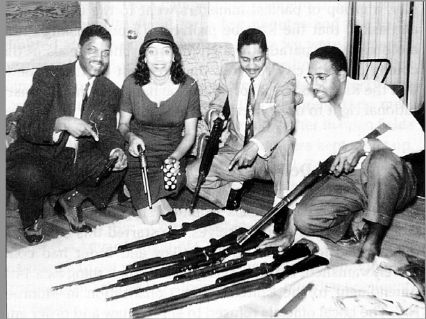
The town looked to the only man that could save the boys was the local head of the NAACP, Robert Williams. Williams had been in charge of the Monroe NAACP for three years at that point. His chapter was much more militant than the average NAACP branch. He also started a Black chapter of the National Rifle Association. He armed Black citizens in Monroe to take back their streets. Before becoming an NAACP President, he was heavily involved in the labor movement and had ties to various socialist networks. All these ties would become useful in the next few months.

After stopping the KKK terrorism by having armed Black guards patrol the Black neighborhood, he began the campaign to free the boys. The NAACP became Williams’s first avenue for resolution. When the state and national office was contacted to intervene, neither wanted to get involved. The NAACP had always had to fight charges of being communist. They also had to repel charges that they advocated race-mixing. They had a strict policy not to get involved in sex cases.

The apathy of the NAACP did not stop John Thompson’s mother. She contacted some family in New York City and got the first national coverage for the case. The November 3rd edition of the New York Post covered the case. Robert Williams also contacted newspapers and television outlets. But his connections with the socialist network of newspapers produced the most significant results.

The Committee to Combat Racial Injustice (CCRI) formed on December 19, 1958. The group’s mission was to fill the void in the Socialist Workers Party (SWP) on racial injustice. Most in the socialist movement thought the imbalance of power between workers and capitalists caused racism. The inevitable socialist revolution would solve the problem. Those that formed the CCRI knew race needed special attention. Attacking racial issues will strengthen the black community and bring blacks into the socialist movement. Robert Williams was not a member of SWP or any other party, but his involvement in labor unions and other left-wing activism led to the Party holding him in high esteem.

Through the CCRI, Williams was able to relay the story to the London News Chronicle that circulated 1.5 million copies. From there, press all over Western Europe picked up the story. Demonstrators protest outside the embassies in London first. Later that month, demonstrations happened at US Embassies in Rome, Paris, and Rotterdam. The socialist used the case to show the American democracy was not inclusive of all citizens.

The world publicity shamed the NAACP and the North Carolina Governor to take action. The two enter into a secret agreement to arrange for the boys’ release. The NAACP would agree to relocated and fund the families’ move to Charlotte, NC. The Governor could arrange for their release when families settled in the new location. If the arrangement could stay secret, the boys could hide until the dust settled around the kissing incident.

To keep the NAACP and the Governor pressured, Williams moved to have a habeas corpus hearing on the Kissing Case. If the boys win the habeas corpus case, it will prove their imprisonment was unjust. The opposition would build a case around the fact that the eight and ten-year-old boys had a prior record of petty theft. They also said their single mothers were unfit because she worked all the time to provide for their family. In the end, the boys lost the case and were sent back to reform school.

In addition to the case, Williams embarked on a multi-city speaking tour. Union halls, churches, and NAACP offices held the events. This tour is where Williams made himself into a national figure. His prominence threatened the NAACP. The head of the organization, Roy Wilkins, offered Williams a job with the NAACP in Detroit to keep him off the kissing case. Williams refused.

The continued pressure eventually worked. On February 13, 1959, the boys were quietly released back into the custody of their mothers in Charlotte. No one is exactly sure what caused the release. Some say that Eleanor Roosevelt convinced Eisenhower to pressure the Governor. Others give credit to the NAACP. No matter what happened, the boys ended up safe at home. Williams considered this case a great victory.

For the full series click Robert Williams Series

Robert Williams “Father of Black Militancy”

Robert Williams was a Civil Rights leader from Monroe, NC. He began his career by staging a walk-out of black workers at 16 years old. This action would initiate the FBI file that would haunt him for the rest of his life.

In 1958, Robert Williams led the defense of two Black boys accused of kissing a White girl. From there, he was able to aid in the prosecution of White men that assaulted Black women. Williams led two protests to integrate the Monroe swimming pool in 1957 and 1961. His actions to free Freedom Riders led him to flee of Monroe and for Havana. While in Havana, he made inroads with all of the Communist world. He was able to travel to Vietnam, then China, to incite rebellions in the American Army. He was finally allowed to return to the United States in the late 1960s.

Spiral Dynamics classifies the Orange Meme by the seeking and obtaining of status. The primary mode of thinking is rational thought and realistic evaluation of consequences. An individual in the Orange Meme would also not be consumed with personal anger or desire. They would take principled and rational stances. Create a plan and see it through to completion, making necessary changes along the way.

Williams began the campaign in Monroe with legal action. Two high profile cases involved White men assaulting Black women in 1959. The Black citizens of Monroe wanted to create a lynch mob to kill the White men. Robert Williams talked them out of it and instead proposed they pool their resources to prosecute the men. The judges of both cases found the defendants innocent despite a mountain of evidence against them. Essentially, the Monroe justice system declared open season on Black people by ensuring these men never met any consequences.

Once the justice system proved they would not aid Black people in need, the only logical next step is self-defense. He makes his infamous statement that blacks will meet lynching with lynching in Monroe due to law and order breaking down. Anger did not motivate this statement. If Williams wanted revenge on White people, he could have just joined the lynch mob as Monroe’s citizens initially planned. Instead, he sent a warning to the White citizens in Monroe. This warning would hopefully stop further bloodshed.

One of the Orange meme tenants is to express self rationally without incurring the wrath of others. Not incurring others’ wrath is an important principle, but one must covet this because of the realities of the Jim Crow South. Black people were always suffering violence or threatened with violence. So the idea of not suffering any wrath is not realistic in the environment of the time. The question then became, did Robert Williams’s self-defense stance lower or increase the amount of harm suffered by the Black people of Monroe?

The sit-in campaign led by Robert Williams on March 1, 1960, used twelve protesters to sit-in for short periods at three Monroe lunch counters. The action forced all the lunch counters to shut down to avoid the protest. The Monroe sit-in protesters did not suffer anywhere near other protesters’ humiliation because Monroe’s White people knew they would fight back. No one poured milkshakes on them, no one put cigarettes out on them, and no one spat on them. The only consequence was the short stint in jail that Robert Williams had to serve as the protest leader. So it seems that not declaring yourself non-violent at the beginning did reduce the violence perpetrated on protesters.

Taking calculated risk is another aspect of people in Orange meme. Robert Williams exemplified this in the Steagall hostage/rescue incident. In 1961, during the Black neighborhood defense in Monroe, NC a White couple was driving through the Black neighborhood. The White couple, the Steagalls, claimed to be lost, but the Black patrol saw they were spying on the defenses being created by the Black Guard. The Steagalls were abducted and brought to the house of Robert Williams.

There are two stories of what happened at the home of Robert Williams. The first told by Robert Williams. Williams claimed the guards wanted to lynch the Whites for spying on the defenses. Williams stopped them from killing the couple and told the Steagalls to leave. The Steagalls feared they would not be able to get away, so they followed Robert Williams in the house. The second narrative given by the chief of police was that Robert Williams took the Steagalls hostage. He then called the police and told him that he would only release the Steagalls if the police chief would ensure the Freedom Riders imprisoned a day earlier were released and sent to the hospital. The Freedom Riders were arrested and beaten the day before in a protest. One of the people jailed was James Farmer, the CORE leader, who sponsored the Freedom Riders. He had severe injuries to his head, and if he did not get medical attention soon, he could be seriously injured or die.

Let us say for a second that the police chief was correct. Would Robert Williams’s plan not be the most logical plan to free the Freedom Riders? They had already been in jail a full day, so it was apparent the commissioner was not planning to give them medical attention. If nothing was done, James Farmer could die. Farmer was one of the “Big Six” organizers during the Civil Rights Movement. If the movement lost him in 1961, it might have never recovered. If the police chief is correct, it is obvious Robert Williams’s actions met the moment.

The difference between Williams’s self-defense strategy and Dr. Martin Luther King’s strategy of non-violence was the idea White people felt remorse on the issue of Black oppression. It was Robert Williams’s stance that Whites did not have remorse for their actions. King thought that if Whites saw Blacks’ resilience in the face of violence, their hearts would change. In reality, some White people could be reformed while others could not. The ability to have leaders in taking both stances was essential to the Civil Rights Movement’s success.

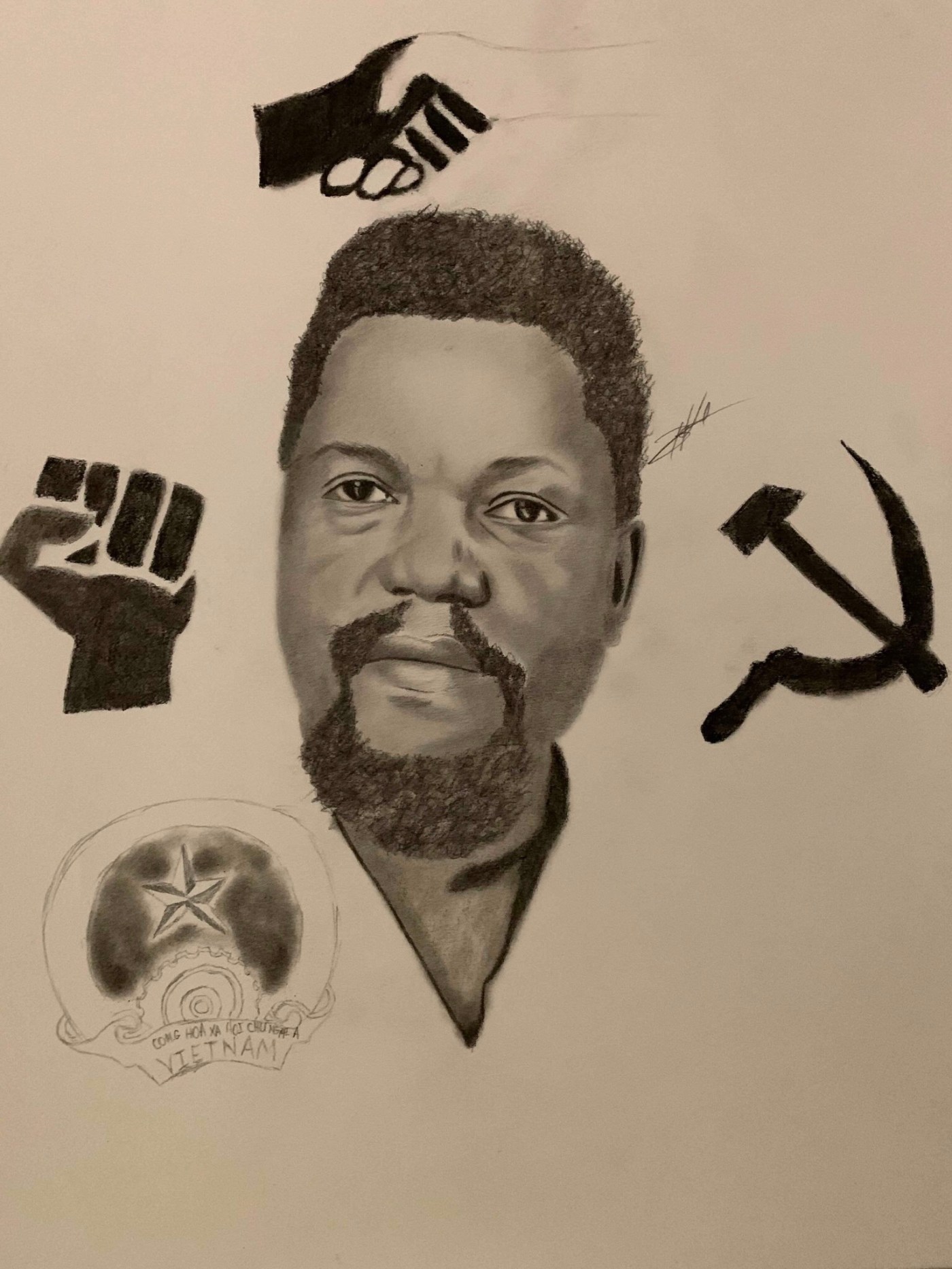
Robert Williams used networks of socialists and communists to procure weapons without himself being a communist. He did not believe the abolition of religion was feasible in the Black community. He also understood White workers would never unite with Black workers. Yet, he strategically used his affiliation with leftist organizations to procure weapons for Monroe’s defense. As all in Orange meme, he could build an alliance based on need. The ideological difference was always secondary.

Some will say Blacks should never advocate for self-defense. In their minds, Black people could never win in and armed conflict with Whites. The stance of Blacks never being able to win in a battle of Whites is a White Supremacist stance. Robert Williams knew a full-scale Black rebellion would cripple the economy of America. If America can’t make money, it will make concessions to Black people.

Don Beck classified the French, American, and Communist Revolution as part of the Orange meme. Why would a Black American Revolution be any different? Robert Williams was very clear that he advocated for self-defense, not revenge. If Robert Williams wanted revenge, he had at least two opportunities. One to lynch the Whites that attacked the Black women in 1959. The second would be the lynching of the Steagalls. Instead, Williams advocated for self-defense. His philosophy was rational and ethical.

Post Script

Often Integralists try to equate Black Militancy as the Black version of White Supremacy. Nothing could be further from the truth. Black Militancy was founded as a form of self-defense. There was nothing in Black Militancy that is about revenge or exterminating Whites. White Supremacy is a uniquely European problem. When people equate Black Militancy to White Supremacy, they only attempt to justify or deflect from atrocities of White Supremacy.

There very well may be individuals in the Black community that feel Blacks are superior to Whites. However, there has been no mass movement by Blacks that moved to exterminate any other race. Again some individuals preach Black Supremacy, but Whites have never lived in fear of Black violence on a massive scale. There was no Black equivalent of the KKK burning towns of Whites. There have never been public displays of killing Whites on the same level as lynchings in the South. It is just not something that has happened
The Monroe NAACP

Robert Williams returned from the Marine Corp to Monroe, NC, in 1955. He contacted an old friend who found him work as a security guard in a textile factory. Now that he secured a job to feed his family, he needed to find some way to help the larger black community.

The local NAACP was in dire straights. The members were harassed and even fired from their jobs. The conservatives of the time sold most of the Whites that communists ran the NAACP. The Southern states outlawed the organization in many areas. The persecution dropped participation to 6 people in 1953.

In 1947, Robert Williams was part of a defense of a funeral home. The Ku Klux Klan attacked the funeral home to steal a Black man’s body that killed a White man in a fight. Those that helped defend the body were among Williams first recruits.

Dr. Albert Perry was not in the 1947 defense force. However, he would prove to be an integral part of the Monroe NAACP. A former soldier like Williams, Perry became a doctor after serving in the military. He was currently working in a local hospital. Dr. Perry became the President of the chapter and essential to Williams political development.

The local pool hall became a rich environment for new members. Traditionally, NAACP members were the elite of black society. But, most of the Black elite in Monroe were unwilling to lose their job for joining the group. Many of the Blacks in the pool room didn’t even think they would be welcome in the NAACP ranks. Once they found out, they could join, they did. The membership swelled to 121 by 1959.

The need to be armed was more than apparent to Williams. He decided to also start a chapter of the National Rifle Association (NRA). Having an NRA charter would allow them to have a stockpile of weapons and legal rights to target practice. The first year Williams attracted 60 members.

The first major action of the Monroe NAACP was in response to the drowning of two black children in a lake in 1957. Black children had to swim in lakes and creeks because no Monroe pool allowed Blacks to swim. The NAACP first petitioned the government for a separate pool. They were told the town did not have enough money for a second pool. The NAACP then asked for the pool to be set aside one day a week for Blacks to swim. The council refused even one day a week because emptying and filling the pool was too costly. Williams replied that segregation is a luxury Monroe cannot afford.

The first protest consisted of 8 people that stood at the gate. Conservatives responded by circulating a petition to kick Dr. Perry and Robert Williams out of Monroe. KKK held rallies to muster support for the segregated pool. Both Robert Williams and Dr. Perry received anonymous death threats.

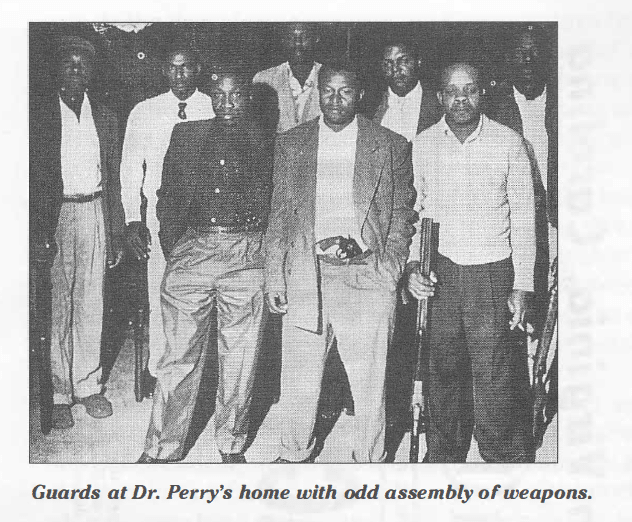
On October 5, 1957, the KKK assembled a motorcade to ride to Dr. Perry’s home. This KKK motorcade included two cop cars. They began wildly shooting at his house to intimidate him. Robert Williams was prepared and had the house barricaded. The members of the Monroe NAACP fired back at the Klansmen causing them to flee into the night. The city council banned KKK motorcades the next day.

Because the racists were not able to kill Dr. Perry, they decided to kill his reputation with trumped-up charges. Later that month, Dr. Perry was arrested for performing an abortion on a White woman. Abortions were illegal, no matter the race of a doctor or patient. Still, the headline in the newspaper read “criminal abortion on a white woman.” Dr. Perry admitted the woman had asked him to perform the abortion, but he refused. Also, the Dr. Perry was Catholic, so he did not believe in any form of birth control. Perry was jailed by Monroe police.

To free the President of the NAACP, Robert Williams led a mass demonstration at the courthouse. Many of the protesters came armed with firearms and knives. Dr. Perry was released when a white benefactor paid the $7,000 bond. Again the armed NAACP came to the rescue.

The trial for Dr. Perry came almost a year after his arrest. It was appealed, but on October 21, 1958, Dr. Perry was sentenced to five years in prison. He will be released in a little over a year. However, he would not regain his license to practice medicine. Dr. Perry lost his profession to further the cause of freedom.

For the rest of the series click HERE

The Formation of Williams’s Militancy

Robert Williams’ first stint in the military did a small amount of good in his life by allowing him to take his first creative writing course. Now that he was discharged, he qualified for the GI Bill and other Veterans Administration Programs. He would return to North Carolina a man with a plan, to become educated and work as a writer.

This plan was interrupted by Williams’ first foray into armed self-defense. In 1946, Bernie Montgomery killed a white man in a dispute about payment for car repairs. He was convicted and sentenced to death. The local KKK planned to raid the funeral home that held Montgomery’s body to desecrate it in public. The black veterans of Monroe banded together and created a battle plan to defend the funeral home. When the KKK came, they were met with rifle fire and forced to retreat.

Fighting was not the only activity that Robert Williams found upon his return to Monroe. He met and married a local woman named Mabel Ola Robinson. Mabel will be crucial in the success of Robert Williams in the battle to come.

After two years of marriage, Williams decides he can best provide for his family by moving back to Detroit and working at Cadillac Motor Company. He also rejoins Local 600 UAW. Never giving up on his dream to be a writer, he got published in a 1949 issue of the Detroit Daily Worker. The piece was a fictional rendition of his own life. Working at a Cadillac plant provided enough stability for Mabel to finish high school.

As in many of Williams’s previous jobs, he butted heads with management. He was fired in February of 1949 for excessive absenteeism and threatening to beat up his boss. Never deterred, he enrolled in West Virginia State University, because they had one of the best courses in creative writing. Once he had another child, he felt it best to move back to North Carolina to get aid from his family while using the GI Bill.

The North Carolina College for Negros in Durham was the first stop in attempting to be educated back home. However, within the same year, he transferred to his Grandfather’s alma mater John C Smith College in Charlotte. His time at John C Smith was well used. Many newspapers published him including the Socialists Workers Party newspaper and Freedom edited by Paul Robeson. Unfortunately, the GI Bill ran out before Robert Williams completed school.

On the bright side, Williams was already a trained machinist with many years of experience. He moved to Woodbridge, NJ, to work in an aircraft factory while living in Harlem. This stint in Harlem was not the same as the first. This time he became associates with many communists and socialists. Never actually joining any organizations because he did not believe in many aspects of communist dogma. The first point of contention was communist opposition to religion. Another flaw in communist philosophy was the idea that Black and White workers would unite. Williams had been around white workers all his life. None ever wanted to unite with him.

The interaction with communists increased the FBI’s surveillance. Williams moved home to be with his family. He could only find menial work. So in 1954, Williams decided to go the Los Angeles to find factory work. The FBI informed potential employers he is a security risk, making landing interviews impossible. Angry and dejected Williams joined the Marine core to avoid homelessness.

Williams took the aptitude test and was told he could work in the communications division. It appeared his dream of becoming a professional writer was coming true. He breezed through basic training and felt he was finally being treated as an American. Then the reality of race hit him in the face. The Marines made him a supply sergeant. When Williams protested, the Marines told him no blacks were in the communications division.

This slight did not go without protest. Williams wrote many government officials, including the President, whom he told he wanted to renounce his American citizenship. As punishment, the Marines stationed him in Nevada at a location that tested soldiers’ ability at sub-zero temperatures. Williams continued to protest, resulting in a dishonorable discharge in 1955 after 16 months.

His stint in the military and civilian workforce hardened Williams militancy. At every turn, his hard work was repaid with slaps in the face due to race. When people live in a society that will not allow them to realize their potential, they inevitably become subversive.

For the rest of the series click HERE

Robert Williams Early Life

Robert Williams was born on February 26, 1925, to John and Ellen Williams in Monroe, North Carolina. The town had around 6,100 people one-third of which were black. The town had a very rigid racial barrier and strong Ku Klux Klan presence. Robert would be shaped by his experiences there in Monroe and grow to challenge the racial order.

Robert’s future militancy was deeply rooted in the struggles of his family. His paternal grandfather Sikes Williams born in 1856, learned to read and write while still a slave. After Emancipation, he went to school at the Biddle Institute in Charlotte. The school was later renamed John C Smith University. Sikes Williams was active in forming the Republican Party of North Carolina, traveling all over the state. To inform locals of the new party, Sikes and Darling Thomas published a newspaper called The People’s Voice. Sikes’s activism caused many conflicts in his town. These conflicts led Sikes to arm himself and his wife. Sikes’s wife gives Robert Williams Sikes’s rifle after he passes.

Sikes’s son John did not carry on the political tradition but kept weapons handy for home defense. John provided a stable environment for Robert to mature into manhood. However, Robert always found ways to make political statements. As a youth, Robert gathered a group of other young boys to patrol their neighborhood. When Whites came to look for prostitutes, the boys would pelt the car with rocks and run into the woods. The young boys took protecting their neighborhood as a personal responsibility even in childhood.

Delivering newspapers was Robert Williams’s first job, and as a result, he became the un-official newscaster for Black Monroe. Many of Monroe’s Black residents could not read, and Robert would relay news stories to them. Impromptu newsman was a pivotal role in the early 1940s because the country was moving closer to World War II.

After the bombing of Pearl Harbor in 1941, the government created many jobs programs to get the entire workforce to join the war effort. Robert Williams joined a jobs program called the National Youth Administration (NYA)at 16 years old. The jobs program was Williams’ first foray into Civil Disobedience.

The NYA was integrated. The Monroe chapter was to learn stone masonry. Even though the Blacks expected to be treated equally, they were only allowed to dig stone, while Whites learned masonry. The last straw was when the Black workers were forced to drink from dirty coca-cola bottles in a separate water bucket. Williams staged a walkout. The program sent the Blacks to Rocky Mount to learn to make machine tools to resolve the labor dispute.

The FBI began Williams’ subject file as a result of this action. For the rest of Williams’ life, he will be under FBI surveillance. For the rest of Williams’s career, he would be plagued by FBI agents telling employers and potential employers he was a security risk.

Once Williams becomes a certified machinist, he decided to move to Detroit to work for the Automobile plants. He landed a job at Ford’s River Rouge Plant and joined the Local 600 United Autoworkers Union. The job at Ford did not only provide income and expand Williams’s social circle. It also provided an exemption from the draft because he was a defense worker. That was the first place Williams found socialists and socialism. That same year a severe race riot broke out in Detroit. Robert thinks it best to leave Detroit for a place much more calm.

He went to San Francisco to work at the docks in 1943. Blacks could not join the machinist union in California. He eventually found work as a civilian in the Navy’s Mare Island Naval Yard at Port Chicago, California. There was even more racial tension on the small Naval base, and Williams returns home to Monroe after three months.

Monroe of 1944 was rife with racial conflict. Soldiers at the nearby military facility would often fight. Many of the Black soldiers would even fight the police. Robert’s parents thought it would be best for him to leave North Carolina to avoid racial conflict. Later that year, Robert moved to Harlem, NY. After working at the docks three months, the US Army drafted him.

The Army drafted Williams for the last 18 months of World War 2. His stint began a month after the Hiroshima bombing. Racial politics in the army were no different than the rest of America. As a result, Williams had a tumultuous time. He failed to obey orders, disrespect officers and was AWOL on several occasions. His service ended “for the convenience of the government” on November 27, 1946.

In Robert Williams’s first 21 years, he had become a machinist, striker, and soldier. Most people are lucky to have their first drink at that age. He began to build a network of socialist that will be vital to his escape from Monroe later in life. Also, the FBI surveillance that would haunt him began.

For the rest of the series clickHERE

Robert Williams Sources

Internet Sources

http://www.pbs.org/independentlens/negroeswithguns/rob.html
https://kinginstitute.stanford.edu/king-papers/documents/robert-f-williams
http://www.ibiblio.org/Southern_Exposure/RFW.html
https://www.jeremiahjenne.com/the-archives/2018/3/10/an-african-american-activist-in-the-court-of-mao-the-life-of-robert-f-williams
https://solidarity-us.org/atc/66/p2283/
https://www.ncdcr.gov/blog/2013/08/27/robert-williams-and-civil-rights-protests-in-monroe
https://www.marxists.org/history/etol/newspape/isr/vol22/no04/monroe.htm
https://www.nytimes.com/2006/02/07/arts/television/outspoken-and-feared-but-largely-forgotten.html
https://www.nytimes.com/1996/10/19/us/robert-f-williams-71-civil-rights-leader-and-revolutionary.html
https://www.blackpast.org/african-american-history/williams-robert-f-1925-1996/
Documentary: Negros With Guns on PBS Independent Lens produced by California Newsreel found on platform Vimeo
Negros with Guns by P. Cowan 3-16-1963 In the Harvard Crimson http://www.thecrimson.com
In Memory of Robert Williams: A Voice of Armed Self-Defense and Black Liberation 11-17-1996 http://www.rwor.org

Books

People With Strength The Story of Monroe, N.C. by Truman Nelson

Radio Free Dixie Robert F. Williams and the Roots of Black Power by Timothy B. Tyson 1999

Negros with Guns by Robert F Williams (1962)

Website Powered by WordPress.com.

Up ↑