Search

Black Leadership Analysis

This is an unofficial Spiral Dynamics blog. It is not endorsed by D. Beck PhD.

Tag

Civil Rights Movement

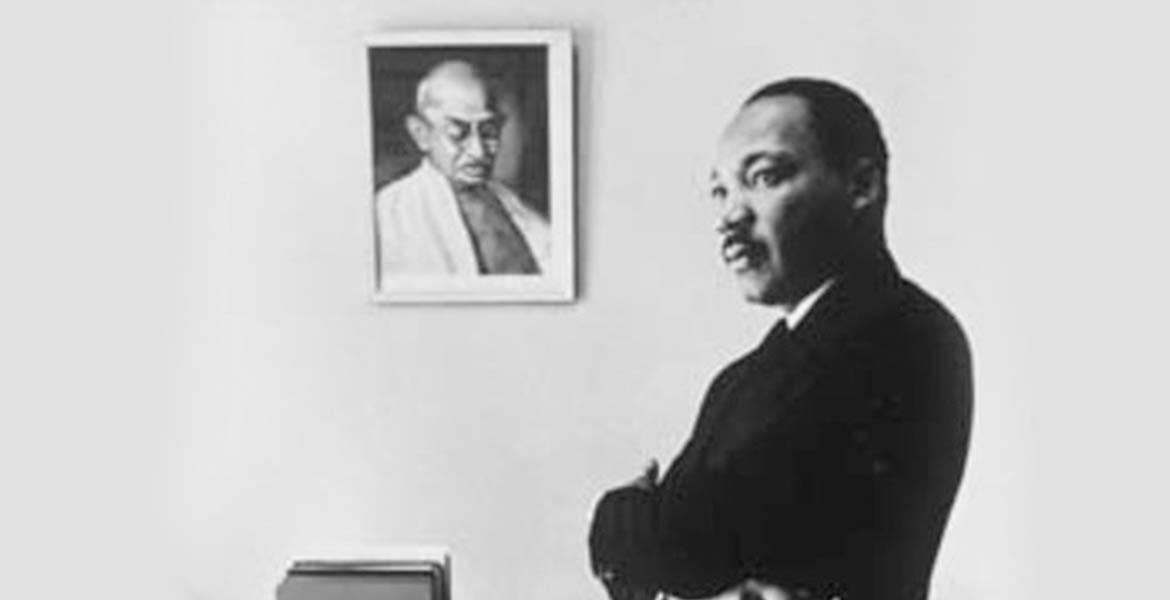
Gandhi’s Influence on Dr King ?

Dr. King saw Gandhi as a fellow Christian. Not because Gandhi was part of a church, Gandhi was Hindu. However, he did see Gandhi as a person that used love to conquer hate through non-violent resistance. He went as far as to say the bible verse “there are other sheep I must minister” (John 10:16) and “do even greater things than these” (John 14:12) included Gandhi. In a 1959 sermon, Dr. King said Gandhi was also a master of self-control.

Dr. King says that his first encounter with Gandhi’s teaching was a two years after the death of Gandhi in 1950. Dr. Mordecai Johnson gave the lecture while Dr. King was in seminary. At the time of the speech, Gandhi had already been assassinated. The address had such an effect on King he went out and bought six books on the subject. Some scholars say that Dr. Benjamin Mays introduced King to Gandhi’s work while an undergraduate. Dr. Mays had gone with a delegation of Christians to visit India and met Gandhi in 1935. However in the paper “My Journey to Non-violence” King credits Dr. Johnson for introducing him to Gandhi.

Prime Minister Nehru invited Dr. King to visit India in 1959. The Gandhi National Memorial Fund and the Quaker Center sponsored the trip. Dr. King arrived in India on February 10, 1959. He brought his wife Coretta and biographer L.D. Reddick for the month-long journey and exploration of non-violent resistance.

Upon leaving India, King calls on the United States and Soviet Russia to follow Gandhi’s example of non-violence and disarm. He also calls on India to disarm and become an example to the world. If India did disarm and some other country attacks, the world would rush to her defense, because she is a shining example of non-violence. His call for India to disarm shows how sincerely he believed in the concept of good will inevitably triumph over evil.

King’s view of Gandhi and his trip to India were recounted in the 1959 Palm Sunday sermon, a 1959 article for Ebony magazine, and a 1965 Independence Day sermon. According to King, Gandhi freed India without a gun drawn or a harsh word uttered. He gave a narrative of Gandhi’s life in the Palm Sunday sermon.

Gandhi began his journey when he was kicked off a train after buying a first class ticket in South Africa. The humiliation for being kicked off the train led him to organize Indians for equality. Gandhi gathered inspiration from the bible and Christian authors like Tolstoy. His campaigns in South Africa were so successful that those back home in India wanted his help.

In India, his campaign for equality began in 1922. This first campaign had to end because people in his movement became violent. King commends Gandhi for having the bravery to chastise members of his movement when they transgressed. He later restarted the campaign and protested the high taxes for salt with the Salt March.

Gandhi also wanted to end untouchability, according to King. King believes the fast of 1932 was to stop untouchability. Gandhi takes himself to the brink of starvation. Right before Gandhi was to die of starvation, a group of untouchables and high caste members decide to sign a pact to end untouchability. He never mentions Ambedkar by name. Now untouchability is punishable by three years in jail. Most Indian leaders publicly denounce the practice, and no one would publicly sign a pact supporting untouchability.

In reality, the 1932 fast was to remove Parliamentary reservations for Dalits. Ambedkar had gone to England and secured The Communal Award ensuring Scheduled Castes and Tribes would have seats reserved for them in Parliament. Supporters were glad that England would ensure some Dalit representation. Gandhi wanted to ensure Hindus always held the majority in Parliament. If Dalit had a separate electorate, they could form a coalition with Muslims and weaken Hindu caste rule. Gandhi went on a fast to ensure the Hindu set aside included Dalits. It is unlikely a Dalit could win an election where most of the voters were caste Hindus, and their numbers would increase the number of seats Hindus had relative to Muslims. Ambedkar and Gandhi were able to reach a compromise in the Poona Pact. Gandhi broke his fast and Ambedkar received some reserved seating in Parliament.

King continues to praise Gandhi saying he achieved absolute self-discipline. According to King, Gandhi had no secrets, and his life was an open book. King obviously was not aware of the numerous sexual allegations against Gandhi. These allegations will not be known in the West until much later. However, someone deeply involved in Indian politics would have at least heard rumor of transgression. Arundhati Roy has written many books detailing the violations.

Gandhi is also complemented for using the term “Harijan” instead of “untouchable.” It appears Dr. King is not aware that the term “Harijan” is also offensive and most people that suffer from untouchability and they prefer the term Dalit. The term “harijan” is Sanskrit for “children of G-d.” The term “Harijan” is more palatable to upper caste Hindus than “untouchables” or “Dalit” because it allows the upper caste to sidestep real issues and the root problems with caste. On the other hand, “Dalit” means “oppressed” in Sanskrit. The term “Dalit” forces upper caste to deal head on with the social problems of the day. Many Dalits protested the use of the term “Harijan” while Gandhi was alive. Gandhi knew this and continued to use the word “Harijan” because his priority was to talk to upper caste Hindus.

King also seems unaware that Ambedkar charged Gandhi of having different narratives in the three versions of his newspaper Harijan. The English version always advocated for the annihilation of caste, but the two versions in his native language advocate for keeping upper caste Hindus above Dalit, while removing rituals of purity when one is in contact with Dalits. King praised Gandhi for having a paper dedicated to Dalits.

While telling his story about his brief stint in Trivandrum, Kerala while in India, he tells the story about when he was called an untouchable. He was visiting a high school in the city that was comprised mostly of untouchables, and the principle introduced him as an untouchable from America. King was at first upset, but after reflection, he realized that he was, in fact, an untouchable, along with every other black man in America.

From the evidence I was able to gather, I am not convinced that Dr. King had a clear view of the Indian struggle and Gandhi’s role in it. He apparently knew little of Gandhi’s personal life. It is most likely that a carefully manufactured retelling of the Indian struggle through the eyes of Christian pre-determinism influenced King’s understanding. The idea that good will inevitably win over evil is pervasive throughout the Bible. All the people in King’s life that studied India were Christians with a background or career in theology. So, it can be easily seen that these people superimposed their beliefs on their retelling of the story. Dr. King was predisposed to believe the narrative because of his sincere belief in the Christian faith.

In reality, India had an armed struggle against the British that started in the 1850’s. By the 1940’s the Indian National Army was large and had carried out successful operations against the British in World War II. The English needed to concentrate on rebuilding after the war and did not have enough resources to suppress an armed rebellion. Gandhi came in at the right time to offer a transition of power that would allow for continued economic growth while not consuming British military resources. That does not mean blacks should form a resistance army to mimic the Indians. I present this evidence to show how fundamentally different what Gandhi accomplished was to what Dr. King accomplished.

King’s faith also led him to be humble and extend credit to Gandhi. In reality, the story of Gandhi had the same influence on King as the stories of rebellious Scottish chiefs had on the American founding fathers. Both gathered inspirations to fight tyranny from those that went before them. Both may have used previous struggles as a rough outline of what needed to be done to free their people. But to say that Gandhi was the inspiration or mastermind of the American Civil Rights movement is a step too far. King’s tactics and struggles were his own.

If Dr. King had been introduced to the philosophy of Ambedkar, he would not have given so much praise and credit to Gandhi. King also would not refer to Dalits as “Harijan” if he understood they prefer the term Dalit. He had a very limited view of the Dalit fight, but he saw the struggle against untouchability and racism as intertwined. If Dr. King understood Gandhi’s true feelings on untouchability, he would be highly critical.

As we continue this blog, we will go in-depth on the philosophy of Gandhi, Ambedkar, and King. It is very likely the philosophy of Ambedkar and King will be the most similar.

Sources

Background

  1. Labelling Dalits “Harijans”:How We remain ignorant and insensitive to Dalit Identity. 10-27-2015 S. Ramanathan
  2. L.D. Reddick’s Account of the arrival in India 02-10-1959
  3. Biography of M. Gandhi on http://kingencyclopedia.stanford.edu/
  4. Narrative of Dr. King’s 1959 trip to India found on http://www.gandhiking.ning.com
  5. Poona Pact: Mahatma Gandhi’s fight against untouchability 09-24-2016 https://www.indiatoday.in
  6. Dr. B.R. Ambedkar’s BBC Interview in 1955
  7. Arundhati Roy: Race, Caste – Ambedkar v. Gandhi posted by Joe Friendly on 10-14-2014 YouTube
  8. Arundhati Roy: The Doctor and the Saint posted by We Are Many Media on 10-16-2014 YouTube
  9. An odd kind of piety: The truth about Gandhi’s sex life 01-02-2012 http://www.independent.co.uk/
  10. The Sexuality of a Celibate Life by Vinay Lal 05-01-2011 https://www.sscnet.ucla.edu
  11. Debunking the Gandhi Myth:Arundhati Roy posted by The Laura Flanders Show 10-21-2014 YouTube
  12. Dr. King’s Papers and Speeches

  13. His Influence Speaks to World Consciousness paper 01-30-1958
  14. My Pilgrimage to Nonviolence paper 09-01-1958
  15. Statement Upon Return from India 03-18-1959
  16. Palm Sunday Sermon 03-22-1959
  17. My Trip to the Land of Gandhi 07-1959 published in Ebony
  18. The American Dream sermon 07-04-1965

Basic Philosophy of Asa Philip Randolph

Lynching

In 1917, Randolph and his business partner, Chandler Owen, wrote a treatise called The Truth About Lynchings. Lynchings was a way to punish people or entire groups without a trial. Lynchings were very common in the South, and the victims were mostly black.

Randolph and Owen created the treatise to combat the myth that black men having sex with white women cause lynchings. Often interracial relationships ended with an accusation of rape. The whites of the town would rally and kill the offending black man.

To prove the cause of lynchings is not racial, Randolph and Owen show the stats for victims of lynching. Around 35% of victims of lynching were white, and only 34% followed a rape charge. There were black men lynched for dressing well, standing up to whites that disrespected them and attempting to vote. Often black men were just randomly killed. Even when a black man was accused of rape, he did not even know his white accuser. The cause of lynching is much deeper than race.

The writers contend all the victims were extremely poor and often exploited for labor. Most times blacks moved into an area and provided incredibly cheap labor. The skilled labor, generally white, would then need to run these people out of town or kill them. A mob would form to kill one man in hopes the rest would leave out of fear. If that did not work, an attack on the entire black population would follow. That was the story of lynchings in the North.

In the South, lynching provided cause for a constant state of fear in the black community. The state of fear impeded organizing and protesting for equal pay. The fear keeps the old exploitative Capitalist system alive, and the South stayed one step away from slavery.

The capitalists perpetuate racial fears and cause lynchings. The wealthy control the newspapers and can create whatever narrative they want. The public believes the narrative, and the skilled workers are pitted against non-skilled workers. Both have their attention diverted from the real cause of suffering.

Ultimately, exploitative Capitalism led to lynching. Instating socialism can correct the problem. The first order of business was to have all trade unions integrated. Blacks also have to begin to support trade unionism. It is insane to be against trade unionism because most black people are in the working class. In spite of the discrimination in the Union, the fundamental principles of Unionism are sound.

International Affairs

Randolph wrote a treatise on how the United States should handle World War I in 1917 with fellow socialist Chandler Owen. The duo was instrumental in the formulation of socialist thought in the black community. For the reader to fully understand the essay a summary of World War I is needed.

World War I started in 1914 with the assassination of Archduke Ferdinand, heir to the Austrian-Hungarian throne. A terrorist organization known as the Black Hand carried out the assassination, and the group had connections to Serbia. Serbia had recently gained full independence from the Ottoman Empire with the help of Russia. The Serbians wanted to liberate various Slavic countries from Austria – Hungary.

Austria – Hungary declared war on Serbia to avenge the killing of the heir. Serbia had a mutual protection pact with Russia. An alliance between France, Russia, and England had existed for decades. The entry of Germany on the side of Austria – Hungary culminated in “The war to end all wars.”

At the beginning of 1917, the United States was not yet in the war. A telegram from Germany was intercepted by the British. The telegram offered Mexico aid if Mexico declared war on the United States to reclaim land lost during the Mexican-American War. The telegram is now known as the Zimmerman Telegram. Public opinion swayed from isolationism to interventionism upon publication of the Zimmerman Telegram. The USA declared war on Germany on April 6, 1917.

Even though America was justified in entering the war, there were many issues getting soldiers half-way across the world. America could not reinforce European Allied force at speed to move the front line. 1917 was a year of stalemate. America was dumping tons of resources in a war with no end in sight. The government instituted the draft. America will solve all these logistic issues and by 1918 ten thousand new soldiers will be sent to France a day. The Allies will begin to push the Axis Powers back, and the war will end in the summer of 1918.

The stress of the war was not only taking a toll on America. Russia was also near starvation by 1917. The harsh living conditions for the average Russian resulted in a revolution to overthrow the Czar. The new government was the first Socialist government in the world. The new Russian government scales back on the war effort. A treaty between German and Russian will be signed in March of 1918.

Randolph and Owen’s joint treatise Terms of Peace and the Darker Races details how to the major European powers can gain peace with each other and with the non-whites of the world. The treatise takes the position that the war was not intended to avenge the death of Ferdinand. The war was to halt German progress in acquiring new territory in Africa and the Pacific. At the beginning of the war, Germany had colonies in East Africa, West Africa, Northern part of Papua New Guinea, and various islands in the Pacific. The German colonial growth threatened French and German power in Africa and beyond.

The second cause of the war was a surplus of military goods that was going idol. Capitalists run Europe and want to ensure resources go to use and generate profit. However, once the excess of military assets has been exhausted the European powers will end the war because there is not profit motive. The following paragraph is a good summary.

“ After the goods produced shall have been used. There is no gain in having the war continue, but on the contrary, the war’s continuance would be a substantial debt upon capitalist. The capitalist…sell immense amount of goods. When the war ends, the government owes them huge debts. It is necessary for the soldiers to become laborers now to pay this debt. Hence the object of peace is profit – gain- just as the object of war is.” p.2

To illustrate his idea the capital gain is the real reason for prolonging the war he shows how differently the new socialist government in Russia and the capitalist government are handling the issue of peace. The Russians have made their terms for peace well known. Britain and France engage in dark diplomacy, working on terms with Austria -Hungary, and Germany in secret. He concludes that Britain and France want continuance because they still see that the venture is profitable

The profit to be made is not only on the sale of arms and supplies, but the reclaiming of colonial lands recently lost to Germany. The new colonial lands have numerous untapped resources. Further development in Europe is no longer possible due to overuse of land. The new colonial lands are vital for further growth. The allies hope to weaken Germany and take the land back.

The European power’s main relationship to the colonial land is for exploitation. The people of the land are seen as a vehicle to be used to cultivate the ground. They are not independent/agentic beings. The following quotes are a summary of this aspect of the philosophy.

“To prevent such a fight, one of three things may be done: You may eliminate the fighters, you may remove the thing they fight about, or change the attitude on what they are fighting about.” p.8

“Herein lies the real bone of contention of the world war – darker peoples for cheap labor and darker people for rich lands” p 13

“Before getting into the terms of peace for the darker nations, we wish to observe that incidentally are the darker people’s exploited. It is not because of their color per se, but because colored peoples happen to assume such a low place in the scale of civilization just now as to make such exploitation attractive easy and possible.” p 15

Because you can not eliminate the European nations or the colonial lands, the attitude toward colonial lands must change. That is why the European must acknowledge the colonial’s independence an aid in the march toward self-sufficiency. Global peace and stability will be needed to facilitate this new paradigm.

The creation of a Permanent International Peace Commission will be necessary. The commission will judge international breaches of justice. The ability address grievances in a court setting will make the need for war obsolete. As part of the commission, there will be an International Council on the Condition of Darker Races. This council will ensure profit sharing between the workers and capitalist, proper education for natives, and eventual independence for the native people.

Randolph believes the desire for peace will be the ultimate motivator to accomplish this goal. World War I was so bloody on such a large scale that no one will want to endure any war ever again. If everyone wants peace, then full independence for the colonies is necessary. He extends the desired autonomy to Alsace, Lorraine, and Poland which were controlled by various European nations at that time.

Immigration

Like many other Black Empowerment Thinkers, Randolph was a restrictionist.[D] Restrictionist means a person believes jobs or government benefits should first go to United States citizens. His reasoning is complex.

1. Black immigrants rarely applied for citizenship in the early 1900’s
2. White immigrants worked to bring racist laws into the North to shut down black competition for work. Immigrants from nations that were hostile to the USA displaced black veterans in the job market.

His restrictionist stance came from the general labor dynamic of the early 1900’s. The labor unions shut out blacks. Then the union would monopolize the labor market. When the union would strike, blacks would fill the jobs left behind by the strikers. So blacks were often opposed to immigration and the unions. The racism of the labor unions led to most blacks voting Republican and most immigrants voting Democrat. The following was a quote from Randolph in 1924.

“ Instead of reducing immigration to 2% of the 1890 quota, we favor reducing it to nothing… We favor shutting out the Germans from Germany, Italians from Italy, and the Hindus from India. Negro’s from the West Indies. The country is suffering from immigrant indigestion.”[D]

It is important to note that Randolph took no stance on immigration bills after the BSCP joined the AFL. Specifically, he did not comment on the McCarran-Walter Act in 1952 or the Hart-Cellar Act in 1965.[D]

Worker relations

In a 1919 editorial in his periodical “The Messenger” he detailed his Socialist policy in an article entitled “Our Reason for Being.” Randolph explains how the interest of black and white workers are the same. Specifically, their interests are better wages, shorter hours, and better working conditions. If unions discriminate against blacks, the capitalist will have a bank of workers to use when the union workers strike. The larger the union, the more power it will have. Therefore integrating unions is only logical. He cites the Industrial Workers of the World, which was the largest union and the most powerful integrated union in the 1910’s.

Allowing Blacks in Unions will also stop the spread of communism among black people. Black radicalism was starting to spread in blacks frustrated with the slow pace of racial justice. If black people were financially stable faith would be restored in the government and society. The newfound faith in America would lead to more stability.

Proactive Politics

Randolph gave the opening speech at the 1963 March on Washington for Jobs and Freedom. In the speech, he details how all Americans need to have full employment. Randolph hoped the march would lead to a jobs bill that would reduce national unemployment. Fair hiring practices must accompany the new jobs. He details one of the main hindrances to fair hiring practices is the need for social peace. Opponents will always claim that change will upset current workers and customers and cause a problem. Randolph expresses the need not to be afraid of conflict for the sake of advancement. Randolph demands that federal funding be contingent on compliance was the method of enforcing the new employment laws.

Randolph also makes clear that the march is just the beginning. He calls for listeners to take a pledge to take the call to resistance back home.

“ When we leave, it will be to carry on the civil rights revolution home with us into every nook and cranny of the land, and we shall return again and again to Washington in ever growing numbers until total freedom is ours” [F]

Legacy

Thomas Baker interview Randolph in 1968 on his life and legacy. The Lyndon Baines Johnson Library kept the interview. The interview recounts his dealings with presidents Roosevelt, Truman, Eisenhower, Kennedy, and Johnson

The first President that Randolph interacted with was F. D. Roosevelt. Randolph had scheduled the 1941 March on Washington to protest segregation in the armed forces and munitions manufacturing. World War II was underway in Europe. The United States would enter the war in December 1941 after Pearl Harbor. The US was supplying the allied war effort. Therefore munitions factories were opening all over the country. Blacks were applying and were not given jobs in munitions factories. For a group of people kept systematically poor, not being allowed in a growing industry was a real problem.

An even larger problem was segregation in the military. There was the moral issue of fighting discrimination overseas when blacks at home suffered and the practical issue of the glass ceiling for promotions for blacks. A black soldier could be in charge of a black division but nothing else. That made the dream of becoming a general unobtainable. All black people in the armed forces had feelings of resentment.

Mrs. Roosevelt was the first to reach out to Randolph to see if they could avoid having the march. The President did not want racial strife to divide the nation when any day the US could be called to help the Allies in Europe. Mrs. Roosevelt asked why had Randolph not come to the President first. After talking, Mrs. Roosevelt set up a meeting between FDR and Randolph.

F.D. Roosevelt explained that he was soon to execute Executive Order 8802 forcing the National Defense Industry to desegregate. Initially, the Executive Order only applied to government contractors. Randolph demanded the addition of federl government work. Roosevelt agreed if Randolph called off the march. Two days before the march, Roosevelt issued Executive Order 8802 and it included the federal government.

Executive Order 8802 did not contain the military. Randolph and other Civil Rights leaders went to work on a national campaign to end segregation in the military. Truman agreed to meet with Randolph in either 1947 or 1948, Randolph could not remember. In the meeting, Randolph explains black were preparing to become insubordinate if the military did not desegregate. Truman did not realize the situation was that serious. Truman got to work and issued Executive Order 9981 desegregating the military.

Randolph says Eisenhower did the least of all the presidents he worked with for the cause of Civil Rights. Eisenhower was sympathetic to the black cause, but would not take public stands. Randolph did commend Eisenhower for protecting the Little Rock 9, but he could have done much more.

Randolph recounts the story of the 1963 March on Washington. Senators Javits and Douglass organized a meeting between Kennedy, Johnson, various congressmen, and Civil Rights leaders. The biggest concern was keeping the march peaceful. There had never been a demonstration of that size before. If the protest turned violent, it would be difficult to contain. The Civil Rights leaders reassured everyone they could keep control.

Johnson is the best president for Civil Rights according to Randolph. He makes sure to say that list includes Lincoln. Randolph lists Johnson’s accomplishments: Civil Rights Act of 1964, 1965, Voting Rights Act of 1967 and the Open House Occupancy Act of 1968. President Johnson is the first man that won the Presidency that received Randolph’s vote. Randolph spent most of his life as part of the Socialist Party, and Johnson was the first mainstream candidate that had his support. Randolph is confident that President Johnson would soon end the Vietnam War.

Baker asks Randolph if Dr. King and President Johnson had any animosity. Randolph says that Johnson and Dr. King had a good relationship. There was no animosity between King and Johnson.

Randolph considers himself and fellow Civil Rights activists Roy Wilkins and Andrew Young the voice of most of Black America. He grouped Booker T. Washington and W.E.B. DuBois together as Capitalist thinkers.He considered Marcus Garvey the voice of more radical separatist. He says Garvey’s Back to Africa movement will not work for the following reasons.

1. Most blacks don’t want to go back to Africa
2. Blacks don’t have enough resources to collective move back to Africa
3. Even if blacks move back to Africa, Imperialist control all the resources.

Ultimately, the Back to Africa movement was not realistic.

Sources:
Books
1. Banks, W. M. 1996, Black Intellectuals: Race and Responsibility in American Life, New York: W. W. Norton & Company.
2. Randolph, A.P 1917 and Owen, Chandler, Terms of Peace and the Darker Race, Poole Press Association (E-book version on Google Play)
Internet
A. Pfeffer, Paula F. (2000). “Randolph; Asa Philip” American National Biography Online. Oxford University Press.
B. “A look at Malcolm X as a mirror for America” New York Times 12-16-1992
Asa Philip Randolph biography on http://www.aflcio.org
C. Scott, Daryl (1999) “ Immigrant Indigestion” Center for Immigration Studies
D. Randolph, A.P. “Our Reason for Being” transcript on http://www.historymatters.gmu.edu
E. Transcript of Randolph’s 1963 March on Washington Speech found on http://www.jacksonville.com

Featured post

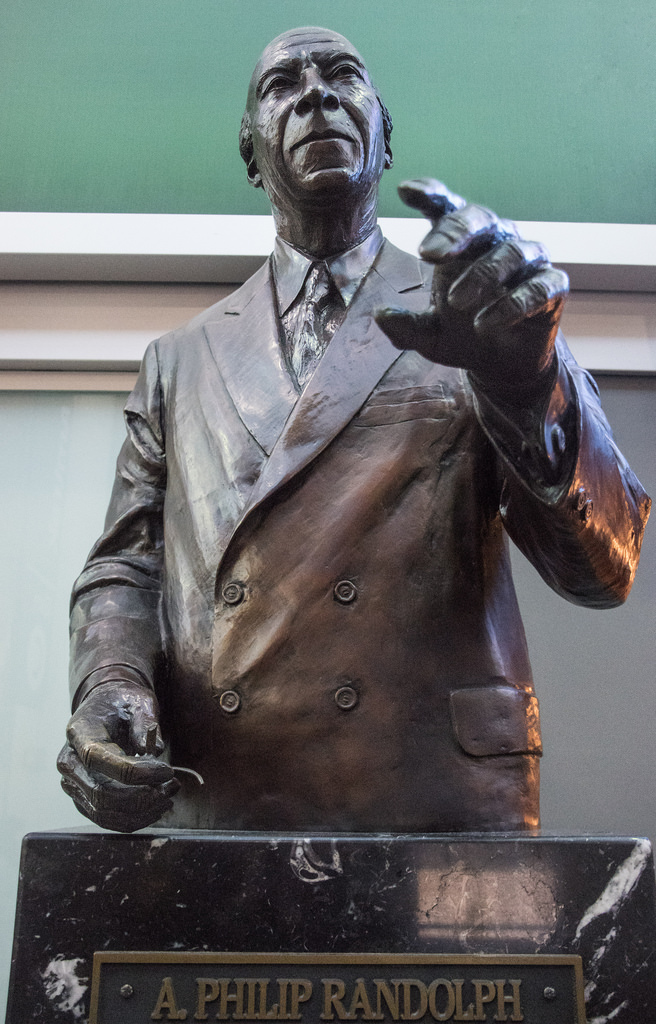
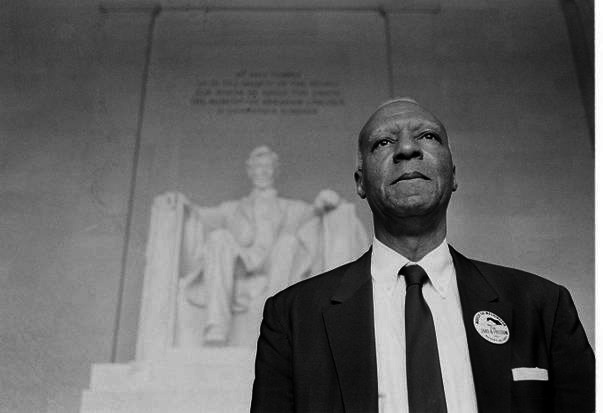
Asa Philip Randolph (1889 – 1979)

Accomplishments
 
+ Organized the Brotherhood of Sleeping Car Porters
+ Pressured POTUS Franklin Roosevelt into signing Executive Order to stop
segregation in Defense Contracting
+ Pressure POTUS H. Truman into signing Executive Order to end segregation in the
military
+ Directed March on Washington in 1963
+ First Vice President of the AFL-CIO in 1955 to 1968
+ Founder of Negro American Labor Council
+ Awarded Presidential Medal of Freedom by POTUS Johnson
+ The movie “10,000 Black Men Named George” was written about Randolph’s life
 
Short Biography
 
Asa Philip Randolph was born in Crescent City, Florida in 1889 to a working class African Methodist Episcopal preacher and his wife. Randolph’s father, James W. Randolph, was heavily influenced by Black Nationalism. In the early 1900’s Henry McNeal Turner, fellow AME preacher was first developing a philosophy that called for black people to leave America in mass and resettle in Africa.[D] Turner also believes G-d was black and it was important for blacks to see G-d in their image. Black nationalist thinking will have a profound effect on Randolph’s life.
 
Randolph’s parents were not only armchair philosophers; they lived what they preached. A black man was being held in a Florida county jail. A mob was preparing to lynch the detainee, and James Randolph organized a protection force to surround the jail. His mother sat at home and protected the family with a loaded shotgun.[C] Philip Randolph vividly recounts the story in many sources.
 
In Randolph’s early years he excelled in school. Randolph graduated valedictorian of his high school class in 1907. He left Florida to pursue an acting career and went to New York City in 1911.[A] While in the acting community he was first introduced to Socialism. He began to devour all the information he could on the new philosophy. While at one of these Socialist meetings he met Chandler Owen, a Columbia law student. The two began a partnership that synthesized various elements of Socialism and black liberation. The pair was colloquially known in Harlem as “Lenin” (Owen) and “Trotsky” (Randolph).
 
The partnership of Randolph and Owen culminated in the periodical they published called the “Messenger” in 1917. “Messenger” campaigned against lynchings, American participation in World War 1, and segregation. The publication was endorsed by the Socialist Party of America and deemed by the Department of Justice as “the most dangerous of all Negro publications.” [A]Various ideological differences caused the publication to disband in 1919. [A]
 
Randolph initial forays as a union organizer were troublesome. He first attempted to organize New York City Elevator Operators. He then became president of the National Brotherhood of Workers of America, a shipyard worker union. The National Brotherhood dissolved due to pressure from the American Federation of Labor (AFL).
 
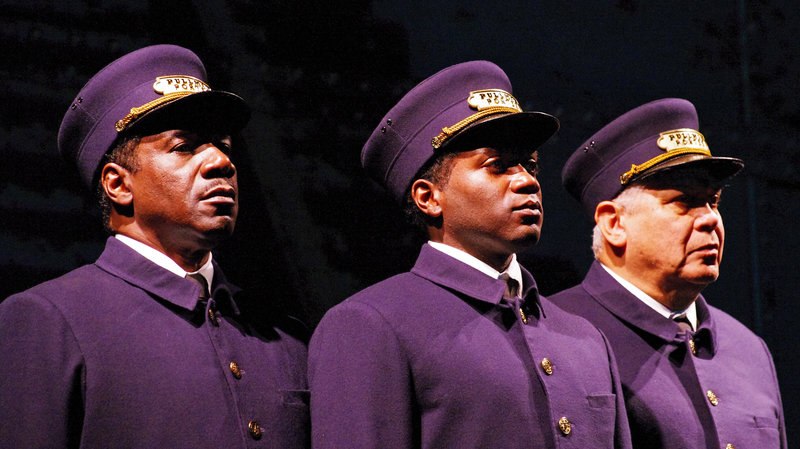
His greatest success as a union leader came with the Brotherhood of Sleeping Car Porters (BSCP). The largest group of Sleeping Car Porters worked for the Pullman Company. The Pullman Company was one of the biggest railroad companies in the early 1900’s. The Sleeping Car, as the name entails, had sleeping berths to allow a person to sleep on long train rides. The Pullman Company had a reputation for the best and most luxurious sleeping cars. A trip on a Pullman Car would be a huge status symbol.
 
A Sleeping Car Porter would be equivalent to a modern day airline stewardess, hotel concierge, and luggage handler all in one. The Sleeping Car Porter would greet the traveler on entry, carry their bags, inform them of train rules, show them around the train. Before the porters unionized, they would commonly work one hundred hours a week. The pay was $1,230 a year in 1927, when the poverty line was $1,500.
 
Randolph was elected president of the BSCP in 1925. It was the first time a black union took on a large corporation. As with many other labor movements, Pullman Company used violence and intimidation to subvert unionizing efforts. Despite adversity, the BSCP was able to sign 51% of porters into their union in the first year.[A] In 1935, Randolph was able to begin negotiations with the Pullman Company. In 1937, the Pullman Company entered the contract with the BSCP.
 
Randolph’s success in the BSCP made him a prominent figure in Civil Rights. He decided to turn his attention to racial segregation in the war industry. He partnered with Bayard Rustin to organize the March on Washington for Jobs and Freedom in 1941. Randolph threatened to have 50,000 people protesting in the city. POTUS F. Roosevelt felt the pressure and signed Executive Order 8802 also known as the Fair Employment Act. The Fair Employment Act ended racial segregation in war industry. The 1941 March was called off due to the signage of the executive order.
 
Randolph understood his work was incomplete. He now focused on ending segregation in the armed forces. Randolph formed the Committee Against Jim Crow in Military Service to pressure the government into abolishing segregation in military service. He went as far as telling black people not to register for the draft.[A] POTUS H. Truman felt this pressure and signed Executive Order 9981 to abolish military segregation in 1948.[A]
 
By the 1950’s, a new group of Civil Rights leaders was coming to the forefront. The most promising of the bunch was a young Georgia preacher named Martin Luther King Jr. Randolph arranged for Bayard Rustin to teach King how to organize and build coalitions. Rustin and Randolph’s tutelage culminated in King being the keynote speaker at the 1963 March on Washington for Jobs and Freedom.
 
While advocating for Civil Rights on the whole Randolph continued to fight for labor rights within the American Federation of Labor (AFL). America has a long history of racism and segregation in labor unions. Randolph also decided to fight this corruption inside the unions. The AFL chartered the BSCP in 1935. Randolph’s involvement continued through the merger with the Congress of Industrial Organizations (CIO). Randolph served as vice president of the newly formed AFL-CIO from 1955 until 1968.
 
Randolph also got Civil Rights leaders involved in the labor movement. The only time Malcolm X participated in a labor strike was 1962’s fifty-six-day strike for the benefit of hospital workers at the Brookdale Medical Center. Malcolm X spoke at their rally and publicly supported the black and brown workers. It is important to note he shared the platform with Dr. Martin Luther King. [B]
 
A. Philip Randolph died in 1979 of a heart condition


Sources:
Books
Banks, W. M. 1996, Black Intellectuals: Race and Responsibility in American Life, New York: W. W. Norton & Company.
Randolph, A.P 1917 and Owen, Chandler, Terms of Peace and the Darker Race, Poole Press Association (E-book version on Google Play)
Internet
A. Pfeffer, Paula F. (2000). “Randolph; Asa Philip”. American National Biography Online.
B. “A look at Malcolm X as a mirror for America” New York Times 12-16-1992
C. Asa Philip Randolph biography on http://www.aflcio.org
D. Scott, Daryl (1999) “ Immigrant Indigestion” Center for Immigration Studies

What Is a Pullman Porter?

The Pullman Porter had a pivotal role in the Civil Rights Movement. His official job description was to assist the passengers on the luxurious Pullman Sleeping Car. His real job was to create the black middle class and forge countless organizations. The porter is known primarily for the Brotherhood of Sleeping Car Porters, which marked the first black labor union to sign a contract with a large company. In addition to all the historical accomplishments of the union, the porter provides vital insight into the black experience.

The first point of business is explaining the Pullman Company. The Pullman Company manufactured luxury train cars for overnight travel. The Pullman Company also contracted out the crew to run the car. The crew members were called Sleeping Car Porters. The founder George Pullman began the company after having to sleep in the train chair on an overnight trip to visit relatives. He started to design a car with rooms with full-size beds called berths. Pullman also elicited help from the government to create favorable laws and obtain funding. Pullman befriended the son of Abraham Lincoln, Robert Todd Lincoln while petitioning the government. Lincoln took over the company after the death of George Pullman. Both men were fiercely anti-union regardless of the race of the members.

In the simplest terms, a Pullman Porter is equivalent to airline stewardess with far more responsibilities. A porter would greet the passenger upon entrance to the train, carry the bags, show the passengers around the car, and cater to the various needs of the passenger. Porters acted as babysitters while parents drank, nurses when the elderly passengers were sick, and safety advisors when the tracks got rocky. The porter was always available with a smile to make sure his passenger’s trip was remarkable.

Pullman preferred to hire dark-skinned, tall, thin porter’s from the American South. They needed to be tall to reach the shelves above the berths. He needed to be thin to walk by passengers in the narrow hallway without touching. Southern to be sufficiently submissive, Northern blacks were often too rowdy. The dark-skin was especially important. Dark-skin marked the division between passenger and porter. The passenger needed to see the porter, but the passenger should never be obliged to consider the porter fully human. The porter was “other,” a servant, and he wanted the passenger to see him as such.

The passengers on Sleeping Cars were known for their rambunctiousness. The Pullman Car was one of the most expensive ways to travel at the time. The liquor flowed freely on the train, so much so, that passengers often “found themselves in strangers beds.” A Pullman trip would be equivalent to a modern day cruise.

In addition to most passengers spending a significant amount of time on the journey drunk, the white passenger treated the porter with very little respect. The most notable feature of the disrespect was referring to all porters as “George.” The name harkens back to slavery when slaves received their master’s last name. Since the owner of the company was named George, all his black workers were George by default. Termination was the penalty for not answering to George. The Pullman Manual had two hundred and seventy rules. A porter could never show and any indication that he was angry or hurt by a passenger’s comment.

Even though porters were not allowed to fraternize with the passengers, many passengers made advances on the porters. Sumner Welles was Undersecretary of State in 1940. Welles was exemplary as a diplomat and was picked to succeed the current Secretary of State Cordell Hull. Welles derailed his career by getting drunk and offering a porter money for sex. The porter told superiors, and other porters said Welles made the same advances on them. Various government officials confirmed the story and Welles was not picked to be Secretary of State. A 1977 tell-all memoir was the first utterance of this story.

Not all advances were turned down. Here is a story of a young porter and a bride whose husband had to disembark early from the train. The account comes from Larry Tye’s book Rising from the Rails.

Watching her husband ride off in a covered wagon, she struck up a conversation with [A porter] “You -you know you’re the first Nig-nigger I have ever talked to. Can I? I? – believe all- believe all my mother and father have told me about you people?” she inquired hesitatingly, with a peculiar smile. Her remarks flashed through my mind, bringing with them thing the boys had told me that white people say about niggahs, and I realized what she was suggesting. It’s sure hard to make white people believe that what they say might be true about some of us, but not about the whole race. Still, as the legend is to our advantage, I left my work for an hour, so that it shouldn’t die with me.

Not all white and black interchanges were agreeable. The porter had to find ways to protect himself that did violate company rules. Larry Tye recounts a story from The Autobiography of Malcolm X. Malcolm X worked for a few years as a Pullman Porter before turning to a life of crime and later conversion to Islam.

I remember that once, when some passengers complaints had gotten me a warning, and I wanted to be careful, I was working down the aisle and a big, beefy, red-faced cracker soldier got up in front of me, so drunk he was weaving and announced loud enough that everybody in the car heard him, “I’m going to fight you nigger.” I remember the tension, I laughed and told him, “Sure, I’ll fight, but you’ve got too many clothes on.” He had on a big Army overcoat. He took that off, and I kept laughing and said he still had on too many. I was able to keep that cracker stripping off clothes until he stood there drunk with nothing on from his pants up, and the whole car was laughing at him, and some other soldiers got him out of the way. I went on. I never would forget that – that I couldn’t have whipped that white man as badly with a club as I had with my mind.”

Relations between blacks on the train was also interesting. Because porters had to suppress their anger toward passengers they often lashed out against each other. Often porters would accuse other porters of “cooning.” Cooning is acting overly obliging to get bigger tips. A charge of cooning could come from having too big a smile for too long or the egregious dancing for customer’s amusement. Ultimately, all the porters had to compromise their pride to work for the Pullman company. An arbitrary line separates following orders and cooning. Cooning was always something the other guy did.

The other large part of the Pullman crew was the kitchen staff. To keep with plantation tradition, the kitchen workers were normally light skinned. Often porters would say waiters were soft and did not work hard. Many people will say that this is a remnant of anger from the plantation hierarchy. Light-skinned slaves, commonly descendant of the master, got “easier” jobs in the house. I think that the animosity between porters and kitchen staff was just another way to expel suppressed anger from passenger’s behavior.

Ultimately, kitchen staff and porters worked together. Kitchen staff would save scraps to make stew. Porters would keep an eye out for empty berths to allow the cooks and waiters to get a good night’s sleep. The kitchen staff could easily sneak out before the passengers awakened. In the end, both kitchen staff and porter were on the same team. If they did not work together, they would sink together.

I will detail the formation of The Brotherhood of Sleeping Car Porters in later blog posts. As of now, I will say the contract between Pullman Company and The Brotherhood will be the first time and all black union will force a major company to sign a contract. The victory catapults Brotherhood President A. Philip Randolph to national acclaim. He uses his fame to make the National Negro Congress, which is a militant alternative to the NAACP. The National Negro Congress folds due to internal conflict. He learns many leadership lessons from the organization and begins a campaign to desegregate the government and military.

To rally support, Randolph rallies crowds around the idea of a March on Washington. Originally, Randolph was going to get 10,000 people to demonstrate in Washington, DC. Once he started relaying the idea to crowds across the country people from all over the nation and of all political persuasions. Randolph officially set the date of the march on June 27, 1941.

Franklin D. Roosevelt did not want a public demonstration at this time. FDR was attempting to gain support for joining in the fight in World War II. He was also afraid that communist would cause a disturbance in the rally and put American race relations on a world stage. FDR met with Randolph to come to a compromise that would allow for Randolph to call off the march. The result was Executive Order 8802 which desegregated the defense industry government and contractor. Two days before the March on Washington 1941 was to happen it was called off.

Randolph does not just fold up shop and go home. He expands the March on Washington Movement. He builds a March on Washington headquarters in all major American cities. The March on Washington protest take place all over the country for twenty years, and it causes change at the local level. On the national level, the March on Washington Movement forced Truman to sign Executive Order 9981, finally desegregating the military. The last March on Washington was in 1963. Dr. King’s gives his “I Have A Dream” speech at this rally.

Dr. King owes much of his career to Randolph and Ed Nixon. Ed Nixon was President of the Montgomery Branch of the Brotherhood of Sleeping Car Porters. Because Nixon was running the Brotherhood and various Montgomery political organization, Ed Nixon recommends Dr. King to run the Montgomery Bus Boycott. The boycott lasts for over a year. Dr. King proves to Nixon he has potential and Nixon introduces him to Randolph. Randolph and his team gave Dr. King the tutelage he needed to lead the movement.

In addition to providing an organizational template and leaders, the Brotherhood provided funding for various organizations in the Civil Rights Movement. Randolph’s motto was, “ Whoever pays the piper calls the tune.” For a black organization to be truly independent, it had to be funded by black people. Malcolm X echoes the same sentiment in later years. Randolph would often invite Malcolm to his personal residence to tell him stories of the Harlem’s socialist movement and talk about politics. A. Philip Randolph and other black leaders including Elijah Muhammad started blacks down the road to self-determination.

The Pullman Porter has a dubious legacy in the minds of Black America. On the one hand, they had a servile role and had to take abuse without fighting back directly. On the other hand, they laid the foundation for the Civil Rights Movement of the 1960’s. I feel the Pullman Porter is the ultimate symbol of the black middle class. Often we work in jobs in which we are under-utilized and treated with disrespect. Not to the same extent as the porter, but disrespect nonetheless. We do that to support the aspirations of our family and those that want to fight white supremacy directly. The fight against white supremacy takes many forms. Blacks have to utilize many methods to fight it. The porter was one of the most cunning soldiers in this battle.

The information for this blog post comes from Larry Tye’s book Rising From The Rails

For more information on the Pullman Porters please vist the official museum. HERE

Featured post

Website Powered by WordPress.com.

Up ↑