
M. Buthelezi is a member of the Zulu Royal Family and has a seat in Parliament. He has been a vital leader in the struggle against apartheid and building democracy. He build a political party called the Inkatha Freedom Party. He is hated for his role in the time of township violence, yet Mandela gave him important cabinet posts. More on him can be found in the attached articles.
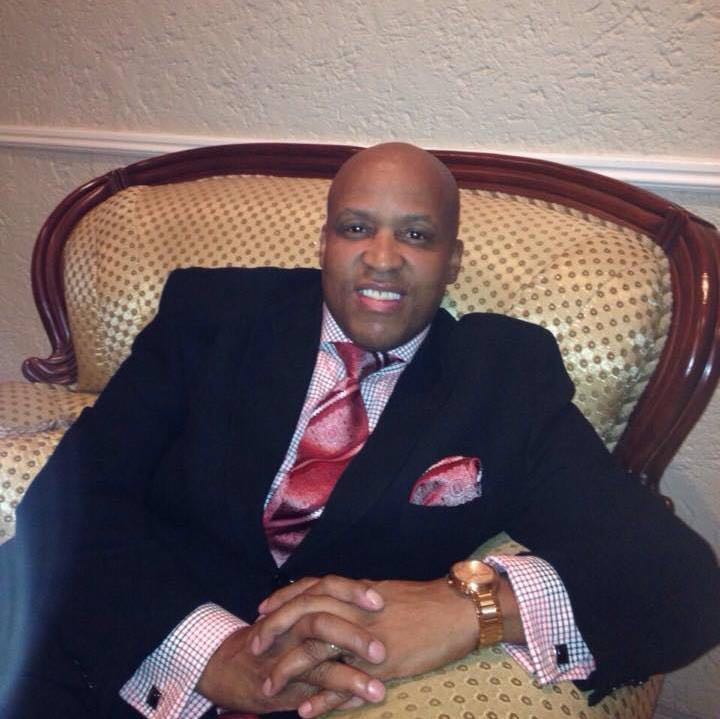
- Founder of The Quest for a Non-Racial South Africa
- Founder of Clyde Ramalaine Outreach Ministries
- Writer for Weekly Xpose ZA
- Practiced Theology for 25 years
- Graduate of the University of Western Cape (Sociology & Systematic Theology)
- Dissertation Black Identity and Experience in Black Theology: A Critical Assessment questions the label of “Black”
Clyde Ramalaine founded The Quest for a Non-Racial South Africa. Quest works to change people’s perception of racial categories. The racial categories of Bantu, coloured, Indian, and white were created solely to oppress people. The idea of race was invented by Immanuel Kant in 1785 to justify white supremacy. The failed Eugenics movement proved the theory had no basis in 1945. South Africa needs to create a non-racial identity to unite its people.
Racial categories are always used to deny access to resources. In the days of Apartheid, Bantu were denied access to jobs and resources because of their category. Now Bantu deny coloured people access because of their race. Racial categories are always oppressive.
Even though the goal is to move away from racial categories, how race affects our thinking cannot be forgotten. In South Africa, there is a feeling amongst “whites” that no “blacks” can run the country. The presumption that blacks are unfit to rule leads to articles on ANC extravagances and political failures flooding the airwaves. Building a non-racial identity will work to combat these problems.
South Africa also cannot afford to forget her history. The atrocities of the various wars on the natives and apartheid. The iniquities of South Africa are just as important as the Holocaust of the Jews. Also, the manner in which Europeans acquired the land should exposed. If land claims are illegitimate a change in ownership is needed.
Ramalaine takes special care to advocate for people labeled by others as “coloured’. The coloured population is around 8% of the South African population. In contrast, the white population is 8%, and the Native (Bantu) population is 80%. A recent genetic study of coloured people revealed that their DNA is 40% Khoisan, 30% Bantu, 20 % European, and 10% Asian. Most coloured people live in the western part of the country. All coloured people do not share the same ancestry. Generally, Bantu are referred to as natives, even though Khoisans were in South Africa longer than any other ethnicity.
Coloured people suffer from discrimination due to not having the wealth of whites and not have the numbers of Bantu. Coloured people face discrimination in jobs programs such as Expanded Public Works Project (EPWP). Local police and human service officials do not learn the language of most coloured people Kaapse Afrikaans, so most Coloureds have to speak English to conduct business. In many other areas, people that know the local language receive preference.
Ramalaine on Politics
Jacob Zuma is the current president of South Africa. He has been accused of various scandals and the misappropriation of funds. He is also outspoken in reallocating resources away from Europeans to the native descendants. Ramalaine thinks the establishment often attacks Zuma. Ramalaine especially commends Zuma for his outreach to Khoisan descendant people. Ramalaine says “No president in democracy, or ever before, has shown an interest in attempting the discussion towards full recognition of this identity.” Zuma is proud of his mixed Zulu and Khoisan identity which leads him to advocate for the coloured population.
Nelson Mandela is the most revered South African leader. Ramalaine has written extensively on Mandela’s legacy. Mandela was a member of the African National Congress and the founder of its military wing MK. MK led a campaign that sabotaged many government buildings. Mandela was implicated in the subversion and spent decades in prison. After he was released, he was elected president of South Africa and facilitated reconciliation between various racial and political groups.
Ramalaine points out that most people that label themselves “white” thought of Mandela as a terrorist until mid-way through his presidency. The event that sticks out in the mind of most white people is Mandela’s support of the South African Springboks. The Springboks are the national rugby team that won the 1995 World Cup. The movie Invictus tells the story of the team.
Mandela was not revered by whites until he showed he would not challenge the right of Europeans to own and control the resources of South Africa. When Mandela did not contest the claim of Europeans or support a plan for wealth redistribution, he lost much of his African support. The event that brought white people to Mandela’s side turned blacks away. Even though most white people claim to support Mandela, very few voted for him in 1994. Many white people today claim that the ANC is the antithesis of what Mandela’s principles. These white people look at only Mandela’s last five years in the public eye. Mandela has a complicated legacy that needs thorough examination.
Even though the ANC is doing an acceptable job in the estimation of Ramalaine, all democracies need opposing parties. The Economic Freedom Fighters (EFF) are the main opposition to the ANC in Ramaline’s estimation. The EFF frequently attacks the ANC, yet doesn’t provide viable alternative solutions. The EFF resorts to juvenile displays to get media attention. The EFF is not providing substantive opposition to the ANC.
Rachel Dolezal
Ramalaine made world news because he invited Rachel Dolezal to speak in South Africa on race. Rachel Dolezal is an American woman that was born white but never felt “white” on the inside. During her childhood, she always felt more akin to black people. When Dolezal became an adult, she changed her race. She now considers herself black, introduces herself as black, and lived life as a black woman. She obtained a degree in African-American art from a historically black college and worked as a racial activist. The media exposed her as a person that was born white in 2015. Many have accused Dolezal of being a con-artist.
To Ramalaine, Rachel represents a person that chose her identity. The reason the media attacks her are many-fold. First “white” conservatives want to disparage her for rejecting whiteness for blackness. “Black” people attack her for taking an identity they feel that they own even though the term black was thrust upon them by racist to oppress them. “White” liberals are upset because she went further than they did to unite with black people. Many “white” liberals take on black culture or partners, yet don’t go as far as becoming black. Ramalaine reminds his audience to look at the heart of the individual.
What Ramalaine has right?
Race is an unsubstantiated construct. The removal of the concept from society will aid in unity not only in South Africa but the world. People affirming who they are independent of society’s constructs will lead to genuine progress. The identity of blackness was not the creation of black people and was always intended to oppress us.
Ramalaine’s commitment to coloured people makes him unique from others that believe in a colorblind society. He sees his destiny as linked with people of a similar heritage and comes to this conclusion on his own terms . He uses his platform to advocate for the people he best understands and can help the most. South Africans and the world community often overlooks coloured people. Ramalaine is doing his part to stop and shine a light on the needs of his people.
He also does not use the building of a color-blind society to excuse atrocities by colonials on native peoples. Ramalaine wants the horrors of colonialism and apartheid to be well documented and frequently discussed. He also wants concrete steps taken toward redress. Not based on one race wronging another, by colonials giving natives back what is rightfully native, the land.
Often many that claim to want a color-blind society to use it as an excuse to separate themselves from their people and to work toward empowerment. That is why when people talk about a color-blind society people roll their eyes. Most see it as a way for elite members of the race to separate themselves. Ramalaine provides a philosophy that is non-racial that is conducive to the empowerment struggle.
What Ramalaine has wrong?
Linking himself to Rachel Dolezal is simply a bad idea. Dolezal could be genuinely attempting to connect to blacks, mentally ill, or just running a con. The “jury is still out” on this one. She could say or do something outlandish for media attention. If she does many people will use the action to question his judgment, and his philosophy will lose credibility.
Ramalaine doesn’t offer specific solutions. His goal is to raise awareness, yet it is important for Ramalaine to provide alternative solutions that are specific. One thing that needs to be laid out is what does a non-racial identity look like and how does it aid a person in fighting injustice. He has an uphill battle because most people see color-blindness as a way to absolve a person from fighting racial justice. However, if he were to detail what a non-racial identity looks like, it would aid in many people coming on board.
What I could not evaluate.
The analyst is American and does not know much about South African politics or society. The analyst will refrain from agreeing or disagreeing with Ramalaine’s political assessments until he has more data on South African politics.
Where is Ramalaine on the Spiral?
Ramalaine is a healthy Green meme. He believes in redefining the group which is a frequent theme in Green meme. I cannot tell if he wants first-order or second-order change. Some articles seem to lean toward first -order change and others second order. Ramalaine would need a full manifesto to evaluate what change is needed.
He appears to stay in Green Meme for the articles I evaluated that span 2011 – 2017. If there were samples from a longer time span, a progression could be evaluated.
For more on Clyde Ramalaine read his blogs listed in Sources.
Sources
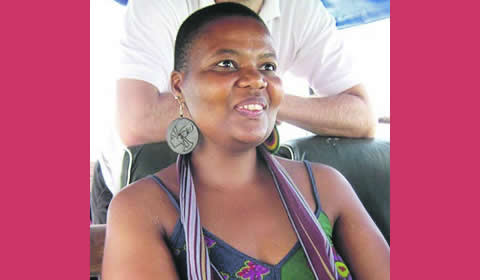
- Represented South Africa at the International Aids Conference in Durban
- Advocate for AIDS prevention in the UK, Holland, South Africa, and Swaziland
- Taught art in Tanzania and South Africa
- Authored poem I am Khanga
Fezekile Ntsukela Kuzwayo better known as Khwezi was born September 17, 1974. Her father was Judson Khuzwayo, Chief Representative of the ANC in Zimbabwe. Fezekile Kuzwayo spent most of her childhood in Durban before her family went into exile in Swaziland. Judson Khuzwayo and Jacob Zuma, Fezekile Kuzwayo’s future alleged rapist, went into hiding together often. They were jailed together at Robben Island. Zuma and the man that encouraged Fezekile Kuzwayo to come forward stayed in the Kuzwayo home during exile. Judson Khuzwayo died in a 1985 car accident.
Fezekile Kuzwayo claims to have been sexually abused by ANC members starting at the age of five. The allegations were never taken to court, but there are rumors of ANC soldiers being docked six months pay due to a rape incident involving Kuzwayo.
Fezekile Kuzwayo was diagnosed with HIV in 1999. She said in court she told Zuma in 2001. She was also an out lesbian. She was a South African representative at the International AIDS Conference in Durban. She was an AIDS advocate in the UK from July 2002 to August 2003
Zuma was a family friend and father figure according to Khuzwayo. Over the years he continued to be active in the ANC and became deputy leader in 2005. Most assumed that Jacob Zuma would succeed Thabo Mbeki as president of South Africa.
Rape Trial
According to Kuzwayo’s testimony, she had to stay overnight with Jacob Zuma because she was having a family crisis. She was asleep in the guest bedroom when Zuma entered. Zuma climbed into bed with her and began the act before she woke up. Kuzwayo did not scream or resist because she was in shock. A man that was her uncle took advantage of her while she was asleep.
Kuzwayo first told family friend Ronnie Kasrils about the rape. Kuzwayo called Kasrils cell phone on her way to the police station according to testimony in the later Kasrils defamation trial.
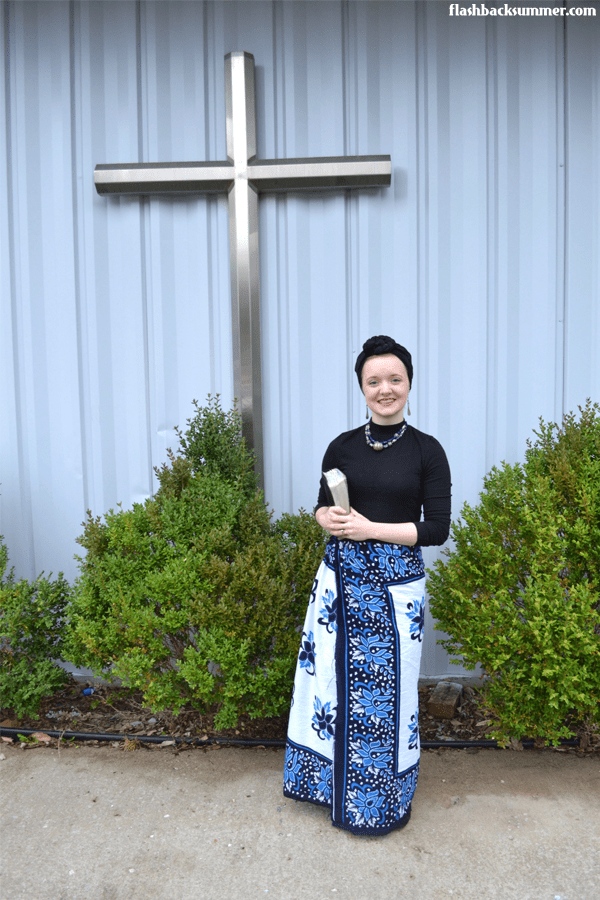
Zuma was formally charged in 2005. He admitted they had sex, but the sex was consensual. Kuzwayo was wearing a Khanga at the time. Zuma interpreted the dress as a sign that Kuzwayo was interested in sex. For those that do not know, a Khanga is a rectangular piece of cloth that is wrapped around a woman’s waist and worn as a dress. The Khanga has several other uses and can be worn as a tunic or be used as a pouch to carry a baby. Some women even wear Khangas to church as the picture below shows. Zuma never said she expressly said she wanted sex, only that she gave several signs of being interested in sex.
Zuma knew at the time of intercourse the woman was HIV positive. He said he showered after sex to reduce the likelihood of contracting HIV. Zuma did not wear a condom. He claims he was ready to marry her. Kuzwayo’s aunts were discussing an acceptable bride price before intercourse took place.
After the rape charge against Zuma had gone public the ANC Women’s League called Kuzwayo a “bitch.” The ANC Youth League and South African Communist Party threatened her life. A mob formed outside the courthouse on her trial date and threw rocks at a woman suspected to be her. The most egregious violation was the burning down of her home. To avoid further harassment and threats on her life, she had to flee to Holland. She left Holland to stay in Tanzania and eventually returned to South Africa in 2011.
The court found the sex to be consensual in 2006. The judge found previous instances of her accusing men of rape. Some of these men accused of rape were clergy. In testimony, she said she never made those charges and that she never met the men. The judge had documents saying she accused the men of rape. The judge concluded Kuzwayo felt guilty after the sex and wanted to clear her name with the accusation of rape. Kuzwayo also was asleep when the assault started. The judge felt it would be illogical to rape a woman if he did not know if she would scream when she woke up. A uniformed officer and his daughter were nearby.
The judge made an order to reveal Kuzwayo’s identity without her consent. She had been known as “Khwezi” to protect her identity.
Aftermath of the Trial
After the trial, Zuma goes on to win the 2008 election and is currently South Africa’s president. The trial ultimately had a positive effect on his political career. His supporters were able to claim that the West and white South Africans conspired to take him out. Zuma is an advocate of land appropriation, black South Africans taking back their land.
Kuzwayo had to go into hiding in Holland. While in Holland she wrote and performed the poem I am Khanga. Aidsfonds, KIT, and Sharenet hired Kuzwayo as a consultant. She left Holland in 2010 to stay in Tanzania. While in Tanzania, she worked as a librarian and drama teacher at a local school. Kuzwayo also volunteered at Nafasi Art Space. She eventually returned to South Africa, in 2011. In South Africa she continued to teach and further her education. Fezekile Kuzwayo died of a blood clot in 2016. Two hundred mourners came to her funeral in Central Methodist Church in Durban.
In 2015,the MK Veterans Association apologized for fueling rumors that the rape accusation had political motives. The ANC Women’s League also issued a statement on Kuzwayo’s death. They said she was a brave woman that told her side of the story. Also, Ronnie Kasrils filed suit against the man that accused him of orchestrating the rape charge. They settled out of court.
What Kuzwayo had right
She lived openly as an HIV-positive lesbian. In a more conservative country, it is important to have LGBT individuals living openly to reduce stigma. Being openly HIV-positive serves the same function.
Fezekile Kuzwayo had every right to stand up for herself. She should be commended for her bravery in standing up to the Deputy President of South Africa. Many hurled insults at threats at her and she stood strong through all of it. She never slanders any of her critics or puts out negative statements about the ANC.
Even after the trial was over, she never stopped helping people. She taught art to children for the next ten years. She became a pillar of the community. The evidence of her altruism was the high attendance at her funeral.
What Kuzwayo had wrong
Absolutely nothing
Where is Kuzwayo on the Spiral
No statement on how Kuzwayo feels about the state of Africa or Africans worldwide could be found.
The action of filing a suit against the Deputy President was a Red Meme action. Bravery begins in the Red Meme. I came to this conclusion by process of elimination.
If she were Blue Meme, she would never go against an ANC leader. Kuzwayo was a life-long ANC supporter. She is ANC royalty through her father.
If she were Orange Meme, she never would have spoken out because Zuma. She knew it could ruin her life. Also, if Zuma told the truth about them getting married, then she would never risk losing a relationship that could make her first lady.
If she were acting in the Green Meme, she never would have done anything to hurt group cohesion. She would have stayed quiet to keep everyone together.
Often in the Spiral Dynamics community, we use Red Meme as a pejorative. It is important that we understand the positive aspects of the Red Meme. In this case, a single stigmatized woman took on the power structure of a country. Her bravery should be commended all over the world.
Sources
- Fezekile Ntsukela Kuzwayo on South African History Online http://www.sahistory.org.za
- SA’s Zuma showered to aviod HIV April 5, 2006 BBC
- Khwezi was ‘getting her life together after 10 difficult years’ By J. Wicks October 9, 2016 http://www.news24.com
- Where is Jacob Zuma’s rape accuse?” by N. Mokati May 7, 2016 IOL News
- “The kanga, womanhood and how Zuma’s 2006 rape trial changed the meaning of the fabric” by r. Pather August 10, 2016 Mail and Guardian
- Biographical Profile History of Late Fezekile Ntsukela Kuzwayo on Daily Mail Nigeria
- ” The real Fezekile ‘Khwezi’ Kuzwayo as her family knew her” by A. Khoza http://www.news24.com
- “Khwezi told me Zuma raped her: Kasrils http://www.enca.com/south-africa
- “Kasrils sues after claim he set up Zuma for rape charge” by j. Evans Feburary 22, 2015 https://mg.co.za/
- “South Africa: Kasrils to Give R500k Defamation Money to Khwezi” August 23, 2016 http://allafrica.com
- “zuma found not guilty May 8,2006 https://mg.co.za/
- “Jacob Zuma cleared of rape” May 8 , 2006 https://www.theguardian.com
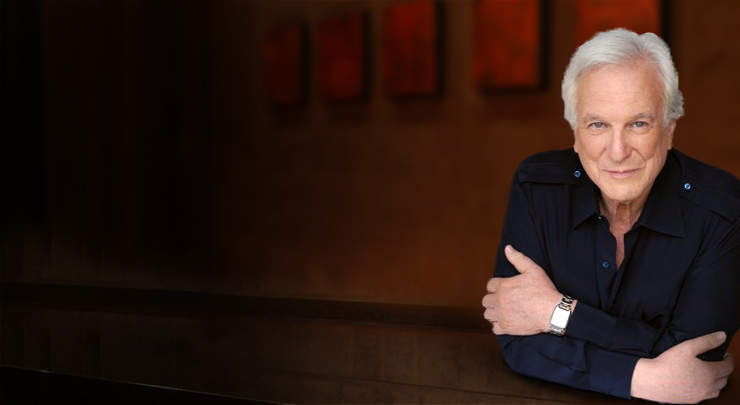
This section deals with the work of Nathaniel Branden. He was a psychologist in the mid twentieth century.
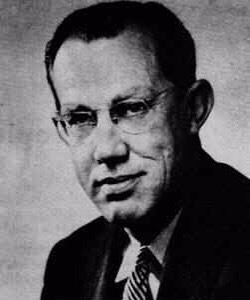

This section has a detailed explanation of the theory as presented by Clare Graves, Don Beck, and Ken Wilber
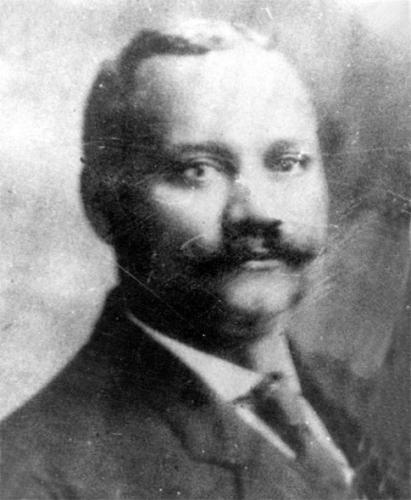
Scipio Africanus Jones
(1863 – 1943 )
Accomplishments
- Successfully defended “Elaine 12” and won the landmark supreme court victory of Moore v. Dempsey
- Republican Presidential Delegate
- Held sit-in at Arkansas Republican convention
- Married once in 1890 and widowed married again around 1915
- Fought against the repeal of black voting rights in Arkansas
Short Biography
Scipio Africanus Jones was born in Dallas County Arkansas to a white father and black mother in 1863. He was educated at Smith College and Shorter College in Little Rock Arkansas. He became a lawyer in 1889.
Jones as a member of several organizations. He joined the Wonder State Bar Association where he was able to network with prominent white lawyers. Jones also joined Booker T. Washington’s National Negro Business League and founded the Black Lawyers Auxiliary. In 1926, the Black Lawyers Auxiliary separated and became the National Negro Bar Association. Jones served as the first treasurer.
Jones was an active politically all his life. In 1902, Jones formed an independent party and ran candidates for county offices. He was elected to the Little Rock School board in 1903. Arkansas attempted to prevent blacks from voting by enacting educational requirements for voting. In response, Jones formed the Negro State Suffrage League in 1911 and stopped the laws from passing.
Arkansas has Black Republican Conventions in 1914 and 1916 which were organized by Jones. He held a sit-in for the 1920 State GOP Convention because it was in a segregated hotel. Even with all of Jones’s activism, the GOP respected him greatly. He served as the GOP delegate in 1912, 1928, and 1940.
One of the early victories in school integration came from Jones. In 1941, black law student petitioned the University of Arkansas for tuition assistance. He won the case because there were no black law schools in Arkansas at the time. Unfortunately, the money to fund the law education was pulled from money allocated to the one black technical college in Arkansas.
Moore v. Dempsey
The information for this section is a summary of “Evanescence The Elaine Massacre by J. Chester Johnson.”
Throughout Jones’s law career he fought for the expansion and solidifying of the fourteenth amendment. The first case in which he used the Fourteenth Amendment as a defense was in 1901. The case in 1901 was to repeal a criminal conviction. Jones lost the case, but never lost faith in the power of the amendment.
For those that don’t know the Fourteenth Amendment Section 1 says the following.
All persons born or naturalized in the United States, and subject to the jurisdiction thereof, are citizens of the United States and of the state wherein they reside. No state shall make or enforce any law which shall abridge the privileges or immunities of citizens of the United States; nor shall any state deprive any person of life, liberty, or property, without due process of law; nor deny to any person within its jurisdiction the equal protection of the laws.
The phrase that Jones continually quoted was “without due process of law.” In the South, during reconstruction and Jim Crow, many blacks were denied access to a fair trial. Often juries had no black members on the jury when race was an issue in the trial. Also, blacks were tortured into a confession or testifying against other black people.
Moore v. Dempsey case was the result of criminal cases that came from the Elaine Massacre. The Elaine Massacre caused the death between 250 to 850 black people. The Massacre was conducted to stop the formation of The Progressive Farmers and Household Workers Union of America, an all-black union. There were 250 black men arrested.
The Governor of Arkansas, Charles Brough, wanted a speedy end to the trial. The first reason was not to impede the upcoming cotton harvest. He needed everyone to feel racial tensions had been eased so blacks would come in to pick the cotton. He also did not want attention from the Federal Government and national press. When the men were arrested on October 2, 1919, whites formed a mob to have another mass lynching in front of the courthouse. Various county officials told the mob to disperse and that the courts will serve justice to the men.
The men were jailed for conspiracy to commit murder. The wealthy men of the town did not want blacks to form a union to get fair pay. The plutocrats then created a rumor that the union was a front for a black insurrection. A “hit list” was supposedly found written by a union member. The full story of the Elaine Massacre can be viewed in this blog under Robert Hill’s leader analysis.
The Governor appointed Committee of Seven composed of County Judges, Mayor of neighboring Helena, and various wealthy cotton farm owners to conduct an investigation. The committee determined the original police patrol was unarmed and in the area to investigate bootlegging. The police patrol was ambushed and unaware of the union meeting. When the second patrol went into Elaine to arrest the men that ambushed the first patrol the second patrol was ambushed. Further police investigation uncovered the “hit list” of planters and only fourteen black people were killed during the arrest of the 285 men.
Another governor-appointed committee that included influential blacks and whites verified the Committee of Seven’s report. Many of Arkansas black elite were willing to comply with the obviously flawed report. Some analysts say the black elite involved in this committee only wanted to further their political influence by cozying up to the governor. Other analysts say they feared retaliation from a governor who recently ordered federal troops to attack civilians. The motivation of the black elite involve in the oversight committee will never be known.[2]
During the investigation, many witnesses against the defense were prisoners captured during the Massacre. These men were tortured until they complied with the story of the Committee of Seven. The Committee of Seven chose the prosecutors, and the judge chose the defense lawyers. Twelve men were picked for the first round of trials. The jury consisted of no blacks and white men that took part in the massacre. The trial resulted in jury deliberations of less than two minutes. All twelve were sentenced to death.
There was a slight problem with the trial. Six of the men were indicted with the phrase. “We, the Jury, find the defendants guilty as charged in the indictment.” the phrase should have been, “We, the Jury, find the defendants guilty of murder in the first degree, as charged in the indictment.”[3] The other six had the correct phrase used. The six sentenced with the incorrect phrase will be known as Ware 6 had their case reversed and had to go back to Philips Co for a retrial. The other six, referred to as the Moore 6, had their case appealed to the State Supreme Court and lost. The Moore 6 had their execution date postponed until the Ware 6 got a retrial. The Moore Six were Frank Moore, Ed Hicks, Frank Hicks, J. C. Knox, Ed Coleman, Paul Hall. The Ware Six were Ed Ware, Alf Banks, J. Martin, Joe Fox, Will Wordlaw, Albert Giles.
Jones knew to free the men he needed to work with many white people to get these convictions overturned. He teamed up with an ex-Confederate soldier Colonel George Murphy to aid in the defense of the Elaine 12. The retrial of the Ware 6 by the county resulted in many black witnesses recanting their story and admitting to being tortured. Unfortunately, the trail led to the reconviction of the Ware 6. Jones, however, set a trap for the county court that allowed for appeal to that Arkansas Supreme Court (ARSC). The ARSC invalidated the second conviction of the Ware 6.
In the case of invalidating the second conviction, the ARSC stated it is not unconstitutional to have an all white jury. However, it is unconstitutional to actively discriminate against black people that could serve on a jury.[3]
In 1921, a new Governor, Thomas McRae, takes charge and wants to decouple the execution of the Ware 6 and the Moore 6. The Moore 6 were now scheduled to be executed June 10, 1921, and the County judge decided not to rule on the Ware 6 until the Moore 6 were executed.
The imminent execution of the Moore 6 forces Jones to race against the clock. He finds an Arkansas judge to stay the execution of the Moore 6. The AR Attorney General appealed the decision to the ARSC. The ARSC held a hearing later that week that resulted in the Governor being allowed to set a new execution date. The prohibition was overturned because it came from and Chancery Court in Pulaski County and the judge did not have jurisdiction in Phillips County. [3]The Governor decided to move the execution date to September 23, 1921.
The addition of three more months allowed Jones to appeal to the Federal District Court. The death of Colonel Murphy, Jones’s partner, earlier in the year caused Jones to partner with another white attorney Edgar McHaney. Working with this white attorney two of the white police officers in the first trial recanted their stories. The state of Arkansas demurred on the grounds the Federal judge did not have jurisdiction over the case.[3] The case was then sent to the United States Supreme Court in the next thirty days.
Jones was able to get the case in front of the USSC. At this point, the State of Arkansas had demurred the facts of the case in the lower court. Demurring the facts means Arkansas could not defend their investigation. The USSC ruled 6 – 2 in favor of Moore. The State of Arkansas had not given Moore a fair trial.
As stated earlier the other 273 arrested in the Elaine massacre plead to second-degree murder. They all were on work detail at Cummins State Farm. By October 1922 all but 15 released from prison.
At this point, the defendants were not free; the USSC ruled they had an unfair trial. Jones petitioned the ARSC for a change of venue to Lee County and won. [3] In Arkansas if a case is not tried with it two terms of the circuit court, the trial is dismissed. The case of the Ware six had been postponed for two terms. Therefore Ware 6 were freed in 1923. [3]
A third county trial will either result in the County attempting to take on the Supreme Court or the County Court freeing the Moore 6. Jones gathered enough signatures to petition the Governor to grant a pardon to the twenty-one remaining prisoners. At the same time, Jones petitioned Phillips County officials, including the Committee of Seven, to commute the sentence of the remaining prisoners to time served. Jones finally creates the last compromise for the Moore 6. The defendants did not have to plead guilty, but their sentences were commuted to time served. The Governor promised to release them within twelve months.
Governor McRae released the last seven of the second-degree murder prisoners in 1924. The Moore 6 were still in jail after the original agreement between Jones had been etched. The Governor finally released the prisoners on his last day in office in 1924 after the date of the original agreement on indefinite furloughs.
The Moore v Dempsey case was important because it made the Federal Government the final determinant of the fairness of a local trial. The expanded authority of Federal Courts was pivotal in the Civil Rights movement. Now when Civil Rights protesters and leaders were tried, they could appeal to Federal Courts that were not beholden to local prejudice. Moore v Dempsey was arguably the most important court victory of the century.
Analysis
No record of Jones’s feelings on race could be found. All the information on Jones’s was particular to a case. Until more information can be found, Jones will be considered Blue Meme. He is strongly committed to the Constitution. The Constitution is a founding document he had no personal input in creating; he is exhibiting Blue Meme values in using it.
Sources
- Johnson, J (02-27-2013) Evanescence The Elaine Massacre from http://greenmountainsreview.com/
- Widell, Robert (08-2002) Blood In Their Eyes Review from http://www.h-net.org
- Dunaway, L.S. (1925) What a Preacher Saw Through a Keyhole in Arkansas
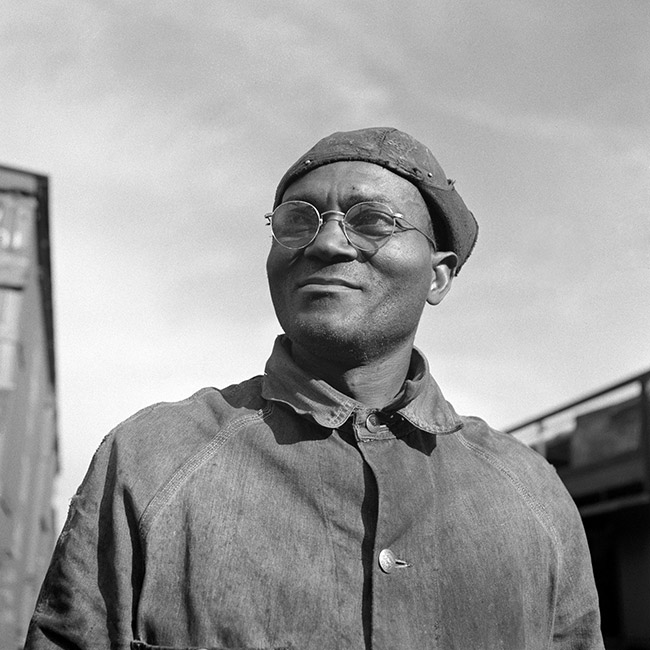
(1892 – 1963)
Accomplishments
- Founded the Progressive Farmers and Household Workers Union of America
- Worked for Santa Fe Railway for forty years
- Member of Topeka Kansas NAACP
The Elaine Massacre
Robert Lee Hill founded the Progressive Farmers and Household Workers Union of America in Arkansas in 1919. The founding of the union led to the Elaine Massacre that left somewhere between 250 to 850 black people dead and four or five white men dead. The Elaine Massacre is part of the Red Summer of 1919. The Red Summer consisted of numerous race riots in various cities and towns in America. The Elaine Massacre also led to the landmark Moore vs. Dempsey trial that will solidify the Fourteenth Amendment of the Constitution.
Robert L. Hill was born in 1892 or 1898 [9] to working class parents. He married in 1916 [9] before going off to war. Hill was a World War I veteran [4]. His time served in the military, more than likely, led to his militancy. 370,000 blacks that fought in World War I [1], when they returned home, they were not afraid to stand up for their rights. Black WWI vets let many armed resistance movements in 1919 in major cities. When Hill returned home, he worked for Valley Planting Company.[9]
Even though Hill was not a sharecropper himself, he felt called to do something to help the sharecropper’s plight. A sharecropper, also known as a tenant farmer, is a person that rents a farm from a land owner. The sharecropper then lives on credit from the landlord until the harvest arrives. The landowner and tenant then agree to share the crop. The tenant gets a percentage of the crop, and so does the landowner. The farmer can then pay off the debt to the landowner and have enough profit to last the winter after the sale of the crop.
Unfortunately, in the southern cotton industry, this ideal scenario never plays out. Often sharecroppers were illiterate and uneducated so they could not evaluate the books to ensure they got their share of the crop. The landlord would not let the sharecropper see the books even if the sharecropper had an education. Because blacks had no legal recourse, landlords would confiscate the entire crop. Ultimately, the sharecropper stayed in perpetual debt.
Not only did debt keep black people in the cotton industry, so did the law. The black codes made it illegal for a black man to be without a job for an extended period. Most companies outside the cotton industry did not hire black people. The person would be forced into a work camp if convicted of vagrancy, not having a job. The work camp would force inmates to pick cotton.
The need for a union was evident. 1919 was one of the worst times for the Labor Movement. The Russian Revolution happened in 1917 and by 1918 Russia was a communist country. The revolution began as a prolonged labor strike that turned into a riot. When the Russian army was called in to stop the riot, the army joined the rebels. The Tsar had to abdicate and the world’s first communist republic was born. Many American capitalists were afraid the same thing could happen in America.
The labor movement was also not welcoming to black people. The American Federation of Labor’s (AFL) 1919 convention declared the job of the AFL was to protect the jobs of “native-born white men” and upheld the restrictions on blacks joining unions. [2] This declaration ultimately hurt the labor movement. Blacks in the North broke strike lines to work at factories. Blacks were used to dilute the power of the Union. The racial strife in the North can be traced back to fear of blacks crossing picket lines.
The cotton industry expected a downturn in 1919[4][1]. World War I ended in 1918 and the southern cotton industry had been supplying cotton for the allied troops. The demand for cotton from Europe was expected to decrease severely. The planters were especially wary of giving sharecroppers a fair shake in 1919.
Despite all the adversity, Hill was able to create nine lodges of his union across Arkansas.[3] It was at a meeting of the lodge at Hoop Sur that the trouble began. On September 30, 1919, the Union had a meeting with one hundred people on how to organize for collective bargaining. In attendance at the meeting were men, women, and children.
Hill expected to be harassed by the local plutocrats. He had six patrolmen stationed outside the Hoop Sur church.[1]The Missouri Pacific (MoPac) Railway had a private police force that worked in conjunction with the sheriff’s office.[4] An informant tipped a group of patrolmen that a union meeting was happening in Hoop Sur. An altercation ensued, and the parties exchanged gunfire. [1][4][6]The church was burned later that night to destroy evidence of return fire.[4] One MoPac agent died, and a sheriff’s deputy was wounded.
The blacks of Hoop Sur decided to prepare for retaliation. Many men took up arms to defend the residential area known as Helena. The sheriff organized a posse of five hundred to one thousand men [3] outside the courthouse. The attack from whites happened at mid-morning October 1st. The black resistance was able to hold off the onslaught, and only 15 to 20 blacks died on that morning.[4] The resistance accomplished an incredible task that day and will go down in history for their bravery.
The Governor decided to call in reinforcements. The Federal Government was afraid of a socialist uprising. The government allowed the Governor to bypass calling in the National Guard and gave him authority over 500 trained federal troops from Camp Pike. The intervention of federal troops caused the carnage.
The federal troops were responsible for most of the killing [4]. The soldiers carried machine guns, and white mobs from all over the South supplemented the force. Many unarmed blacks hid in the woods and were hunted down like dogs. Here are some of the quotes from whites that witnessed the massacre.
“[The white mobs and troops] shot and killed men, women, and children without regard to whether they were guilty or innocent of a connection with killing anybody or whether members of a union or not.”[1]
“Vigilantes killed a black woman pulled her dress over her head, and left her body on a road, another brutal lesson of what happened when [blacks] lost their place”[1]
“Several hundred (whites) … began to hunt negroes and shooting them as they came to them.”[3]
“Committed one murder after another with all the calm deliberation in the world, either too heartless to realize the enormity of their crimes, or too drunk on moonshine to give a continental darn.” [3][6]
“When finally the soldiers’ ammunition was exhausted, and their liquor ran low, they withdrew from the scenes of their sins against humanity, the remaining negroes gathered up their scattered dead and with slow, awkward step marched to their little churchyards and there said their simple rites over the bullet-riddled bodies of loved ones.”[6]
In the face of federal troops blacks still resisted. An eyewitness account from L.S. Dunaway reports a black dentist was arrested for his connection to the union. He and his three brothers were put in the back of two police cars. When the cars were transporting the men to jail, the envoy was ambushed. One of the police officers was shot with a shotgun. The other officers immediately killed the four suspects. [9]
The black resistance was not well documented. Much of the reason for such little information is the black men that were captured then freed were on extended furlough. They did not get a pardon. Furlough meant the governor could send them back to prison at any time. Also, after they saw the carnage inflicted on their families after their capture, they wanted to make sure the people that survived would not be attacked. No one wanted to be seen as bragging about shooting whites.
The fact that over 250 men were captured alive proves that the resistance was formidable. If the troops could simply annihilate the resistance, they would. There were too many instances of black towns being burned to the ground such as Rosewood, FL, and Tulsa, OK. The five hundred federal troops must have evaluated particular encampments and decided that forcing the rebels to surrender would reduce the loss of life. One corporal is reported to have died in the skirmishing. There is one quote by L.S. Dunaway that attest to the bravery of these men.
“There were those among [Blacks] that openly defied officers, citizens and soldiers alike, until death cut short their futile stand against the whites. ”
Unfortunately, after most of the resistance was captured or killed, blacks were killed indiscriminately in Elaine, AR. There are reports of black men being shot while running away from white mobs. Many eyewitness accounts report the killing of women and children. The troops often opened fire on unarmed civilians with machine guns. The exact number of blacks killed will never be known. Most of the bodies were burned in large pits to allow for quick disposal. [6] Many blacks fled Arkansas and created new lives in the North and West.
There is no record of Robert Hill participating in the fighting. However, there was a special search made for him.[6] He was able to escape to Boley, OK an all-black town in Oklahoma then moved to South Dakota to evade capture. [9]. He finally settled near Topeka, KS.
Topeka police captured Hill in 1920.[9] He had written a friend in Arkansas to let people know he was safe. The friend asked to meet him in Kansas City, MO. Hill agreed, and the friend tipped off the authorities.
The NAACP took the defense of Hill. After a prolonged legal battle, the NAACP prevented Hills extradition to Arkansas. Hill took an assumed name and worked for the Santa Fe Railway for forty years.[9] In gratitude to the NAACP, he served in the Topeka NAACP for many years.[9] He died in 1963.
Most of the black resistance was captured by October 3.[1] A few hundred people were put into makeshift jails to await trial. [3] The result of the original trial cause 12 men to be sentenced to death, 273 to pleas for second-degree murder, and a few had the case dismissed. Details on the trail and the landmark Moore vs. Dempsey case will be in next week’s Leader analysis.
Analysis:
No transcripts or recordings could be found of his speeches. However, L.S. Dunaway said, “Hill’s influence over the less intelligent Darkey was something marvelous.” According to Dunaway Hill said this:
“He had them believing that by standing together the negroes could make the white people divide with them in the matter of land ownership, and that if a peaceable division could not be obtained, then the negroes, outnumbering the whites about ten to one in that section, would “rise up and march on the whites with high-powered rifles and shotguns, thus showing the strength of the colored race.” p 107 [6]
For the sake of analysis, the statement’s truth will be assumed. The statement expresses an Orange level understanding of the situation of black people. Hill understands the underlying problem is economic, and once others realize that the real issue is money, poor whites and blacks are natural allies. The statement shows that Hill ultimately saw the struggle beyond racial lines.
Hill obviously was not against using physical force to protect members of his movement. He also made it clear to his followers that they had numbers in the town of Elaine and that they should not be intimidated by white people. The use of physical force is a precarious subject in black empowerment. The Elaine Massacre goes to illustrate this point. It is hard to speculate on what would happen if the black people of Hoop Sur did not have guards for the September 30 the meeting. Maybe the whites would have simply broken up the meeting, which there is little historical precedence. More than likely they would have hung Hill. It is also most probable they would have burned Helena to the ground if there had been no resistance on October 1st. The white mob of 500 to 1,000 people did not come to take six suspects peaceably. However, the result was the killing of 250 to 850 blacks in southeast Arkansas. Ultimately, white people have the firepower and numbers nationally. A large scale attack or defense will produce an outcome similar to the Elaine Massacre.
Sources
- Krugler, David (2-26-2015) America’s Forgotten Mass Lynching. from http://www.thedailybeast.com
- (5-25-2012) Causes of the 1919 Race Riots from https://socialistworker.org/
- Stockley, Grif (08-01-2016) Elaine Massacre from http://www.encyclopediaofarkansas.net
- Johnson, J (02-27-2013) Evanescence The Elaine Massacre from http://greenmountainsreview.com/
- Widell, Robert (08-2002) Blood In Their Eyes Review from http://www.h-net.org
- Dunaway, L.S. (1925) What a Preacher Saw Through a Keyhole in Arkansas
- (May 2016) Never Forget America’s Mass Lynching from https://blackmainstreet.net/
- (05-07-2011) Race Riots of 1919 from http://www.globalsecurity.org/
- Gruber, John (02-26-2015) Robert Lee Hill from http://www.encyclopediaofarkansas.net
 Black Leadership Analysis