
The book Revolution and Counter-Revolution is an unfinished work of Ambedkar.
At the time of the Buddha, India was a decadent country. Hinduism permitted all manner of licentious behavior. The Buddha came as a reformer and gave people an alternative that can lead to a purposeful life. The religion spread due to the charisma of the leader and being backed by influential people. After his death, his disciples spread his dhamma from India to Central Asia, Southeast Asia, and the Far East.
Hundreds of years after Buddhism began, Ashoka became the most prominent Buddhist. Ashoka was emperor of the Maurya Empire and converted to Buddhism toward the end of his life. At the time Buddhism was vegetarian. As king, Ashoka banned the killing of animals and animal sacrifice. The Hindu Brahman primarily served the community as officiants in animal sacrifice. They lost not only money but prestige and social standing. Ashoka conquered the Maurya Empire around 265 BC.
The revolt against Buddhism was lead by Pushyamitra. The goal was to re-solidify and secure the role of the Brahman. To ensure Brahman stay in control, Brahmans had to grant themselves the right to hold kingship and fight in a war. Both responsibilities were initially given to the Kshatriya. Then the Brahman had to create a strict social order to ensure a converted king could not reinstall Buddhism. The Manusmriti was the perfect sacred document for this purpose. The Pushyamitra revolution happened in 185 BC.
Pushyamitra persecuted Buddhist monks, going as far as placing a bounty on their heads. If Buddhist were found practicing their religion, were banished from the realm. Denial of water was also punishment for practicing Buddhism. Pushyamitra was a brutal dictator.
Through Manusmriti, Pushyamitra was able to codify the caste system. To solidify the place of Brahman in society and ensure the progeny would enjoy the same privilege, Manusmriti prohibited inter-dinning, inter-marriage, and general social interaction. These prohibitions provided the Brahman were an isolated group held above the rest of society.
Changing marriage laws to allow child brides and forbidding widows to remarry further solidified the Brahmans’ place and lineage. Controlling the sexuality of women reduces the likelihood they will procreate with those outside their caste. Having women wed in childhood prevents sexual exploration in youth. The killing of widows does prevent sexual exploration in adult years. Brahman also allowed themselves to marry and have children with lower varna women. Low varna men were castrated if he had sex with high caste women. To further extend the privilege of Brahman men, they were not responsible for the children they had by low caste women. The children would have their mother’s caste.
The Islamic invasion starting in 712 AD and ending around 1296 AD was another blow to Buddhism. The areas conquered by Muslims outlawed the practice of other religions. Islamic rulers killed Buddhist and Hindu clergy. The Hindu were able to replenish quicker because Hindus are born into the priesthood. Buddhist have to undergo a lengthy process administered by elder monks. If all the monks in a region died, the Sangha ended. Also, the Hindu priest had the support of the state, Buddhist had no state support.
Even though many Buddhist were forced to convert, others willingly joined Islam. Hindu rulers were persecuting Buddhist in southern India as severely as they did in the Mauryan Empire. Many Buddhist joined Islam to consolidate forces and resist. Ambedkar also offers evidence that the present-day country of Bangladesh was once a Buddhist kingdom. Converting to Islam provided a nominal level of protection from Hindu and other Muslim invaders.
Ultimately Hindu India was invaded by Muslim invaders, and Brahman invaders invaded Buddhist India.
Caste in Buddhism
Ambedkar reiterates that Buddha allowed people of both genders and all social status to be part of his Sangha. For further evidence, he provides the Ambattha Sutta. In this Sutta, Buddha refuses to pay respect to a Brahman because Buddha knows the Brahman does not come from a pure lineage. Also, he makes the Brahman acknowledge that his life is not virtuous and renounce Hinduism. The Brahman is then allowed to join the Sangha.
Manusmirti and the conflict between Brahmin and Kshatriya
Manusmirti is the religious text that codified the caste system. The caste system existed long before the document, but no one text housed all the rules. In this text, the four castes were separated with Brahman on the top. To solidify the superiority of Brahman, they were allowed to take the duty of caste below them. However, lower castes could not assume the role of castes higher than them. Manusmirti allowed Brahman to take up arms against Kshatriya. The arming of Brahman was a fundamental change to the caste system unprecedented in previous works.
Brahman taking up arms was important to solidify their dominance over the Kshatriyan Kings. The Kshatriya wanted to have their own priesthood to solidify power, temporal and divine. The conflict between Kshatriya and Brahman is mythologized as the conflict between the Brahman Vashishtha and the Kshatriya Vishvamitra.
Ambedkar contradicts his other works by saying the Shudra were members of a privileged political class not vanquished Kshatriyas. The King that the name Shudra is derived, Sudas, was always a Shudra. There were many Shudra kings before Manusmirti and Brahman say nothing wrong with serving them.
Manusmirti degraded women. Specifically:
- Women had no right to initiate divorce
- Be subject to beatings by husband
- Own property
- Obtain education
Women before Manusmirti had freedom and were considered equals in society and marriage.
Significance of Bhagvat Gita
Ambedkar makes a case that the Bhagvat Gita is not a religious text. Instead, it is a counter-revolutionary text used to oppose Buddhism. The three main points of the Bhagvat Gita are:
- Justification of killing because the soul and body are separate. If a person is killed or dies in war only their body perishes. The soul is indestructible and the body will re-incarnate
- Defense of the caste system as the result of unchangeable quality in an individual
- Expands the idea of karmic yoga, the concept that your current life conditions are the result of past actions in this or previous lives, to make a case against revolt. Ultimately, people should accept there position in society as a cosmic duty
There is no over-arching morality to the text. It is merely a defense of duty and the status quo.
Ambedkar also questions the year the text was written and if it predates Buddhism. To begin the Bhagvat Gita has concepts that are in Buddhism and not the Upanishads. Scholars know the idea of Nirvana started with Buddhism. Also, when the text describes a good devotee of Krishna, the language is very similar to the Sutta’s description of an excellent devote of Buddha. Also, The Bhagvat Gita mentions a religious sect called Mahasanghikas. Ambedkar determined Mahasanghikas are an early sect of Mahayana Buddhist.
The Bhagvat Gita is also determined by Ambedkar to have four distinct parts written at different times. The first and original is the epic poem in which Krishna is determined to be a mortal human. The second is the introduction of Sankhya and Vedanta philosophy. The third raises Krishna to the level of a god. The work is unfinished so the fourth point is not detailed.
Full Text can be found HERE

Bhimrao Ambedkar was born on April 14, 1891, in Mhow, Madhya Pradesh. His father was a leading administrator in a military school, and his family had been involved in the military for generations. Military service was common for hundreds of years in Ambedkar’s subcaste of Mahars. The Mahar community also had a history of fighting for equality.
Ambedkar’s family pushed for him to become educated. He went to a school reserved for upper caste children. As a Dalit, the school segregated him from the other students. After graduation, which in and of itself was a feat for a Dalit, he was able to obtain Ph.D.’s from Columbia University and London School of Economics. His thesis “The Problem with the Rupee” was a seminal work in economics. He became a Barrister at Grey’s Inn. Finally, he worked as a consultant to the anthropology department; he began to debunk the Aryan Invasion Theory. This theory was the scientific justification of the caste system and British rule. The work eventually became the book “The Annihilation of Caste.”
He began his career as an advocate for India by joining the Indian Home Rule League. He eventually left because they were not concerned with ending untouchability. The Depressed Classes Mission was the most popular anti-untouchability movement during Ambedkar’s early career. Ambedkar criticized this organization because it did not have Dalits in its leadership or consult with Dalits on strategy. Ambedkar will ultimately oppose the Mission in the Southborough Commission. For the first time, Ambedkar was an advocate to the ruling elite for Dalit rights including the right to a separate electorate.
The water rites of untouchables was always a contentious subject. Under the caste system, Dalits could not drink from the same water sources as upper caste individuals. Ambedkar began a publication for Dalit water rights in 1930.
At the time of Ambedkar, there were various visions for an independent India. Ambedkar saw that the Dalits had issues to solve. The first was building an egalitarian society within India. The second was freeing India from British Rule. Ambedkar always cared more about fighting the caste system than overthrowing the British. The quality of life in India was more important than merely being free. Also, British rule will allow Indians to concentrate on social reform because the British would take care of running the state.
The famous confrontation between Ambedkar and Mohandas Gandhi occurred during the round table conferences. Both men claimed to represent the interest of Dalits. However, Gandhi saw the Dalits as a group of people the upper caste needed to care for and manage. Ambedkar believed in Dalit self-determination. Ambedkar secured a separate Dalit electorate for 78 seats in Congress through the Communal Award. Gandhi saw that a separate Dalit electorate would weaken the Hindu position concerning Muslims and Sikhs. Gandhi then went on fast to build public support against separate Dalit electorates. Their standoff ended with the Poona Pact, which doubled the number of seats allocated to Dalits, but a general electorate would elect the Dalit candidates.
Ambedkar opposition to Gandhi and the Indian National Congress with the creation of the Independent Labor Party in 1936. The party of Ambedkar had a moderate socialist bent and saw the enemy of the working class being both Brahmanism and Capitalism. Through the party, Ambedkar would advocate for citizenship and economic opportunity. Later he would form the Samata Sainik Dal as a youth league focused on self-defense. The league would later form the Scheduled Caste Federation in 1942. All these political organizations focused on building an egalitarian society and funneling resources to underprivileged communities.
Upon Indian Independence, India appointed Ambedkar as the first Law Minister. In this position, he got to draft the Indian constitution.
Women’s rights were fundamental to building Ambedkar’s new India. He saw the subjugation of women as essential to preserving the caste system. Once women were free to marry whom they wanted or no one at all, the rest of the system would come crashing down. He advocated for the Hindu Code Bills, which, among other things, would establish some gender equality.
Ambedkar’s first wife was ill and died when she was forty. She wanted to make a pilgrimage to a Hindu holy site. Ambedkar would not let her go because the priest at this site would not conduct the last rites while facing a Dalit. He promised her to build Dalits their holy sites. Ambedkar began to study and court the leaders of various world religions. The plan was to facilitate a mass exodus of Dalits out of Hinduism. After much deliberation, Ambedkar accepted Buddhism and oversaw the first mass conversion in modern Buddhism on October 14, 1956. This mass conversion earned Ambedkar the moniker of the father of modern Buddhism.
Due to complications from diabetes and other illnesses, Ambedkar died on December 6, 1956. He is remembered fondly in India, with more statues than any other modern Indian. There are several schools and organizations named in his honor. The airport in Nagpur was named in his honor. His school of Buddhism, Navayanna, has inspired many downtrodden people, including the Romani of Hungary. There are now many Navayanna Buddhism in India and Hungary. Ambedkar’s secular philosophy is still encouraging revolutionaries and other freedom organizations.
What is Rebirth?
The concept of rebirth is the Buddhist alternative to the belief in reincarnation or the afterlife. Here reincarnation is defined as a Hindu concept that a metaphysical part of a person is eternal (soul) and will reinhabit another physical body. The belief in an afterlife is common in the Abrahamic religions is the soul will be sent to a paradise because of good deeds or beliefs. Neither of these concepts is in Buddhism as explained by the religious scholar Ambedkar.
The Buddhist concept of rebirth has to do with the ever-changing nature of matter and ideas. When a person dies, his body breaks down into its original elements (earth, fire, wind, water) and re-enters the universe to reappear as another person eventually. The process is never-ending and is happening every time someone consumes food or loses skin cells. It is also occurring as a person interacts with the world. As a person does good deeds, it increases the chances of others copying. The same is true for unwholesome deeds. So Buddhist rebirth is a never-ending process with one aspect being the physical death of the body.
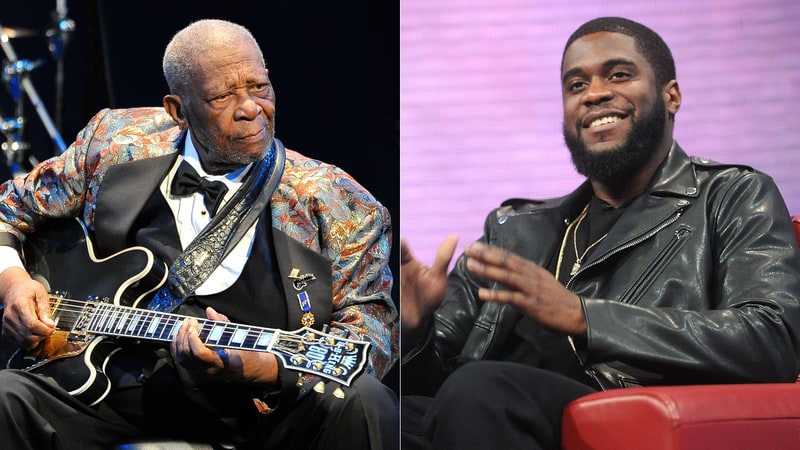
The story of B.B. King and Big K.R.I.T.
In 1956, a brand new musician Roy King was about to release an album. Riley’s nickname Blues Boy or B.B. King was featured prominently on the album cover, but one thing is missing, B.B.’s photo. Mr. King asked about the apparent mistake and the record executives said, there was no mistake. We believe that the record could have cross-over appeal if the customer didn’t realize you were black.
Fast forward to 1986, and a middle-aged fan of the seasoned Blues Boy buys his newest record. Before she got to the counter, she saw a poster of B.B. King’s show in Paris. She decided to get the poster also. She rushed to get back to her house to welcome her daughter and new grandson. The original poster was a welcomed addition and pleased both the new grandmother and mother.
The boy was named Justin Scott and he grew up in a house with much love and music. B.B. King had more than solidified himself as the greatest musician that Mississippi ever produced. His music was an inspiration for Justin. He also grew to love many of the Hip Hop artist of his own generation. In an attempt to fuse the two genres, a new style and flavor of hip-hop was created. Justin decided to start performing under the pseudonym King Remembered in Time, K.R.I.T. It was both an assertion of how great he was and a nod to his hero B.B. King.
B.B. King briefly spoke on Hip-Hop in a 1996 interview. He said he didn’t like the gratuitous cursing or pornographic references to sex. However, he also didn’t like vulgar movies or artwork. King also acknowledged his parents and elders hated the fact he played what would later be called the Blues for many of the same reasons. Ultimately, B.B. King was impressed by the rapper’s ability, and admitted most people could not rhyme every word. He accepted Hip-Hop as an art form and applauded its success.
After years of hard work Big K.R.I.T released a record and make XXL freshman class list in 2011. His album gets much critical acclaim because it is at the same time cerebral and down-home. It talks about southern freedom fighters of the civil rights era and strip clubs. A genuinely southern album welcoming yet challenging to the listener. Bloggers have a field day debating the double meanings to the rhymes and what he really meant.
For the sophomore album, he wanted to make a concept song. In the song, three dead men talk to the angel of death which appears to them as a praying man. One man was lynched, one jumped from a slave ship, and another died while running away from the plantation. He gets the DJ from his favorite strip club to help him produce the track. After it was finished the DJ Chucks suggests that B.B. King would be a great addition to the record. K.R.I.T laughs but after being prodded by chunky gets his lawyer to reach out to B.B. King.
Luckily, one of the grandchildren of B.B. King’s band members was a fan of K.R.I.T. When the name is mentioned, the grandchild happened to be in the room and played the mp3 for the legends. B.B. King liked the album and was happy to work with the young rapper.
K.R.I.T recounted the story for “Complex” magazine as being surreal. The legend came in the booth as an extremely humble character. They talked and B.B. King offered to play his guitar in addition to singing. There were three flawless takes of B.B. King sang and played over the track. K.R.I.T was amazed at the precision and passion of the 84-year-old.
After the session, K.R.I.T and King talked about the industry and life in general. B.B. King re-told the story of how he had to fight to get his photo on his album cover. The moral was to fight, but not let bitterness fill your heart. King said he has forgotten most of the bad things that happened to him because people are so kind to him now. It is water under the bridge, and his eyes are facing forward.
King then told K.R.I.T he was the continuation of the musical tradition of Mississippi. Hip-Hop is the new method of conveying raw emotion to a room full of people. It is another unapologetic reflection of truth.
No outsider can say Blues or Hip-Hop should or should not use certain methods of communication. The music is made for the people in the backwoods of Mississippi. These people afford the rest of the world the privilege of hearing their music.
B.B. King died three years after the recording. K.R.I.T told Vox is mission is to continue to spread King’s music and inform the younger generation. K.R.I.T will forever be in debt to King not only for his professionalism. King opened his warm and creative soul to the young rapper. K.R.I.T and all his fans will never be the same after.
How the story illustrates rebirth
The story of K.R.I.T and King shows how music is being reborn constantly. King added to the American lexicon of music soul-stirring music. These seeds germinated in another Mississippi native building his own art form. Not only has the artistry been passed down to the new generation, but the mentality of resilience. It is the continuation of blackness. The term blackness doesn’t denote a skin color, it represents an experience that transcends the individual. One can view it being born in America or being imported from Africa, but it can’t be denied that it is unique and beyond mental constructs.
Rebirth is the realization that what most conceive as the individual is really a continuum of experience much bigger than one can conceptualize. The concept of the individual is an artificial construct used to aid in understanding. What exists is a never-ending flux of energy and thought that emerges as what we call individuals.
The song ” Praying Man” is a living example of rebirth. It connects the ancestors with the older generation and the newer generation. In the song, all the generations exist in one, and the lines of demarcation become blurred. We realize the ancestors are one with us and we are one with the ancestors. Even though the artists are not Buddhist, they exemplify the principles. The idea of rebirth is not unique to Buddhism or Asia, it is a concept that people witness every day in their own life.
For more on music and Buddhism
To hear the song “Praying Man” click HERE
To learn more about Buddhism click HERE
References
- Big K.R.I.T explains how the collaboration with B.B. King came together 11-12-14 http://www.hiohopdx.com
- Big K.R.I.T on B.B. King: “He did not have to be Humble” 5-15-15 http://www.rollingstone.com
- We Tried to get Big K.R.I.T to dis another MC 3-30-12 http://www.vice.com
- B.B. King: Sweet Sixteen http://www.paste.com
- All Day and Night: Memories from Beale St 1990 Documentary Directed by Gordon and Guida

The Muslims came to India in various ethnic groups during many invasions. All the attacks shared one goal, the total eradication of native Hindu religion. Areas that maintain Hindu control violently suppressed Islam. The suppression of both faiths led to two distinct people groups inheriting what would become future India, Muslims and Hindus.
Ambedkar is clear that there are two distinct people groups must come together as a new whole. The heroes of Muslims are the villains of Hindus and vice versa. The stark differences in worldviews led to people of both ethnicities to advocate for separate homelands. Hindustan for the Hindus and Pakistan for the Muslims.
One of the things a unified India would lose if Pakistan becomes a separate state is the majority of its military. Most of the current military is native to the Northwest region of the country. The reason for the concentration of military force in the northwest was not due to an inherent trait in the people of that area. The concentration was the result of British military policies. It is because the British military had recruitment policies that favored these territories. The initiative to recruit high caste members from the northwest was politically motivated.
Supporters of the creation of Pakistan would say that its creation would end the need for separate electorates dictated in the Communal Award. Ambedkar explains how the creation of Pakistan would not absolve the demand for separate electorates. Under the current system the four northwest provinces would control a Hindu minority while the rest of India controlled a Muslim minority. The reservation of seats for minorities ensured there would be some representation for the Hindus in the Northwest and Muslims in the rest of India. If in either section of the country the majority oppresses the minority, they minority could call on his brothers in the other part of India to retaliate. Essentially, creating a mutual hostage situation. Even though the method is crude, it could cause both majorities to treat minorities with respect. If Pakistan is created, Hindus inside its borders would be vulnerable to ethnic cleansing.
In a unified India the northwest provinces could act as a national home, without the full powers of a state. The provinces could hold the cultural, religious, and communal heritage of the Muslims of India without the power of a state. The Muslims of southern India would benefit from a unified India in that, they are connected to their brothers. If Pakistan splits, southern Muslims will be alone to tend with a Hindu cultural and political majority.
As stated earlier, if Pakistan is not separated from India, the Muslims will live as a minority in a Hindu country. Even if their rights are not infringed upon they will live by Hindu cultural norms. The thirst for Muslim nationalism could increase even after political concessions. Ambedkar uses the Arabs of the Ottoman Empire and the Slovaks of former Czechoslovakia to illustrate how nationalism grows even in people that are not oppressed. If the current political climate changes to allow for a unified India, separation could be inevitable.
A genuine growth of fellow-feeling needs to be fostered between Hindus and Muslims to create a new nation. Political allegiance and expediency will not promote long-lasting unity. Both parties have to see the inherent value in solidarity and be willing to sacrifice privilege to stay together. If Britain grants India independence, and Muslims mistrust Hindus, political stability is impossible. Britain often serves as an arbitrary third party in disputes as the situation stands now. Western intervention is not always a bad thing.
One issue observed in the Muslim community by Ambedkar was the inability to advocate for social change. Most Muslims put religion at the top of their priorities. The hyper-focus on religion causes them to only seek control in the political realm. They want to be in charge, yet do not care about how the government functions or if vulnerable people are protected. To expand political power they often implore violence. In the year immediately preceding the publishing of this book, Hindus reciprocated. The current climate could lead to a civil war.
The idea that Muslims are superior and a fear of absorption into the more dominate Hindu culture leads to torpor in the field of social justice. If the Koran doesn’t specifically condemn an act, most Muslims will not advocate for change. As a result, women’s rights had been halted and once a Muslim is in charge, no one would challenge him. Also, questioning a Muslim leader could lead to a Hindu takeover. Therefore the social stagnation seen in the Muslim community is a superiority complex mixed with fear of vulnerability.
Another division in the Hindu and Muslim community is what they ideally want with independence. Muslims want full autonomy and no affiliation with the British Empire. Hindu support varies between dominion status in the British Empire similar to Australia and full independence. However, for Muslims, a significant tenet of their religion is to live in a country that they rule. Living side by side with another religion as equals is not part of the Islamic faith. It is also incumbent on Muslims to extend the rule of Islam all over the world. Therefore, if another Muslim country declares war, they are obligated to help the Muslim nation whether or not it is beneficial to India.
As a solution, Ambedkar purposes Britain granting India a limited amount of Independence as a unit. If the Muslims see they can be in a unified India with their rights not infringed upon, they can decide to become entirely independent. He also questions if the Muslim League reflects the thoughts and concerns of the entire community. It appeared to him that the league was only concerned with the elites.
Post-Script
From an Integral perspective what Ambedkar is talking about here is the dangers of fundamentalist religion. A nation can not be built with a large percentage of people identifying with their faith more than the country. Besides if they see those outside their religious community as enemies or oppressors, then national unity is impossible.
This book has a lengthy discussion on how Gandhi’s position on nationalism changed over the years.
If you enjoyed the summary and want to know more the full text can be found HERE
 Black Leadership Analysis