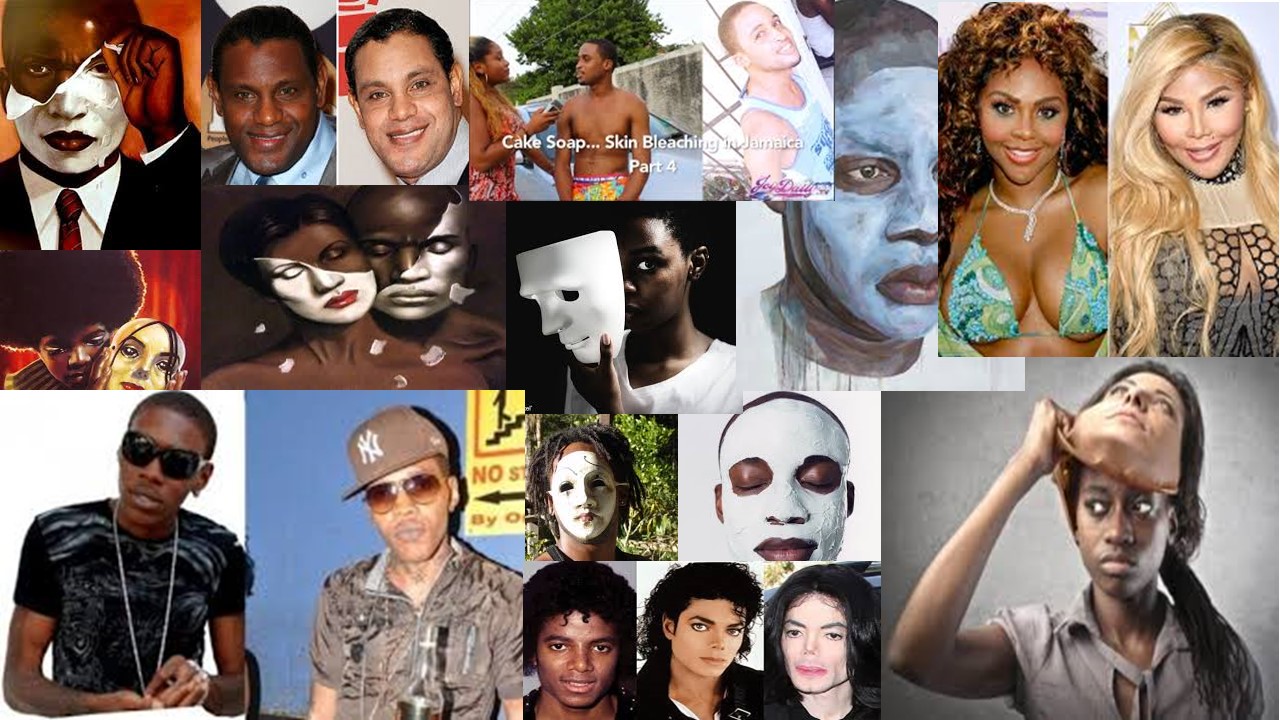
View entire series HERE
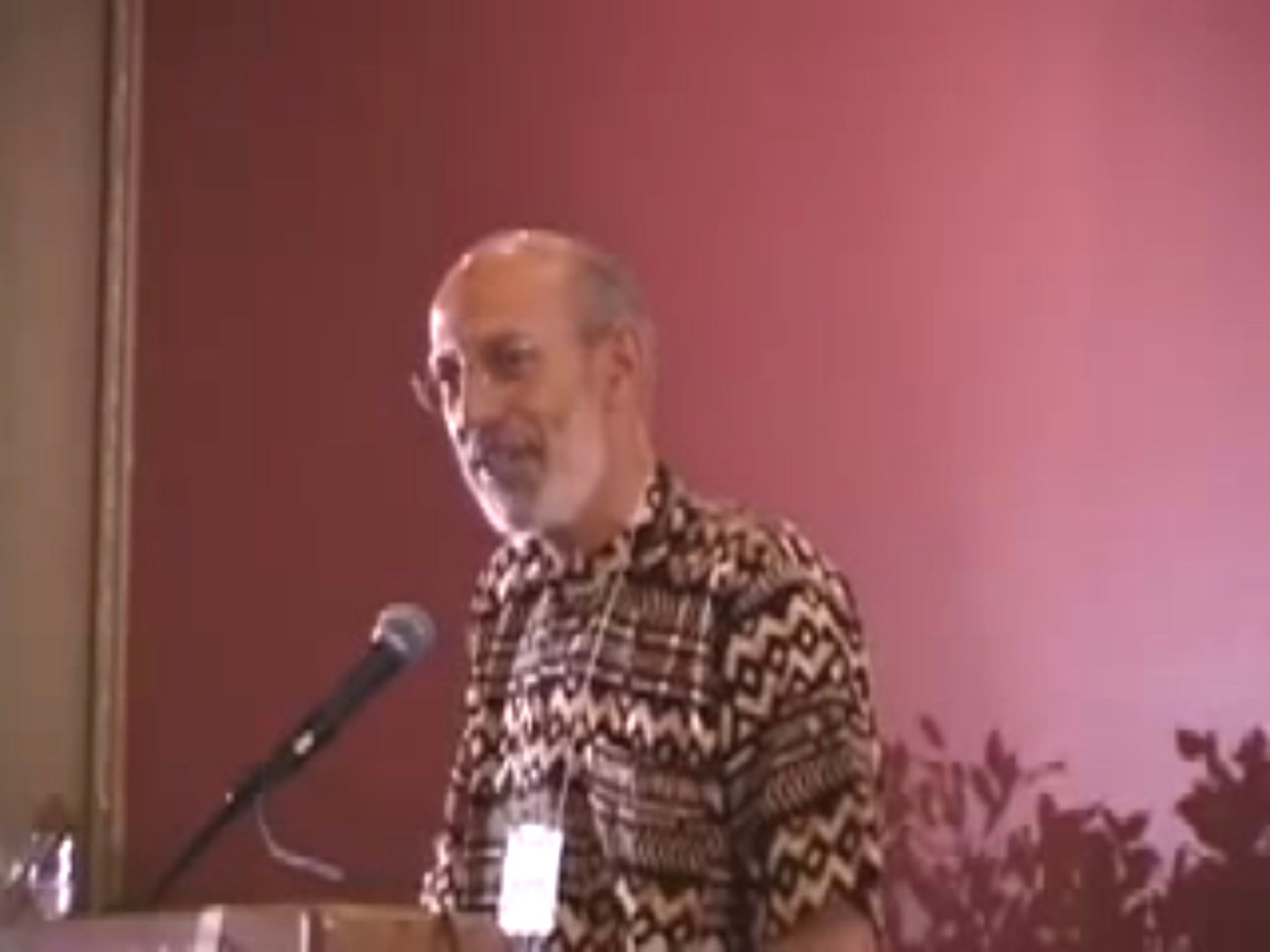
What makes William Cross Yellow Meme?
The hallmark of the Yellow meme is the ability to understand that people naturally progress in life in stages and meet people in their current stage. Dr. Cross developed an ethnic development hierarchy that is very similar to Spiral Dynamics. Even though his scope focused on African-Americans, the framework has been used to understand many identities better. As his work developed, he moved from the position that some stages are pathological to the belief there are healthy versions of all stages. He also discusses regression in the face of adversity.
Similarities between Spiral Dynamics and Nigrescence
- People progress through stages
- Stages can not be skipped
- People can ascend or descend
- There are healthy versions of each stage
Frequently, Integralists view race as an arbitrary social construct. Dr. Cross doesn’t talk about race, which is the idea that people from the same area are genetically linked, and these links create similarities in ability and personality. He talks about ethnicity, which is the idea that people from a similar lineage have similar experiences and position in society. Ethnicity is something that can be verified and explains how changing environment can have a positive effect on a person life. By concentrating on ethnicity, he can talk about the unique experience of being black without delving into racist ideas of superiority.
Example of this is his thoughts on criminality in the black community. Dr. Cross first explains the similarity in black gangs and gangs of other oppressed groups. Before the New Deal, Italians and Jews formed gangs and other criminal organizations. When mainstream America prevents a group from operating in the economy, the oppressed group create an underground economy. Therefore, the solution is to find ways to reduce discrimination in the marketplace.
Another example of Dr. Cross’s Integral view of problems in the black community is his view of the disparity in education. He begins the conservation by talking about the greatest achievement in American education, the teaching of former slaves. After the Civil War, former slaves created a network of Sabbath schools. The system was nationwide two years after slavery. By 1900 illiteracy in the blacks under 40-year-old was non-existent according to the University of Illinois. Dr. Cross said if blacks had been allowed to explore their natural curiosity, we could have been just as successful as any other ethnic group.
Even though Dr. Cross doesn’t use Wilber’s four-quadrant terminology, he has a four-quadrant view of social problems and solutions. He doesn’t assume blacks are destined to become super-predators because of culture or genetics. He also doesn’t blame everything on slavery or evil whites. He looks at all the factors of a problem for a better understanding. His better understanding leads to advocating for practical solutions and not merely eternal blaming.
How does William Cross not find the Yellow meme mold?
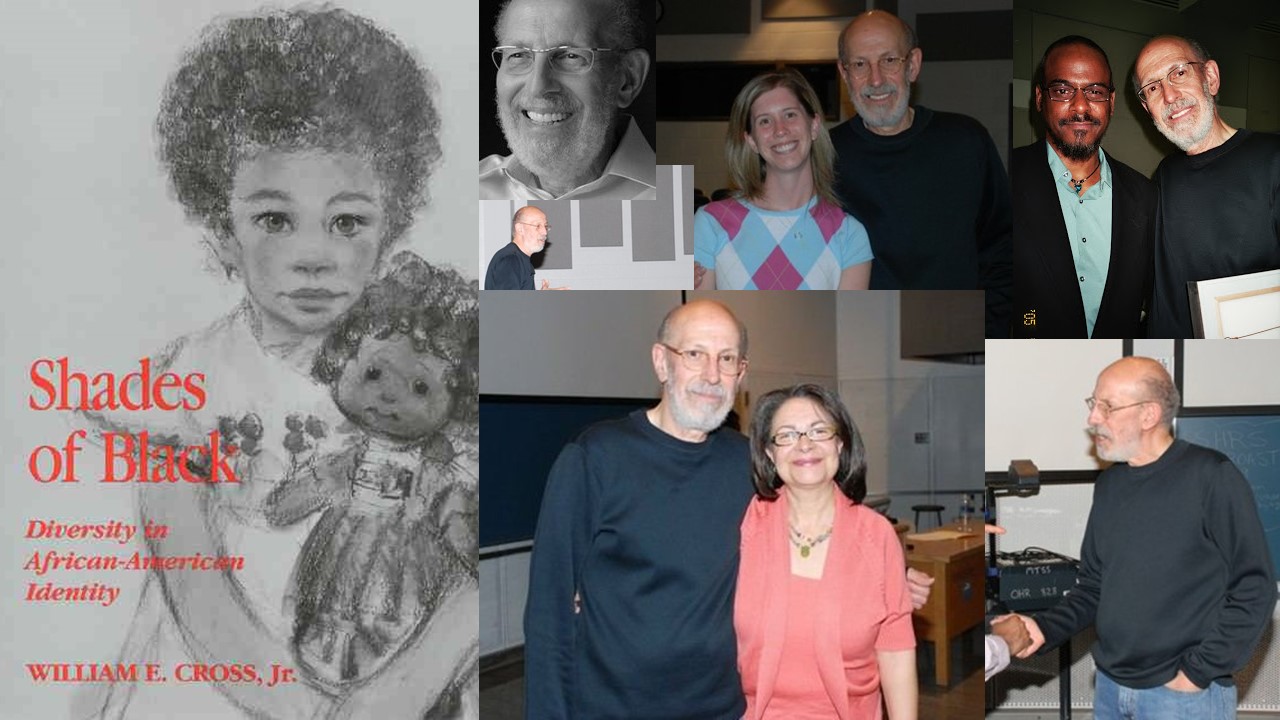
He is by no means an individualist or preferential to independent study. He said in his talk on collaboration that his last book Shades of Black(1991) would be his last solo work. Ideology is something that infects everyone’s decision making. The only way to catch and understand one’s blind spots is to work with those that do not agree with you.
Dr. Cross criticizes mainstream psychology for being too individualistic. The focus is on attaining personal happiness which is contingent on building proper bonds with parents, life partner, and children according to Dr. Cross. Since there are few opportunities to develop these bonds for personal happiness most will not find it. It is more important to build and aid one’s community. Most people will have more salience with people of the same ethnicity because they share the experience. By wrestling with the issues surrounding a particular identity one can contribute to society and help create more well-adjusted people. Personal happiness could not affect the surrounding community or building a better world.
The other way that Nigrescence is different from Spiral Dynamics in that there is no oscillation between collaborative stages and individualistic stages. Ethnic Identity Development focuses on how a person relates to others in his ethnicity, the stages are all collectivist.
The world nor black America are in crisis or on the verge of collapse, according to Dr. Cross. He made clear that black people have lived and thrived for hundreds of years before psychology or ethnic development theory. He approached his work with the attitude that he can learn as much from black people as he can teach. This perspective allowed him to value input from people at all education levels and socio-economic backgrounds. Traditionally, Yellow meme individuals want lean information from sources they feel are “in the know.”
The ways Dr. Cross diverges from the Yellow meme show his growth and a healthy understanding of people. The areas in which he would not fit the Yellow meme mold are areas in which Yellow is anti-social. Anti-social meaning unhealthy individualistic.
What can’t be determined?
One can not determine if he has any fear or shadow controlling his decisions. To know his shadow, one would have to work with Dr. Cross over an extended period. However, one can assume that Dr. Cross’s success in founding the field of African American Studies shows he more than likely isn’t suffering from serious shadow issues.
References
- How former slaves established schools and educated their population after the Civil War by Chamberlain https://news.illinois.edu/view/6367/198842
- Pi Lamda Phi About page https://www.pilambdaphi.org/about/
- Dr. William Cross Jr. Exemplifies Inclusive Excellence by J. Davies http://www.morgridge.du.edu
- William Cross http://www.gc.cuny.edu
- William Cross http://www.psychology.iresearchnet.com
- “Validating the Cross Racial Identity Scale” By Vandiver, Worrel, Fhagen-Smith, and Cross in Journal of Counseling Psychology
- “The Psychology of Nigrescence” by Cross in Handbook of Psychology
- Cross, William E. (1991) Shades of Black; Diversity in African-American Identity Philadelphia, PA: Temple University Press
- “Cross’s Nigrescence Model: From Scale to Theory” in Journal of Multicultural Counseling and Development
- “William. E. Cross, Jr. PhD Awarded 2014 APA Presidential Citation on http://www.apa.org
YOU CAN RETURN TO THE SERIES HERE
YOU CAN RETURN TO THE SERIES HERE

Accomplishments
- President of Pi Lambda Phi fraternity Alpha Chapter
- PhD from Princeton
- Helped to found the American Association of Black Psychologist in 1968
- Assistant Chair of African American Studies at Princeton in 1969
- Professor at Cornell 1973 – 1994
- Penn State University professor 1994 –
- President Elect of Division 45
- Married 40 years
- 2014 APA Presidential Citation
Personal Worldview
Cross humbly approaches black psychology. Black people in America existed 350 years before psychology and thrived. Psychologists should approach the community in hopes of learning from them and not teaching or dictating.
He also doesn’t approach black psychology from the avenue of oppression only. He also doesn’t want to portray European culture as only anti-black. There are many aspects of European culture that are anti-black and those aspects must be isolated and removed. However, black people cannot be afraid to learn from all cultures. He describes his own worldview as Afrocentric informed, but ultimately multicultural.
Being his own worldview is multicultural, he scolds those who believe there is one way to be black. He has meet happy well adjusted black people that have an assimilated, Afrocentric, bicultural, and multicultural view. Attempts to mandate one black worldview did not work. The only worldview that is detrimental is one in which blackness is accepted, but not used to inform decisions and ideological stances. An example of this would be Clarence Thomas, a man that knows he is black yet sees no responsibility in making life better for other black people.
Ethnic Identity Development is proposed as a way to re-order one’s worldview with new information and fight against self-hate. An example of the process of building a healthy black worldview would be W.E.B. DuBois. DuBois grew up in the whitest conditions possible and then discovered his blackness in college at Fisk. When he reflected on his experience, he concluded that he must dedicate his life to creating a better life for his people.
Ethnic Identity Development
The goal of his work is to expand psychology’s view of blackness as more than a pathology. Also, expand what defines a healthy identity. At the time Cross published his work psychologists wondered how identity affects self-esteem and if certain identities make a person have higher self-esteem, since many of the subjects saw blackness as something making their life harder and separating themselves from others. The fact that the identity of blackness separated people and made them less happy caused blackness to be seen as a pathology. Cross’s work shows healthy self-esteem as a willingness to identify with a group of people and help in their struggles for self-improvement. Whether a person is happy or wants to interact with others at all times has more to do with upbringing and more than likely will not change.
Cross purposes a five-stage model for Ethnic Identity Development. The stages are:
- Pre-Encounter
- Encounter
- Immersion /Emerson
- Internalization
- Internalization – Commitment
In the pre-encounter phase a person is unaware that they have the identity. People are in this stage at early childhood and pre-adolescents. Then there is an encounter phase in which a trauma happens that forces a person to recognize their identity. Immersion is the next phase when a person obsesses and personifies all the trappings of their identity and puts down other identities. In immersion black people will challenge other black people on their blackness and put down what they see as white culture. After a person spends enough time fighting all other identities to create their own they internalize the identity. Internalization allows a person to interact and respect people from their own group and other groups. The highest for of ethnic identity is internalization- commitment . At the Commitment stage a person works to help their community become empowered regardless of their personal feelings about the identity.
References
- Pi Lamda Phi About page https://www.pilambdaphi.org/about/
2. Dr. William Cross Jr. Exemplifies Inclusive Excellence by J. Davies http://www.morgridge.du.edu
3. William Cross http://www.gc.cuny.edu
4. William Cross http://www.psychology.iresearchnet.com
5. “Validating the Cross Racial Identity Scale” By Vandiver, Worrel, Fhagen-Smith, and Cross in Journal of Counseling Psychology
6.”The Psychology of Nigrescence” by Cross in Handbook of Psychology
7. Cross, William E. (1991) Shades of Black; Diversity in African-American Identity Philadelphia, PA: Temple University Press
8. “Cross’s Nigrescence Model: From Scale to Theory” in Journal of Multicultural Counseling and Development
9. “William. E. Cross, Jr. PhD Awarded 2014 APA Presidential Citation on http://www.apa.org
YOU CAN RETURN TO THE SERIES HERE

Ambedkar begins by establishing what he means by a philosophy of religion. This treatise evaluates Hinduism’s ability to create a fair and just society. Hinduism will either be vindicated or dismissed as a way of life.
A short synopsis of various terms and sub-categories used in comparative religion follows. The treatise defines religion as an ideal scheme of divine government that creates a social order in which men live in a moral order. The previous statement shows Ambedkar’s ability to think holistically as he describes religion as a large holon that encompasses the smaller holon of social order which includes the smaller holon of moral order. He then explains how these three holons were not always connected and over time life conditions facilitate these holons merging.
The work evaluates the idea of G-d as a supreme controller. Ambedkar admits that there is no way to know where the idea to G-d originated definitively. It is possible that it came from hero worship or as an explanation for the origin of the Universe. However, the concept of G-d is not necessary for evaluating morality and or explaining the source of the universe. Also, the idea of an omnipotent and benevolent creator is not in primitive religion.
The progression of religion is briefly explained. At one time religion encompassed all knowledge. An external revolution called the renaissance pruned religion from branching into areas of study it had no real authority. Internal revolutions forced a progression in how the relationship between man and G-d was viewed.
Religion should be both godly and earthly. Instead of evaluating Hinduism on these criteria Hindus take one of two stances. The first is religion is not important. The second is all religions are good. Both these statements are demonstrably false, as Ambedkar will later prove. Religion is a societal influencer for better or worse.
Hinduism’s claim to be a religion of equality was first dissected. The caste system as defined in the scripture Manusmriti creates a societal scheme that is hierarchical. An individual’s position determined at birth with no means to move up or down. Manusmriti dictates romantic relationships, the division of labor, and access to education between caste. When a lower caste is created that can be isolated socially and economically inequality will persist in society. A collective remedy for social and economic inequality is needed for further progress. Society intentionally created the division and must remove it.
The inequality in education leads to those in lower caste being more vulnerable to servitude. In Hinduism, only Brahmin can study scripture which leads to them being the literate class. Shudras, Dalit, and women were forbidden from studying Vedas. Those without an ability to understand the law or access written information of any kind will always be susceptible to manipulation. Also, if one believes Hinduism leads to union with G-d, precluding lower caste from scripture is especially sinister.
Hinduism all runs counter to the building of fraternity or fellow feeling needed for an equitable society. In addition to the four castes, there are thousands of sub-castes. It is difficult for a Hindu to find a suitable community outside his hometown. In addition to social isolation, the caste system has caused genocide. According to scripture, the priest caste annihilated the soldier class twenty-one times. Ambedkar frames these caste wars as a class war. They are endemic and permanent in Hindu society. All the castes and those outside Hinduism are suffering. Hindus can’t even share a meal with a member of a different caste.
He summarizes the problem with Hinduism and the caste system in four points.
- Caste divides labourers
- Caste dissociates work from interest
- Caste devitalises because it prevents men from pursuing their interest
- Caste prevents mobilization
Caste is not merely a division of labor; it is a division of laborers. By creating a system that assigns occupations at birth you divorce work from ability or interest. The separation of work and personal ability is a market inefficiency. Caste is also impractical in times of national emergency such as war. In war, everyone must be a soldier. To confine fighting to the soldier caste would prevent taking on any outside enemy. Also, Shudras are not allowed to accumulate wealth. Not being allowed to accumulate wealth removes them from any business pursuits.
He ends the treatise by comparing Hinduism to Nazism. The idea of supermen is the basis for both philosophies. Whether Brahman or Aryan, there is an idea that some are just born better, and others are not allowed to challenge the belief. The real difference was Nazism was out to create a super race, and Hinduism was created to maintain privilege asserted by a few at an earlier stage in history.
Ambedkar recognizes critics could say Manusmriti was not an essential text of Hinduism. He refutes this by recounting the history of how the smritis rose in prominence over time. Because smritis maintained social order, they became equal with the Vedas. It is true that Manusmritis states explicitly the rules of Vedas, but the concept is in the Vedas and Bhagwat Geeta.
Because the Hindu scriptures do not create a more just society or protect individual freedom, their study is unimportant. Ambedkar favors study of the greats in Western philosophy such as Plato and Rousseau. The Bible and other works of poetry are equally insignificant in comparison to rational philosophy. India must modernize while looking backward. However, he doesn’t completely disavow religion. Instead, he understands its value is proportional to its ability to fosters a love for humanity. If love for humanity and its advancement are not the center of religion, the religion should be abandoned.
Full text can be found HERE
 Black Leadership Analysis